
Sign up to save your podcasts
Or

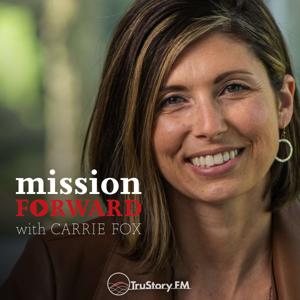


The business of Washington D.C. is government, so the saying goes. But sayings aren't sayings for nothing. And if we take ourselves through the WayBack Machine to the halcyon days at the end of the 20th century, the reputation of the city as the hub of national leadership brought with it the perception that the business community was a distant other. Then, in 1996, Alex Orfinger took on the role of publisher for the Washington Business Journal. Driving to change that perception became his mission.
For over two decades as publisher, Alex worked to develop a strong identity for the region's business sector. After a brief stint away, he is now back at the publication as Market President and Publisher, leading the paper and doubling down on the city that he loves. In the face of great local and national challenges alike, he sees a role for the Journal.
"What we need is to help businesses grow and proper, and particularly give them the tools they need to get through the pandemic," he says. "We need to do that in a way that addresses systemic racism and income inequality ... If we, as a community, can come together and change that trajectory, it'll be a better community for everybody."
Alex's ties to the Greater Washington business community are stronger today than ever. You'll hear him share his experience as chairman of Jubilee Housing, enjoining their efforts to fight for affordable housing for all. He's served as a board member for the Greater Washington Board of Trade, United Way of the National Capital Area, and the Washington Area Women's Foundation. Plus, he's the former chairman of the D.C. Chamber of Commerce. He is home here, and the Journal has a particular role in his care.
"Coming back at this moment for me was different. It's very complicated. What I think the Business Journal's role can be is to show — to lead — the business community and demonstrate that it's in their long term best interest. ... If we increase the economic pie, it is better for everyone."
As you will hear, Alex is passionate about justice, equity, and impact, and the role the business community plays in advancing all three. He works and lives at the intersection of business and community and we know you'll appreciate what he has to say.
Links & Notes
More than 70 years ago, Danny Thomas dreamed the idea of a hospital that would operate in segregated South, where patients of all races would be treated together by physicians of all races. Thanks to that history of radical inclusion and innovation, St. Jude Children's Research Hospital has moved the childhood cancer survival rate from 20% to more than 80% today.
Many organizations have perfected their large annual giving events—usually fundraising galas—that contribute as much as 60% of their annual revenue. St. Jude has proved to be a stunning producer of such events in the spirit of the children they serve. The hospital is funded in large part by its donors who have ensured that no family should ever pay for travel, treatment, housing, or food; that all they should worry about is helping their child live. But when COVID-19 hit and large in-person gatherings became impossible, organizations who were not able to quickly innovate faced major setbacks in recovering from this loss. Stories of stresses on these organizations are legion.
Given the St. Jude legacy of innovation and good work, it should come as no surprise that the institution was named Fast Company’s #1 Best Workplace for Innovators in 2020. Despite the challenges of this year—and years past—St. Jude continues to raise more than $1 billion per year. In full disclosure Mission Partners has been a proud partner and donor to St. Jude for many years.
If there’s one thing that 2020 has taught us, it's that dual transformation is key to sustaining organizations in 2021 and beyond. This week, Ken Zakalik, Director of Innovation at ALSAC/St. Jude Children’s Research Hospital, joins us to share how his team looks into the future in the spirit of constant innovation in three core areas—culture, strategy, and opportunities. Listen in and learn more about what has worked for St. Jude to continue service through crisis and discover how innovation has become imperative to driving business into the future.
Links & Notes
By title, Karen Wawrzaszek is Principal and Senior Director of Financial Planning at Sullivan Bruyette Speros & Blayney (SBSB). But that’s hardly enough to understand what she does and the impact she’s making in the world.
Karen is an expert on socially responsible and impact-oriented investing and financial planning. She’s led impact initiatives for two privately-held family offices. She’s the former chair of the Washington Area Women’s Foundation. She is the Pomona Society founder, a collective of women in impact who come together to effect systemic change for women and families in the district of Columbia. In full disclosure, she was also our advisor in restructuring the company’s 401K offering to be aligned with our mission and values and remains our closest advisor on all things related to impact investing.
For today’s conversation, we’re building upon the conversation we had with Carolyn Lowery in which we focused on the inner work that is required to understand how privilege, power, and racist systems and structures play out in today’s society. And as Natalie Burke discussed earlier in the season, before we can dismantle those white supremacist systems, we must understand our roles in these systems.
So, to help us along this journey, we’re heading back to June when Carrie interviewed Karen as part of our virtual community conversation series. In light of the wide and growing inequalities across our society, many of which COVID has only further intensified, we wanted to explore the role that business leaders and philanthropists play — in how they use, spend, and save money— that either drive principles of justice, equity, diversity and inclusion forward or perpetuate harmful inequities.
They begin by defining what it means to be an impact investor, and then dig into the issue, by the end having shared some practical tips that we can all take — business owner or not — to drive a more equitable and inclusive economy.
It was his experience in the consumer packaged goods industry that taught our guest this week how to channel his empathy. He found it by way of the institution’s appreciation for Design Thinking in product development. “One of the things that you do in design thinking very explicitly is that you obsess over the problem that you’re solving in people’s lives. ... They name that empathy.”
For Ryan Pintado-Vertner, that experience connected a new vernacular to something he’d known all along. Empathy — that sensitivity to others’ experience — described both his expertise in product development and his desire to change the world through his activism.
And thus, Smoketown, LLC was born. The name? A callback to Louisville’s oldest African-American neighborhood founded by emancipated slaves after the Civil War. To Pintado-Vertner and team, “it represents extraordinary potential hiding in plain sight.”
This week’s show goes straight to the heart of the dynamics in entrenched business processes that serve to stifle innovation through diversity and limit opportunities for marginalized communities. The opportunity, says Pintado-Vertner, lies in demography.
“They are more likely to lean into progressive expectations for how the economy should work better,” he says of recent generations. “What that means for us, how we think about this moment, is that this is not a moment at all. It is a building up of increasing power and influence of generations who do not share our expectations of the corporations they interact with; what we’re seeing right now is simply going to accelerate.”
Smoketown is an incredible operation with a powerful team shepherding its legacy. Ryan’s insights on that legacy and the historical events that shape our collective outlook today make him the perfect guest to take on such challenging conversations.
Links & Notes
This week, we invite you into a conversation with someone we admire very much who has taught us a lot this year.
Carolyn Lowry is a racial equity professional with a focus on cultural competence facilitation and relationship-building. We’ve crossed paths many times with Carolyn over the years, but it was this year that we got to learn from her up close. Carolyn has an incredible gift for teaching. She can make people feel at ease, even when the topic is a complicated one.
Carolyn sat down with Carrie Fox earlier this year to discuss race in the workplace as part of our virtual community conversation series. The goal was to model a conversation on race and racism to show that while these conversations may be challenging, they don’t have to be intimidating.
If you’ve been following our work, you know our team has been engaging in conversations like this one for a few years. We do this work in the spirit of continuous learning and then thoughtfully applying those learnings to build and maintain an actively anti-racist workplace.
We have all made our share of mistakes on this journey. We will make more in the future. But those mistakes are a crucial part of the fabric we create as we learn together, moving together toward a more just and equitable future.
We start this conversation with three questions inspired by our friends over at leadership Montgomery: why did you show up for this conversation? Why does this moment in history feel different? And what will you do about it?
As you listen to our explorations on these issues, we hope you lean in and answer each for yourselves.
Links & Notes
Edgar Villanueva is a southerner. He’s a North Carolinian. He was raised in the church. He’s also a member of the Lumbee Tribe of North Carolina, and as such, was the only Native American in his K-12 education experience.
“When I got to the University of North Carolina, I was so hungry to connect with other native students. I began to understand there that there were things about my world view and my perspective that were unique to being Native American.”
Somewhere between his Native heritage and his disarming Southern charm, Edgar has developed a muscle for speaking truth to power with love (his fantastic words, not ours), and no where is that more apparent than in his work in institutional philanthropy, an industry ripe for change.
In his best-selling book, Decolonizing Wealth: Indigenous Wisdom to Heal Divides and Restore Balance, Edgar takes us on tour of the philanthropic industry that carries the baggage of colonial structures designed to stifle the voices of equity through a veneer of altruism. Philanthropy is an exercised of "dividing Us from Them and the haves from the have-nots," says Edgar.
This week on the show, Edgar shares with us 14-year exploration of Big Philanthropy, and his healing and compassionate solutions to an industry mired in systemic imbalance. He shares the experience of grappling with issues but not having language to have the conversations we need to have, and his work to help others develop vernacular to help and to heal.
Most important, he offers us insight to his efforts not just to discuss these issues, but to change an industry through Liberated Capital: A Decolonizing Wealth Fund.
Rooted in relationships of mutuality and equity, Liberated Capital gives through a reparations model that trusts and supports the leadership of those most impacted by historical and systemic racism. The fund welcomes support from individuals at all levels of giving who are committed to collectively healing the wounds of colonialism and white supremacy by using money as medicine to shape an equitable future.Anyone can join and take part in the mission of Decolonizing Wealth through Liberated Capital, and we here at Mission Partners are proud to be a part of this movement through our own donation this month. Our great thanks to Edgar for his time and support of this show. We’re proud to be in orbit of the work of this organization.
Links & Notes
Since starting the Mission Forward conversation series in 2014, we’ve had the opportunity to interview some amazing folks: Pulitzer Prize-winning writers, MacArthur Genius grantees, media entrepreneurs, and philanthropists. One of our favorite conversations to date has been with Ed Yong and Liz Neeley. It took place in 2018, shortly after Ed wrote a story in the Atlantic titled: “I Spent Two Years Trying to Fix the Gender Imbalance in My Stories Here’s What I’ve Learned, and Why I Did It.”
As an acclaimed author and science writer, Ed was a big deal then, but he’s had quite a run these last few years. This past September, his story on the COVID-19 pandemic, “How Did it Come to This?” took the cover spot of The Atlantic magazine, and since that time, he’s published several other articles on COVID 19 including his most recent: “America Is About to Choose How Bad the Pandemic Will Get.”
Given how much we value Ed Yong — and how straightforward he can make even the most complex science story — we decided to resurface this great conversation from a few years back, about building equity and breaking bias in storytelling.
In that 2018 story about gender imbalance in his reporting, Ed found that only 24 percent of his last 23 articles quoted sources that were women. And of those stories, 35 percent featured no female voices at all. As Ed shared in his article:
“I knew that I care about equality, so I deluded myself into thinking that I wasn’t part of the problem. I assumed that my passive concern would be enough. Passive concern never is.”Yong’s heartbreakingly honest revelation, and several others like it, spurred our desire to dig in on ways that writers, marketers, and communications directors can build equity and break bias in their storytelling, and his story has stuck with us for many years.
But it wasn’t just Ed who we spoke with in 2018. We were joined by his partner, the brilliant Liz Neeley, founder and principal of Liminal Creations, where she focuses her time and talent on science communication. Liz served as Executive Director of The Story Collider through August of this year, shepherding real and deeply personal stories of science and living through on-stage events and their eponymous (and extraordinarily popular) podcast. Together, they had a lot to say on the topic of equity in storytelling.
Liz Neeley and Ed Yong are extraordinary people and exceptional journalists and communicators. We love this conversation and we’re sure that you will, too.
Links & Notes
From the publisher's feed

441 Listeners
8 Listeners

21 Listeners

37 Listeners

38 Listeners

12 Listeners

100 Listeners

4 Listeners
2 Listeners

8 Listeners

0 Listeners

69 Listeners

6 Listeners

0 Listeners

5 Listeners

8 Listeners

0 Listeners

0 Listeners
2 Listeners