
Sign up to save your podcasts
Or



Listen to Part 3 of this Special Series with music courtesy of composer Max Richter.
All voices on this episode are from our interviews for The Creative Process & One Planet Podcast:
PAULA PINHO, Director of Just Transition at the European Commission Directorate-General for Energy
PIA MANCINI, Co-founder/CEO of Open Collective - Chair of DemocracyEarth Foundation, YGL World Economic Forum
JENNIFER MORGAN, Fmr. Executive Director of Greenpeace International, Special Envoy for International Climate Action, German Foreign Ministry
WALTER STAHEL, Architect, Economist, Founding Father of Circular Economy, Founder-Director, Product-Life Institute
MERLIN SHELDRAKE, Biologist & Bestselling Author of Entangled Life: How Fungi Make Our Worlds, Change Our Minds, and Shape Our Futures, Winner of the Wainwright Prize 2021
RON GONEN, Founder & CEO of Closed Loop Partners, Former Deputy Commissioner of Sanitation, Recycling & Sustainability, NYC
MANUELA LUCÁ-DAZIO, Executive Director, Pritzker Architecture Prize, Fmr. Exec. Director of Venice Biennale, Visual Arts & Architecture Dept.
NICHOLAS ROYLE, Co-author of "An Introduction to Literature, Criticism and Theory”, Author of “Mother: A Memoir”
MARK BURGMAN, Director, Centre for Environmental Policy, Imperial College London, Editor-in-Chief, Conservation Biology
MIKE DAVIS, CEO of Global Witness
JAY FAMIGLIETTI, Fmr. Senior Water Scientist at NASA Jet Propulsion Laboratory, Exec. Director, Global Institute for Water Security, Host of "What About Water?" Podcast
BRITT WRAY, Author of “Generation Dread: Finding Purpose in an Age of Climate Crisis”, Researcher Working on Climate Change & Mental Health, Stanford University
RICHARD VEVERS, Founder & CEO of The Ocean Agency
ARMOND COHEN, Executive Director of Clean Air Task Force
BILL HARE, Founder & CEO of Climate Analytics, Physicist, Climate Scientist
DAVID PALUMBO-LIU, Activist, Professor & Author of “Speaking Out of Place: Getting Our Political Voices Back”, Host of Speaking out of Place Podcast
IBRAHIM ALHUSSEINI, Founder & CEO of FullCycle Fund
GAIA VINCE, Science Writer, Broadcaster & Author of “Transcendence” & “Adventures in the Anthropocene”
INGRID NEWKIRK, Founder & President of PETA - People for the Ethical Treatment of Animals
www.creativeprocess.info
www.oneplanetpodcast.org
IG www.instagram.com/creativeprocesspodcast
www.maxrichtermusic.com
https://studiorichtermahr.com
Max Richter’s music featured in this episode are “On the Nature of Daylight” from The Blue Notebooks, “Path 19: Yet Frailest” from Sleep.
Music is courtesy of Max Richter, Universal Music Enterprises, and Mute Song.
Listen to Part 2 of this Special Series with music courtesy of composer Max Richter.
All voices on this episode are from our interviews for The Creative Process & One Planet Podcast:
MANUELA LUCÁ-DAZIO - Executive Director, Pritzker Architecture Prize - Fmr. Exec. Director of Venice Biennale, Visual Arts & Architecture Dept.
BRITT WRAY - Author of “Generation Dread: Finding Purpose in an Age of Climate Crisis”, Researcher Working on Climate Change & Mental Health, Stanford University
WALTER STAHEL - Architect, Economist, Founding Father of Circular Economy - Founder-Director, Product-Life Institute
MATHIS WACKERNAGEL - Founder & President of the Global Footprint Network - World Sustainability Award Winner
JAY FAMIGLIETTI, Fmr. Senior Water Scientist at NASA Jet Propulsion Laboratory, Exec. Director, Global Institute for Water Security, Host of "What About Water?" Podcast
RICHARD VEVERS - Founder & CEO of The Ocean Agency
ARMOND COHEN - Executive Director of Clean Air Task Force
PAULA PINHO - Director of Just Transition at the European Commission Directorate-General for Energy
MARTIN VON HILDEBRAND - Indigenous Rights Activist - Winner of Right Livelihood & Skoll Awards - Founder of Fundacion Gaia Amazonas, named #40 NGOs of the World by The Global Journal
HAROLD P. SJURSEN - Professor of Philosophy - Science, Technology, the Arts - NYU, Beihang University, East China University
BILL HARE - Founder & CEO of Climate Analytics, Physicist, Climate Scientist
SIR ANDY HAINES - Tyler Prize Award-winner for Environmental Achievement - Professor of Environmental Change & Public Health
LISA JACKSON PULVER - Deputy Vice-Chancellor of University of Sydney's Indigenous Strategy & Services
Max Richter’s music featured in this episode:
“Spring 1” from The New Four Seasons – Vivaldi Recomposed
Vladimir’s Blues” from The Blue Notebooks
"Lullaby From The Westcoast Sleepers” from 24 Postcards in Full Colour,
Music is courtesy of Max Richter, Universal Music Enterprises, and Mute Song.
www.maxrichtermusic.com
https://studiorichtermahr.com
www.creativeprocess.info
www.oneplanetpodcast.org
IG www.instagram.com/creativeprocesspodcast
Today we’re streaming voices of environmentalists, artists, students, and teachers. Enjoy Part 1 of this Special Series with music courtesy of composer Max Richter.
All voices on this episode are from our interviews for The Creative Process & One Planet Podcast:
MAX RICHTER
INGRID NEWKIRK, Founder of PETA
BERTRAND PICCARD, Aviator of 1st Round-the-World Solar-Powered Flight, Explorer, Founder, Solar Impulse Foundation
CARL SAFINA, Ecologist, Founding President of Safina Center
CLAIRE POTTER, Designer, Lecturer, Author of “Welcome to the Circular Economy”
ADA LIMÓN, U.S. Poet Laureate, Host of The Slowdown podcast
CYNTHIA DANIELS, Grammy and Emmy award-winning producer, engineer, composer
JOELLE GERGIS, Lead Author of the IPCC Sixth Assessment Report, Author of “Humanity’s Moment”
KATHLEEN ROGERS, President of EARTHDAY.ORG
ODED GALOR, Author of “The Journey of Humanity”, Founder of Unified Growth Theory
SIR GEOFF MULGAN, Fmr. Chief Executive of Nesta, Fmr, Prime Minister’s Strategy Unit Director & Downing Street’s Head of Policy, Author of “Another World is Possible”
ALAIN ROBERT, Rock & Urban Climber known for Free Solo Climbing 150+ of the World’s Tallest Skyscrapers using no Climbing Equipment
NOAH WILSON-RICH, Co-founder & CEO of The Best Bees Company
CHRIS FUNK, Director of the Climate Hazards Center at UC Santa Barbara, Author of Drought, Flood, Fire: How Climate Change Contributes to Recent Catastrophes
DAVID FARRIER, Author of “Footprints: In Search of Future Fossils”
DR. SUZANNE SIMARD, Professor of Forest Ecology, Author of “Finding the Mother Tree”
PETER SINGER, “Most Influential Living Philosopher”, Author, Founder of The Life You Can Save
JENNIFER MORGAN, Fmr. Executive Director of Greenpeace International, Special Envoy for International Climate Action, German Foreign Ministry
www.creativeprocess.info
www.oneplanetpodcast.org
IG www.instagram.com/creativeprocesspodcast
www.maxrichtermusic.com
https://studiorichtermahr.com
Max Richter’s music featured in this episode are “On the Nature of Daylight” from The Blue Notebooks, “Path 19: Yet Frailest” from Sleep.
Music is courtesy of Max Richter, Universal Music Enterprises, and Mute Song.
"You know, so much of it is about trying to get to a situation where you can sort of uncover the work. It is sort of out there, and it's about having enough patience, peace of mind, concentration, and opportunity to kind of let it come into the foreground somehow. I think Picasso says that: "I hope that when inspiration strikes, it finds me sitting in the chair." You know, so you do have to be in the chair in order for that process to happen. Or in some way in the chair, maybe not literally, but you need to be ready.
Creative work in some way feels like a dialogue with something else. But you know, whether that's something else that is kind of out there, or whether that's something else that is actually just a part of our mind which is normally inaccessible to us, it sort of doesn't matter, in a way. It's sort of not important. But I do think that feeling of there being a dialogue or some sort of inquiry into something else, that's fundamental to creativity.
So again, it's something which is about tabula rasa, something which is about fundamentals, things which are universal, kind of the origin of being, in a way. So all of these sorts of gestures, all of these kinds of ideas in Sleep, they all point to the idea of sleep as being, in some ways, a negotiation. A conversation between a kind of existence and non-existence, you know? "Our little life is rounded with a sleep." You know, this idea of being a kind of fundamental state. So all of the musical language, all the musical objects suggest that sort of feeling. And I think we all need that. We all need to connect to these fundamentals, to the big things which are sort of pre-civilization, the things which are before all the noise, the things which are shared, very simple human experiences.
I think there's something about our culture which sort of erodes those connections to those experiences. And I think particularly large-scale creative works can allow us to reconnect to them because they feel like alternate realities. So when you go to a Sleep performance, you are entering a kind of a different world.”
Composer Max Richter is known for his ability to translate profound human emotions into music. Max’s record Sleep is the most streamed classical album of all time and his catalogue has surpassed 3 billion streams.
A prolific collaborator, he scored and performed for Kim Jones for the Dior shows, and the new Wayne McGregor and Margaret Atwood ballet MADDADDAM, and arts collective Random International on the Rain Room installation.
Max has collaborated with film directors Denis Villeneuve, Martin Scorsese, and Ari Folman, and scored film & TV including Ad Astra, Black Mirror, Shutter Island, The Leftovers, Arrival and his Emmy-nominated score for Taboo.
He’s the co-founder of Studio Richter Mahr, with his partner and artist Yulia Mahr in Oxfordshire, UK. Max and Yulia built the studio around an old tractor barn, and have powered it with cutting-edge solar and heat-pump technology. It’s a haven for their family and community of musicians and artists which regularly come through. Set within 31 acres of woodland, Max and Yulia have a huge passion for using the land to farm and provide a sustainable working environment as well as using creativity as an elevating force within society. Operating as a free space for artists to develop their work, the studio also works with local partners to support the local community.
www.maxrichtermusic.com
https://studiorichtermahr.com
Photo by William Waterworth
www.creativeprocess.info
www.oneplanetpodcast.org
IG www.instagram.com/creativeprocesspodcast
Max Richter’s music featured in this episode is "On the Nature of Daylight” from The Blue Notebooks.
Music is courtesy of Max Richter, Universal Music Enterprises, and Mute Song.
Composer Max Richter is known for his ability to translate profound human emotions into music. Max’s record Sleep is the most streamed classical album of all time and his catalogue has surpassed 3 billion streams.
A prolific collaborator, he scored and performed for Kim Jones for the Dior shows, and the new Wayne McGregor and Margaret Atwood ballet MADDADDAM, and arts collective Random International on the Rain Room installation.
Max has collaborated with film directors Denis Villeneuve, Martin Scorsese, and Ari Folman, and scored film & TV including Ad Astra, Black Mirror, Shutter Island, The Leftovers, Arrival and his Emmy-nominated score for Taboo.
He’s the co-founder of Studio Richter Mahr, with his partner and artist Yulia Mahr in Oxfordshire, UK. Max and Yulia built the studio around an old tractor barn, and have powered it with cutting-edge solar and heat-pump technology. It’s a haven for their family and community of musicians and artists which regularly come through. Set within 31 acres of woodland, Max and Yulia have a huge passion for using the land to farm and provide a sustainable working environment as well as using creativity as an elevating force within society. Operating as a free space for artists to develop their work, the studio also works with local partners to support the local community.
"You know, so much of it is about trying to get to a situation where you can sort of uncover the work. It is sort of out there, and it's about having enough patience, peace of mind, concentration, and opportunity to kind of let it come into the foreground somehow. I think Picasso says that: "I hope that when inspiration strikes, it finds me sitting in the chair." You know, so you do have to be in the chair in order for that process to happen. Or in some way in the chair, maybe not literally, but you need to be ready.
Creative work in some way feels like a dialogue with something else. But you know, whether that's something else that is kind of out there, or whether that's something else that is actually just a part of our mind which is normally inaccessible to us, it sort of doesn't matter, in a way. It's sort of not important. But I do think that feeling of there being a dialogue or some sort of inquiry into something else, that's fundamental to creativity.
So again, it's something which is about tabula rasa, something which is about fundamentals, things which are universal, kind of the origin of being, in a way. So all of these sorts of gestures, all of these kinds of ideas in Sleep, they all point to the idea of sleep as being, in some ways, a negotiation. A conversation between a kind of existence and non-existence, you know? "Our little life is rounded with a sleep." You know, this idea of being a kind of fundamental state. So all of the musical language, all the musical objects suggest that sort of feeling. And I think we all need that. We all need to connect to these fundamentals, to the big things which are sort of pre-civilization, the things which are before all the noise, the things which are shared, very simple human experiences.
I think there's something about our culture which sort of erodes those connections to those experiences. And I think particularly large-scale creative works can allow us to reconnect to them because they feel like alternate realities. So when you go to a Sleep performance, you are entering a kind of a different world.”
www.maxrichtermusic.com
https://studiorichtermahr.com
Photo by William Waterworth
www.creativeprocess.info
www.oneplanetpodcast.org
IG www.instagram.com/creativeprocesspodcast
00:25 JERICHO BROWN - Pulitzer Prize-Winning Poet, Author of “The Tradition” & “The New Testament”
00:39 JILL HEINERTH - Explorer, Presenter, Author of “Into The Planet: My Life as a Cave Diver”
01:02 ALICE FULTON - Poet - Recipient of MacArthur “Genius”, NEA & Guggenheim Fellowships
01:31 BERTRAND PICCARD - Aviator of 1st Round-the-World Solar-Powered Flight, Explorer, Founder, Solar Impulse Foundation: 1000+ Profitable Climate Solutions
02:31 CHRIS BLACKWELL - Founder of Island Records - Bob Marley, U2, Cat Stevens, Grace Jones, Roxy Music, Amy Winehouse…Author of “The Islander: My Life in Music and Beyond"
03:31 ALICE NOTLEY - Poet & Artist - Academy of American Poets Award Winner
04:08 MIA FUNK - Artist, Writer & Host of The Creative Process reads “In My Dreams"
04:45 MAX STOSSEL - Award-winning Poet, Filmmaker, Speaker - Creator of "Words That Move”
05:04 GERALD FLEMING - Poet, Author of the collections “The Choreographer”, “One”, “Night of Pure Breathing”, among others
05:29 MARGO BERDESHEVSKY - Award-winning Poet - "Kneel Said the Night”,"Before The Drought”, “Between Soul & Stone”
05:56 SAM LEVY - Award-winning Cinematographer of “Lady Bird” “Frances Ha” “While We’re Young” “Confess, Fletch”
06:31 CHAYSE IRVIN - Award-winning Cinematographer - “Blonde" starring Ana de Armas, “Beyonce: Lemonade”, Spike Lee’s “BlacKkKlansman”
06:57 KARINA MANASHIL - President of Mad Solar - Creative Confidante for Kid Cudi - Executive Producer of Netflix’s “Entergalactic”, A24’s “Pearl”, “X”
07:37 CARL SAFINA - Ecologist - Founding President of Safina Center - NYTimes Bestselling Author of “Becoming Wild: How Animal Cultures Raise Families, Create Beauty, and Achieve Peace”, among others
www.creativeprocess.info
www.oneplanetpodcast.org
IG www.instagram.com/creativeprocesspodcast
Flower Duet - Leo Delibes
Creative Commons Attribution 3.0 Unported CC BY 3.0
https://creativecommons.org/licenses/by/3.0/
Conducted by Philip Milman https://pmmusic.pro/
“Beyoncé has been a musician her whole life. She's been an icon since she was 14 or 15, so young. And when we were doing Lemonade, Kahlil Joseph and I, we talked a lot about how Beyoncé must have maybe skipped this moment in our lives that most people have where we're coming up in our twenties, sort of discovering ourselves. In Lemonade, we were really trying to explore that she's coming to herself now that she has a daughter and that she's married, and she's trying to harness a family life and these themes that she was singing about in the music. We were sort of trying to consider that and how we were going to tell that story, too.
And then also legacy and family, you know, that was the reason why we shot in New Orleans. On Lemonade, we didn't do any treatment or anything. Kahlil and I met in New Orleans, and we started scouting. And through the scouting period we came up with the concept and the ideas, but the scouting's unique because we we're basically connecting with liaisons. So we're connecting with the Beyoncé family member. We're connecting with the guy that runs security for Beyoncé there in New Orleans. And it's like all of a sudden you get to an alien part of a culture that exists as an underbelly that is so hard to access because everyone's basically presenting a stereotype, typically. So then that's sort of what we were trying to get to on that. And that was actually really intuitive for Kahlil's way of working, who I consider an auteur director.
That's the thing I think is really beautiful in film is actually the harmony. It's musical. It's the cinematography, the emotions acting in harmony to one another. And that doesn't always mean that they're like perfectly matched.”
Chase Irvin is a Canadian American cinematographer making waves in the film industry. Chayse has received immense critical acclaim for his vision and style. He has worked on features, shorts, and visual albums, most notably in his collaboration with Director Kahlil Joseph on the film Beyoncé: Lemonade. He lensed Spike Lee’s BlacKkKlansman, which received 6 Academy Award nominations, winning for best adapted screenplay. Chayse’s first feature film Medeas won the prestigious Best Cinematography Debut at the Camerimage Film Festival in 2013. Hannah, starring Charlotte Rampling, won a Silver Hugo from the Chicago International Film Festival. Chase is a member of the Canadian Society of Cinematographers. His latest films are Netflix’s Blonde starring Ana de Armas and A24’s God's Creatures starring Emily Watson.
www.chayseirvin.com
www.creativeprocess.info
www.oneplanetpodcast.org
IG www.instagram.com/creativeprocesspodcast
Chase Irvin is a Canadian American cinematographer making waves in the film industry. Chayse has received immense critical acclaim for his vision and style. He has worked on features, shorts, and visual albums, most notably in his collaboration with Director Kahlil Joseph on the film Beyoncé: Lemonade. He lensed Spike Lee’s BlacKkKlansman, which received 6 Academy Award nominations, winning for best adapted screenplay. Chayse’s first feature film Medeas won the prestigious Best Cinematography Debut at the Camerimage Film Festival in 2013. Hannah, starring Charlotte Rampling, won a Silver Hugo from the Chicago International Film Festival. Chase is a member of the Canadian Society of Cinematographers. His latest films are Netflix’s Blonde starring Ana de Armas and A24’s God's Creatures starring Emily Watson.
“Beyoncé has been a musician her whole life. She's been an icon since she was 14 or 15, so young. And when we were doing Lemonade, Kahlil Joseph and I, we talked a lot about how Beyoncé must have maybe skipped this moment in our lives that most people have where we're coming up in our twenties, sort of discovering ourselves. In Lemonade, we were really trying to explore that she's coming to herself now that she has a daughter and that she's married, and she's trying to harness a family life and these themes that she was singing about in the music. We were sort of trying to consider that and how we were going to tell that story, too.
And then also legacy and family, you know, that was the reason why we shot in New Orleans. On Lemonade, we didn't do any treatment or anything. Kahlil and I met in New Orleans, and we started scouting. And through the scouting period we came up with the concept and the ideas, but the scouting's unique because we we're basically connecting with liaisons. So we're connecting with the Beyoncé family member. We're connecting with the guy that runs security for Beyoncé there in New Orleans. And it's like all of a sudden you get to an alien part of a culture that exists as an underbelly that is so hard to access because everyone's basically presenting a stereotype, typically. So then that's sort of what we were trying to get to on that. And that was actually really intuitive for Kahlil's way of working, who I consider an auteur director.
That's the thing I think is really beautiful in film is actually the harmony. It's musical. It's the cinematography, the emotions acting in harmony to one another. And that doesn't always mean that they're like perfectly matched.”
www.chayseirvin.com
www.creativeprocess.info
www.oneplanetpodcast.org
IG www.instagram.com/creativeprocesspodcast
“I watched things with my grandparents, and I read books with my grandmother. And my mother was obsessed with Sondheim and Neil Simon, and she took me to standing-room-only Broadway shows for $5. And she held me during A Chorus Line. So the lyrics I was singing when I was four years old were very inappropriate. We did community theater, and my mom had this incredible network of gorgeous gay men who would drink coffee and eat biscotti and listen to show tunes in my tiny one-bedroom apartment.
I think that I was surrounded by storytellers and hams and charming, charismatic people who sang beautifully. I still can hear my mom's friend Bobby Cipolla's voice. I hear him playing the leading player in Pippin in our community theater production of Pippin, and my sisters and I all sang. So we were very theatrical for a bunch of girls who shared a couple of bedrooms in an apartment in Yonkers.
But my mother also just always showed us how New York City was only 10 miles away, and like greatness was attainable. And you can do fabulous, cool, fun things. You didn't have to be rich to do them. And she would walk me around the Columbia campus and the Metropolitan Museum of Art, and we would go to the nosebleed seats to the ballet. And so I think the storytelling came from a combination of that exposure to the arts and closeness to New York City.
Brian Yorkey is my dear friend. We went to college together. Brian and Tom Kitt wrote Next to Normal, which was the very first Broadway show that dealt with mental health and mental illness. I had a grandmother who was bipolar and institutionalized, and when Brian told me when we were like 21 years old that he was writing a musical about electro-shock therapy, I was like, great idea! 10, 12 years later, and many iterations and workshops later with Tom and Brian, the show went to Broadway and got the Pulitzer and 11 Tony nominations, and it was groundbreaking.”
Joy Gorman Wettels is the founder of Joy Coalition, an impact producing venture with a focus on creating purpose-driven film and television content for a global audience. She executive-produced the newly-released UnPrisoned, and is currently working on a multi-part storytelling ecosystem inspired by landmark civil rights documentary Eyes on the Prize. Her body of work includes, notably, the critically acclaimed series Home Before Dark, the influential 13 Reasons Why, created by Pulitzer and Tony Award-winning playwright Brian Yorkey and directed by Oscar-winner Tom McCarthy (Spotlight).
Other works include The Meddler, named Vanity Fair's #1 film of 2016, and the forthcoming adaptation of Little House on the Prairie. She serves on the Advisory Council for UCLA’s Center for Scholars and Storytellers and the Advisory Board for Hollywood, Health and Society at USC. As part of their commitment to social change, Joy Coalition works in collaboration with the Office of the Surgeon General in response to the youth mental health crisis. She’s accepted a Sentinel Award, Television Academy Honors for advancing social change, and the 2018 Mental Health America Media Award.
www.joycoalition.com
www.imdb.com/name/nm2229726
www.imdb.com/title/tt20228406/mediaviewer/rm1596470273/?ref_=tt_ov_i
www.creativeprocess.info
www.oneplanetpodcast.org
IG www.instagram.com/creativeprocesspodcast
Joy Gorman Wettels is the founder of Joy Coalition, an impact producing venture with a focus on creating purpose-driven film and television content for a global audience. She executive-produced the newly-released UnPrisoned, and is currently working on a multi-part storytelling ecosystem inspired by landmark civil rights documentary Eyes on the Prize. Her body of work includes, notably, the critically acclaimed series Home Before Dark, the influential 13 Reasons Why, created by Pulitzer and Tony Award-winning playwright Brian Yorkey and directed by Oscar-winner Tom McCarthy (Spotlight).
Other works include The Meddler, named Vanity Fair's #1 film of 2016, and the forthcoming adaptation of Little House on the Prairie. She serves on the Advisory Council for UCLA’s Center for Scholars and Storytellers and the Advisory Board for Hollywood, Health and Society at USC. As part of their commitment to social change, Joy Coalition works in collaboration with the Office of the Surgeon General in response to the youth mental health crisis. She’s accepted a Sentinel Award, Television Academy Honors for advancing social change, and the 2018 Mental Health America Media Award.
“I watched things with my grandparents, and I read books with my grandmother. And my mother was obsessed with Sondheim and Neil Simon, and she took me to standing-room-only Broadway shows for $5. And she held me during A Chorus Line. So the lyrics I was singing when I was four years old were very inappropriate. We did community theater, and my mom had this incredible network of gorgeous gay men who would drink coffee and eat biscotti and listen to show tunes in my tiny one-bedroom apartment.
I think that I was surrounded by storytellers and hams and charming, charismatic people who sang beautifully. I still can hear my mom's friend Bobby Cipolla's voice. I hear him playing the leading player in Pippin in our community theater production of Pippin, and my sisters and I all sang. So we were very theatrical for a bunch of girls who shared a couple of bedrooms in an apartment in Yonkers.
But my mother also just always showed us how New York City was only 10 miles away, and like greatness was attainable. And you can do fabulous, cool, fun things. You didn't have to be rich to do them. And she would walk me around the Columbia campus and the Metropolitan Museum of Art, and we would go to the nosebleed seats to the ballet. And so I think the storytelling came from a combination of that exposure to the arts and closeness to New York City.
Brian Yorkey is my dear friend. We went to college together. Brian and Tom Kitt wrote Next to Normal, which was the very first Broadway show that dealt with mental health and mental illness. I had a grandmother who was bipolar and institutionalized, and when Brian told me when we were like 21 years old that he was writing a musical about electro-shock therapy, I was like, great idea! 10, 12 years later, and many iterations and workshops later with Tom and Brian, the show went to Broadway and got the Pulitzer and 11 Tony nominations, and it was groundbreaking.”
www.joycoalition.com
www.imdb.com/name/nm2229726
www.imdb.com/title/tt20228406/mediaviewer/rm1596470273/?ref_=tt_ov_i
www.creativeprocess.info
www.oneplanetpodcast.org
IG www.instagram.com/creativeprocesspodcast
From the publisher's feed
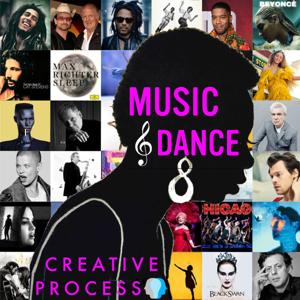
Music & Dance episodes of the popular The Creative Process podcast. To listen to ALL arts & creativity episodes of “The Creative Process · Arts, Culture & Society”, you’ll find our main podcast on Apple: tinyurl.com/thecreativepod, Spotify: tinyurl.com/thecreativespotify, or wherever you get your podcasts!
Exploring the fascinating minds of creative people. Conversations with writers, artists & creative thinkers across the Arts & STEM. We discuss their life, work & artistic practice. Winners of Oscar, Emmy, Tony, Pulitzer, leaders & public figures share real experiences & offer valuable insights. Notable guests and and organizations include: Pacific Northwest Ballet, Pilobolus Dance Company & Five Senses Festival, Harvard Dance Center, Songwriters Hall of Fame, Carter Burwell, John Powell, Edmar Castaneda, Kovacs, Marcelo Zarvos, Paulo Szot (Chicago, South Pacific), Jill Johnson (Ballet Frankfurt, The Forsythe Company), Mario Alberto Zambrano (Juilliard Dance), Nano Stern, Michael Daugherty, Bright Sheng, François Clemmons (Mister Rogers’ Neighborhood, Harlem Spiritual Ensemble), Rick Carnes (Songwriters Guild of America), Peter Boal, Noelani Pantastico, Itamar Kubovy, Jonah Bokaer Choreography & The Hudson Eye, Renée Jaworski, Matt Kent, Trish Sie (Pitch Perfect 3), Emily Kent, Seán Curran (NYU Tisch School of the Arts), Carolyn Waters Broe (Four Seasons Orchestra), Yuval Sharon, Aaron P. Dworkin (Sphinx Organization), Lorenda Ramou (Onassis Cultural Center), Terry Radigan, among others.
The interviews are hosted by founder and creative educator Mia Funk with the participation of students, universities, and collaborators from around the world. These conversations are also part of our traveling exhibition. www.creativeprocess.info
For The Creative Process podcasts from Seasons 1 2 3, visit: tinyurl.com/creativepod or creativeprocess.info/interviews-page-1, which has our complete directory of interviews, transcripts, artworks, and details about ways to get involved.
27,677 Listeners
275 Listeners

4 Listeners
150 Listeners
26 Listeners

27 Listeners
55 Listeners
55 Listeners
47 Listeners
35 Listeners

7 Listeners
88 Listeners

119 Listeners
33 Listeners
13 Listeners
7 Listeners
18 Listeners
39 Listeners
81 Listeners
11 Listeners
35 Listeners
2 Listeners
3 Listeners