
Sign up to save your podcasts
Or



“There's a great David Bowie song called ‘Memory of a Free Festival.’ It's a song about a concert that he organized in Beckenham in August 1969, the same weekend of Woodstock. He wrote this song about that concert. And in August 1969, also, his father died just 10 days or so before the concert. And his funeral took place days before.
So the song that Bowie wrote is, I think, deeply resonant of the death of his father, as well as about the concert itself. And it's an extraordinary song about the end of the 1960s as well. I think there's a sort of critical consensus that it's with this song that Bowie really started coming into his own. And the second part is just kind of chorus. ‘The Sun Machine is coming down, and we are going to have a party.’ And it's kind of demonic. It's an extraordinary refrain, which really, it's hypnotic. It's mesmerizing.
And I found myself trying to think about this idea of a sun machine. What is a sun machine? How might we describe a sun machine? What do we feel about the idea of a sun machine? Something affirmative but strange that is arriving, that's coming down, and that we are going to celebrate. We're going to have a party. So the sun machine in the book is in part an attempt to think about what music does to me, or what music might do to people more generally.
And that's another key way, I suppose, in which I'm interested in the wordless. The power of listening. The power of music. The capacity that music has to transport and to transform, but also the power of music. And this is something that David Bowie realized very early on. I think the power of music and its links with memory. So the relationship between music and mourning, but also the way in which our memories of our lives are bound up with music and how listening to music can be like opening a portal into the past. And into particular ways of thinking about memory.”
Nicholas Royle is Professor Emeritus of English at the University of Sussex, England, where he has been based since 1999. He has also taught at the University of Oxford, the University of Tampere, and the University of Stirling; and has been a visiting professor at the universities of Århus, Santiago del Compostela, Turku, Manitoba, and Lille. He is a managing editor of the Oxford Literary Review and director of Quick Fictions. He has published many books, including Telepathy and Literature, E.M. Forster, Jacques Derrida, The Uncanny, Veering: A Theory of Literature, How to Read Shakespeare, and Hélène Cixous: Dreamer, Realist, Analyst, Writing, as well as the novels Quilt and An English Guide to Birdwatching, and Mother: A Memoir. In addition, he is co-author with Andrew Bennett of three books: Elizabeth Bowen and the Dissolution of the Novel, This Thing Called Literature: Reading, Thinking, Writing, and An Introduction to Literature, Criticism and Theory Sixth edition, 2023. Royle’s current projects include a detective novel, a collection of essays about new approaches to narrative theory, and a collaborative work with Timothy Morton on Covid-19. His latest book, David Bowie, Enid Blyton and the Sun Machine, is due to be published in November 2023.
www.routledge.com/An-Introduction-to-Literature-Criticism-and-Theory/Bennett-Royle/p/book/9781032158846
https://myriadeditions.com/creator/nicholas-royle/
https://quickfiction.co.uk/
www.creativeprocess.info
www.oneplanetpodcast.org
IG www.instagram.com/creativeprocesspodcast
Nicholas Royle is Professor Emeritus of English at the University of Sussex, England, where he has been based since 1999. He has also taught at the University of Oxford, the University of Tampere, and the University of Stirling; and has been a visiting professor at the universities of Århus, Santiago del Compostela, Turku, Manitoba, and Lille. He is a managing editor of the Oxford Literary Review and director of Quick Fictions. He has published many books, including Telepathy and Literature, E.M. Forster, Jacques Derrida, The Uncanny, Veering: A Theory of Literature, How to Read Shakespeare, and Hélène Cixous: Dreamer, Realist, Analyst, Writing, as well as the novels Quilt and An English Guide to Birdwatching, and Mother: A Memoir. In addition, he is co-author with Andrew Bennett of three books: Elizabeth Bowen and the Dissolution of the Novel, This Thing Called Literature: Reading, Thinking, Writing, and An Introduction to Literature, Criticism and Theory Sixth edition, 2023. Royle’s current projects include a detective novel, a collection of essays about new approaches to narrative theory, and a collaborative work with Timothy Morton on Covid-19. His latest book, David Bowie, Enid Blyton and the Sun Machine, is due to be published in November 2023.
“There's a great David Bowie song called ‘Memory of a Free Festival.’ It's a song about a concert that he organized in Beckenham in August 1969, the same weekend of Woodstock. He wrote this song about that concert. And in August 1969, also, his father died just 10 days or so before the concert. And his funeral took place days before.
So the song that Bowie wrote is, I think, deeply resonant of the death of his father, as well as about the concert itself. And it's an extraordinary song about the end of the 1960s as well. I think there's a sort of critical consensus that it's with this song that Bowie really started coming into his own. And the second part is just kind of chorus. ‘The Sun Machine is coming down, and we are going to have a party.’ And it's kind of demonic. It's an extraordinary refrain, which really, it's hypnotic. It's mesmerizing.
And I found myself trying to think about this idea of a sun machine. What is a sun machine? How might we describe a sun machine? What do we feel about the idea of a sun machine? Something affirmative but strange that is arriving, that's coming down, and that we are going to celebrate. We're going to have a party. So the sun machine in the book is in part an attempt to think about what music does to me, or what music might do to people more generally.
And that's another key way, I suppose, in which I'm interested in the wordless. The power of listening. The power of music. The capacity that music has to transport and to transform, but also the power of music. And this is something that David Bowie realized very early on. I think the power of music and its links with memory. So the relationship between music and mourning, but also the way in which our memories of our lives are bound up with music and how listening to music can be like opening a portal into the past. And into particular ways of thinking about memory.”
www.routledge.com/An-Introduction-to-Literature-Criticism-and-Theory/Bennett-Royle/p/book/9781032158846
https://myriadeditions.com/creator/nicholas-royle/
https://quickfiction.co.uk/
www.creativeprocess.info
www.oneplanetpodcast.org
IG www.instagram.com/creativeprocesspodcast
"When I think about the most amazing things that humans can do, I can't help but think about high level jazz musicians. The amount of information that they're processing—harmonic, melodic, rhythmic information all on the spot—and the act of not only taking it all in and figuring out where they fit in it, but also responding to it and creating something with a certain form and meaningfulness to it is, I think, one of the most impressive things that I've known any human being to do.
And that's worth thinking about in terms of human capacities. And it's also, of course, going back to this idea that music is sophisticated as something like what Duke Ellington would create was labeled as 'jungle music' in the twenties. It's a sign of the way race was and continues to be a way in which all sorts of human creativeness and inventiveness and intelligence is under-recognized or dismissed."
Bruce Evan Barnhart is an associate professor of American literature and culture at the University of Oslo and co-director of the project Literature, Rights, and Imagined Communities. He is the author of Jazz in the Time of the Novel: The Temporal Politics of American Race and Culture. His work has appeared in African American Review, Callaloo, and Novel. His latest publications are Temporal Experiments: Seven Ways of Configuring Time in Art and Literature, co-edited with Marit Grøtta, and LeRoi Jones, Jazz, and the Resonance of Class. His research interests include African American literature, post-Marxist theory, jazz, and Caribbean aesthetics.
www.hf.uio.no/ilos/english/people/aca/bruceb
www.routledge.com/Temporal-Experiments-Seven-Ways-of-Configuring-Time-in-Art-and-Literature/Barnhart-Grotta/p/book/9781032350240
https://www.hf.uio.no/ilos/english/research/groups/temporal-experiments/
www.creativeprocess.info
www.oneplanetpodcast.org
IG www.instagram.com/creativeprocesspodcast
Bruce Evan Barnhart is an associate professor of American literature and culture at the University of Oslo and co-director of the project Literature, Rights, and Imagined Communities. He is the author of Jazz in the Time of the Novel: The Temporal Politics of American Race and Culture. His work has appeared in African American Review, Callaloo, and Novel. His latest publications are Temporal Experiments: Seven Ways of Configuring Time in Art and Literature, co-edited with Marit Grøtta, and LeRoi Jones, Jazz, and the Resonance of Class. His research interests include African American literature, post-Marxist theory, jazz, and Caribbean aesthetics.
"When I think about the most amazing things that humans can do, I can't help but think about high level jazz musicians. The amount of information that they're processing—harmonic, melodic, rhythmic information all on the spot—and the act of not only taking it all in and figuring out where they fit in it, but also responding to it and creating something with a certain form and meaningfulness to it is, I think, one of the most impressive things that I've known any human being to do.
And that's worth thinking about in terms of human capacities. And it's also, of course, going back to this idea that music is sophisticated as something like what Duke Ellington would create was labeled as 'jungle music' in the twenties. It's a sign of the way race was and continues to be a way in which all sorts of human creativeness and inventiveness and intelligence is under-recognized or dismissed."
www.hf.uio.no/ilos/english/people/aca/bruceb
www.routledge.com/Temporal-Experiments-Seven-Ways-of-Configuring-Time-in-Art-and-Literature/Barnhart-Grotta/p/book/9781032350240
https://www.hf.uio.no/ilos/english/research/groups/temporal-experiments/
www.creativeprocess.info
www.oneplanetpodcast.org
IG www.instagram.com/creativeprocesspodcast
"Well, I think if it's 'closer to the surface' as you so beautifully put it, it's usually that you see it through their personality a lot more. It's just not just their actions or the products that they create, but they somehow are sort of glowing with it, in a sense. And you usually see that when they essentially embody specific traits that we know to be very important for creativity. And one is a sort of openness to new experiences that is one of the most consistent findings of creativity research that people across the board, whether you're looking at artists or scientists who've reached some level of creative eminence, they're all marked by a specific kind of openness to new experience. Very deeply curious and game for anything, if you want, for what a possibility can tell them, or the level which you can take them to next. So they are open to it, and excited by it.
And the second thing is that they exude a certain kind of confidence. Creative confidence is something that really can't be taught. And you can tell people 'you should be more confident,'' but it's something that they have to...that can be cultivated by the person themselves. But usually what you see is this enormous confidence. Sometimes they'll say it with these sort of destiny kind of words. Like 'I was put here for this reason. I know that I have a purpose in life and that is...' And that stems from a sort of profound confidence about what they have to offer the world and what lies within them. And so I would say those two features are perhaps the things that those sorts of people embody."
Anna Abraham, Ph.D. is the E. Paul Torrance Professor and Director of the Torrance Center for Creativity and Talent Development at the University of Georgia (USA). She investigates the psychological and neurophysiological mechanisms underlying creativity and other aspects of the human imagination, including the reality-fiction distinction, mental time travel, social and self-referential cognition, and mental state reasoning. She is the author of the 2018 book, The Neuroscience of Creativity (Cambridge University Press) and the editor of the multidisciplinary volume, The Cambridge Handbook of the Imagination (2020).
www.anna-abraham.com
https://coe.uga.edu/directory/torrance-center
www.cambridge.org/core/what-we-publish/elements/elements-in-creativity-and-imagination
www.creativeprocess.info
www.oneplanetpodcast.org
IG www.instagram.com/creativeprocesspodcast
Anna Abraham, Ph.D. is the E. Paul Torrance Professor and Director of the Torrance Center for Creativity and Talent Development at the University of Georgia (USA). She investigates the psychological and neurophysiological mechanisms underlying creativity and other aspects of the human imagination, including the reality-fiction distinction, mental time travel, social and self-referential cognition, and mental state reasoning. She is the author of the 2018 book, The Neuroscience of Creativity (Cambridge University Press) and the editor of the multidisciplinary volume, The Cambridge Handbook of the Imagination (2020).
"Well, I think if it's 'closer to the surface' as you so beautifully put it, it's usually that you see it through their personality a lot more. It's just not just their actions or the products that they create, but they somehow are sort of glowing with it, in a sense. And you usually see that when they essentially embody specific traits that we know to be very important for creativity. And one is a sort of openness to new experiences that is one of the most consistent findings of creativity research that people across the board, whether you're looking at artists or scientists who've reached some level of creative eminence, they're all marked by a specific kind of openness to new experience. Very deeply curious and game for anything, if you want, for what a possibility can tell them, or the level which you can take them to next. So they are open to it, and excited by it.
And the second thing is that they exude a certain kind of confidence. Creative confidence is something that really can't be taught. And you can tell people 'you should be more confident,'' but it's something that they have to...that can be cultivated by the person themselves. But usually what you see is this enormous confidence. Sometimes they'll say it with these sort of destiny kind of words. Like 'I was put here for this reason. I know that I have a purpose in life and that is...' And that stems from a sort of profound confidence about what they have to offer the world and what lies within them. And so I would say those two features are perhaps the things that those sorts of people embody."
www.anna-abraham.com
https://coe.uga.edu/directory/torrance-center
www.cambridge.org/core/what-we-publish/elements/elements-in-creativity-and-imagination
www.creativeprocess.info
www.oneplanetpodcast.org
IG www.instagram.com/creativeprocesspodcast
“I think you need to be aware and see people be open to what can happen and get a feel, get an instinct. I think I've been blessed with instinct. I mean, I did not do well at school. I passed zero exams. I'm unemployable, but I've been blessed with having instincts. The instinct of U2 was seeing their determination, the fact that the music itself initially wasn't close to what most of my music was because most of my music was bass and drum. And most of their music was vocal, so it wasn't a certain kind of music that I like all the time. I like music from all different kinds of levels…I absolutely felt for Bob Marley to really make it worldwide as it were, he needed to change something a little bit. I didn't want him to change what he was doing, not his lyrics and everything else like that. It was more the instrumentation of it. I felt for Bob to be able to reach a wider audience that he needed to move away a little bit from that and focus more and more on his lyrics.
When I finally met Cat Stevens, and we just sort of sat down and then when he played the song ‘Father and Son,’ then suddenly the lyrics of the song and what it meant and everything, I suddenly felt this guy is fantastic. You know, the I person I'd seen on television had nothing to do with this person sitting in front of me. And so that's really when I said to him, I opened up to him and I said, ‘Honestly, I wasn't really interested to meet, but this song that you've just sung for me is such an incredible song.’ I felt that I could definitely connect with him. ‘Where Do the Children Play', that was the one that, just the fact that he was somebody who was thinking like that.
There was one time when Mick Jagger asked me to come and meet with him because I think he'd heard the records that were coming up from me, mainly Jamaican records and things, and that's why he wanted me to come and meet with him. He was leaving Decca, and wanted to go to another level. And I said, ‘It makes absolutely no sense for you to come to my label because you already are huge.’
Grace Jones, she's a stunning-looking lady. They put on the record and there was a drum machine, and all it played was a drum machine. There was no vocal, there were no instruments, nothing for about two and a half to three minutes before I heard a voice. I thought, Oh my gosh, this is a disaster. This is going to end in tears. And then suddenly I heard the voice, and the voice sounded great.”
Chris Blackwell, an inductee of the Rock & Roll Hall of Fame, is widely considered responsible for turning the world on to reggae music. As the founder of Island Records, he helped forge the careers of Bob Marley, Cat Stevens, Grace Jones, U2, Roxy Music, among many other high-profile acts, and produced records including Marley’s Catch a Fire and Uprising. Blackwell currently runs Island Outpost, a group of elite resorts in Jamaica, which includes GoldenEye—the former home of author Ian Fleming. He received the A&R Icon Award in recognition of his lasting influence on the music business. He is author, with Paul Morley, of The Islander: My Life in Music and Beyond.
www.islandoutpost.com
www.simonandschuster.com/books/The-Islander/Chris-Blackwell/9781982172701
www.islandrecords.com
www.creativeprocess.info
www.oneplanetpodcast.org
IG www.instagram.com/creativeprocesspodcast
Chris Blackwell, an inductee of the Rock & Roll Hall of Fame, is widely considered responsible for turning the world on to reggae music. As the founder of Island Records, he helped forge the careers of Bob Marley, Cat Stevens, Grace Jones, U2, Roxy Music, among many other high-profile acts, and produced records including Marley’s Catch a Fire and Uprising. Blackwell currently runs Island Outpost, a group of elite resorts in Jamaica, which includes GoldenEye—the former home of author Ian Fleming. He received the A&R Icon Award in recognition of his lasting influence on the music business. He is author, with Paul Morley, of The Islander: My Life in Music and Beyond.
“I think you need to be aware and see people be open to what can happen and get a feel, get an instinct. I think I've been blessed with instinct. I mean, I did not do well at school. I passed zero exams. I'm unemployable, but I've been blessed with having instincts. The instinct of U2 was seeing their determination, the fact that the music itself initially wasn't close to what most of my music was because most of my music was bass and drum. And most of their music was vocal, so it wasn't a certain kind of music that I like all the time. I like music from all different kinds of levels…I absolutely felt for Bob Marley to really make it worldwide as it were, he needed to change something a little bit. I didn't want him to change what he was doing, not his lyrics and everything else like that. It was more the instrumentation of it. I felt for Bob to be able to reach a wider audience that he needed to move away a little bit from that and focus more and more on his lyrics.
When I finally met Cat Stevens, and we just sort of sat down and then when he played the song ‘Father and Son,’ then suddenly the lyrics of the song and what it meant and everything, I suddenly felt this guy is fantastic. You know, the I person I'd seen on television had nothing to do with this person sitting in front of me. And so that's really when I said to him, I opened up to him and I said, ‘Honestly, I wasn't really interested to meet, but this song that you've just sung for me is such an incredible song.’ I felt that I could definitely connect with him. ‘Where Do the Children Play', that was the one that, just the fact that he was somebody who was thinking like that.
There was one time when Mick Jagger asked me to come and meet with him because I think he'd heard the records that were coming up from me, mainly Jamaican records and things, and that's why he wanted me to come and meet with him. He was leaving Decca, and wanted to go to another level. And I said, ‘It makes absolutely no sense for you to come to my label because you already are huge.’
Grace Jones, she's a stunning-looking lady. They put on the record and there was a drum machine, and all it played was a drum machine. There was no vocal, there were no instruments, nothing for about two and a half to three minutes before I heard a voice. I thought, Oh my gosh, this is a disaster. This is going to end in tears. And then suddenly I heard the voice, and the voice sounded great.”
www.islandoutpost.com
www.simonandschuster.com/books/The-Islander/Chris-Blackwell/9781982172701
www.islandrecords.com
www.creativeprocess.info
www.oneplanetpodcast.org
IG www.instagram.com/creativeprocesspodcast
Florian Hoffmeister is a prolific director of photography. Recent works by Hoffmeister include his lensing on the Apple TV+ series Pachinko, the critically-acclaimed political thriller Official Secrets starring Keira Knightley, Ralph Fiennes, and Matt Smith, and TÁR starring Cate Blanchett. Hoffmeister is well-known for his collaboration with Terence Davies on feature films The Deep Blue Sea, starring Rachel Weisz, Tom Hiddleston and Simon Russel-Beale, and A Quiet Passion, starring Cynthia Nixon and Jennifer Ehle. His work on Brian Kirk’s television phenomenon Great Expectations earned him further distinction as well as numerous accolades, including a Primetime Emmy, a BAFTA, and an ASC Award.
"I enjoy dancing, but I would not call myself a dancer by any means compared to the people I'm working with here who are so wonderful at it. I worked with a lot of in this piece, especially immersive theater actors and dancers. So there's a show called Sleep No More in New York, which is like an adaptation of Shakespeare's Macbeth. It's immersive theater. You walk through the room and all these different actors have these interactions with the people as they're moving through this entire building. And I love immersive theater so much, and I was really glad to work with these very talented, immersive theater actors as I just think they're such good captures of humanity, and they tend to be very good dancers as well.
There's a lot of dance in those shows. Then Sleep No More and Then She Fell are both just truly spectacular immersive theater programs. And Taylor Myers, Isabel Umali, Jonothon Lyons, and Rachel Berman, they were all part of those shows, and they worked with me on the Aliens piece and on Subway Love."
Max Stossel is an Award-winning poet, filmmaker, and speaker, named by Forbes as one of the best storytellers of the year. His Stand-Up Poetry Special Words That Move takes the audience through a variety of different perspectives, inviting us to see the world through different eyes together. Taking on topics like heartbreak, consciousness, social media, politics, the emotional state of our world, and even how dogs probably (most certainly) talk, Max uses rhyme and rhythm to make these topics digestible and playful. Words That Move articulates the deep-seated kernels of truth that we so often struggle to find words for ourselves. Max has performed on five continents, from Lincoln Center in NY to the Hordern Pavilion in Sydney. He is also the Youth & Education Advisor for the Center for Humane Technology, an organization of former tech insiders dedicated to realigning technology with humanity’s best interests.
www.wordsthatmove.com/
www.instagram.com/maxstossel/
www.humanetech.com
https://vimeo.com/690354718/54614a2318
www.creativeprocess.info
www.oneplanetpodcast.org
IG www.instagram.com/creativeprocesspodcast
From the publisher's feed
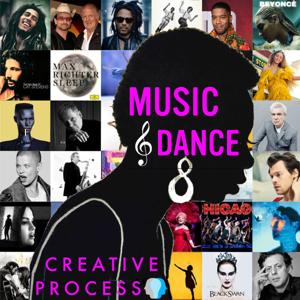
Music & Dance episodes of the popular The Creative Process podcast. To listen to ALL arts & creativity episodes of “The Creative Process · Arts, Culture & Society”, you’ll find our main podcast on Apple: tinyurl.com/thecreativepod, Spotify: tinyurl.com/thecreativespotify, or wherever you get your podcasts!
Exploring the fascinating minds of creative people. Conversations with writers, artists & creative thinkers across the Arts & STEM. We discuss their life, work & artistic practice. Winners of Oscar, Emmy, Tony, Pulitzer, leaders & public figures share real experiences & offer valuable insights. Notable guests and and organizations include: Pacific Northwest Ballet, Pilobolus Dance Company & Five Senses Festival, Harvard Dance Center, Songwriters Hall of Fame, Carter Burwell, John Powell, Edmar Castaneda, Kovacs, Marcelo Zarvos, Paulo Szot (Chicago, South Pacific), Jill Johnson (Ballet Frankfurt, The Forsythe Company), Mario Alberto Zambrano (Juilliard Dance), Nano Stern, Michael Daugherty, Bright Sheng, François Clemmons (Mister Rogers’ Neighborhood, Harlem Spiritual Ensemble), Rick Carnes (Songwriters Guild of America), Peter Boal, Noelani Pantastico, Itamar Kubovy, Jonah Bokaer Choreography & The Hudson Eye, Renée Jaworski, Matt Kent, Trish Sie (Pitch Perfect 3), Emily Kent, Seán Curran (NYU Tisch School of the Arts), Carolyn Waters Broe (Four Seasons Orchestra), Yuval Sharon, Aaron P. Dworkin (Sphinx Organization), Lorenda Ramou (Onassis Cultural Center), Terry Radigan, among others.
The interviews are hosted by founder and creative educator Mia Funk with the participation of students, universities, and collaborators from around the world. These conversations are also part of our traveling exhibition. www.creativeprocess.info
For The Creative Process podcasts from Seasons 1 2 3, visit: tinyurl.com/creativepod or creativeprocess.info/interviews-page-1, which has our complete directory of interviews, transcripts, artworks, and details about ways to get involved.
27,677 Listeners
275 Listeners

4 Listeners
150 Listeners
26 Listeners

27 Listeners
55 Listeners
55 Listeners
47 Listeners
35 Listeners

7 Listeners
88 Listeners

119 Listeners
33 Listeners
13 Listeners
7 Listeners
18 Listeners
39 Listeners
81 Listeners
11 Listeners
35 Listeners
2 Listeners
3 Listeners