
Sign up to save your podcasts
Or

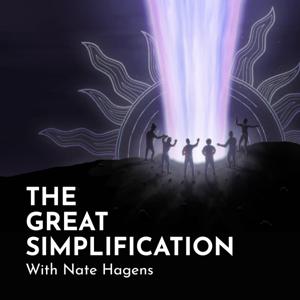

Language is one of humanity's most unique and powerful tools. We are amazingly good at imagining the pictures created through words - almost to the point that even the most fantastical things can seem real. But how might this extraordinary ability backfire as we try to chart the course for the 21st century?
In this Frankly, Nate explores the limitations of using our imaginations to shape our understanding of what's possible through the use of three categories: what can't happen, what won't happen, and what might happen. Nate demonstrates how this framework can be used by going through one example of the many hurdles standing in the way of humanity - as we currently consume today - reaching Net Zero carbon emissions by 2050.
How are today's societal goals shaped by unrealistic expectations of what's possible under our current biophysical reality? What 'bottlenecks' constrain the possibilities of the future, and how might these change our expectations and preparations for what's to come? Finally, how can we use the logic of aggregate probability in our own lives to push the initial conditions of the future towards the best likelihoods for all life on Earth?
(Recorded April 1, 2025)
Show Notes and More
Watch this video episode on YouTube
Want to learn the broad overview of The Great Simplification in 30 minutes? Watch our Animated Movie.
---
Support The Institute for the Study of Energy and Our Future
Join our Substack newsletter
Join our Discord channel and connect with other listeners
 View all episodes
 By Nate Hagens

4.8
400400 ratings
Language is one of humanity's most unique and powerful tools. We are amazingly good at imagining the pictures created through words - almost to the point that even the most fantastical things can seem real. But how might this extraordinary ability backfire as we try to chart the course for the 21st century?
In this Frankly, Nate explores the limitations of using our imaginations to shape our understanding of what's possible through the use of three categories: what can't happen, what won't happen, and what might happen. Nate demonstrates how this framework can be used by going through one example of the many hurdles standing in the way of humanity - as we currently consume today - reaching Net Zero carbon emissions by 2050.
How are today's societal goals shaped by unrealistic expectations of what's possible under our current biophysical reality? What 'bottlenecks' constrain the possibilities of the future, and how might these change our expectations and preparations for what's to come? Finally, how can we use the logic of aggregate probability in our own lives to push the initial conditions of the future towards the best likelihoods for all life on Earth?
(Recorded April 1, 2025)
Show Notes and More
Watch this video episode on YouTube
Want to learn the broad overview of The Great Simplification in 30 minutes? Watch our Animated Movie.
---
Support The Institute for the Study of Energy and Our Future
Join our Substack newsletter
Join our Discord channel and connect with other listeners
26,380 Listeners
1,884 Listeners
2,631 Listeners

1,167 Listeners
180 Listeners
380 Listeners

1,025 Listeners
507 Listeners
4,167 Listeners
466 Listeners
1,635 Listeners
1,046 Listeners
152 Listeners
91 Listeners

71 Listeners