
Sign up to save your podcasts
Or




Based on Podcast App listening data
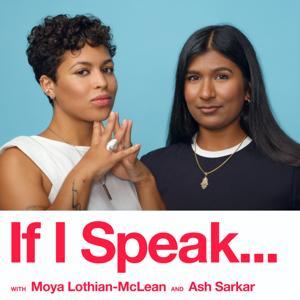
As the American empire teeters, China gains dominance, and war spreads across Eastern Europe and West Asia, questions arise as to Europe’s place in this rapidly changing world order. On Downstream this week, Ash Sarkar speaks to Roderick Beaton, former Koraes Professor of History at King’s College London, about his latest book Europe: A New History.
How did the boundaries between Europe and Asia come to be drawn in the first place? How were immigration and borders managed by the ancients in Greece and Rome? How do the stories we tell about our collective history in Europe shape contemporary political thought? And in an age of mass migration, who gets to be European today – and why?
Help us build people-powered media: https://novara.media/support
To accompany our podcast series, Death in Westminster, hosts Kojo Koram and Dalia Gebrial met with investigative journalist Peter Geoghegan and former private wealth lawyer Stephanie Brobbey at EartH in Hackney last month.
Digging into the dark money that flows through Westminster, Kojo and Dalia find out what made Stephanie quit her job hiding rich people’s assets, why Peter couldn’t find anyone to publish his story about Labour corruption, and what normal people can do to challenge the global system of wealth extraction.
Listen to Death in Westminster, hosted by Dalia and Kojo Koram, in the Novara Media podcast feed. Follow Peter’s work through the Democracy For Sale newsletter.
Take part in our audience survey: novara.media/survey
In China in the 1990s, the arrival of the internet was swiftly met with the ‘great firewall’: a complex matrix of censorship, surveillance and state control. Since then there have been two internets: the World Wide Web, and the Chinese internet.
Aaron Bastani talks to China analyst Yi-Ling Liu about the cultures and innovations that have evolved in this separate digital ecosphere. How have feminist and LGBTQ+ movements manifested through the Chinese internet? How has the Chinese Communist Party negotiated the promise and threat of the internet, and now AI? And why is the West suddenly so obsessed with China?
Yi-Ling Liu’s book is The Wall Dancers: Searching for Freedom and Connection on the Chinese Internet.
After mulling over the problem of boredom in the last Trip episode, the ACFM gang return with a solution: hobbies.
In this episode Nadia, Jem and Keir wonder why hobbies tend to mutate into jobs, which hobbies are appropriate for commoners, whether men and women approach their hobbies differently, and why having a hobby is often framed as uncool.
It’s a weird-left spin on private pastimes with ideas from Engels and Gary Cross and music from Television Personalities and Shonen Knife.
Find the books and music mentioned in the show: https://novara.media/acfm
Help us build people-powered media: https://novara.media/support
Fill in our audience survey: https://novara.media/survey
For fifty years, Alfred McCoy has exposed covert operations. In 1972 he uncovered the CIA and French intelligence’s complicity with the heroin trade during the Vietnam War – research that the CIA tried to suppress.
He’s the author of many books, most recently Cold War on Five Continents, which gives a comprehensive account of late 20th century geopolitics, decolonisation, and covert operations.
But now he’s warning of a New Cold War. Is it over for the US empire?
He talked to Richard Hames about the strange parallels between the 1956 Suez Crisis – a turning point in global British influence – and the 2026 war on Iran and the new Chinese World Order.
Do Your Own Research is a new show from Novara Media about the systems that make life possible.
Music by Iglooghost.
Donald Trump has threatened to bomb Iran’s power plants in an expletive-laden Truth Social Post, and the U.S. account of its rescue of two airmen inside Iran raises more questions than it answers.
With Michael Walker, David Wearing and Daniel Levy.
Liberalism, in one form or another, has been the pervading political ideology of the past 200 years. It has become so pervasive, as an ideology, that it lays claim to the middle ground and common sense itself. But liberalism is a set of dogmas and doctrines like any other political ideology, and unfathomable horrors as well as huge advances have been made in its name.
Today on Downstream, the ideas we call liberal or centrist are up for scrutiny, as Aaron Bastani interviews Adrian Wooldridge. Wooldridge is a liberal insider, having been a journalist at the Economist magazine for thirty years. His new book, Centrists of the World Unite! The Lost Genius of Liberalism is an account of his own sense that liberalism in 2026 is in a state of crisis. It must reinvent itself, he argues, or die.
So what exactly is liberalism, where did it come from, and how can we characterise it today? What was the historical relationship between liberalism and slavery? Why are liberals always so reluctant to acknowledge this aspect of their history? In times of crisis, do liberals always defect to the fascist far-right? And what must centrists do today, if they want their ideas to organise the 21st century?
To mark the launch of our new podcast series, Death in Westminster, host Dalia Gebrial sat down with Hannah Spencer, the new MP for Gorton and Denton, and Faiza Shaheen, the director of Tax Justice UK, at EartH in Hackney.
They talked about Hannah’s landslide victory, her first few weeks in Parliament, and what a wealth tax would actually look like. What approach did Faiza and Hannah take with Reform voters when they went canvassing? What lessons should progressives learn from past failures? And what are the conspiracy theories swirling about Hannah online?
Listen to Death in Westminster, hosted by Dalia and Kojo Koram, in the Novara Media podcast feed.
When was the last time you were bored? Nadia, Jem and Keir wonder if ennui is a feeling that belongs in the past – and what a boredom-free life might be missing.
Is compulsive scrolling a modern symptom of boredom? Why are spiritual practices often based around tedious repetition? Do bored workers make better organisers? What about the “stuckness” experienced by migrants, or the drudgery of housework?
The gang offer their theories of Boredism (and Post-Boredism) in a perfectly mind-numbing Trip, with ideas from Lukács, Gramsci, the Pet Shop Boys and loads of 1970s punk.
Find the books and music mentioned in the show: https://novara.media/acfm
Help us build people-powered media: https://novara.media/support
In the last decade and a half, society has got vastly more politicised: Occupy, Black Lives Matter, the Me Too Movement and many other movements besides mobilised hundreds of millions of people around the world.
So where are the massive organisations that big mobilisations brought in the 20th century? They don’t exist. For all the increased political activity, society hasn’t become much more organised.
This has produced what Anton Jäger calls ‘hyperpolitics’. He’s the author of Hyperpolitics: Extreme Politicisation without Political Consequences as well as a columnist at The New York Times and a lecturer at Oxford University.
He explained to Richard Hames how we got so isolated, why fascism isn’t even the biggest threat right now, and whether the worldwide organising around Palestine, anti-ICE uprisings in the US and the Gen Z Revolutions have already hurtled us into yet another era of political struggle.
Do Your Own Research is a new show from Novara Media about the systems that make the modern world possible.
Music by Iglooghost.
From the publisher's feed
Ranked by our users in the last 21 days
303 Listeners
1,858 Listeners
1,461 Listeners
132 Listeners
120 Listeners
1,578 Listeners
180 Listeners

50 Listeners
201 Listeners
285 Listeners
17 Listeners
163 Listeners

54 Listeners
26 Listeners

12 Listeners
99 Listeners
3 Listeners

10 Listeners