
Sign up to save your podcasts
Or

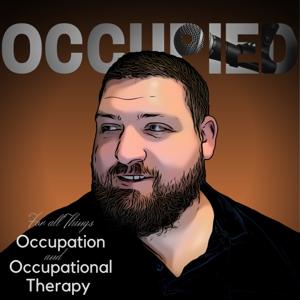


Laura Park Figueroa, to me, is something special in the profession. To take on the often scary role of an entrepreneur and turn your passion into a private practice takes STONES. This is exactly what Laura has done with her practice, Outdoor Kids Occupational Therapy. Loving the great outdoors and having that connection with nature are driving forces behind the business.
Laura also runs the Mind Your OT Business podcast where she shares her insights and thoughts about private practice and supporting OT’s to take the plunge! We delved into her journey into private practice as well as what it might take for others to do the same.
I was able to draw on my experience of a time when I NEARLY became an entrepreneur myself and Laura helped me highlight the areas where I could have improved.
I’m a firm believer that many of the amazing new and adventurous OT practice out there at the moment is coming from the brave people in the entrepreneurial space. Those that are brave enough to really back up their words and turn their passions into projects that help others.
Check out Laura’s amazing work here:
www.mindyourotbusiness.com
http://www.outdoorkidsot.com
Keep occupied
Brock
[email protected]
@brockcookOT
A while ago I asked Michelle to come and be a guest on Occupied. As I had expected she agreed but then retorted, “I’m going to interview you”. We both laughed and that was that for a couple months while we tried to nail down an appropriate time. When we did find a time Michelle mentioned that she had been thinking about questions to ask me. This is when I finally realised she was serious….she was intending to hijack the podcast!
In all seriousness though, Michelle and I have known each other for a long time and we talk often about all things OT and OS so I knew her questions and ideas were going to be deep. We went right through my OT history but from the perspective of my conceptual development which was an interesting reflection.
I hope there’s something for everyone in this one as we explore a whole gamut of OT and the OT process. Some strong discussions around Occupation based practice, institutional trauma, alternative lenses and where we’d like to see the profession go in the future.
Keep occupied
Brock
[email protected]
@brockcookOT
The release of the adaptive XBox controller might have been something you saw cross your news feed a while back. You may even have thought “damn that’s awesome, I wonder how OT’s are going to use this”. What you may not have known is that an OT was heavily involved in its development! Erik Johnson is that very OT and his story is phenomenal.
Some of you may remember Erik from his time in the Army when was known across the social media landscape as ArmyOTguy. Back then, like me, you might have been in awe of his amazing work with service men DURING his deployment to Afghanistan. For me it really opened up my mind about the potential for where OT’s could work. At the time he also inspired me to explore the use of Nintendo Wii in my own practice area.
Fast forward a few years and Erik retired from the Army. Since then he helped start Warfighter Engaged, a volunteer company that custom designs and sets up adaptive control centres for people with accessibility issues so they can engage in the occupation of gaming! Incredibly creative and inspiring work can be seen on the Warfighter Engaged website here: https://warfighterengaged.org/projects
I thoroughly enjoyed this chat with Erik and his rich experience and occupational focus was amazing and inspiring.
Check out the XBox adaptive controller here:
Brock
[email protected]
@brockcookOT
Alexis is an OT, an online juggernaut, a clinical mentor and metaphor aficionado. If you’re on Instagram or Facebook then you have more than likely come across some of her posts, stories or live chats. Hard to imagine how she has any balance…. 😉
A few months ago Alexis invited me to do an Insta-live with her. Honestly, I can’t even remember what we originally started talking about but we digressed to occupational balance. We decided then and there that we needed to record a podcast and give the topic the time and space that it deserved.
Occupational Balance is a concept that ALL occupational therapists have heard of and the majority would mention regularly, usually as a potential or ideal outcome. But how many have thought about the concept in detail? How many have considered the process of occupational balance outside of the feeling that we get when we have “achieved” it? What is actually being balanced?
balance /ˈbal(ə)ns/
noun
1. an even distribution of weight enabling someone or something to remain upright and steady.
“she lost her balance and fell”synonyms:
stability, equilibrium, steadiness, footing”I tripped and lost my balance”
2. a situation in which different elements are equal or in the correct proportions.
By definition balance is about offsetting things against other things in the correct proportions. When we look at getting the “just right” perceived amount of engagement in a certain occupation what exactly are we offsetting this against? We explore the merits of considering this phenomenon as Occupational Wellbeing instead.
We also branch off and consider ditching occupational classifications in favour of classifications of engagement. The paper discussed during the episode is here:
Hammell, AW. (2009) Self-care, productivity, and leisure, or dimensions of occupational experience Rethinking occupational ‘categories’, Canadian Journal of Occupational Therapy, 76(2): 107-114
During the chat, Alexis also refers to this article on distracted parenting: https://www.theatlantic.com/magazine/archive/2018/07/the-dangers-of-distracted-parenting/561752/?utm_source=atlfb_test134_1
CreatingconfidenceinOTs.club updates on happenings, resources, e-courses, mentorship program, tools, and shares.
Hang out with Alexis on Instagram at @8alexisjoelle. If you have any questions you can email her at [email protected] OR tweet her at @8alexisjoelle
Brock
[email protected]
@brockcookOT
“Coffee, a brewed drink prepared from roasted coffee beans, the seeds of berries from certain Coffea species.”
I can guarantee you that many people reading this did not know that a coffee bean comes out of a cherry! Why? Because, for most of us, it’s not important to our engagement with it. Some of you may not even be aware that it is a seed! and some of you might not like coffee at all (say it isn’t so!).
What I want to do with this episode is take something that I love and explore how it has the potential to mean so many different things to different people. By looking at the different ways in which it can be engaged with I’m hoping it will act as a lesson/reminder that context is king and assumptions of meaning have very little place in Occupational Therapy.
As an added bonus, I came out of this episode so highly caffeinated I recorded another right after it!
Keep occupied
Brock
[email protected]
@brockcookOT
Acceptance and Commitment Therapy (ACT) is a clinical modality that I was introduced and exposed to during my clinical career. Unlike many psychotherapies, ACT was always able to be incorporated into an Occupation-Based Practice framework.
I came across Lou Sanguine on Facebook through a post about the podcast. She challenged me to make a post about ACT. I challenged her to make it with me. It was a challenge but she caved and joined me for a chat. We explored this new experience for Lou during the conversation and use it as an example to explain a lot of the different aspects of ACT….very meta.
Lou’s knowledge and passion for Acceptance and Commitment Therapy runs deep and that comes across in our conversation. She mentions the underpinnings being based in Contextual Behavioural Science. If you’d like to explore this more, do check out their website contextualscience.org
For more regular updates and information on ACT in the OT profession go ahead and give Lou’s FB page a like:
https://www.facebook.com/OTandACT
Keep occupied
Brock
[email protected]
@brockcookOT
There’s very little I can say about RachelStarLive that she hasn’t expressed herself in one of her amazing youtube videos. So using her own words, Rachel is a “schizophrenic badass from Youtube and TV stuff.” She’s been on Americas Got Talent & Ninja Warrior. She is a Mental Health advocate. She’s a Schizophrenic (listen to the episode before you take offence to the word). She’s survived a flesh-eating bacteria. She’s a Stuntwoman. She is not a pornstar.
Her story is diverse, scary, inspiring, shocking and all that without even considering her schizophrenia. When people say they’ve “been through some stuff,” Rachel is the embodiment of that phrase.
I’ve personally used some of Rachel’s videos to help teach students about the lived experience of various symptoms etc. So when it came to wanting to highlight lived experience on the podcast there was no one else for me, It had to be Rachel.
There are a lot of things that originally drew me to Rachel’s content. Firstly her energy. The way she presents information is full of buzz and very engaging. As she discusses in the podcast, if you didn’t know she had schizophrenia, you wouldn’t guess by watching her videos. To a large degree that is one of the learning points, I liked from her content. Her descriptions of her experienced symptoms are dynamic, descriptive and strangely comprehend-able for a wide audience.
Rachel has been working on her own movie called Stuntgirl so give her Youtube a follow and stay up to date with all of her mental health and stunt content!
Keep occupied
Brock
[email protected]
@brockcookOT
Dr Twinley came into my life, as many have, via online connections and shared thoughts on Occupation and Occupational Therapy. When we first connected was just before she publicly released the concept of The Dark Side of Occupation. This concept very easily resonated with me. It integrated into my clinical practice and conceptualization very easily. It just made sense.
The understanding that occupations having purpose and meaning, being contextually situated and having an impact on health are nothing new to OTs. Reflecting on “the dark side” of occupations and seeing that there are many people in society, you included, who engage in maladaptive, harmful or health decreasing occupations was profound. It’s something, that for many, doesn’t seem to have been given the focus it deserved until it was given a name.
Since this time I’ve seen the concept spread and evolve and become more widespread. One thing I’ve seen is the evolution of how people used the term. It was good to get Bex’s opinion on this and how it differs from her understanding and presentation of the concept.
It’s incredibly important that Occupational Therapists not only look at occupations that are health promoting but also those that may not have such a positive impact. Only then are we able to fully gain an adequate understanding of the people we work with and deliver effective health services. If you are wanting to get a better understanding of the concept then definitely start with the website linked below.
Also check out some of these:
Twinley, R. (2017) Woman-to-woman rape and sexual assault, and its impact upon the occupation of work: A Learn at Work Webinar. Available at: https://www.youtube.com/watch?v=TXGxvh96pnA
Twinley, R. (2017) ‘The Dark Side of Occupation’. In: Jacobs, K. and MacRae, N. (eds) Occupational Therapy Essentials for Clinical Competence. 3rd edn. Thorofare, NJ: SLACK.
Twinley, R. (2014) ‘Everyone is a moon’: The dark side of occupation. OT24Vx2014: A World of Health and Well Being. 3-4 November 2014. 24 hour Virtual exchange available at: http://www.ot4ot.com/ot24vx.html
Twinley, R. and Morris, K. (2014) Editorial: Are we achieving occupation-focussed practice? British Journal of Occupational Therapy, 77(6): 275
Twinley, R. (2013) The dark side of occupation: A concept for consideration. Australian Occupational Therapy Journal, 60(4): 301-303.
Twinley, R. (2013) Response to Re: The dark side of occupation: A concept for consideration. Australian Occupational Therapy Journal, 60(6): 459.
Twinley, R. (2013) ‘The dark side of occupation’ Occupational Science Seminar Series. 24 April 2013. Plymouth University: Plymouth
Twinley, R. and Addidle, G. (2012) Considering Violence: The Dark Side of Occupation. British Journal of Occupational Therapy, 75 (4): 202-204. DOI: 10.4276/030802212X13336366278257
Keep occupied
Brock
[email protected]
@brockcookOT
It’s OT Month in the states and I’ve seen a TONNE of social media posts promoting the profession and saying how amazing we are and outlining the wide variety of things we can do. What I haven’t seen is a large swell of people promoting the profession outside of the profession. I’m all for giving each other a pat on the back when we’ve done something awesome, 100% but don’t expect that pat on the back to be anything other then what it is. If we really want people outside the profession to understand what we do then we need to promote to them.
This all started after a conversation with Gail Whiteford. Sitting on my couch the other day I had the thought that I would put out my “elevator speech” to see if it was similar to other peoples. I also wanted to share with my networks (most of which are non-OT’s) with the hope that it might trigger the conversation where I could explain fully about our amazing profession. What I didn’t expect was the reaction these three little pictures would get. To date they have reached over 70 thousand people after over 1400 of you shared them with your own networks. To me, these numbers are INCREDIBLE! So I decided to put together a little episode to explore this and why I think it’s important.
I am most definitely not saying that OT Month/Week/Day activities that are about highlighting our professional strengths are a bad thing. Quite the opposite, in fact, I feel like they do serve an important place. What I am saying is it’s important that we continue to try and push the understanding of occupation and occupational therapy outside the profession if we expect to grow and be respected as a health profession.
Keep occupied
Brock
[email protected]
@brockcookOT
From the publisher's feed
1,056 Listeners
591 Listeners

808 Listeners
562 Listeners
228 Listeners
2,681 Listeners
328 Listeners
44 Listeners
392 Listeners

162 Listeners

11 Listeners
260 Listeners
67 Listeners

21 Listeners