Occupied
Download on the App Store

Occupied episodes

  • 157 – Lessons I’ve Learned Pushing OT Into The Digital World
    Absolutely honoured to be asked to deliver the keynote for the Wisconsin OT Association virtual conference. This is that presentation as well as the Q&A at the end of it for your consumption. 
    Look after yourself, look after others, and always keep Occupied
    Transcript
    Brock Cook  0:00  
    Hi, and welcome to another episode I got asked, and still can’t believe that I got asked to give the keynote presentation at the Wisconsin State ot conference a couple of weeks ago. And they asked me to give some lessons that I’ve learned in Korea that has involved a lot of empowering OTS to use online technology and an online space. So this is the presentation that I gave you guys also get the discussion towards the end of it, as well as the actual PowerPoint from the presentation and everything. So you’ll have everything as if you were there. So I hope you get something out of it. I hope you enjoy it. Please do let me know either way. And let’s roll it. Welcome to occupy plus the Patreon exclusive podcast for those supporters looking to inject some extra value into their practice. Thank you for your support, and enjoy.
    Host  1:11  
    Good morning and welcome to our 2021 Virtual World Conference. My name is Laura souls today and I am the VP of professional development in honor to kick off a two day agenda of expert speakers to set the tone and celebration of our professions. 100 years of resilience. today’s keynote speaker comes to us all the way from Australia. Brock Cook is a seasoned occupational therapist with experience in working in acute mental health rehabilitation, delivering his expertise through innovating, approaches of podcasts and webinars. Currently, Brock is an associate lecturer for James Cook University, and will be presenting on the topics of lessons I’ve learned pushing ot into a digital world. Welcome, Brock.
    Brock Cook  1:59  
    Thank you very much very kind. Just give me one second while I work this shared screen thingamajigger me out. There we go. Hopefully people can see that. Cool. So yeah, hi, thank you for asking me to come and speak to you today. I’m flattered, honored. And hopefully, I can bring something that is of interest to a range of people I was asked to I’ve been involved in this world of OT and how its uses online technologies and social medias and that kind of thing for a very long time now. So I’m gonna go through a bit of my history with, I guess, technology in general, and how that led me into that space of being able to try and adapt it and use it for how I’ve used it within OT. And I’m hoping at the end, if we can, if there’s questions, and I’m very much more of an interactive kind of person than just me speak to people through a screen kind of person. So I’d like to field some questions and try and explore I guess the future where to from here in that sort of question time towards the end of it, if we can so. So if I press the right button, that’ll help. So having a look at my technological journey, so that not there we go. All right, I’ll just do it this way. Sorry. where it started. So I was born in 1985. I my family we got our very first home computer. So one thing I will preface because I know this people have a whole wide range of ages in this room is I am of the generation that saw the start of pretty much all of the internet, that type of thing. So I remember a time before the internet, I remember a time before social media. And I was here when all of them started so I was kind of on the ground level learning all these things as they developed, which I think put me in a good position to start supporting other people and therapists to to actually use them and how to use them safely and effectively. So it started in 1990 When my my family bought the very first computer I remember dad bringing it home and it was absolutely enormous came in boxes that I don’t even think I could fit in my car nowadays. It was heavy. I was five at the time. I remember it not having a clue what it was other than it looked like a big TV with another box under it. It cost a fortune. So back then I actually looked this up. The, it cost us about two and a half $1,000 Australian. Back then which equivalent today was over five grand, which is a very expensive computer had a whopping 12 megahertz processor, VGA screen and 40 megabyte hard drive. Which, if you know much about computers, it did make me laugh because my iPhone, which I have sitting right here in front of me, is 9,000% faster than that computer has more than 10 times the screen resolution and six and a half 1000 times more storage and cost a fraction of the amount. So we’ve come a long way since 1990. But this is where it began. So I learned the very basics of how a computer works and the different parts of it. And for me as a kid, I was the kid that liked to pull things apart and put them back together, which I don’t know how my parents felt about that all the time. But I was very sort of enamored with this computer and how it worked. And I’d never seen anything like it. Fast forward a few years. So around 1996, we got our first internet connection, it was dial up many people probably remember the the weird dial up noise that used to make and you couldn’t make phone calls while you were using it. That kind of thing. A whopping 56 kilobytes a second of internet, which is an I did this test yesterday is 5,000% slower than my internet that I’m currently talking to you on. So again, another leap forward in the last 25 years.
    But where it started to make a bit more sense about what we could actually do with this technology, for me anyway, was the birth of social media. Now MySpace wasn’t the first social media it was, I think it was the second but it was definitely the largest and most, I guess, key to shaping what the internet was going to look like. So 2013 or 2003, sorry, which was the year before I started my ot degree, my undergrad, I joined this weird website called MySpace on the recommendation of a friend of mine. And sort of start didn’t really know what to do with it. But then slowly realized that there were developing communities and you could connect with other people. And I actually that I still to this day have a friend that I met through MySpace, all those many moons ago. But it was the beginning of what we look at as web 2.0. So Web 2.0, if you haven’t heard of that term, was the shift in internet websites and tools online to be more interactive. So all of your social medias, like versions of web 2.0. Back in the day, we used to have forums and messengers, like I CQ, and AOL that kind of stuff. Before that, when the internet was really a place that you just went to get information. So look up a website, you go to that website, you find the information you need. And that was pretty much it. It was very one way traffic, web 2.0 allowed for configuration and interaction with the content on the web. So this is where things like wikis were born, where you could actually create content and put yourself out there without having to know like coding languages. MySpace, what MySpace did that was unique to everything else on the web was it allowed you to configure your own little space, so you’d actually have your own room or last one sort of felt like you had your own space, you can make your page look like what you want. You could put your top five, like songs that you were currently into on there, you could highlight who your best friends were and prioritize them into groups and all sorts of stuff. You could configure the colors on the page, what pictures you wanted to share on the page. It was the first really easily accessible and free space on the internet that people could configure to make their own. And that’s a really powerful that’s one of the reasons why it was so big, why it was so massive. The origins of it were very much trying to replicate our social interactions that we were having in person. So back in that day I was probably your typical teenager, before MySpace came out posters on the wall of cars and all that sort of stuff, and bookshelves full of magazines of, you know, rock music and rap music, and probably not a lot of highly what would be deemed highly educational content. But that’s the kind of personalization that kids in my era or in my area where I lived, just what you did with your space, it was a way to personalize your space. And my space offered you that in a virtual forum. The chats were all private, it was like messaging. Same as if you were having a one on one conversation with people. The music would be a few like recommending it. Like these are my favorite songs. Everyone at school knew who whose favorite songs were what it was very much replicating. In life interactions there was at this stage, and I’ll get to this a bit later, there was no algorithm that was changing anything, if you posted something, everyone in your list could see it, all of your friends, etc. It was very basic, in a way. So when did ot come into this, obviously, all that up until that point, it happened before I even started my degree, started my IT degree in 2004. During that time, we had the lovely Facebook, enter the realm
    and swallow was I had the time period during my undergrad. So we did a four year undergrad here in Australia. So I have a Bachelor of occupational therapy. I was using all of these social medias and tools. I hadn’t heard of anyone using it for any professional purpose. It was literally as it says on the box, it was just a social media. So you connect with your friends. So I kind of had three or four years with these tools to just play with them, I
    58 min
  • 156 – The Memory OT ft Allison Brush
    If you’re like me you are aware that memory is a thing. You may even know there are different types etc but for many this is the extent of it. Allison Brush IS the Memory OT. I came across her page on Insta where she puts out awesome content around the OT’s role when working with people whose memory has been impacted. It seemed like something that I definitely had to find out more about and brought you along for the ride! 
    Look after yourself, look after others, and always keep Occupied
    1 hr 21 min
  • 154 – The State of the Profession
    So I’ve been asked a fair bit about where I think the profession is at right now and where I think it’s going. So here is a short and sweet exploration of that exact topic…..or is it….
    Look after yourself, look after others, and always keep Occupied
    14 min
  • 153 – How To/Not to Enact Change in the Profession ft Clarice Grote
    Clarice and I connected online after a little social media break when I arrived to a bunch of online controversy regarding a movement being pushed to change the profession in a variety of ways. We decided that we would get together and have a chat and break down some of the points logically and see if there was any merit behind the movement. 
    We explore OT’s role in politics and how Clarice’s background makes her the perfect therapist to break this down for me. We look at various practice areas and the impact the medical model is having on them as well as our opinions on the positive or negative aspects of this impact. Lastly we leave it open for the facilitators of the FullScopeOT movement to come on and discuss their ideas with us for you all. 
    Look after yourself, look after others, and always keep Occupied
    1 hr 37 min
  • 152 – ALL ABOUT OCCUPATION ft Jaime Leite Junior
    Session Title: Dissident Genders and Sexualities and Life Possibilities 
    Session Details This seminar aims to create a dialogue about the possibilities of life faced by the population who experience dissidence of genders and sexualities. Taking the Brazilian reality as a central example, the proposal is that we can understand how the vulnerability and subalternization processes of these people create and maintain situations of social injustice, demanding actions from every society engaged in social transformation. 
    For more and how to register for future seminars, see: https://blogs.brighton.ac.uk/occupation/
    48 min
  • 151 – Can Anyone Be a Dope Leader?
    This Episode was recorded around April 2021.
    Leadership is a topic that everyone has come across during their studies, career, sports engagement or just general life but how’s your knowledge about what it actually is? This episode we decided to bounce around the idea of leadership and pick it apart in order to fully understand what’s involved. 
    Who better to bring on board for this one than the AMAZING Dr. Arameh Anvarizadeh! AOTA Vice President, Director of Admissions and Associate Professor of Clinical OT at USC, Founding member and chair -elect of the Coalition of OT Advocates for Diversity, Youngest women of color to be inducted into the Roster of Fellows (FAOTA), among many many other accolades, Dr Anvarizadeh’s leadership CV is second to none. 
    In This Episode –  Can Anyone be a Dope Leader? – we cover:
    What is leadership?Why do we need leadership?Can leadership skills be developed?What are the essential leadership skills?And more!
    What do you think? Do you consider yourself a leader? Do you want to be a leader?
    As always, if you enjoyed the episode please like, share, and subscribe.
    Have you ever thought about starting your own business? What is stopping you?
    Contact:
    Dr. Arameh Anvarizadeh: (an-i-var-iz-i) 
    Website:
    Instagram: https://www.instagram.com/drarameh/
    Facebook: https://www.facebook.com/arameh.anvarizadeh
    Twitter: https://twitter.com/DrArameh
    Brock: http://occupiedpodcast.com/
    Michelle: https://www.incorporatemindfulness.com/
    Sarah: https://ot4lyfe.com/
    1 hr 10 min
  • 150 – Why do we need to talk about Occupational Therapy?
    Welcome to Occupied 3.0. Some of you may have noticed a lack of episodes recently, and for that unannounced break I apologised. But I’m back and I’m inspired to continue bringing you more regular eps and interviews again! 
    A hot topic every April during OT month. Why does no-one know what we do? I want to look deeper into how this became a problem and what can we do to fix it.
    Occupational Therapy Practice Framework: Domain and Process (3rd Edition)”. American Journal of Occupational Therapy. 68 (Suppl. 1): S1–S48. March–April 2014. doi:10.5014/ajot.2014.682006
    Look after yourself, look after others, and always keep Occupied
    Transcript
    0:02  
    So many moons ago, I did an episode on occupied about how to talk about occupational therapy. And it remains, to this day, one of the most popular episodes that are out there. There’s been a lot of talk recently, around a similar topic. And it tends to be something that comes up pretty much every April every 18 months, surprisingly, in the States. So I thought I’d revisit this topic and try and delve into a little bit more detail so that we have a better understanding of why it’s important that we do gain a good professional identity, we do gain confidence in what we do, and we are speaking about the profession in a more consistent manner. Why? Or how do we know this is an issue, I only have to look into a number of ot Facebook groups or Instagram accounts, or particularly my favorite meme pages to see that the complaint of no one knows what we do is still prevalent within the profession. There’s been some talk recently about blaming the individual or blaming the profession. And I do want to assure you, I’m not here to blame anyone. But I am here to hopefully get you to see that although it’s not an individual’s fault, or it’s not the professions fault, it is also our responsibility to fix it because no one else is going to fix it for us. So I think it’s important that we have a look back at sort of how we got here. And to do that, because we’re such a young profession, we have to go right back to the very start. So it’s important to know if you don’t already that ot was birthed from a group of people from a number of different professions, there were psychologists, or psychiatrists, nurses, and a lot of other professions, I can’t read all of them off the top of my head, but other professions are weren’t even health related, who all saw this sort of gap in the medical model at the time, there were people slipping through the cracks, and there was things not being done because it didn’t fit within that medical model.
    2:47  
    The overall sort of consensus was that occupational therapy could be a profession that looked more at the complex interrelation of social, economic, and biological reasons for a person’s dysfunction, rather than just the medical reason. So it was looking outside the medical model to improve health and well being, even if they weren’t exactly the terms used back in the early 1900s. There was early on, and I believe he was one of the founding people of IoT, I can’t remember his name off the top of my head. But they came up with four sort of core points for what would become occupational therapy. And those points were that occupation has a positive effect on health and well being. That occupation creates structure and organizers. I’m that occupation brings meaning to life, culturally, and personally. occupations or individual people value different occupations. The weird thing about that thing, the thing that I actually really like about that, as even though that was written many moons ago, and the profession has through a number of different phases, the phase that we’re coming back to for the last 1520 years. This fits perfectly. I can’t think of a really good sort of occupation based practice or that that doesn’t fit within these four points. But since that was written before or like after that was written, we went through a phase around World War Two, were based on the huge number of injured vets and some criticism From the medical model professions, the medical model health system, OTS adopted more of a reductionist philosophy, we kind of merged, we assimilated more with that medical model. And I think it was more to do with just needing more hands to do what they were doing. OSI at that point in time, very small, a very small percentage. And we’re thinking sort of David and Goliath type sort of odds. But we were essentially it was mob mentality, in a way we, the dominant culture was the medical model culture. And after looking for validation and looking to, I guess, kind of cement our identity, even though we’re still kind of forming our own identity, and didn’t really know what that was, we still are to a degree, we tended to, or the profession itself tended to move into that reductionist philosophy, where a lot of practical skills were adopted, and grown, especially around the areas of physical rehab, and assistive technology, etc. But we tended to drift away from our core philosophy, which was the use of occupation as a therapy. This way, there’s a number in in in different clinical settings, there is still a number of different phases, but the main sort of ones we’re we’re that were started off being very occupation based, we moved into a more reductionist role, a more reductionist framework around the sort of late 40s 50s. And it really wasn’t any really wasn’t until occupational science was coined, and was was formally formed in 1989, and then rolled out through the early 90s, that the profession had a good hard look at itself and started to move back towards its roots. Now, I can’t imagine how big a shift that would have been, and the the time and effort that it would have taken to shift our whole profession, even that, yes, in the 90s, to get the profession would have been much smaller population wise than it was than it is right now.
    7:48  
    But you’re really trying to steer a huge ship with what essentially was a handful of therapists that we’re driving that movement. So whether you are in care, occupational science or not our ridiculously impressive feat. Either way, the underlying philosophy of at evolve from being more of a diversion from illness, which it kind of had evolved into during that reductionist period, it became more of a diversion or thing as opposed to looking at enablement through the use of occupation. So that’s how we kind of got here, we’re still in that transition phase, we’ve still got therapists that qualified and worked. We’ve still got, like during that reductionists period, yes, there. They may be in the academic roles. They may be retired, they’re still the one thing I’ve learned about OTS is even in retirement, they still seem to they love the professional enough that they still are usually quite involved, which I think is says amazing things about the profession itself, which is, which is wicked. But there’s still that influence. A lot of the theories and the textbooks that we don’t even think twice about using were develops during that reductionist time period. And yes, some of the newer ones may have been developed through the sort of transition period of the 90s. But there’s still that flavor. I’ve talked a lot on occupied about cultural transitions. And I’m thinking and again, completely unrelated to the topic, but the idea of ongoing cultural influence in my episode, interpret and God around the colonization of Australian healthcare system. And yes, in that example, yes, like, I’m not trying to colonize the work that I’m doing. But I’m working in a system that has been influenced for many, many years, quite often without me really putting any thought into the fact that hey, wait a minute, maybe this isn’t working for everyone involved, that the the profession is the same, we are enculturated into the workplace that we go into. And if that workplace is heavily influenced by a well now very old reductionist paradigm, then you’re going to be as a new grad enculturated into that. One of the reasons that I believe that we need to talk about ot more or better is, in order to change this. Now we need to try and complete this transition over to our very occupation based back to our roots, our core assumptions. Back to those four points that I spoke about earlier, that occupation has a positive effect on health and well being it creates structure and organizes time brings meaning to life, culturally and personally. And it’s individual people value different occupations. The reason we need to get back to that we need to complete the transition back to that is at the present, if we pictured on I don’t have the exact numbers, but if we picture that there’s 50% of the profession, and that’s probably a bit overkill, but 50% of the profession working in a very sort of reductionist paradigm still and 50% working from the more widely promoted occupation based paradigm. How are those two kind of diametrically opposing philosophies going to form one single, cohesive, professional identity?
    12:23  
    You think about the recent US elections, like there was so much turmoil, because there was two parties that had such an opposing view on opposing philosophy on one what it was to be an American, and to the what the system does, pretty much everything wasn’t really on, it was pretty much everything. And that kind of you saw the turmoil, that that created of not being able to form this cohesive i

    31 min
  • 149 – Rural Practice as a Newgrad ft Holly Gawthorne
    You may have heard her on the Holly the OT podcast and if not then definitely get on that! Holly works in a super remote Australian town called Lightening Ridge. Her experience of the newgrad transition on top of working super remote is unique and one that everyone can take lessons from. 
    Look after yourself, look after others, and always keep Occupied
    1 hr 19 min
  • 148 – ALL ABOUT OCCUPATION ft Sakshi Tickoo

    Session Title
    Sexuality as an Occupation

    Session Details
    Human sexuality is an ongoing occupation that develops at each stage of an individual’s life. This session will focus on understanding the basics of sexuality and the various ways it translates into human occupations. It will also explore how therapists can practically integrate sexuality within their occupational therapy education, practice, and clinical settings.

    For more and how to register for future seminars, see: https://blogs.brighton.ac.uk/occupation/

    30 min

About Occupied

From the publisher's feed

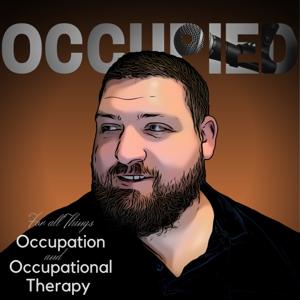
A podcast about Occupational Therapy for Occupational Therapists.

More shows like Occupied

Hamish & Andy by LiSTNR

Hamish & Andy

1,056 Listeners

No Filter by Mamamia Podcasts

No Filter

593 Listeners

Conversations by ABC Australia

Conversations

814 Listeners

Mamamia Out Loud by Mamamia Podcasts

Mamamia Out Loud

565 Listeners

Chat 10 Looks 3 by Chat 10 Looks 3

Chat 10 Looks 3

230 Listeners

Off Menu with Ed Gamble and James Acaster by Plosive

Off Menu with Ed Gamble and James Acaster

2,681 Listeners

Life Uncut by LiSTNR

Life Uncut

325 Listeners

Outspoken the Podcast by Outspoken the Podcast

Outspoken the Podcast

44 Listeners

The Imperfects by The Imperfects

The Imperfects

395 Listeners

Full Story by The Guardian

Full Story

162 Listeners

OT & Chill by OT Chill

OT & Chill

11 Listeners

The Case Of by ABC Australia

The Case Of

259 Listeners

Just The Gist by Just The Network

Just The Gist

64 Listeners

Alva Beach: Death At The Door by Tapt Media

Alva Beach: Death At The Door

21 Listeners