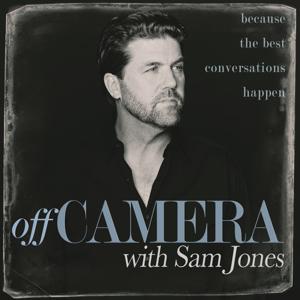
Off Camera with Sam Jones

Off Camera with Sam Jones

Download on the App Store

Off Camera with Sam Jones episodes

  • 164. Mary Elizabeth Winstead
    Mary Elizabeth Winstead’s first true love was the ballet, but her body had other plans, and she grew a bit too tall for the grande jeté. Luckily, her favorite parts about ballet—performing, telling a story, playing different characters—are all essential tenets of acting, and Mary found herself in love anew.
    Her early experiences acting reinforced her love of the craft, but as she got older, she struggled to find her artistic place in an industry where women are often saddled with objectification and unwanted sexual attention. But it was when Mary faced the prospect of quitting that she found her voice, and became willing to say no. She also started choosing roles that weren’t based on her beauty or desirability. “I’d always prefer to take a great role in a weird horror film over playing somebody’s girlfriend in another actor’s big vanity piece.”
    Her dedication is evident in her work. She’s turned in incredible performances in films like Smashed, Alex of Venice, and in Noah Hawley’s hit television series Fargo. That trend continues in her newest film All About Nina in which she plays a standup comedian who is struggling to grapple with her own emotional turmoil.
    Mary joins Off Camera to talk about the challenges she’s faced as a woman in Hollywood, why making a performance human and believable is so essential to storytelling, and why she’ll never step foot in a casting office bathroom.
    58 min
  • 163. Sissy Spacek
    Growing up, award-winning actress Sissy Spacek sang and danced her way through small town Texas talent shows, eventually realizing she was too big a fish for her small pond. By the time she was a teenager, Sissy set her sights on the music industry in New York City at the expense of a college education. “I went on a trip to New York, and I made friends who, at 14 years old, were top models and already working. I thought, ‘Oh god, I’m missing the boat! I’m getting old—I’ve got to get started.’”
    Sissy was searching for a creative experience more than anything, so when her music career failed to take off (“We like you, but you sound like an artist we already have. Her name’s Loretta Lynn.”), she was grateful that it opened doors for a career in acting—something she realized was equally fulfilling. “You know how you lose yourself in music? I remember singing to a thousand people and coming back into my body. It’s that idea of being swept away, getting lost in the creative process. And when I started acting, getting swept away by a scene, I realized it was the same thing.”
    She didn’t have to wait long to feel that way. Her second job was Terrence Malick’s 1973 film Badlands, and while she was falling in love with the creative process of filmmaking, which included things like falling asleep on set to wake up in character and chasing a breathtaking full moon for Malick’s perfect shot, she was also falling in love with her future husband Jack Fisk, a production designer on the film.
    Badlands set the bar high, but Sissy still marvels at the mysteriousness of the creative process and why/how it works. Even more remarkable—after such a long, acclaimed career, she still gets “swept away” by a powerful scene and a great character.
    Sissy joins Off Camera to talk about the life-changing role that she never wanted to let go, experiencing the “Robert Redford effect” for the first time in her new film Old Man and the Gun, and why it’s so important for her, as an artist, to live in the real world.
    1 hr 5 min
  • 162. Javier Bardem
    Acclaimed Spanish actor Javier Bardem comes from a long line of artists and filmmakers, but his love of cinema officially took shape when his mother, a working actress herself, snuck him into a movie theater to see Bob Fosse’s All that Jazz when he was 6 years old. It wasn’t exactly a Disney movie, but that didn’t matter—Javier was in awe. He wondered, “What is this mechanism of people, feelings, dance, music, colors, drama, and comedy? I want to be a part of that.”
    His passion and dedication to the craft are evident in his work—take his award-winning performances in the Coen brothers’ No Country for Old Men and Iñárritu’s Biutiful, to name a few. In his newest film Loving Pablo, Javier takes on the legend and mythology of Columbian drug lord Pablo Escobar and takes on an intensity and physicality that was even intimidating to his costar and wife Penélope Cruz. But Javier and Penélope know the difference between fiction and reality. As Javier says, “At the end of the day, I give her flowers and chocolates and say, ‘That was a lie.’ Even though it’s a part of my truth as a human being.’”
    Honesty is everything for Javier, even though it’s hard to attain on a daily basis. “We tell so many lies during the day because we need to protect who we are for others. When you play a character, you have to give up on that and be naked. And that’s why actors love acting—it may be the only time in the day where we are honest.”
    Javier joins Off Camera to talk about how being the target of senseless violence led him to discover his worth as an artist, why his marriage to Penélope Cruz works, and why therapy is the perfect tool for an actor.
    1 hr 3 min
  • 161. Eric Idle
    With Monty Python’s 50th anniversary coming up, Eric Idle thought it would be nice to put things in perspective for himself by writing a memoir, so he did, and the result, Always Look on the Bright Side of Life: A Sortabiography, is a comprehensive history of his life in comedy, and also a beautiful snapshot into the creative zeitgeist of London in the 1960s and 70s. But it also details the incredible hardships he overcame as a child and the double-edged sword that fame can be. Enlightenment came at a price for Eric, and his candor and honesty make his story engaging.
    Monty Python had a great impact on my own sense of humor and view of the world, and I was eager to talk to Eric about his origins in subversive humor. I found out that his anti-authoritarian personality has been a part of Eric’s identity ever since he was dropped off at age seven at boarding school, amongst a crowd of crying boys who had all lost their fathers, like Eric, in World War II. Despite his feelings of abandonment, boarding school taught Eric an important lesson about surviving hardship, whether it was bullying from older students or getting whacked with a cane by the headmaster. “I was funny and quick and that stopped me from being bullied. It’s hard for people to hit you if they’re laughing. It was a survival skill I developed there.” He also developed a keen eye for the absurd abuse of power that would become the basis of Monty Python’s unique sensibility.
    Somehow Eric made it all the way from the boarding school that “wasn’t the end of the world but you could see it from there,” to Cambridge University, where he found fellow future Pythons John Cleese, Graham Chapman, and Michael Palin. The rest, as they say, is comic history as Monty Python revolutionized sketch comedy on television (Monty Python’s Flying Circus), in film (Holy Grail, Life of Brian), and on stage (Spamalot) by being subversive and exploring hot-button subjects like religion, government, politics, silly walks, and dead parrots.
    Eric joins Off Camera to talk about why comedians feel compelled to seek approval and attention from strangers, about the challenges of being a solo writer, and the best advice he ever received…which just happened to be from a Beatle.
    1 hr 4 min
  • 160. Elizabeth Olsen
    It’s safe to say that Elizabeth Olsen didn’t have a normal childhood. As the other sister to the Olsen twins, Elizabeth Olsen had a front row seat to her sisters’ experience in the spotlight, media circus included, and she also witnessed what it was like to be a working actor—something she wanted to be but was embarrassed to admit. “I had this fear that people would think I didn’t earn or deserve the things I worked for because of who I was naturally associated with.”
    The nepotism critique motivated her to prove her worth, but that turned out to be the easy part. Elizabeth’s a hard worker by nature. After all, you don’t get dubbed NYU’s notorious “Rehearsal Nazi” for nothing. And very soon, people started taking notice, and Elizabeth started getting roles, including the one that led to her breakout performance in Martha Marcy May Marlene. Since then, Elizabeth has conquered the world of independent film (Wind River, Kodachrome, Ingrid Goes West) and the blockbuster world of Marvel’s Avengers franchise as superhero Scarlet Witch.
    Elizabeth is the kind of actor who loves the work and the craft, and she’s also the kind of artist who wants to take risks. In her newest project, Sorry for Your Loss, a Facebook Watch series that explores grief, she plays a widow trying to piece her life back together—not easy subject matter, but as you’ll see, Elizabeth will rise to any challenge thrown her way.
    Elizabeth joins Off Camera to talk about the biggest lesson she’s learned from her family, why she may be one of the few actors who likes to audition, and why she’s the most Zen type A person you’ll ever meet.
    59 min
  • 159. Chris Messina
    If things turned out differently, Chris Messina might have been the next Baryshnikov. But growing up, the other kids in his small Long Island town wouldn’t let him dance without a fight—the ensuing nickname “Ballerina Boy” and other more graphic homophobic slurs followed him around for most of his adolescence, as did a persistent questioning of his own identity.
    By the time Chris was asked to be in his school’s rendition of the musical Pippin, he almost didn’t do it. As he explains, “I was so scared to be in the musical, and scared to show people my dancing because I got beat up so much for it. But I remember going to school the day after my performance, and it felt like I was finally seen.”
    After that experience, Chris fell in love with the hard work of the craft. He dropped out of college to pursue acting full time, and after a brief stint trying to be Jack Kerouac, started winning roles in the theater and playing dark, complicated characters. In his mind, he was on his way to becoming his heroes (or antiheroes, more accurately) like DeNiro, Hackman, Walken, and Duvall. But then movies and TV happened, and Chris found himself with a “nice guy” problem. A series of roles in rom-coms like Julie & Julia and Vicki Cristina Barcelona and his multi-season work on The Mindy Project was taking him, in his mind, further from the mean streets of his acting dreams. And the simple fact is, Chris has the ability to disappear into any role he is offered—nefarious, noble-hearted, or otherwise. But for an actor who tends to question everything, Chris wondered if he saw himself differently than Hollywood did.
    Then along came Sharp Objects, director Jean-Marc Valée’s dark and disturbing discourse on family dysfunction, murder, and self-harm. Chris landed the part of the out of town detective, and turned in a performance that is subtle, dirty, and so realistic that you could swear that he wasn’t acting. Which, as he explains, he barely was. And for Chris, who longs to “get inside the engine and get dirty,” it was an experience that changed his whole approach to acting.
    Chris joins Off Camera to talk about feeling like an outsider, living a real-life actor’s nightmare, and the benefits of watching Chinatown over and over and over again.

    1 hr 2 min
  • 158. Paul Feig
    Writer and director Paul Feig has an uncanny ability to reflect humanity. He showed us the cringe-y and torturous moments of adolescence in the cult television show Freaks and Geeks, and in his female-centric, hit comedies Bridesmaids, Ghostbusters, and Spy, his characters are honest and realistic, in addition to hilarious. Paul’s at it again with his newest foray into the art of self-examination in A Simple Favor, a film starring Anna Kendrick and Blake Lively that examines the unsettling, dark underpinnings of friendship, marriage, and mommy blogs.
    A self-described “gentle giant,” Paul was an overly sensitive kid growing up, making him an attractive candidate for bullying. As Paul says, “When someone says the phrase ‘locker room talk,’ all I hear is me getting tortured. I don’t know why there aren’t laws against kids taking showers at school." But Paul’s sensitivity was also a blessing—it made him a better writer and performer, two things he always wanted to be.
    Luckily, being on stage (brandishing an amateur magic kit) was one of the few places where Paul felt appreciated as a teenager: “I used to do my magic act at retirement homes; that’s the circuit when you’re a young teen magician. I’d been so tortured in high school, so the only time I ever felt lauded or admired was when I was onstage.” With that little bit of positive reinforcement, Paul decided to strike out for Hollywood. He took an initial 20 year detour as an actor, but eventually found his way to writing and directing after a particularly inspiring conversation with director John Landis. Paul walked out of that conversation saying, “I want to be that guy. I want to be a director.” And we’re all better off for it.
    Paul joins Off Camera to talk about the humiliating moment that led him to give up acting in favor of directing, the key to making a successful comedy, and why he hates questions that start with “Why…?”
    1 hr 5 min
  • 157. Uzo Aduba
    After a particularly disheartening audition, Uzo Aduba sat on the NYC subway in tears, resigning herself to the fact that she’d never be a working television actor. “Uzo, acting is not for you. This is the universe telling you that this will never be yours,” she said to herself. So, with sushi takeout and a bottle of wine in hand, Uzo made her decision to quit, praying, “God, if you can figure out a way for me to go back to school and become a lawyer, I will go.” Of course, the universe had other plans. Forty-five minutes after arriving home, Uzo received the call offering her the role of Suzanne “Crazy Eyes” Warren in Netflix’s Orange is the New Black.
    Growing up in a nearly all-white Massachusetts suburb, Uzo was accustomed to feeling her otherness and perceiving those differences (from her Nigerian heritage, to the food she brought to lunch, to the gap in her teeth) as undesirable. Coming to terms with her self-image was a struggle, but she received a lot of help from her mom. “My mom’s the most amazing person in the world—she gave me the belief that I was enough, just the way I was.”
    She’s carried that lesson to Orange is the New Black. Uzo’s own personal struggle with identity is a large reason why the show, which has such a diverse and wide-ranging female cast, is so powerful to her. As she says, “Having been someone who felt unseen since childhood, to be on a show that tells the story of people who are unseen is powerful. I work with a cast of women who have been unseen, so for us to be sitting on television, being celebrated for our work is the greatest gift that I have ever been given.”
    Uzo joins Off Camera to explain why she’s so protective of her character Suzanne, how her mom perfected the art of Miyagi-ing, and why acting is really just like skydiving.
    1 hr
  • 156. Awkwafina
    Awkwafina (also known as Nora Lum) is having quite a moment. She's a part of the impressive cast of female icons (Sandra Bullock, Rihanna, Cate Blanchett, and more) in Ocean’s 8, and she’s so hilarious in Crazy Rich Asians that you’ll barely hear her next line over the sound of your own laughter. What does this moment in the spotlight feel like? Awkwafina likens it to this: “I compare it to a wall opening up and transporting you to an alternate dimension where there is no gravity, and everything is weird.”
    Her initial shock isn’t so strange when you consider the fact that she never allowed herself to dream of a career in the arts, and there weren’t exactly any female Asian-American actress/rapper hybrids to pave the road to possibility. Awkwafina tried to follow the path that her friends took after college, but living the buttoned-up office life of a publicity assistant in Manhattan wasn’t really her thing. When her boss made her choose between her music and her unfulfilling job, it wasn’t much of a contest—not only because she got fired, but especially because her identity was at stake. As she explains, “If I didn’t have my music, then I didn’t have an identity.”
    With nothing to lose, she decided to post her “My Vag” music video on Youtube, in which she hilariously raps about the superiority of her genitalia. After the push of a “Publish” button, Awkwafina became a viral success—and the rest is herstory.
    As the first Asian-American actress/rapper of any consequence, Awkwafina acknowledges, “Being the first sucks, but I found what I love. I found what I always dreamt of as a kid that would connect with adulthood. It’s so powerful for me. I finally feel like I can walk and know what I’m doing. I know why I’m there.”
    Awkwafina joins Off Camera to talk about embracing the responsibility that comes with being an Asian-American actor in Hollywood, discovering her comedic talents post personal tragedy, and why Margaret Cho is her spirit animal.
    1 hr 6 min
  • 155. Chris O'Dowd
    Since his role in Bridesmaids as the charming and lovable cop who really hates littering and broken taillights, Irish-born actor Chris O’Dowd has taken audiences by storm. There was his captivating Tony award-winning performance on Broadway as Lenny in John Steinbeck’s Of Mice and Men, and Moone Boy, a show about his upbringing that he wrote, produced, and starred in. Most recently, he’s kicking butt and taking names (and scripts and meetings) as an Irish-mobster-turned-Hollywood-producer alongside Ray Romano in Get Shorty.
    Though you can find Chris on television, in films, and in theaters these days, Hollywood success wasn’t always a sure bet for Chris. In fact, for many years, his career was so touch and go that he had to watch his first appearance on Conan at a local bar because his cable had just been cut off due to not being able to pay his bill.
    Chris tried his luck in America after achieving enough fame in the U.K. to realize the limits of staying in London. He didn’t have much of a plan, but he was lucky enough to have a few people in his corner, including Bridesmaids’ director Paul Feig, who was a huge fan of Chris’ work in the British sitcom The IT Crowd. After seeing the impressive list of actors he was up against, Chris was so sure he wasn’t going to get his iconic role in Bridesmaids that it actually took all of the pressure off the audition, which in turn, helped him get the role. Or as he says, “I’ve learned to lower my expectations, and that has worked out for me.”
    Chris tells me about that epiphany and much more when he joins Off Camera to talk about the moment he discovered he was into the “drama weirdos,” why tragedy is an essential element of comedy, and the proper way to speak pirate (Hint: It’s not “Oo-argh!”).
    1 hr 3 min

About Off Camera with Sam Jones

From the publisher's feed

Off Camera is a podcast hosted by photographer/director Sam Jones, who created the show out of his passion for the long form conversational interview, and as a way to share his conversations with a…

More shows like Off Camera with Sam Jones

WTF with Marc Maron Podcast by Marc Maron

WTF with Marc Maron Podcast

28,893 Listeners

Happy Sad Confused by Josh Horowitz

Happy Sad Confused

1,281 Listeners

Awards Chatter by The Hollywood Reporter

Awards Chatter

1,343 Listeners

IndieWire's Filmmaker Toolkit by Chris O'Falt

IndieWire's Filmmaker Toolkit

109 Listeners

In the Envelope: The Actor’s Podcast by Backstage

In the Envelope: The Actor’s Podcast

180 Listeners

Armchair Expert with Dax Shepard by Armchair Umbrella

Armchair Expert with Dax Shepard

69,560 Listeners

Conan O’Brien Needs A Friend by Team Coco & Earwolf

Conan O’Brien Needs A Friend

59,373 Listeners

The Three Questions with Andy Richter by Team Coco & Earwolf

The Three Questions with Andy Richter

3,610 Listeners

Literally! With Rob Lowe by Stitcher & Team Coco, Rob Lowe

Literally! With Rob Lowe

12,390 Listeners

Mike Birbiglia's Working It Out by Mike Birbiglia

Mike Birbiglia's Working It Out

4,588 Listeners

SmartLess by Jason Bateman, Sean Hayes, Will Arnett

SmartLess

57,744 Listeners

Blocks: I Wish I Knew w/ Neal Brennan by Neal Brennan

Blocks: I Wish I Knew w/ Neal Brennan

1,377 Listeners

Family Trips with the Meyers Brothers by Seth Meyers and Josh Meyers

Family Trips with the Meyers Brothers

2,869 Listeners

Where Everybody Knows Your Name with Ted Danson and Woody Harrelson (sometimes) by Team Coco & Ted Danson, Woody Harrelson

Where Everybody Knows Your Name with Ted Danson and Woody Harrelson (sometimes)

3,408 Listeners

Good Hang with Amy Poehler by The Ringer

Good Hang with Amy Poehler

12,445 Listeners