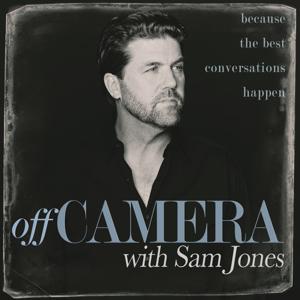
Off Camera with Sam Jones

Off Camera with Sam Jones

Download on the App Store

Off Camera with Sam Jones episodes

  • 154. Rose Byrne
    Even with all of her success, Rose Byrne still spent years of her career wailing and breaking down in audition rooms. As she says, “Women often have to start with a break down scene in auditions. Do guys have to do this? No. It’s such a cliché, but it’s always crying…or she’s got her top off. The classic hits of what the female character’s doing.”
    Luckily, Rose hasn’t been limited to those “classic hits.” Her break out performance in America came opposite Glenn Close in FX’s thrilling legal drama series Damages, a show that was ahead of its time with two strong female protagonists. Since then, she’s flourished in big budget comedies like the female-centric films Bridesmaids and Spy, and she’s shown off her “rowdy Aussie” side (not the stereotypical woman-as-buzzkill-in-comedy side) in Neighbors, opposite Seth Rogan.
    Her most recent film is Juliet, Naked, a small film based on the Nick Hornby novel of the same name. Shooting a small film in a quiet, seaside village in England is a big change from big budget Hollywood, but the experience is quite familiar to Rose, bringing her back to her Australian roots.
    Reflecting back on where she’s come from is a theme for Rose, especially when she’s struggling to maintain a “thick skin” after rejection or when the harsh self-critic is a little too loud in her head. After taking some advice from a friend, Rose agrees, “You have to look back and look how far you’ve come, because it’s the only way you can give yourself a break.” Indeed.
    Rose joins Off Camera to discuss the most challenging aspect of being an actress in the public eye, how following her intuition serves her well as an actor, and why a successful comedy film like Bridesmaids is really just lightning in a bottle.
    1 hr 3 min
  • 153. Betty Gilpin
    Before she was body slamming opponents as her wrestling alter-ego Liberty Belle in GLOW, Betty Gilpin was coming to terms with her own self-perception—the beta personality who sat with the bugs and observed human behavior as a kid wasn’t matching with what the industry saw on the outside. They noticed her beauty and her body, but failed to notice her “monster soup.” She pulls no punches about her own career, describing many of the parts she got as one-dimensional female stereotypes, or “Voldemort Drag Bimbo Barbies.”
    All Betty wanted was a role that reflected her ultra-creative insides, which makes sense when you consider that both her parents were theater actors, and she spent her childhood in the playhouses of New York City. “I grew up with the sense that there’s a magic underbelly to the world—a tribe of these special clown people who gossip while putting on false eyelashes and hand out Werther’s candies while you listen to the play over the intercom.”
    The magic she experienced as a kid is something she's trying desperately to hold on to and not take for granted. As someone who has struggled with insecurity, Betty warns, “You don’t want all of the doors to creativity to close because you’re so worried about being judged.”
    After five arduous auditions for GLOW, the role of a lifetime was finally hers, and it represented a sea change for Betty. She’s valued for her insides, the weird creative parts that want to roam free, and her body is seen as an example of female empowerment, not as a sex symbol custom made for the male gaze.  "I'm in a race to get to a place where I love myself, so when the things that the patriarchy has told me are valuable about myself start to leave and fade and wrinkle beautifully, I can say, 'Oh, I don't think that about myself anymore.'"
    Betty joins Off Camera to discuss why her brain resembles a Pixar movie, what “monster soup” is and why it’s so important to her, the emotional and physical break down that changed her life, and what it really feels like to be an actress. Like, really, honestly, what it feels like.
    1 hr 2 min
  • 152. Keri Russell
    After an exhausting 16-hour workday on the set of Felicity, Keri Russell treated herself to a matinée at a movie theater in Santa Monica, and a group of girls her age caught her eye. She remembers, "They were just a group of friends going on a fun road trip together, and I cried because I wanted that life. I just wanted to be a teenager."
    Fame and the responsibilities of work are not without their challenges, especially for a girl whose childhood was put on hold after being cast in Disney's Mickey Mouse Club and later, the hit WB series Felicity. As Keri explains, "You’re supposed to mess up when you’re a kid, and it’s supposed to be okay. When money is riding on you, you grow up so fast." Keri had the wherewithal to take a break after Felicity and catch up on what she missed: wandering New York City, reading books, and being a young adult without a hit television show riding on her shoulders.
    After her hiatus, Keri found that delicate balance between working as an actor and having enough breathing room to be happy doing it. But getting out from under the image of the aspirational, good natured America's sweetheart as Felicity proved to be difficult. Keri says, "I certainly played a lot of nice moms for a long time. In my 20's and 30's, there was something about my face that screamed nice pregnant girl.”
    Luckily for Keri, The Americans came along and mixed things up for her, professionally and personally. In the hit FX series, she plays the anti-America's Sweetheart—a Russian spy—along with her on- and off-screen husband Matthew Rhys. For someone seeking a balance between her work and personal life, she really nailed it with The Americans. (Even though you'll never hear her say, "Nailed it!" after an audition.)
    Keri joins Off Camera to discuss the creepy factor of being a child actor, what makes her Americans' character Elizabeth so unique, and how taking her favorite disguises from the show out for a spin can give her a taste of the simple life.
    58 min
  • 151. Alison Brie
    After spending seven years on AMC’s Mad Men and NBC’s Community, Alison Brie decided to take some time off from television. It wasn’t until she read a script based on the 80’s female wrestling show G.L.O.W. (“Gorgeous Ladies of Wrestling”), that Alison decided to dive back into TV. Problem was—even with her past success, the show’s executives just weren’t convinced she could do it. Alison had to fight for the role of Ruth and endure a drawn out, emotional rollercoaster ride of an audition process. As she says, “I would go from thinking, ‘Yes! I’m amazing!’ to sobbing in my car and thinking, ‘Oh god, it’s never going to happen!’”
    She was content to let her desire show, ignoring the old adage of never letting your desperation show in an audition. “I don’t really care for being aloof, so it’s never going to be the vibe I put out. I wear my heart on my sleeve, and that’s definitely a similarity I share with Ruth.”
    Her journey to the show may have been difficult, but her experience on the set of GLOW has been magical. She says the show is like fantasy fulfillment—she gets to play a woman who goes after what she wants. Alison’s also getting a taste of the empowerment that comes when women have ownership over stories about women.
    Alison joins Off Camera to discuss how the stunts on GLOW are real and really dangerous, how dealing with sexual harassment in character forced her to come to terms with her own #MeToo experiences, and what to do when you are acting with Meryl Streep. Hint: Keep your mouth shut and try to steal all her tricks!
    1 hr 4 min
  • 150. Rachel Brosnahan
    Ever since she was a little girl traveling back and forth between Chicago and London with a carry-on bag filled with books, Rachel Brosnahan has been a lover of storytelling. Eventually, the joy of entering the world of fantasy and exploring her imagination opened Rachel’s eyes to the performing arts. By the time she applied to college, becoming an actress was her goal, despite the concerns of her parents. As Rachel says, “Nobody wants their kid to come home and say, ‘Mom, Dad, I’m going to be an actor.’ My parents were terrified. They were like, ‘But you’re so smart! Please do something else.’”
    Rachel wouldn’t budge from her dream, but the resistance from her parents served her well, and fostered a sense of independence and determination. As she says, “If you tell me I can’t, I’m going to do it, and I’m going to go all the way.” That focus paid off. After four years at NYU’s prestigious Tisch School, Rachel landed a role in Netflix’s hit series House of Cards as the mysterious call-girl Rachel Posner. What was originally a two-episode commitment turned into a reoccurring role and a launching pad for Rachel's career, including projects like Manhattan and most recently, The Marvelous Mrs. Maisel, for which she won a Golden Globe.
    As Midge Maisel, Rachel takes on her first lead role as a housewife who accidentally discovers she is a comedian in 1950’s New York City. The role required a deep commitment into research about the era, feminism, and stand up comedy, which came with a fair amount of discomfort. As Rachel says, “When I really love something, I’m the most anxious about it and feel the most vulnerable doing it. I feel fulfilled and petrified simultaneously, and it’s the best feeling.” That’s why Rachel believes suffering for her art is a necessary part of the process because if “[she] doesn’t feel absolutely terrible, it’s probably not very good.” She did draw the line at actually performing stand up, however, explaining that if she was playing a doctor, she wouldn’t actually perform surgery as part of her research. Fair point.
    Rachel joins Off Camera to discuss why it's so difficult to teach art, the depths she’ll go to research and mine a character, and what really happens between chapter 3 and chapter 4.
    1 hr 4 min
  • 149. Sarah Paulson
    From the outside, it would appear that Sarah Paulson, after her Emmy award-winning performance as prosecutor Marcia Clark in The People v. O.J. Simpson, has "made it." She's got a role in Ocean's 8, her first "big sh**-kicker, popcorn movie,” and has the luxury of sifting through multiple film and television offers to choose a part that “sparks something inside of her.” What more could an actor want?
    But that's exactly the problem for Sarah. She wants the want. Without it, she finds herself in a bit of an identity crisis. She wants to fight for roles and be challenged by an acting part that requires total commitment. As she explains, “Before Marcia Clark, I was full of all that want. I don’t have that anymore.”
    The road to this point was not an easy one for Sarah. She never had her Cannes or Sundance moment like peers Carey Mulligan or Maggie Gyllenhaal. She fought hard for many pilots that never saw the light of day. When she did get her big break, on Aaron Sorkin’s Studio 60 on the Sunset Strip, it was cancelled after one season. Luckily, Ryan Murphy eventually came into her life. The prolific producer, writer, and director saw Sarah’s unique talent of being able to completely disappear into characters, and immediately started casting her in projects like The People v. O.J. Simpson and American Horror Story. She's finally being seen, and she gives full credit to Murphy for continuing to throw her "the juiciest, meatiest bones on the planet." And lucky for us, she’s still hungry.
    Sarah joins Off Camera to discuss why being an actor (or a person, for that matter) is not for the faint of heart, what's behind her decision not to watch her own performances, and why you’d better not fall asleep on a plane!
    1 hr 6 min
  • 148. Natasha Leggero
    How long can you continue to hear the word “no” before you lose confidence in your dream? If you’re Natasha Leggero, the answer is never. Rockford, Illinois was not a kind place for the aspiring actress. There was the art teacher who told her she’d never be an artist, the English teacher who told her she’d never be a writer, and her mother, who told her not to go to New York City. As Natasha says, “They aren’t looking at the big picture in a small town. They’re raising people to work at Walmart.”
    When she finally made the decision to buck conventional wisdom and go to New York, she was met with more emphatic “no’s”—including one from a talent agent who told Natasha that she was too short to be an actress. (Al Flanagan, where are you now?) Despondent but undeterred, Natasha left New York to try her luck in Los Angeles, and shortly thereafter stumbled upon the Comedy Store in Los Angeles. After watching an aspiring actress friend at an open mic, she was hooked. As she says, “I never really knew what standup was. I didn’t know you could dress cool and talk about how dumb everyone was. I didn’t know you could be a modern girl and talk about your thoughts.”
    With some hard work and a little courage (in the form of Valium), Natasha’s first set went amazingly well, which was exactly what she needed after all those “no’s.” As she explains, “If I had bombed, I don’t know if I would have gotten back up there.”
    Thankfully they all laughed, because since that night, Natasha’s comedy and acting careers have been on a forward march. She’s the showrunner and costar of Comedy Central’s Another Period and her joint comedy special with her husband and fellow comedian Moshe Kasher called The Honeymoon Stand Up Special is out now on Netflix.
    Natasha joins Off Camera to discuss why comedians make the best company, why public transportation can be a comedy goldmine, and why nothing is sacred when you’re in a relationship with a comedian.
    1 hr 7 min
  • 147. Peter Krause
    Peter Krause has been a fixture on quality television for the past 20 years, starting with Aaron Sorkin’s critically acclaimed and gone too soon debut, Sports Night. Soon after, Peter played Nate Fisher in HBO's Six Feet Under, exploring the concept of death in a way that was deeply moving to both the audience and to Peter personally. Then came Parenthood, another deeply moving series, in which his character Adam Braverman became the benchmark for being a good husband and father.  These days, Peter's trying to save lives as Bobby Nash, a Los Angeles fire captain with a dark past, in Ryan Murphy's "procedural drama on steroids," 9-1-1. What ties all of these shows together is Peter’s ability to illuminate the human condition, a skill he learned in acting school at NYU, and something he takes very seriously.
    Part of what makes Peter so magnetic as an actor is his ability to shed light on the inner struggle that we all go through. He has a way of communicating subtle emotions that hold a mirror up to the audience. But that doesn’t come without a price. As Peter says, "It can be hard to live inside a character's skin. I don't think you ever completely abandon yourself when you take on a character, but your sense of self does become fluid in the process. Sometimes I just want to be me for a while.” He's been grappling with questions of identity and authenticity ever since he was a kid growing up in Minnesota, observing and analyzing the behaviors of those around him. And that wasn’t always easy either. Peter struggled with his relationship with his father, and often had to find his own way without the support or understanding of his talents and desires.
    All of that introspection has served him well in his career and in his life because, as Peter says, "To understand your powers and your limitations is the point of being a human being."  Peter not only understands his powers and limitations, he understands ours, and that is why he is so mesmerizing to watch.
    Peter joins Off Camera to discuss discovering acting, why playing a character who is too familiar is terrifying, how the baritone horn became the source of his teenage rebellion, and what it's like to be a hero to funeral directors nationwide.
    1 hr 2 min
  • 146. John Mulaney
    It all started with Ricky Ricardo and I Love Lucy. That's when young John Mulaney discovered the appeal of life in show business. Add his love of "everything funny" and some outrageous childhood experiences to the mix, and it's no wonder John became a comedian, even if it's an unexpected choice for the son of two lawyers.
    John had a knack for wordplay and joke rhythms as a kid, but he started fleshing out his skills when he joined Georgetown's improv troupe, a breeding ground for comics like Nick Kroll and Mike Birbiglia. Discomfort and anxiety plagued John early on, but joining Birbiglia's standup tour helped him overcome the awkwardness of being on stage. As John says, "Mike absolutely turned me into a comedian. The tour was life-changing; I wanted to do standup every night after that."
    John also spent six seasons as a comedy writer for Saturday Night Live, and he was the brains behind fan-favorite sketches and characters like Bill Hader's Stefon. The job came with a lot of responsibility, but John loved it. He says, "I was like a producer of live TV at 25. Once my sketch was picked, I would go around to every department, discussing with them how it would look, the costume, set, everything you were hoping for."
    These days, John's making us laugh with his standup. His Netflix comedy special John Mulaney: Kid Gorgeous at Radio City offers a hilarious glimpse of his childhood and family life. When he's on tour, John spends his nights onstage talking about the things that make him absolutely crazy or delight him. Looks like his Ricky Ricardo dream lives on.
    John joins Off Camera to discuss mining his life for comedy, why the best approach in life is one without expectations, and why we all need a little bit of Street Smarts in our lives.
    1 hr 5 min
  • 145. Jason Isbell
    Growing up poor to parents barely past their own adolescence was not without its struggles, but luckily for Jason Isbell, familial bonds run deep in rural Alabama. Unable to afford daycare, Jason's parents often dropped him at his grandparent’s, where he spent the day playing music. As Jason says, "From the time I was seven years old, I would take this huge Dreadnought guitar and play old gospel rhythms and country with my grandad. It was bluegrass all day long, and that was my first real interaction with anything creative."
    Jason's obsession with the guitar was evident to his family. So much so, that the one punishment that was off-limits was taking away said guitar. He even slept with guitar because once he realized he could play, being a musician was the only thing that entered his mind. His passion and focus led teenage Jason to the live music scene in Muscle Shoals, a recording studio mecca in Alabama. He played alongside seasoned musicians like David Hood, who provided wisdom and expertise to Jason, whose confidence was "way beyond where it should have been." Eventually Jason joined Drive-By Truckers, Hood's son Patterson's band, which exposed him to the spoils and temptations of the rock and roll lifestyle.
    After a number of tumultuous years with the Truckers, Jason realized that collaboration was not necessarily his strong suit. After a stint in rehab, Jason began his solo career and formed his own band, The 400 Unit (wait until you hear about the origin of that name!). Since that time, Jason has developed into one of the greatest songwriters of his or any other generation as evidenced by his singing and songwriting on Southeastern, Something More Than Free, and his newest album The Nashville Sound.
    It's refreshing to sit down with an artist who is so focused on protecting the integrity of his art, because, as he says, "Good art reminds you of your similarities rather than your differences, and bad art reminds you so much of your differences."
    Jason joins Off Camera to discuss the moment he discovered that he was a songwriter, how there's no such thing as writer's block, and why it's cool to walk around with his pants down (emotionally, that is).

    1 hr 7 min

About Off Camera with Sam Jones

From the publisher's feed

Off Camera is a podcast hosted by photographer/director Sam Jones, who created the show out of his passion for the long form conversational interview, and as a way to share his conversations with a…

More shows like Off Camera with Sam Jones

WTF with Marc Maron Podcast by Marc Maron

WTF with Marc Maron Podcast

28,893 Listeners

Happy Sad Confused by Josh Horowitz

Happy Sad Confused

1,281 Listeners

Awards Chatter by The Hollywood Reporter

Awards Chatter

1,343 Listeners

IndieWire's Filmmaker Toolkit by Chris O'Falt

IndieWire's Filmmaker Toolkit

109 Listeners

In the Envelope: The Actor’s Podcast by Backstage

In the Envelope: The Actor’s Podcast

180 Listeners

Armchair Expert with Dax Shepard by Armchair Umbrella

Armchair Expert with Dax Shepard

69,560 Listeners

Conan O’Brien Needs A Friend by Team Coco & Earwolf

Conan O’Brien Needs A Friend

59,373 Listeners

The Three Questions with Andy Richter by Team Coco & Earwolf

The Three Questions with Andy Richter

3,610 Listeners

Literally! With Rob Lowe by Stitcher & Team Coco, Rob Lowe

Literally! With Rob Lowe

12,390 Listeners

Mike Birbiglia's Working It Out by Mike Birbiglia

Mike Birbiglia's Working It Out

4,588 Listeners

SmartLess by Jason Bateman, Sean Hayes, Will Arnett

SmartLess

57,744 Listeners

Blocks: I Wish I Knew w/ Neal Brennan by Neal Brennan

Blocks: I Wish I Knew w/ Neal Brennan

1,377 Listeners

Family Trips with the Meyers Brothers by Seth Meyers and Josh Meyers

Family Trips with the Meyers Brothers

2,869 Listeners

Where Everybody Knows Your Name with Ted Danson and Woody Harrelson (sometimes) by Team Coco & Ted Danson, Woody Harrelson

Where Everybody Knows Your Name with Ted Danson and Woody Harrelson (sometimes)

3,408 Listeners

Good Hang with Amy Poehler by The Ringer

Good Hang with Amy Poehler

12,445 Listeners