
Sign up to save your podcasts
Or



David Edelman is a Harvard Business School Fellow and Executive Advisor at BCG. David spent over 30 years as a chief marketing officer at Aetna/CVS, as well as building consultancy businesses in digital and marketing transformation while with McKinsey, Digitas, and BCG. He now teaches marketing at Harvard Business School and serves as an advisor to top executives in startups, private equity, and larger enterprises.
In this discussion, we dive into David’s book, Personalized: Customer Strategy in the Age of AI, coauthored with Mark Abraham, which helps executives learn how to put personalization at the center of their strategy, accelerate growth, and capture their share of the value personalization creates.
In this episode, he shares:
_______________________________________________________________________________
Episode Timeline:
00:00—Highlight from today's episode
1:00—Introducing David+ the topic of today’s episode
3:20—If you really know me, you know that...
4:25—What is your definition of strategy
05:05—The true meaning of personalization
06:55—A surprising experience in personalization
10:04—Technological advances enabling personalization
13:10—Ecosystem-based personalized solutions
17:40—The five promises of personalization
21:25—Starting with empowerment before data collection
23:34—The sequential implementation of personalization
26:41—Measuring personalization effectiveness with a personalization index
30:06—How can people follow you and continue learning from you?
_______________________________________________________________________________________
Additional Resources:
Personal website: www.edelmanadvisoryservices.com
Link to book: Personalized: Customer Strategy in the Age of AI
Linkedin: www.linkedin.com/in/daveedelman
Rebecca Homkes, is a high-growth strategy expert and CEO and executive advisor. She is a Lecturer at London Business School, Faculty at Duke Corporate Executive Education, Advisor and Faculty at the Boston Consulting Group focused on AI and Digital Transformation and a former fellow at the London School of Economics Centre for Economic Performance.
A global keynote speaker and recognized thought leader, she is also the global Faculty Director of the Active Learning Program with the Young Presidents Organization (YPO), leads several fintech accelerators, and serves on the boards of many high-growth companies.
Rebecca's multifaceted roles give us a uniquely wide and deep perspective on how companies grow. Her work challenges us to realize that the mechanical, linear paradigm of strategy making that has dominated the field for the last 60-odd years cannot deliver sustained growth in volatility of today’s rapidly-changing world. She shares an alternative approach in her 2024 book Survive, Reset, Thrive: Leading Breakthrough Growth Strategy in Volatile Times.
In this conversation, we dive into some of her powerful techniques around arming your company with the right mindset for the right time, and building a company that can learn and adapt through change.
In this podcast, Rebecca shares:
_______________________________________________________________________________
Episode Timeline:
00:00—Highlight from today's episode
1:06—Introducing Rebecca + the topic of today’s episode
3:23—If you really know me, you know that...
4:32—What is your definition of strategy
05:10—The "survive, reset, thrive" framework
8:30—The learning loop vs. linear thinking
10:20—Parrel paths: strategy and executing
12:59— Beliefs and critical assumptions in strategy
17:28—Addressing AI uncertainty in strategy
19:23—Balancing waiting and acting in strategy
20:48—Identify your learning loops
22:51—Learning velocity as a growth differentiator
24:41—The dynamics of survive, reset, and thrive modes
28:05—The three elements of thriving organizations
29:15—How can people follow you and continue learning from you?
_______________________________________________________________________________________
Additional Resources:
Personal website: www.rebeccahomkes.com
Link to book: Survive, Reset, Thrive
Linkedin: www.linkedin.com/in/rebecca-homkes/
William Duggan is lecturer of strategy and innovation at Columbia Business School, and the author of four books on innovation: Strategic Intuition: The Creative Spark in Human Achievement (2007); Creative Strategy: A Guide for Innovation (2012); and The Seventh Sense: How Flashes of Insight Change Your Life (2015), and his most recent work: Corporate Innovator: A Guide Through the Labyrinth, published in 2024.
In his book, Bill covers employee-driven innovation. Bill dives deep into a dilemma he found resurfacing time and again in his research from interviews he conducted: the seemingly never-ending maze that corporate employees face in trying to bring their ideas to reality.
Here we cover insights from his into how employees can navigate “the corporate labyrinth,” and how employers can lower the obstacles they (usually unwittingly) put in the path of would-be internal innovators.
In this podcast, he shares:
_______________________________________________________________________________
Episode Timeline:
00:00—Highlight from today's episode
1:20—Introducing Bill + the topic of today’s episode
3:37—If you really know me, you know that...
4:26—Defining strategy
04:54—Motivation that lead to writing Corporate Innovator
07:17—Research approach for Corporate Innovator
9:36—The corporate labyrinth
11:55—Where innovative ideas come from
13:38—Techniques for generating more ideas
15:24—The idea hierarchy obstacle
18:08—Tunnel vision and the core business
20:15—The Ally Maze: managing up, across, and down
22:41—Tyranny of the team
24:29—Mind games
24:41—Effective language for discussing new ideas with your team
24:38—Handling "bad" ideas constructively
27:10—How can people follow you and continue learning from you?
_______________________________________________________________________________________
Additional Resources:
Faculty page: https://business.columbia.edu/faculty/people/william-duggan
Link to book: Corporate Innovator: A Guide Through the Labyrinth
Frederik Pferdt is Google's first Chief Innovation Evangelist and author of "WHAT'S NEXT IS NOW: How To Live Future Ready.”
During his time at Google, Frederik played a pivotal role in shaping one of the world's most renowned creative cultures. He founded Google's Innovation Lab, where he trained tens of thousands of Googlers to develop and experiment with cutting-edge ideas. For over a decade, he also taught groundbreaking classes on innovation and creativity at Stanford University.
Something that shines through Frederik’s work is his eternal optimism and emphasis on an active creation of the future, rather than passive prediction. This perspective challenges us to think differently about innovation and our role in shaping the future.
In this episode, Frederik shares:
_______________________________________________________________________________
Episode Timeline:
00:00—Highlight from today's episode
1:16—Introducing Frederik + the topic of today’s episode
3:38—If you really know me, you know that...
6:32— Defining strategy: Envisioning the future and designing experiments
07:52—Desired versus predictive future
09:51—The core idea of Frederik's book
11:41— The five dimensions of a future-ready mindset
15:14— Embracing optimism in innovation
17:26— Reimagining work: Using metaphors to envision the future
21:16— The mistake of relying on predictions and trends
23:20— The evolution of life's priorities: From objects to relationships
26:10— The power of reframing: Transforming challenges into opportunities
28:12— The science behind optimism and the benefits of gratitude
31:08—How can people follow you and continue learning from you?
_______________________________________________________________________________________
Additional Resources:
Personal website: www.frederikgpferdt.com
Link to book: What's Next Is Now: How to Live Future Ready
LinkedIn: www.linkedin.com/in/fgpferdt/
Instagram: www.instagram.com/frederikgpferdt/
Brian Evergreen, author of Autonomous Transformation: Creating a More Human Future in the Era of Artificial Intelligence, named a Next Big Idea “Must-Read” and for which Brian was shortlisted for the 2023 Thinkers50 Breakthrough Idea Award.
Building on his experiences working at Accenture, Amazon Web Services, and Microsoft, Brian advises and speaks to organizations around the world, guest lectures at Purdue University and the Kellogg School of Management, sharing the unconventional and innovative methods and frameworks he developed leading and advising Digital Transformation initiatives at many of the world's most valuable companies. There are very few people in the world who has had as much experience of Brian facilitating strategic conversations that lead to big, breakthrough ideas.
At the core of Brian’s ideas is that in this age of accelerated AI, there is not only room for—but a dire need for human reasoning to remain a core component of business strategy in what he calls “autonomous transformation,” which contrast with and complements what we all call digital transformation.
In this podcast, he shares:
_____________________________________________________________________________
Episode Timeline:
00:00—Highlight from today's episode
1:09—Introducing Brian + the topic of today’s episode
2:56—If you really know me, you know that...
3:29— How chess shaped Brian's approach to strategy
04:49— Defining strategy: a decision tree framework
05:56— Challenges of strategy implementation in organizations
06:58— Reformation vs. transformation, the key differences
09:17— Knowing when to build from scratch
11:24— Reason driven framework for strategic decision making
14:16— Data vs. reason: Why reason driven decision making is crucial
24:22— Steps of the reason-driven framework
28:48— Digital vs. autonomous transformation
33:43—Solving for the future
_______________________________________________________________________________________
Additional Resources:
Link to personal website: www.brianevergreen.com
Link to book: Autonomous Transformation: Creating a More Human Future in the Era of Artificial Intelligence
LinkedIn: www.linkedin.com/in/brianevergreen/
Cristina Alaimo, is the Assistant Professor of Digital Economy and Society at Guido Carli University in Rome, Italy and soon to be Associate Professor at ESSEC Business School in France.
Her research focuses on innovation catalyzed by data-based services and the consequences it has on organizations and society. Cristina also studies the broader ecosystem of data exchanges in which digital platforms are embedded and how these new platform ecosystems emerge and evolve.
In her recently released book, DATA RULES: Reinventing the Market Economy, Cristina and her co-author Jannis Kallinikos, dive deep into the unprecedented social and economic restructuring brought about by data.
In this episode, we discuss:
_______________________________________________________________________________
Episode Timeline:
00:00—Highlight from today's episode
1:01—Introducing Cristina + the topic of today’s episode
2:55—If you really know me, you know that...
3:48—What's your definition of strategy?
04:52—The historical function of data
08:40—The link between data and institutions
11:55—The interrelation between data and writing
15:12—The four functions of data
18:08—The data making process
22:43—Data's impact on ecosystems and platforms
26:38—TripAdvisor case study
30:25—Redefining industry concepts
33:02—Future of competitive advantage
37:44—How can people follow you and continue learning from you?
_______________________________________________________________________________________
Additional Resources:
Link to book: DATA RULES: Reinventing the Market Economy
LinkedIn: https://www.linkedin.com/in/cristinaalaimo/
X: https://x.com/cristina_alaimo
Stephan Meier, is Chair of the Management Division and the James P. Gorman Professor of Business Strategy at Columbia Business School whose work lies at the intersection of behavioral economics, business strategy, and the future of work.
Customer-centricity has long been at the forefront of conversations that involve optimizing profit, with the idea that happy customers lead to increased revenues. But a new theory is quickly gaining traction—that employee-centricity is just as important.
Stephen is a big advocate for the idea that happy employees not only boost company morale, but have a clear direct correlation on the bottom line. In his upcoming October 2024 book, The Employee Advantage: How Putting Workers First Helps Business Thrive, he collects fascinating case studies and insights from his research to showcase how businesses that invest in employee experience often outperform others.
___________________________________________________________________
In this conversation, we discuss key points from his book, including:
_______________________________________________________________________________
Episode Timeline:
00:00—Highlight from today's episode
1:26—Introducing Stephan+ the topic of today’s episode
2:59—If you really know me, you know that...
5:34—What's your definition of strategy?
06:06—The thesis of Stephan's book
08:38—Clarifying employee value creation
09:58—Employees as the new customer
16:13—How companies should see their employees
19:49—Are companies really prioritizing employees?
22:03—Common misconceptions about employee motivation
27:47—Exemplary employee-centric companies
32:20—How can people follow you and continue learning from you?
_______________________________________________________________________________________
Additional Resources:
Personal site: www.stephanmeier.com
Link to book: The Employee Advantage: How Putting Workers First Helps Business Thrive
LinkedIn: https://www.linkedin.com/in/stephan-meier-5297082/
X: https://x.com/meier_steph?lang=en
The world has undergone a transformation in the past century, as the industrial revolution turned many luxuries into everyday commodities. Then, at the turn of the century, the advent of the internet compounded this supply and demand shift. Now, we are entering yet again a new era as we see technology once again propel us into a new radical shift we call: Proximity.
Full disclosure, in this episode, we follow a different format to present the findings a book I co-authored with Rob Wolcott, cofounder and chair of The World Innovation Network (TWIN Global). He came up with the idea years ago. He I spent the last three years compiling research and case studies on the topic into our recently released book: Proximity: How Coming Breakthroughs in Just-in-Time Transform Business, Society, and Daily Life.
In this discussion, Rob and I are honored to be joined by guest host Stuart Crainer, co-founder of Thinkers50, the definitive listing of the world's top 50 management thinkers. Rob is the cofounder and chair of The World Innovation Network (TWIN Global) and adjunct professor of innovation at the Booth School of Business, University of Chicago.
Together, we lay out the key discoveries Rob and I made as we interviewed innovators, business leaders, and other experts seeking to piece together the facets of the concept of proximity: the idea that digital technologies are pushing the production and provision of value ever closer to the moment of demand in time and space.
What we discovered is a monumental shift in how businesses approach value creation. Rather than following the typical value creation chain that has so long prevailed the concept of business and industries, businesses are now meeting customers by creating value at the moment it is needed. Not just when they need but actually where they need it.
The implications of this shift with change most, maybe every, area of life: the way we work, eat, heal, produce, power, defend, explore space. And the implications for businesses are profound as well, and we share what leaders need to know and act on now if they want to stay ahead of this curve that will likely upend every business industry as we know it.
We hope you enjoy this special episode of Outthinkers.
__________________________________________________________________________
Episode Timeline:
00:00—Highlight from today's episode
0:33—Introducing the topic of today’s episode
4:25—If you really know me, you know that...
5:41—What's your definition of strategy?
6:36— What is Proximity? Unpacking the core concept
11:31— Praise for Procrastination: The counterintuitive logic of proximity
14:38—The Proximity revolution: Real-world examples and implications
17:20—How well is the Proximity concept understood in the business world
20:40—Proximity and AI
25:01— Overcoming obstacles
26:27— Proximity pioneers: Organizations leading the way
31:40— Just-in-time reimagined
32:46— Sustainability and Proximity
36:04—Projecting proximity's timeline
38:40—Optimism and caution in the proximity era
Matt Beane, is an Assistant Professor in the Technology Management Program at the University of California, Santa Barbara. He has conducted extensive field research with robots and AI seeks to uncover systematic positive exceptions that we can use in the workforce. His award-winning research has been published in top management journals such as Administrative Science Quarterly and Harvard Business Review, and he has spoken on the TED stage. Curiously enough, 2012 he was also selected as a “Human-Robot Interaction Pioneer.”
Matt took a two-year hiatus from his PhD at MIT’s Sloan School of Management to help found and fund Humatics, a full-stack IoT startup. All this is testament to his passion for bridging what he calls the “master-apprentice gap.” In this discussion, we dive deep into topics from his book, The Skill Code: How to Save Human Ability in an Age of Intelligent Machines.
___________________________________________________________________
In this episode, Matt shares:
_______________________________________________________________________________
Episode Timeline:
00:00—Highlight from today's episode
1:13—Introducing Matt+ the topic of today’s episode
3:18—If you really know me, you know that...
5:07—What's your definition of strategy?
05:50—Matt shares what lead him to the subject his research and latest book
11:20—Learning skills through a three-tiered approach: See one, do one, teach one
14:48— Defining skill vs knowledge
16:38—3 Cs: Challenge
21:35—3 Cs: Complexity
23:42—3 Cs: Connection
28:48—The impact of AI on capability building
31:41— Organizational strategy for skill preservation
34:12—How can people follow you and continue learning from you?
_______________________________________________________________________________________
Additional Resources:
Personal site: www.mattbeane.com
Link to book: The Skill Code: How to Save Human Ability in an Age of Intelligent Machines
LinkedIn: https://www.linkedin.com/in/mattbeane
Twitter: https://x.com/mattbeane
Christopher Marquis, the Sinyi Professor at the University of Cambridge Judge School of Business. Chris writes a regular column for Forbes and his work has appeared in the Boston Globe, Washington Post, Fortune, TIME, Foreign Policy, and Harvard Business Review. He is also author of Better Business: How the B Corp is Remaking Capitalism and Mao and Markets, which made the Financial Times “Best Book of 2022,” list.
Christopher takes on topics that are, or should be, important for companies and society. In this episode, we dive into concepts from his newest book, The Profiteers: How Business Privatizes Profits and Socializes Costs
_______________________________________________________________________________
In this episode, Christopher shares:
_______________________________________________________________________________
Episode Timeline:
00:00—Highlight from today's episode
1:19—Introducing Chris + the topic of today’s episode
3:05—Chis shares what lead him to the subject of his latest book
5:46—The cost of externalities
11:21—EU's CSRD policy, a seismic shift in corporate sustainability reporting
15:33—Regional competition and policy differences
19:51—Regenerative business models
26:48—Starting points for corporate strategists
28:53— How can people follow you and continue learning from you?
_______________________________________________________________________________________
Additional Resources:
Personal site: https://chrismarquis.com/
Link to book: The Profiteers How Business Privatizes Profits and Socializes Cost
LinkedIn: https://www.linkedin.com/in/christopher-marquis-3884834/
Twitter: https://x.com/Chris_Marquis_
From the publisher's feed
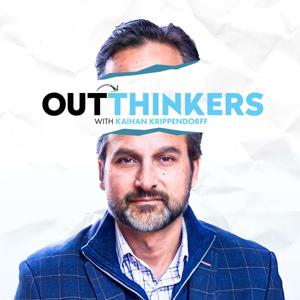
The Outthinkers podcast is a growth strategy podcast hosted by Kaihan Krippendorff. Each week, Kaihan talks with forward-looking strategists and innovators that are challenging the status quo,…
30,206 Listeners

14,267 Listeners

1,455 Listeners

141 Listeners

111,825 Listeners

8,306 Listeners
183 Listeners

805 Listeners