
Sign up to save your podcasts
Or

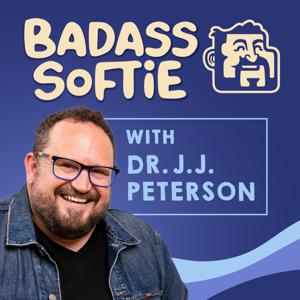

Leaders carry growing responsibility. Bigger teams. Bigger decisions. Bigger stakes.
But growth in responsibility doesn’t automatically mean growth in thinking.
Dr. JJ Peterson explores a counterintuitive leadership truth: when leaders stop trying new things, their thinking gets smaller — even as their influence expands. The issue isn’t intelligence. It isn’t experience. It’s rigidity.
The brain is designed to change. Novelty builds cognitive flexibility. Exposure to unfamiliar environments interrupts autopilot. Creative hobbies, new skills, and even small disruptions in routine reshape how the brain approaches ambiguity and problem-solving.
Trying something new outside of work isn’t indulgent. It’s strategic.
Learning stained glass doesn’t make someone a better marketer. Curling doesn’t automatically improve strategy. But putting yourself back into beginner mode rewires how you respond to uncertainty, failure, and complexity — and that changes leadership.
Growth doesn’t always look impressive. Sometimes it looks like falling on the ice, laughing, and getting back up again.
Leadership requires adaptability, perspective, and the willingness to experiment before certainty arrives.
If this resonates, consider sharing it with a leader who may need permission to try something new — not to master it, not to monetize it, but to stay mentally alive.
Because ambition and humanity are not opposites. And the most strategic thing a leader can do might be to become a beginner again.
 View all episodes
 By Dr. J.J. Peterson
5
1212 ratings
Leaders carry growing responsibility. Bigger teams. Bigger decisions. Bigger stakes.
But growth in responsibility doesn’t automatically mean growth in thinking.
Dr. JJ Peterson explores a counterintuitive leadership truth: when leaders stop trying new things, their thinking gets smaller — even as their influence expands. The issue isn’t intelligence. It isn’t experience. It’s rigidity.
The brain is designed to change. Novelty builds cognitive flexibility. Exposure to unfamiliar environments interrupts autopilot. Creative hobbies, new skills, and even small disruptions in routine reshape how the brain approaches ambiguity and problem-solving.
Trying something new outside of work isn’t indulgent. It’s strategic.
Learning stained glass doesn’t make someone a better marketer. Curling doesn’t automatically improve strategy. But putting yourself back into beginner mode rewires how you respond to uncertainty, failure, and complexity — and that changes leadership.
Growth doesn’t always look impressive. Sometimes it looks like falling on the ice, laughing, and getting back up again.
Leadership requires adaptability, perspective, and the willingness to experiment before certainty arrives.
If this resonates, consider sharing it with a leader who may need permission to try something new — not to master it, not to monetize it, but to stay mentally alive.
Because ambition and humanity are not opposites. And the most strategic thing a leader can do might be to become a beginner again.

38,931 Listeners
2,282 Listeners
1,447 Listeners

4,589 Listeners

1,934 Listeners
12,644 Listeners
6,447 Listeners

58,190 Listeners
666 Listeners
325 Listeners

19,688 Listeners

2,900 Listeners
451 Listeners

2,280 Listeners

24 Listeners