
Sign up to save your podcasts
Or



What if part of your job is to create more magic?
After attending Will Guidara's Welcome Conference in New York, Dr. J.J. Peterson found himself returning to a conversation that had already changed how he thinks about work, creativity, and the people around him. Listening again, he discovered new meaning in an idea that sounds simple but can be surprisingly difficult to practice: making ordinary moments extraordinary.
Will Guidara, bestselling author of Unreasonable Hospitality, helped turn Eleven Madison Park into the number one restaurant in the world by caring as much about how people felt as he did about the food they were served. But his philosophy goes far beyond restaurants. It's about noticing people, creating moments of connection, and being willing to invest more energy into an experience than anyone might reasonably expect.
J.J. and Will explore why the most meaningful things we do aren't always the most practical, why joy deserves a place in everyday life, and what becomes possible when we stop talking ourselves out of generous ideas.
What This Conversation Explores:
During their conversation, J.J. shares an idea for a community event that he's not entirely sure he should pursue. Now, months later, he's bringing that idea to life—a fitting reminder of Will's encouragement to stop letting good ideas pass us by.
Because creating more magic doesn't necessarily require a grand gesture. Sometimes it simply means noticing an opportunity to make someone's day better and choosing to act on it.
Instagram: https://www.instagram.com/badasssoftiepod
You have an idea you keep coming back to. A book you want to write. A podcast you want to start. A business, creative project, or next chapter you can see yourself pursuing.
But starting means finding out what happens when the idea leaves your head. What if it isn’t as good as you thought? What if nobody wants it? What if you don’t know exactly what you’re doing yet?
Jill Pickering has spent more than 20 years making creative work as a musician, songwriter, producer, podcaster, and author, including touring with Kelly Clarkson. She’s also learned that you can’t answer every question about an idea before you begin.
Jill and Dr. J.J. Peterson explore what changes when you stop requiring certainty before taking the first step. They talk about starting small enough to learn from what happens, finding your voice by actually using it, recognizing real signs that an idea has potential, and recovering when something you put into the world doesn’t go the way you hoped.
Because sometimes the next step isn’t another plan. It’s making enough of the thing to discover what comes next.
What This Explores
Connect with Jill Pickering
Follow Badass Softie
Instagram: https://www.instagram.com/badasssoftiepod
We have more language for healthy communication, boundaries, and emotions than ever before. So why can our relationships still leave us feeling so disconnected?
Dr. Lee Long believes part of the problem may be where we put our attention. When a conversation becomes difficult, we often focus on finding the right words to get the other person to understand, respond differently, or change. We may genuinely believe we’re trying to communicate better, without realizing how much energy we’re putting into managing the outcome.
Dr. J.J. Peterson and Lee explore what changes when we bring some of that attention back to ourselves. They talk about the difference between influence and control, the stories we create when we assume we know what someone else is thinking, and why anxiety can make it difficult to recognize what we’re actually feeling.
Lee also shares a simple question that can interrupt those patterns: Where am I in this? Because understanding where you are doesn’t mean avoiding the difficult conversation. It can help you decide how you want to show up in it.
Follow Dr. Lee Long on social media: @dr.leelong
Learn more about Lee, his book Wait! Where Am I in This?, his podcast, and his work at drleelong.com.
Follow Badass Softie
Instagram: https://www.instagram.com/badasssoftiepod/
AI can write, research, organize, automate, and produce at a scale that would have been impossible for most people a few years ago.
But Dan Cumberland thinks the more interesting question is what all of that frees you up to do.
As AI takes on more of the execution, it can create room to go deeper—to spend more time on the ideas that are working, the problems worth solving, and the decisions that need your experience and judgment. It can also force a bigger question: If technology can perform more of the tasks you associate with your work, where do you bring the most value?
Dan and Dr. J.J. Peterson explore what to hand off to AI, how to identify the deeper value you bring beyond the tasks you perform, and why the time AI gives back doesn't have to be filled with more work. Because the real opportunity may be letting technology do more of what it can do so you have more room for what only you can do.
What This Explores
Mentioned
Follow Badass Softie
What do you do when a problem is so big that anything you could possibly do feels insignificant?
On September 11, 2001, Dr. J.J. Peterson was thousands of miles from home, volunteering with a medical clinic in a rural village in the Dominican Republic. With almost no information and no way to change what was happening back home, someone in his group finally asked a simple question: “What can we do?”
Twenty-five years later, J.J. still comes back to that question when the suffering in the world feels too big to hold, much less fix. He reflects on the difference between control and agency, Viktor Frankl’s idea of tragic optimism, and how we find meaningful ways to respond when some things simply can’t be fixed.
Instagram: https://www.instagram.com/badasssoftiepod
You’re used to being the person who follows through. So when plans change, it can feel personal.
Dr. J.J. Peterson had just celebrated a year of Badass Softie without missing an episode. Then interviews moved, a new client required unexpected travel, his daughter left for college, and suddenly the plan he had been following no longer fit his life. Instead of simply adjusting, JJ found himself wondering if he was dropping the ball.
But changing the plan isn’t the same as giving up on what matters. JJ explores why ambitious people can be so quick to judge themselves when circumstances change, why being harder on yourself may not actually help you move forward, and how to distinguish between abandoning a commitment and finding a different way to honor it.
Why changing the plan can feel like a personal failure
The difference between changing your approach and giving up
What unfinished commitments can do to your attention
Why grace may be a better motivator than self-criticism
Three questions to help you decide what moving forward looks like now
Instagram: https://www.instagram.com/badasssoftiepod/
Something will eventually not go according to plan.
Maybe a project doesn’t turn out the way you hoped, a difficult conversation catches you off guard, or life takes you in a direction you didn’t expect. You can’t control all of it, but you can get better at what happens next.
Dr. J.J. Peterson talks with wellbeing educator, author, and Self-Care Sensei Jan Raeder about how knowing yourself can help you stay grounded when things get hard—and respond with more intention when they do.
Drawing from positive psychology, behavioral change research, and 30 years in martial arts, Jan offers a different way to think about self-care. It isn’t only about stepping away from difficult things. It’s also about understanding your reactions, recognizing the stories you carry, and building the resilience to move forward without pretending everything is okay.
Jan explores her M.O.R.E. framework—Meaning, Optimism, Relationships, and Engagement—in Strive for M.O.R.E.: What Wellbeing Really Means and How You Can Achieve It. If you want to put these ideas into practice and better understand what supports your own wellbeing, Get a copy of Strive for M.O.R.E. here - https://selfcaresensei.com/purchase
You can also learn more about Jan and her work as the Self-Care Sensei - https://selfcaresensei.com
Instagram: https://www.instagram.com/badasssoftiepod
A year ago, Dr. J.J. Peterson launched Badass Softie with a lot of questions. What if nobody listened? What if it went nowhere? And maybe the hardest one: Who am I to do this?
A year later, the fear wasn't the thing that disappeared. J.J. changed.
After a year of conversations about ambition, vulnerability, leadership, visibility, work, and what it means to stay human while doing big things, one idea keeps rising to the surface: courage isn't something you either have or you don't. It's something you practice.
Sometimes courage means moving forward. Sometimes it means changing the plan, asking for help, telling yourself the truth, letting yourself be seen, or having the conversation you'd rather avoid. And sometimes the people around you are what make the brave thing possible.
Why courage isn't the absence of fear — or something you have to wait to feel
How doing difficult things gives you new evidence about what you're capable of
Why changing direction, asking for help, and letting yourself be seen can all be acts of courage
How safety and support can make people more willing to take meaningful risks
Why the people you surround yourself with can change what becomes possible
One of J.J.'s biggest realizations from the past year is that courage rarely happens alone. The people who challenge us, remind us who we are, offer a different perspective, and sit with us when we don't know what to do next can change the decisions we're able to make.
That's also what's behind Become the Obvious Choice (https://become-the-obvious-choice.com/), a one-day intensive J.J. is hosting with Julie Firth and Sonya Whittam on October 9 in Nashville.
This isn't a conference built around sitting back and collecting more information. It's a small, carefully curated room where experienced business owners and leaders can bring a real challenge, put their thinking in front of people who understand what it's like to build a business, challenge their assumptions, and leave with a clearer way forward.
Because sometimes the next brave thing isn't figuring it all out yourself.
Sometimes it's putting the decision in the right room.
Learn more and secure your place at Become the Obvious Choice.
Instagram: https://www.instagram.com/badasssoftiepod
It’s easy to tell yourself you’re being kind when you decide not to say the hard thing. You don’t want to hurt someone, create tension, or turn a small problem into a bigger one. But what if avoiding the conversation isn’t actually kindness?
Matt Turner learned that putting people first sometimes means making people uncomfortable. After growing Clownfish Events into a multimillion-dollar company recognized as one of the UK’s best places to work, he built a culture where employees practiced giving honest feedback—even when that meant telling the person running the company what was difficult about working with him.
Matt and Dr. J.J. Peterson explore the difference between psychological safety and comfort, why accountability and kindness aren’t opposites, and what leaders teach their teams by the way they respond when someone challenges them.
And the responsibility doesn’t belong only to the boss. If something at work isn’t working for you, Matt challenges you to consider whether you’ve actually had the conversation that could change it—and shares how to approach that conversation with honesty, generosity, and specificity.
Because sometimes the kind thing isn’t keeping the peace. It’s creating enough trust to say what needs to be said.
Learn more about Matt and his work at matthewturner.com.
Catch up with Matt:
Follow Badass Softie
Instagram: https://www.instagram.com/badasssoftiepod
Website: https://www.badasssoftie.com
Ever spend more time deciding what to write than actually writing it?
If marketing feels harder than it should, the problem may not be your writing. You may simply be asking the wrong question.
Dr. J.J. Peterson remembers sitting down every week to write emails and wondering what to say. Everything changed when he stopped asking, "What should I write?" and started asking, "What does this email need to do?"
Dr. J.J. Peterson closes out this marketing series by sharing three email frameworks you can return to again and again. Each one has a different job, helping move a customer forward at a different stage of the relationship. When you understand the purpose of the email you're writing, creating consistent marketing becomes much simpler.
If writing emails, updating your website, or explaining what your business does always feels harder than it should, the problem may not be your writing—it may be a lack of clarity. Dr. J.J. Peterson helps organizations clarify their message so customers immediately understand what they do, why it matters, and what to do next.
Learn more at drjjpeterson.com.
Instagram: https://www.instagram.com/badasssoftiepod
From the publisher's feed
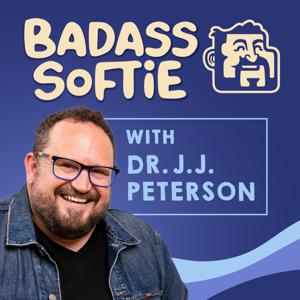
A Badass Softie is unapologetically ambitious and leads with heart. Ambitious and kind. Fun and driven. Powerful and deeply human.
Badass Softie, hosted by Dr. J.J. Peterson, is a podcast that challenges the false choice leaders are too often given: be strong or be compassionate. The world doesn’t just need more leaders — it needs leaders bold enough to make an impact and compassionate enough to make it meaningful. Each episode pulls back the curtain on leaders, creators, and innovators who are rewriting the rules of what real leadership looks like. You’ll walk away with stories, insights, and practical takeaways that show you how to lead with both strength and softness — the very definition of being a Badass Softie.
Subscribe and step fully into the kind of leader the world is waiting for.

38,735 Listeners
2,268 Listeners

1,446 Listeners

4,586 Listeners

1,935 Listeners

12,504 Listeners

6,447 Listeners

57,567 Listeners
636 Listeners

326 Listeners

19,146 Listeners

2,882 Listeners

375 Listeners

2,265 Listeners

24 Listeners