
Sign up to save your podcasts
Or



Based on Podcast App listening data
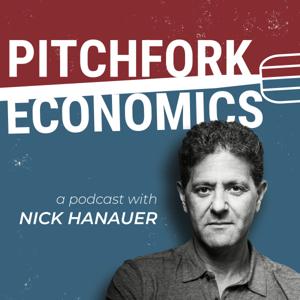
As Republicans work at break-neck speed to push another round of massive tax cuts for the wealthy, we thought it would be a good idea to revisit our 2019 conversation with Bruce Bartlett, a Reagan policy adviser and key architect of the 1981 tax cuts. Bartlett explains how the trickle-down logic he once championed turned out to be economic snake oil, because tax breaks for the wealthy don’t grow the economy—they just grow inequality.
Bruce Bartlett is an American historian and former economic adviser who helped draft the 1981 Reagan tax cuts. He served in senior roles under Presidents Reagan and George H.W. Bush, including at the Treasury Department and the Joint Economic Committee of Congress. Once a champion of supply-side economics, Bartlett is now a leading critic of trickle-down tax policy.
This episode originally aired January 29, 2019.
Social Media:
@bartlettb.bsky.social
@BruceBartlett
Further reading:
Trump tax bill will add $2.4 trillion to the deficit and leave 10.9 million more uninsured, CBO says
The secret saga of Trump’s tax cuts
Website: http://pitchforkeconomics.com
Instagram: @pitchforkeconomics
Threads: pitchforkeconomics
Bluesky: @pitchforkeconomics.bsky.social
Twitter: @PitchforkEcon, @NickHanauer, @civicaction
YouTube: @pitchforkeconomics
LinkedIn: Pitchfork Economics
Substack: The Pitch
The GOP’s new tax bill isn’t just a massive giveaway to the rich—it’s an all-out assault on SNAP, one of the most effective anti-poverty programs in the U.S. That’s because SNAP is more than just a program designed to end hunger. It’s also a powerful economic engine, stabilizing local economies as well as supporting retailers and farmers. Lily Roberts from the Center for American Progress joins us to break down how these proposed cuts will deepen poverty, weaken economic resilience, and hurt millions—especially in the very communities whose lawmakers are pushing them.
Lily Roberts is the managing director for Inclusive Growth at American Progress. Her work focuses on raising wages, combating economic inequality linked to race, gender, and geography, and building wealth and stability for American families.
Social Media:
@lilyroberts.bsky.social
Further reading:
SNAP Cuts Are Likely To Harm More Than 27,000 Retailers Nationwide
SNAP Mythbusters Report
Website: http://pitchforkeconomics.com
Instagram: @pitchforkeconomics
Threads: pitchforkeconomics
Bluesky: @pitchforkeconomics.bsky.social
Twitter: @PitchforkEcon, @NickHanauer, @civicaction
YouTube: @pitchforkeconomics
LinkedIn: Pitchfork Economics
Substack: The Pitch
What makes a company good—and who gets to decide? Economist Lenore Palladino joins Nick and Goldy to dismantle the myth of shareholder primacy and explain how our current system of corporate governance has warped innovation, deepened inequality, and undermined democracy. Drawing from her new book Good Company: Economic Policy after Shareholder Primacy, Palladino outlines a bold vision for how we can redesign the rules of the game—so corporations serve workers, communities, and the public good, not just wealthy shareholders.
Lenore Palladino is an assistant professor of economics and public policy at the University of Massachusetts, Amherst, a senior fellow of the Roosevelt Institute, and a research associate at the Political Economy Research Institute.
Social Media:
@lenorepalladino.bsky.social
@lenorepalladino
Further reading:
Good Company: Economic Policy after Shareholder Primacy
Website: http://pitchforkeconomics.com
Instagram: @pitchforkeconomics
Threads: pitchforkeconomics
Bluesky: @pitchforkeconomics.bsky.social
Twitter: @PitchforkEcon, @NickHanauer, @civicaction
YouTube: @pitchforkeconomics
LinkedIn: Pitchfork Economics
Substack: The Pitch
With Trump’s second major tax bill clearing committee and heading to the House floor—packed, as promised, with massive giveaways to the ultra-wealthy—we’re revisiting our timely conversation with Samantha Jacoby of the Center on Budget and Policy Priorities. Originally recorded before Trump’s reelection, this episode breaks down the real impact of the tax bill that Trump signed into law back in 2017: trillions added to the deficit, corporations and billionaires cashing in, and working families left behind.
Spoiler alert: the rich get richer, and everybody else gets screwed. As Congress considers doubling down on the same failed policies, this conversation couldn’t be more relevant.
Samantha Jacoby is the Deputy Director of Federal Tax Policy with the Center’s Federal Fiscal Policy division. Samantha focuses on U.S. federal income tax issues, including corporate and business taxation, individual income taxation, and climate tax policy.
This episode originally aired March 19, 2024.
Social Media:
@centeronbudget.bsky.social
@jacsamoby
@CenterOnBudget
Further reading:
Ten Questions on House Republicans’ Upcoming Tax Bill
The 2017 Trump Tax Law Was Skewed to the Rich, Expensive, and Failed to Deliver on Its Promises
Website: http://pitchforkeconomics.com
Instagram: @pitchforkeconomics
Threads: pitchforkeconomics
Bluesky: @pitchforkeconomics.bsky.social
Twitter: @PitchforkEcon, @NickHanauer, @civicaction
YouTube: @pitchforkeconomics
LinkedIn: Pitchfork Economics
Substack: The Pitch
During COVID, corporations blamed supply chain shocks for rising prices while quietly raising prices higher than costs, thereby boosting their profits to record levels. We know they did this because they bragged about doing it on corporate earnings calls. Economist Hal Singer warns that Trump’s proposed tariffs could spark a repeat, giving corporations another “golden opportunity” to jack up prices under the guise of higher costs. He explains why tools like antitrust enforcement and interest rate hikes aren’t enough to stop price gouging—and why failing to curb greedflation could carry a steep political price.
Hal Singer is an economist, antitrust expert, and Managing Director at Econ One Research, where he specializes in competition policy, regulatory economics, and consumer protection. He’s a professor at the University of Utah and a leading voice on market power, price gouging, and the intersection of antitrust and inequality.
Social Media:
@halsinger.bsky.social
@HalSinger
Further reading:
Hal’s Twitter thread on the potential for companies to exploit Trump’s tariffs to raise prices higher than their costs.
Hal’s recent OpEd in The Sling: Progressives Need a New Toolkit to Fight Inflation
How Corporations “Get Away With Murder” to Inflate Prices on Rent, Food, and Electricity
How Trump Is Helping Price Gougers Exploit His Tariffs
President John F. Kennedy News Conference on April 11, 1962
Antitrust Policy for the Conservative
Website: http://pitchforkeconomics.com
Instagram: @pitchforkeconomics
Threads: pitchforkeconomics
Bluesky: @pitchforkeconomics.bsky.social
Twitter: @PitchforkEcon, @NickHanauer, @civicaction
YouTube: @pitchforkeconomics
LinkedIn: Pitchfork Economics
Substack: The Pitch
Decades of trickle-down thinking hollowed out our government—and now the anti-democracy crowd is finishing the job. This week, legal scholar and former Biden advisor K. Sabeel Rahman joins Nick and Goldy to talk about what happens when the rule of law becomes optional, what the Biden administration got right (and what it didn’t,) and why simply restoring the old system isn’t enough. If we want a real democracy—one that can stand up to corporate power and actually deliver for people—we need to stop playing by outdated rules and start constructing a government that's faster, fairer, and fit for the modern world.
K. Sabeel Rahman is a legal scholar, policy expert, and former senior advisor in the Biden administration, where he served as Associate Administrator at the Office of Information and Regulatory Affairs. A leading voice on democracy, governance, and economic justice, he is Demos's former president and a law professor at Cornell University.
Social Media:
@ksabeelrahman.bsky.social
@ksabeelrahman
Further reading:
Civic Power: Rebuilding American Democracy in an Era of Crisis
Website: http://pitchforkeconomics.com
Instagram: @pitchforkeconomics
Threads: pitchforkeconomics
Bluesky: @pitchforkeconomics.bsky.social
Twitter: @PitchforkEcon, @NickHanauer, @civicaction
YouTube: @pitchforkeconomics
LinkedIn: Pitchfork Economics
Substack: The Pitch
This week, we’re revisiting a critical conversation we had back in 2020 with author and historian Nancy MacLean, in which she exposes how today’s threats to democracy were decades in the making. Based on her groundbreaking book Democracy in Chains, MacLean traces how Nobel Prize-winning economist James Buchanan worked with billionaire donors to rig the rules of government to expand corporate power and protect extreme wealth. From public choice theory to voter suppression, this episode reveals the coordinated strategy to undermine democracy—and explains why understanding it is essential to fighting back.
Nancy MacLean is an award-winning historian and the William H. Chafe Distinguished Professor of History and Public Policy at Duke University. Her book, Democracy in Chains: The Deep History of the Radical Right’s Stealth Plan for America was a National Book Award finalist and winner of the Los Angeles Times Book Prize.
This episode originally aired on July 21, 2020.
Social Media:
@nancymaclean.bsky.social
@NancyMacLean5
Further reading:
Democracy in Chains
Website: http://pitchforkeconomics.com
Instagram: @pitchforkeconomics
Threads: pitchforkeconomics
Bluesky: @pitchforkeconomics.bsky.social
Twitter: @PitchforkEcon, @NickHanauer, @civicaction
YouTube: @pitchforkeconomics
LinkedIn: Pitchfork Economics
Substack: The Pitch
What does “abundance” actually mean—and who is it really for? In this episode, Goldy and Paul welcome back economic policy expert Mike Konczal to unpack the big new idea dominating political discourse: abundance. They dive into the buzz around Ezra Klein and Derek Thompson’s book “Abundance,” and Konczal’s sharp critique of its deregulatory leanings, missed opportunities, and neoliberal undertones. From housing policy to green energy to the myth that deregulation alone can fix America’s problems, this episode challenges the idea that more is always better, and asks what it would really take to build a future that’s abundant for everyone—not just the rich.
Mike Konczal is the Senior Director of Policy and Research at the Economic Security Project, where he oversees policy development, research, and strategic analysis to advance its ideas. Previously, he served as a Special Assistant to President Biden for Economic Policy and Chief Economist for the National Economic Council.
Social Media:
@mtkonczal.bsky.social
@mtkonczal
Further reading:
Democracy Journal - The Abundance Doctrine
Abundance By Ezra Klein & Derek Thompson
Why Nothing Works: Who Killed Progress—and How to Bring It Back By Marc Dunkelman
NBER Working Paper - Supply constraints do not explain house price and quantity growth across U.S. cities
Website: http://pitchforkeconomics.com
Instagram: @pitchforkeconomics
Threads: pitchforkeconomics
Bluesky: @pitchforkeconomics.bsky.social
Twitter: @PitchforkEcon, @NickHanauer, @civicaction
YouTube: @pitchforkeconomics
LinkedIn: Pitchfork Economics
Substack: The Pitch
Why does it feel like we can’t build anything anymore? In this episode, Nick and Goldy talk with author Mark Dunkelman about his new book Why Nothing Works, which examines how well-intentioned progressive reforms created a “vetocracy” that makes major public projects nearly impossible. From Seattle’s decades-long waterfront rebuild to the dysfunction of Penn Station, they explore the messy trade-offs between accountability and action—and ask what it would take to make progress possible again.
Marc Dunkelman is a fellow at Brown University’s Watson Institute for International and Public Affairs and a former fellow at NYU’s Marron Institute of Urban Management. During more than a decade working in politics, he worked for Democratic members of both the Senate and the House of Representatives and as a senior fellow at the Clinton Foundation.
Social Media:
@MarcDunkelman
Further reading:
Why Nothing Works: Who Killed Progress—and How to Bring It Back
Website: http://pitchforkeconomics.com
Instagram: @pitchforkeconomics
Threads: pitchforkeconomics
Bluesky: @pitchforkeconomics.bsky.social
Twitter: @PitchforkEcon, @NickHanauer, @civicaction
YouTube: @pitchforkeconomics
LinkedIn: Pitchfork Economics
Substack: The Pitch
Timid tweaks won’t fix a broken economy. From Nick Hanauer’s blunt critique of Democratic incrementalism to a candid conversation with Representatives Ro Khanna, Delia Ramirez, and Jim Himes on how Democrats can reclaim working-class trust by embracing economic populism and fighting for real change, this episode brings you inside the 2025 Middle Out Economics conference, where the message was clear: Go big or get out of the way.
Moderator: Harold Meyerson, The American Prospect
Rep. Jim Himes, 4th congressional district, Connecticut
Rep. Ro Khanna, 17th congressional district, California
Rep. Delia Ramirez, 3rd congressional district, Illinois
Further reading:
Measuring the Income Gap from 1975 to 2023
Adieu to Laissez-Faire Trade
Website: http://pitchforkeconomics.com
Instagram: @pitchforkeconomics
Threads: pitchforkeconomics
Bluesky: @pitchforkeconomics.bsky.social
Twitter: @PitchforkEcon, @NickHanauer, @civicaction
YouTube: @pitchforkeconomics
LinkedIn: Pitchfork Economics
Substack: The Pitch
From the publisher's feed
Ranked by our users in the last 21 days

9,193 Listeners

10,715 Listeners

3,474 Listeners

1,981 Listeners

431 Listeners
1,198 Listeners

6,275 Listeners

6,103 Listeners

32,248 Listeners

545 Listeners
9,303 Listeners

626 Listeners

2,074 Listeners

15,877 Listeners

562 Listeners