
Sign up to save your podcasts
Or

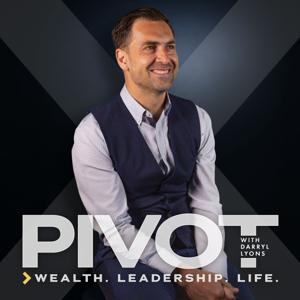


Who actually holds your money? And how can you know your financial advisor is acting in your best interest?
In this episode of PIVOT with Darryl Lyons, Darryl Lyons, CEO and Co-Founder of PAX Financial Group, breaks down how the registered investment advisory (RIA) industry works and why understanding the structure behind your investments matters.
Drawing on his 20 years of experience as an independent advisor, Darryl explains the role of financial custodians like Charles Schwab and Fidelity, how investors can independently verify their account information, and why conflicts of interest at major financial institutions deserve closer attention.
He also shares real-world examples of financial fraud, discusses the differences between independent advisors and large brokerage institutions, and explains how transparency and proper disclosures can help protect investors and their families.
You'll learn:
- What a financial custodian does and why your advisor shouldn't be the institution holding your assets.
- How to verify your investment accounts using statements directly from your custodian.
- What the Bernie Madoff case teaches investors about independently verifying financial information.
- How large banks and brokerage firms can create conflicts of interest.
- What it means to work with a Registered Investment Advisor (RIA).
- Six important questions to ask your financial advisor to better understand how your money is managed.
Whether you're reviewing your own financial relationships or helping your parents protect their retirement savings, understanding who holds your money is an important step toward making informed financial decisions.
If you enjoyed this episode, leave a review and share it with someone who could benefit from the conversation.
References:
https://www.envestnet.com/rias/trends-facing-rias-2025
Disclosure: This podcast is for general educational and informational purposes only and is not intended to provide individualized investment, tax, or legal advice. References to specific financial institutions, custodians, products, or business models are provided for educational purposes and should not be interpreted as a recommendation or as a statement that all firms or financial professionals operate in the same manner. Conflicts of interest, compensation arrangements, services, affiliations, and custodial practices vary by firm and may change over time. Investors should review the applicable firm's current Form ADV, Form CRS, account agreements, and other disclosures when evaluating an advisory relationship. PAX Financial Group also has conflicts of interest, including those arising from affiliated insurance activities, which are described in its applicable disclosure documents.
What happens when the market crashes, inflation stays higher for longer, or life takes an unexpected turn? A strong financial plan helps you prepare for uncertainty before it arrives.
In this episode of PIVOT with Darryl Lyons, Darryl Lyons, CEO and co-founder of PAX Financial Group, shares five scenarios worth discussing with your financial advisor: a market downturn, persistent inflation, living longer than expected, the early loss of a spouse, and tax changes. He explains how stress-testing your plan, building flexibility into your assumptions, and having difficult conversations can help you make thoughtful financial decisions when circumstances change.
Darryl also discusses the emotional side of financial planning, including how headlines can shape our reactions and why preparing for uncertainty can bring greater peace. The goal is not to control every outcome. It is to practice good stewardship and create a plan that gives you and your family a clearer path forward.
You'll Learn:
● Why market volatility is part of long-term investing and how to stress-test your financial plan for downturns.
● How persistent inflation can affect your future spending and retirement assumptions.
● Why planning for a longer life and the possible loss of a spouse matters for both partners.
● How an advisor can help you prepare for changing taxes, including taxes on Social Security, Medicare, capital gains, and estates.
● How headlines and uncertainty can influence financial decisions, and how preparation can help you respond more thoughtfully.
● Why financial planning is about more than portfolio returns, and how honest conversations can help you prepare for life's unknowns.
Listen to the full episode of PIVOT with Darryl Lyons, and if you found it helpful, we'd appreciate if you left a review on your preferred podcast platform.
Some of the most expensive financial mistakes happen when life gets busy. In this episode of PIVOT with Darryl Lyons, Darryl explains the difference between acts of commission, the decisions we actively make, and acts of omission, the important steps we leave unfinished.
From fear-driven investment decisions to retirement accounts left sitting in cash, Darryl shares examples of how financial oversights can have lasting consequences. He also walks through the math behind a $200,000 investment earning 3% versus 7% over 10 years, illustrating how inaction can lead to a difference of roughly $125,000.
Darryl explains how regular financial checkups and working with a trusted financial advisor can help identify overlooked decisions and keep your money aligned with your goals.
You'll Learn:
● The difference between acts of commission and acts of omission.
● How fear can influence investment decisions and lead to costly mistakes.
● Why retirement funds can remain in cash even after being rolled into an IRA.
● How different rates of return can create a significant gap in investment growth over time.
● Why financial checkups can help uncover overlooked opportunities and potential problems.
● How working with a financial advisor can help reduce the likelihood of costly financial mistakes.
Enjoyed this episode? Follow PIVOT with Darryl Lyons, listen to more conversations about wealth, life, and leadership, and leave a rating or review on your favorite podcast platform.
Resources:
Vanguard, Out of sight, out of market: The IRA cash
Schroders, The lost-retirement generation, 2024 US Retirement Survey.
Hypothetical calculation: $200,000 × 1.03^10 = $268,783; $200,000 × 1.07^10 = $393,430; difference = $124,647. No contributions or withdrawals; annual compounding; excludes taxes, investment expenses, and advisory fees. The illustration compares assumed return paths, not equivalent-risk investments or a verified historical period.
Your financial goals matter, but understanding the purpose behind them can help you make decisions with greater clarity. In this episode of PIVOT with Darryl Lyons, Darryl explores why knowing your "why" influences the way you approach money, leadership, family, work, and faith.
Drawing on ideas popularized by Simon Sinek and lessons from his own life, Darryl explains how your personal story can reveal your purpose, how that purpose can shape your character, and why a clear sense of direction can help you navigate difficult seasons. He also discusses how your "why" can become a filter for major financial decisions, including when to retire, when to sell a business, how to support your family, and where to give.
Darryl shares the personal mission statement behind his BIG framework: helping others believe in a bigger life, investing in the future, and glorifying God in all that he does. The conversation offers a practical reminder to look beyond the numbers and consider what you want your financial decisions to make possible.
You'll Learn
• Why financial goals and your deeper purpose serve different roles in decision-making.
• How the reasons behind your choices can reveal your values and character.
• How experiences from your personal story can help clarify your "why."
• Why purpose can help you persevere through challenging seasons.
• How to use a personal mission statement as a filter for major financial decisions.
• How Darryl's BIG framework connects purpose, investing in the future, and glorifying God.
Enjoying the show? We'd appreciate if you left a review on your favorite podcast platform.
Resources:
How Great Leaders Inspire Action | Simon Sinek | TED
Interest rates have a major impact on the economy, the bond market and your financial plan. In this episode of PIVOT, Darryl Lyons breaks down what's happening with interest rates in 2026 and what it could mean for investors, borrowers and people preparing for retirement.
Darryl explains why bond prices typically fall when interest rates rise, how bond duration affects interest-rate sensitivity and why today's higher-rate environment could create new opportunities for income-focused investments. He also discusses the impact of higher borrowing costs on mortgages, businesses and economic growth.
You'll learn:
● Why the Federal Reserve is raising interest rates
● How rising rates affect bond prices
● Why longer-duration bonds tend to be more sensitive to rate changes
● How higher rates can create opportunities for bond investors
● What rising mortgage rates mean for home affordability
● How borrowing costs can affect businesses and economic growth
● Why your risk profile and time horizon matter when evaluating your bond allocation
● Why understanding the bond market can become increasingly important as you approach retirement
As always, use this episode as the beginning of a conversation with your financial advisor about your specific situation.
References:
Macro Signposts | September Fed Hike May Be More Than a Risk Management Exercise | PIMCO
Enjoying the podcast? We'd appreciate it if you left a review on your favorite podcast platform.
Elon Musk's tunnel projects are more than an unconventional approach to transportation. They offer an interesting look at how innovation, infrastructure and economic activity can connect in ways that ultimately affect all of us.
In this episode of PIVOT, Darryl Lyons explores The Boring Company's tunneling projects in Las Vegas, Nashville, Dubai and the potential Austin-to-San Antonio tunnel. He discusses how these projects are being developed, what makes the technology different from traditional transportation systems and how the industries supporting these projects can create broader economic activity.
You'll learn:
● How Elon Musk's interest in underground transportation led to The Boring Company
● How the Las Vegas tunnel system works
● What makes tunneling different in places like Las Vegas and Nashville
● How infrastructure projects create economic activity across multiple industries
● Why companies involved in construction, energy, manufacturing, technology and other industries can benefit from major infrastructure projects
● How innovation can create jobs and contribute to broader economic growth
● What the potential Austin-to-San Antonio tunnel could mean for the region
● Why thinking long term matters when considering economic innovation and investment
As Darryl emphasizes throughout the episode, innovation doesn't happen in isolation. The economic activity surrounding new ideas and infrastructure can have an impact far beyond the project itself.
Enjoy the episode? We'd appreciate it if you left a review on your favorite podcast platform.
Should you have a will, a trust, or both? On this episode of PIVOT with Darryl Lyons, Darryl explores the differences between wills and trusts through the complicated estate of music legend Jimmy Buffett.
Buffett's estate, valued at hundreds of millions of dollars, has become the subject of a legal dispute involving trustees, beneficiaries, and questions about how his assets should be managed and distributed. While the circumstances are unique, the underlying lesson applies to families of all wealth levels: estate planning is about more than deciding where your money goes. It is also about making your intentions clear and having important conversations before you're gone.
Darryl breaks down key estate planning terms, including trusts, marital trusts, beneficiaries, trustees, and the role of corporate trustees. He also explains why families with blended families, significant assets, property in multiple states, or concerns about incapacity may want to consider a trust.
You'll learn:
● The difference between a will and a trust
● Why some families choose to establish a trust
● How trustees and beneficiaries fit into an estate plan
● What a marital trust is designed to accomplish
● How complicated estates can create conflict among family members
● Why choosing the right trustee matters
● How communication can help prevent family disputes after your passing
● Why estate planning should include conversations with the people affected by your decisions
Estate planning is not just about what happens to your money after you're gone. It's about making your intentions understood while you're still here.
Benefiting from the show? We'd appreciate it if you left a review on your favorite podcast platform
Resources: https://www.wsj.com/style/lost-in-margaritaville-drama-jimmy-buffett-275-million-dollar-trust-65710c8d?msockid=39164ae8011c6ba429c95df600676aea
Is investing in the stock market really like going to a casino? In this episode of PIVOT with Darryl Lyons, Darryl breaks down the differences between short-term speculation and long-term investing, and explains why understanding those differences matters when making decisions with your money.
Darryl walks through how stocks work, why investors are compensated for taking on greater risk and how the structure of the market gives long-term investors an opportunity to participate in the growth of successful companies. He also looks at the history of investing, from the early stock market to mutual funds, the Investment Company Act of 1940 and the creation of the 401(k).
You'll also hear Darryl explain the role dividends can play in a portfolio through a memorable cattle and milk analogy, along with why company growth, executive incentives and shareholder interests matter.
In this episode, you'll learn:• Why long-term stock market investing is different from gambling • How stocks and bonds differ in terms of risk and potential return • What the price-to-earnings ratio tells investors about a company • How mutual funds helped make diversification more accessible • Why dividends can be an important part of investing • How to match your investments with your time horizon • Why liquidity and diversification are important parts of stewardship • How having a clear purpose can help guide your investment decisions • Why patience can make such a difference for long-term investors
Investing is about more than accumulating wealth. It's about understanding what your money is for and making decisions that support that purpose.
Like the podcast? Leave a review and share this episode with someone who could benefit from thinking differently about investing and building wealth for the long term.
Visit paxfinancialgroup.com to learn more about financial planning and investment guidance.
Resources:
What Percentage of the Time Do Stocks Go Up? - by Ira Roth
SEC Investor.gov - Stocks: a stock gives its holder a share of ownership in a company.
Amsterdam City Archives - VOC shares were offered in 1602 and were transferable, an early form of modern share ownership.
SEC - The agreement that formed the New York Stock Exchange dates to 1792; modern exchanges are now almost entirely electronic.
U.S. Department of Labor - The Revenue Act of 1978 permitted the cash-or-deferred arrangement associated with 401(k) plans.
SEC - Mutual funds and ETFs pool investor money; many 401(k) and 529 participants invest through registered funds.
SEC Investor.gov - Diversification and asset allocation are core ways to manage investment risk; investing still involves possible loss.
Should you be worried about the United States carrying roughly $40 trillion in federal debt? Darryl Lyons, CEO and co-founder of PAX Financial Group, breaks down what the national debt means, why it matters, and what could ultimately force Washington to take action.
Darryl explains the difference between federal debt and the annual deficit, who actually owns U.S. debt, and why foreign investors continue to purchase U.S. Treasuries despite growing concerns about government spending. He also shares a personal story about his own experience with debt early in his career and the lessons it taught him about controlling spending and increasing income.
The conversation also explores whether investors are losing confidence in U.S. Treasuries, how the 30-year Treasury rate can serve as a measure of investor confidence, and what a changing debt environment could mean for portfolio diversification. Rather than encouraging investors to panic, Darryl emphasizes staying informed, reviewing your investment strategy, and thinking long term.
YOU'LL LEARN:
• The difference between federal debt and the annual deficit
• Who owns U.S. government debt
• Why foreign investors continue to buy U.S. Treasuries
• What could force Washington to address the national debt
• How Treasury rates can signal changing investor confidence
• Why portfolio diversification may require more creativity
• How to respond to economic concerns without making emotional investment decisions
This episode is for investors, retirees, and anyone who wants a clearer understanding of how the national debt could affect the economy and their financial future. As always, Darryl encourages listeners to use this conversation as a starting point and discuss their individual circumstances with a trusted financial professional.
Benefiting from the show? We'd appreciate it if you left a review on your favorite podcast platform.
Resources:
Mark Zandi Says America May Need A Crisis Before It Fixes Its Debt Problem | The WealthAdvisor
Top 15 Largest US Treasury Holders in 2026: Who Owns America's Debt?
Who Owns U.S. Debt? A Simple Breakdown of America's $39 Trillion Debt
What Would It Take to Balance the Budget? An Update-2023-02-24
The Rich Aren't Rich Enough to Balance the Federal Budget
Trump plans to grow his way out of $40 trillion debt crisis—it's a 'fantastic story' but virtually impossible, says top budget economist
How might economic frustration influence the way people evaluate political candidates?
In this episode of PIVOT with Darryl Lyons, Darryl examines a recent McKinsey Institute for Economic Mobility report, In Pursuit of Progress: Americans' Aspirations for Economic Mobility, to explore the financial pressures and lack of economic confidence that can shape how people think about the future and who they choose to support.
Using survey data from 30,000 adults, Darryl breaks down four major themes: the common desire for financial security, the cost squeezes people experience at different stages of life, the importance of community, and the role proximity plays in helping people move forward. He discusses rising living costs, health care, child care, housing, retirement savings, and the financial shocks that can make it difficult for families to build stability.
Darryl also explores the roles employers, friends, family, churches, and government institutions play in helping people find opportunities. From a Christian worldview, he argues that community and relationships can create practical opportunities for people who are struggling, while employers can help employees build skills and become more valuable in the marketplace.
Ultimately, this episode looks beyond politics to ask a more important question: What happens when people feel like they have no financial security, no clear path forward, and little hope for the future?
You'll learn:
• Why financial security is a priority for so many Americans
• How rising costs affect people at different stages of life
• Why groceries, health care, child care, and housing are major financial pressure points
• What retirement savings reveal about economic mobility in America
• Why strong community connections can influence people's sense of control and momentum
• How employers can help employees improve their skills and financial opportunities
• How economic frustration may influence political choices
This episode is for anyone interested in financial planning, economic mobility, personal finance, leadership, community, and the forces that influence how people think about their financial future and political choices.
Benefiting from the show? We'd appreciate it if you left a review on your favorite podcast platform.
Resources:
Americans' aspirations for economic mobility | McKinsey
From the publisher's feed
2,186 Listeners

4,380 Listeners

3,680 Listeners
5,412 Listeners

7,102 Listeners

584 Listeners

56,533 Listeners

1,225 Listeners

65,350 Listeners

43,712 Listeners

4,384 Listeners