
Sign up to save your podcasts
Or

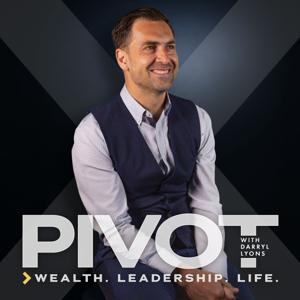


What should Texans understand about the state's rapid economic growth?
Many people see packed highways, busy small towns, and constant construction and assume Texas is just getting more crowded. But what if the bigger story is not simply population growth - it is the scale of economic development, infrastructure investment, and innovation reshaping the future of the state?
In this episode of Retire in Texas, Darryl Lyons explores the forces driving Texas' continued expansion and why that growth matters for residents, business owners, and investors alike. He shares personal observations from a trip through small-town Texas before zooming out to explain how Texas has continued to lead the nation in economic development. Darryl unpacks several major initiatives that highlight where the state may be headed next, including large-scale chip manufacturing tied to artificial intelligence, a major new refinery project in Brownsville, and the rise of autonomous trucking operations taking shape in Texas.
You'll learn:
• Why Texas has remained a national leader in economic development.
• How growth is reshaping small towns, infrastructure, and local communities.
• What major projects in chips, energy, and autonomous vehicles could mean for the future of the state.
• Why energy independence and refining capacity remain important economic themes.
• How business owners can view Texas growth as an opportunity rather than a threat.
• Why long-term investors may want to pay attention to the industries helping drive Texas forward.
Whether you are a longtime Texas resident, a business owner navigating a changing local economy, or an investor trying to better understand where future growth may come from, this episode offers perspective on the innovation, expansion, and economic momentum continuing to shape Texas.
Benefiting from the show? We'd appreciate it if you left a review on your favorite podcast platform.
Resources:
https://kodiak.ai/
What should investors understand before adding private credit to their portfolio?
Many people hear the phrase private credit and assume it is just another income-producing investment. But what if the real issue is not simply the yield it offers - it is understanding the structure, liquidity, and risk that come with it?
In this episode of Retire in Texas, Darryl Lyons breaks down the growing role private credit has begun to play in today's financial markets. He explains how private credit expanded after the 2008 financial crisis, why it became attractive to both institutions and individual investors, and how it helped fill a lending gap when traditional banks pulled back. He also walks through some of the recent stress points in the market, including investor withdrawals, concerns around software companies, and the broader conversation about risk in a changing economic environment.
You'll learn:
• What private credit is and why it grew after the 2008 financial crisis.
• How private lenders stepped in when banks became more restricted in their lending.
• Why private credit has appealed to investors seeking higher yields.
• What recent cracks in the private credit market may be signaling.
• Why liquidity limits and withdrawal restrictions can play an important role in risk management.
• How Darryl thinks investors should evaluate exposure, risk, and portfolio fit before making any decisions.
Whether you are hearing about private credit for the first time, trying to better understand how it fits within a diversified portfolio, or thinking through how risk should be managed in uncertain markets, this episode offers a practical framework for evaluating private credit with greater clarity and perspective.
Benefiting from the show? We'd appreciate it if you left a review on your favorite podcast platform.
Resources:
advisor.zacksim.com/l/376582/2026-03-23/5v89h3/376582/1774272361c55MbMDB/2026_03_21___MOTM___What_the_Private_Credit_Boom_is_Revealing.pdf
https://www.callan.com/blog/3q25-private-credit/
https://go.stepstonegroup.com/rs/664-QRQ-541/images/Cutting_through_the_noise_in_direct_lending_headlines.pdf?version=0
https://www.mercer.com/en-us/campaigns/investments/insights/alts/private-debt/private-credit-markets/
What really keeps people from building generational wealth?
Many people assume the biggest obstacle to building long-term wealth is picking the wrong investment. But what if one of the biggest barriers isn't market performance at all - it's trust?
In this episode of Retire in Texas, Darryl Lyons explores why trust may be one of the most overlooked components of building generational wealth. He explains why long-term financial success is not about perfectly timing the market, but about staying invested long enough for the process to work. He also breaks down the three-part foundation he believes is necessary for lasting wealth creation: trusting the markets, trusting that your advisor is acting in your best interest, and trusting that your advisory team is competent.
But this conversation goes beyond investment strategy alone. Darryl also examines the emotional and behavioral side of wealth building, showing how doubt, skepticism, and broken trust can cause people to hesitate, pull back, or abandon a sound long-term plan altogether. By understanding both the practical and psychological barriers, listeners can begin to see why trust plays such a central role in financial decision-making over time.
You'll learn:
• What Darryl believes is one of the biggest barriers to building generational wealth.
• Why long-term wealth building is not about timing the market perfectly.
• The three-part framework of trust he believes families need in order to stay invested.
• How broken trust can derail even a well-designed financial plan.
• Why fiduciary responsibility and advisor competency matter in the wealth-building process.
Whether you are trying to stay disciplined during market uncertainty, evaluate the strength of your financial plan, or think more intentionally about the kind of legacy you want to leave, this episode offers a practical framework for thinking about wealth through the lens of trust.
Benefiting from the show? We'd appreciate it if you left a review on your favorite podcast platform.
What are the smartest ways to give to charity while also being tax efficient?
Many people want to be generous. But what if the biggest obstacle to giving strategically isn't a lack of desire - it's behavior, emotion, and not knowing the right financial tools?
In this episode of Retire in Texas, Darryl Lyons explores the intersection of charitable giving, tax strategy, and behavioral finance. He breaks down three powerful giving tools - donor-advised funds, qualified charitable distributions (QCDs), and donating appreciated stock - and explains how each one can help individuals and retirees give more intentionally and efficiently.
But this conversation goes beyond tax mechanics. Darryl also unpacks the behavioral side of generosity, showing how concepts like the house money effect, mental accounting, and status quo bias can quietly shape the way people think about giving. By understanding both the financial and psychological barriers, listeners can begin to make more thoughtful, impactful charitable decisions.
You'll learn:
What a donor-advised fund is and why it has become such a popular charitable giving tool.
How qualified charitable distributions can help retirees give directly from IRA assets in a tax-efficient way.
Why donating appreciated stock may be more effective than selling it first and giving cash.
How behavioral finance influences generosity and charitable decision-making.
Why education and awareness are often the first steps toward more transformational giving.
Whether you're still working, already retired, or simply trying to become more intentional with your giving, this episode offers a practical framework for thinking through generosity with long-term perspective.
Benefiting from the show? We'd appreciate it if you left a review on your favorite podcast platform.
Is the escalating conflict with Iran something investors should worry about?
Global headlines about war, oil supply disruptions, and geopolitical tensions can make it feel like a major market crash is just around the corner. But are these fears grounded in probability - or simply possibility amplified by the news cycle?
In this episode of Retire in Texas, Darryl Lyons explores the investing skill of distinguishing between what is possible versus what is probable. Using the current tensions surrounding Iran and the Strait of Hormuz as a backdrop, Darryl explains how geopolitical events can influence markets through both economic effects and investor sentiment, and why headlines often exaggerate the real long-term impact.
Drawing on historical examples like Pearl Harbor and the assassination of President John F. Kennedy, Darryl walks through how markets have historically responded to major crises. While uncertainty can trigger short-term volatility, investors and institutions often shift quickly from panic to analysis, evaluating what events mean for economic growth, corporate earnings, and long-term investment opportunities.
You'll learn:
Why understanding the difference between possible and probable is a key investing skill.
How geopolitical conflicts like tensions with Iran can affect markets and oil supply.
What history shows about market reactions to major global events.
Why missing just a few of the market's best days can dramatically reduce long-term returns.
How diversification, time horizon, and portfolio structure help investors weather uncertainty.
Darryl also explains why investors should be cautious about reacting emotionally to alarming headlines. Whether markets are responding to geopolitical tensions, economic concerns, or unexpected global events, long-term investors can benefit from maintaining discipline rather than trying to time the market.
This episode serves as a reminder that while uncertainty is inevitable in investing, markets have historically endured wars, crises, and disruptions because the global economy continues moving forward. With proper perspective, diversification, and long-term planning, investors can build resilience in their financial strategy.
Benefiting from the show? We'd appreciate it if you left a review on your favorite podcast platform.
Resources:
https://www.invesco.com/us-rest/contentdetail?contentId=a9b2a3dd-29a7-4302-ab86-814c4886a73c&msockid=0f56055ffc28689a11991143fda66906
https://www.wellington.com/en/insights/war-and-markets-whats-the-connection
Is food insecurity really a problem in San Antonio - even in a city with so much abundance?
Many people assume hunger is caused by a lack of food. But what if the real issue isn't supply - its distribution, dignity, and breaking the deeper psychological cycles of poverty?
In this episode of Retire in Texas, Darryl Lyons sits down with Marcus Walker of Daily Bread Ministries, a San Antonio-based nonprofit celebrating 30 years of serving the community. Marcus explains how Daily Bread uses food as a tool - not just to meet immediate needs, but to equip churches to provide poverty alleviation training, parenting education, financial literacy, and long-term transformation.
Rather than operating traditional handouts alone, Daily Bread trains churches to serve families in ways that restore dignity, build capability, and help break generational cycles. From client-choice food pantries to parenting classes like Raising Highly Capable Kids, this conversation highlights how meeting physical needs can open the door to lasting hope and restoration.
You'll learn:
Why food insecurity is often about access - not shortage.
How churches play a key role in breaking cycles of generational poverty.
The psychological impact of poverty and why dignity matters in food distribution.
How parenting and financial education can create long-term change.
How every dollar donated can generate a significant community impact.
Daily Bread Ministries operates without government funding to preserve its mission and faith-based foundation. Through local partnerships and volunteer support, they distribute over $11 million worth of food annually across San Antonio and surrounding areas.
If you'd like to support Daily Bread Ministries, you can:
Volunteer by emailing [email protected]
Schedule a tour or give online at DBMSA.org
This episode is a reminder that transformation often begins with meeting basic needs - and that sustainable change requires community, education, and faith working together.
Benefiting from the show? We'd appreciate it if you left a review on your favorite podcast platform.
Should you really try to die with zero?
The popular book "Die With Zero" argues that many people save too much money and miss opportunities to enjoy life along the way. Its philosophy encourages maximizing experiences, spending intentionally during different seasons of life, and giving wealth away earlier rather than leaving large inheritances.
But does that approach actually work for most retirees?
In this episode of Retire in Texas, Darryl Lyons reviews the bestselling book Die With Zero by Bill Perkins and walks through its nine core rules - including investing in experiences early, timing spending throughout life, giving while living, and knowing when to stop growing wealth.
Drawing from decades of working with retirees and families, Darryl shares where he agrees with the book's ideas and where he believes the philosophy may create financial risks. He explains why experiences don't have to be expensive, how today's retirement landscape has changed, and why balancing enjoyment with long-term financial security remains critical.
You'll learn: • What the "memory dividend" concept means and how experiences shape long-term happiness. • Why spending earlier in life can make sense - but also where it can become dangerous. • How giving while living may create more impact than traditional inheritance planning. • Why many Americans face a growing retirement risk despite messages encouraging more spending. • The role purpose and meaningful work can play in long-term health and fulfillment.
This episode isn't a rejection of enjoying life - it's about balance, stewardship, and making financial decisions that support both present experiences and future security.
If you'd like help building a retirement strategy designed around your life stage and long-term priorities, visit PAXFinancialGroup.com and schedule a conversation with an advisor.
Benefiting from the show? We'd appreciate it if you left a review on your favorite podcast platform.
Resource: https://www.amazon.com/Die-zero-author/dp/3959727739
What are the four new financial changes families and retirees should know about?
Several new programs and policy updates have quietly launched that could impact children, seniors, private school families, and retirees - but most people haven't heard the details yet.
Some involve compounding investment accounts for kids. Others affect IRA withdrawals after age 65. And a few provide direct education funding opportunities in Texas that families can apply for today.
In this episode of Retire in Texas, Darryl Lyons breaks down four recent financial changes, including the new Trump Accounts for children, the $6,000 senior deduction for retirees, the $1,700 education tax credit, and the Texas Education Freedom Account program.
He explains how compounding interest can potentially transform consistent contributions into meaningful long-term savings, why retirees must carefully manage IRA withdrawals to avoid losing deductions, and how families can apply for education-related credits and funding before application windows close.
You'll learn:
How the new Trump Accounts work and what happens when a child turns 18.
Why the senior deduction can be lost if IRA withdrawals aren't managed properly.
How the $1,700 education tax credit functions and who can use it.
What the Texas Education Freedom Account provides - including funding levels for private school, homeschool, and students with disabilities.
This episode isn't about politics - it's about understanding the rules and knowing how to apply them strategically within your own financial plan.
If you'd like to see how these changes affect your personal situation, visit PAXFinancialGroup.com and schedule a conversation with an advisor.
Benefiting from the show? We'd appreciate it if you left a review on your favorite podcast platform. Your feedback helps more families think long term and make better money decisions.
Resources:
https://trumpaccounts.gov/
https://www.irs.gov/publications/p554
https://educationfreedom.texas.gov
https://www.edchoice.org/2025-congress-enacts-first-ever-federal-tax-credit-for-education-scholarships/
What is elder fraud and why is it increasing right now?
Elder fraud is financial exploitation that targets seniors, often through impersonation, emotional manipulation, or false emergencies.
There's an $80 trillion wealth transfer underway - and scammers know it.
In this episode of Retire in Texas, Darryl Lyons exposes how criminals are increasingly targeting seniors and families using sophisticated elder fraud schemes, including fake "grandchild in trouble" calls and AI-generated voice cloning.
Drawing from a Department of Justice investigation, Darryl breaks down how international call centers impersonate loved ones, manipulate emotions, and move stolen cash through unsuspecting rideshare drivers. He also explains how scammers now need as little as three seconds of audio from social media to replicate a family member's voice using AI.
You'll learn:
How grandparent scams work from start to finish.
Why seniors are being targeted during the historic wealth transfer.
How AI voice cloning makes scams harder to detect.
Real warning signs to listen for during urgent phone calls.
Practical steps families can take to protect aging parents and grandparents.
This episode isn't just about financial loss - it's about the emotional damage these scams cause to families, parents, and seniors.
If you or someone you love may have been exposed to fraud, contact the FBI at 1-800-CALL-FBI (1-800-225-5324).
Benefiting from the show? We'd appreciate it if you left a review on your favorite podcast platform. Your feedback helps more people find the show and continue the conversation.
Resource:
www.justice.gov/usao-ma/pr/thirteen-individuals-charged-operating-transnational-elder-fraud-scheme
Is faith-based investing an all-or-nothing decision, or is there room for balance?
In this episode of Retire in Texas, Darryl Lyons, CEO and Co-Founder of PAX Financial Group, continues the two-part conversation on faith-based (biblical responsible) investing by exploring the remaining perspectives investors often hold.
Building on Part 1, Darryl focuses on investors who are fully committed to biblical responsible investing - as well as those who take a more blended approach. Through real-world examples and conversations, he unpacks how deeply held convictions, market realities, and fiduciary responsibility intersect in portfolio construction.
Episode highlights include:
The mindset of investors who are "all in" on biblical responsible investing, and why conviction matters.
Potential explanations as to why faith-based investing has underperformed the S&P 500 in recent years - and what caused the divergence.
How excluding the "Magnificent Seven" impacted performance across many strategies, not just faith-based portfolios.
The role of asset managers, shareholder advocacy, and proxy voting in responding to corporate behavior.
Why fiduciary duty requires flexibility - especially when certain asset classes aren't yet available in faith-based strategies.
How advisors help clients balance convictions with diversification, opportunity, and long-term planning.
What it means to be "in the world, but not of the world" when it comes to investing.
This episode completes the four-perspective framework introduced in Part 1 and offers a practical, thoughtful approach for investors navigating faith, finances, and long-term responsibility.
To learn more or start a conversation, visit PAXFinancialGroup.com and click "Connect With Us."
Enjoying the show? If Retire in Texas has been helpful to you, we'd appreciate it if you left a review on your favorite podcast platform. Your feedback helps more people find the show and continue the conversation.
Resource: https://www.inspireetf.com/news/does-it-matter-if-i-underperform-the-s-p-500
Disclosure: This material is provided by PAX Financial Group, LLC. The opinions voiced in this material are for general information only and are not intended to provide specific advice or recommendations for any individual. The information herein has been derived from sources believed to be accurate. Please note: Biblically Responsible Investing ("BRI") involves, among other things, screening for companies that fit within the goal of investing in companies aligned with biblical values. Such screens may serve to reduce the pool of high performing companies considered for investment. Investing involves risk. BRI investing does not guarantee a favorable investment outcome. PAX Financial Group has conducted due diligence for their Biblically Responsible Investing (BRI) process and proudly serves as each client's advocate using fully vetted third-party specialists for the administration of BRI methodology. Past performance is no guarantee of future results. Investments will fluctuate and when redeemed may be worth more or less than when originally invested. This information should not be construed as investment, tax, or legal advice and may not be relied on for the purpose of avoiding any Federal tax penalty. This is neither a solicitation nor recommendation to purchase or sell any investment or insurance product and should not be relied upon as such.
From the publisher's feed
2,186 Listeners
4,380 Listeners

3,680 Listeners
5,412 Listeners

7,102 Listeners

584 Listeners

56,533 Listeners
1,225 Listeners

65,350 Listeners

43,712 Listeners

4,384 Listeners