
Sign up to save your podcasts
Or

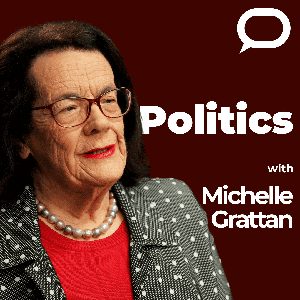


Based on Podcast App listening data
For allies of the United States, the reality of a Donald Trump presidency has just begun to sink in. Former Australian diplomat and intelligence analyst, Professor Rory Medcalf, who heads the National Security College at ANU, tells Michelle Grattan that for Australia, the shock of the Trump presidency will mean that we have to think much more seriously about what our foreign policy and national security looks like with an unpredictable American ally.
“I do think that Australia knows now that we can’t simply rely on the strategic direction that America is setting in the Asia-Pacific or the Indo-Pacific region, because I suspect under Trump, for quite a while, the Americans won’t know that themselves,” he says.
“A lot of old certainties are now in question. I think that countries like China and Russia are going to feel emboldened, particularly Russia. I think US allies around the world are going to be feeling anxious and there is this potential for a ripple effect of far-right political views, more so in Europe than in this country.”
Music credit: “Sabre”, by Ketsa on the Free Music Archive
Mentioned in this episode:
Your support matters
Support non-profit journalism you can trust.
Donations 2025
The Making of an Autocrat
Search: "The Conversation Weekly" for our new series.
Many in the government have clamoured for changes to be made to section 18C of the Racial Discrimination Act. Liberal backbencher Julian Leeser, however is not one of them.
The member for the northern Sydney seat of Berowra tells Michelle Grattan there are definitely people within the Liberal Party who share his view that Section 18C “achieves a good balance between allowing people the freedom of speech which is necessary in a democracy like Australia but also protecting racial minorities from racial vilification and racial slurs”.
“But the thing that I think unites everybody in this debate, regardless of your view on Section 18C, is that the process underscored in the QUT case and also in the Bill Leak case, just didn’t work as well as it should have,” Leeser says.
Mentioned in this episode:
The Making of an Autocrat
Search: "The Conversation Weekly" for our new series.
Your support matters
Support non-profit journalism you can trust.
Donations 2025
Kim Beazley’s time as Australia’s ambassador to the United States came to an end earlier this year, but he is riveted by next week’s presidential election.
“When I was the ambassador to Washington I just missed politics every day. In this year, I am missing the United States every day,” he says.
Beazley tells Michelle Grattan that “slightly, on balance” Hillary Clinton is more likely to win. “But the anger, the energy, in this campaign is within one group and that is with the white working class - mainly male but also female - who feel that America is being taken away from them,” he says.
“I see the election contest at the moment has the momentum with Trump.”
He cites the reduced turnout of Democrat-voting African-Americans and the mire of the Hillary Clinton email controversy as factors in a possible upset.
“One would have to say that if there is more of this over the weekend that the Trump momentum may well be unstoppable.”
If Trump pulls off an unlikely victory, Beazley foresees huge challenges for Australia. “Were he to implement the policies that he talks about in regards to the Asian region, we would be confronting strategic damage and possibly economic disaster,” he says.
Beazley says Hillary Clinton has a very favourable view towards Australia. “She sees us as a skilled, well-off and purposeful people and she will have things for our will and purpose and a lot of them may well involve decisions or topics that we’re quite uncomfortable with.”
“I think for starters she would be looking very strongly at a deeper integration of Australian and American forces in the region. She might be looking more vigorously than Obama has been at deployment of American aircraft from Australian bases and she’d in all probability look quite strongly at the possibility of rotating ships through [Royal Australian Navy base] Stirling.”
Music credit: “Star-spangled banner” by the United States Marine Band on the Free Music Archive
Mentioned in this episode:
The Making of an Autocrat
Search: "The Conversation Weekly" for our new series.
Your support matters
Support non-profit journalism you can trust.
Donations 2025
In the third volume of The Official History of ASIO series, historians Dr John Blaxland and Dr Rhys Crawley examine the organisation’s role in the years leading to the end of the Cold War.
Blaxland tells Michelle Grattan that this is a story about looking at Australia in the ‘70s and '80s “through the glasses of an ASIO officer or an ASIO agent”.
During the period covered in the book, Blaxland says the Soviet Union was so active in Australia the work of ASIO was not sufficient to cover their activity.
“Effectively, ASIO found itself dealing with a grown Soviet presence and a proliferation of Soviet Bloc consulates and diplomatic presences that were simply beyond it. They weren’t resourced to monitor them all. And so we now know that while ASIO was doing what it could, it was in a position where it was simply outpaced. They did not have the number of officers and agents in place to monitor the incredible growth in the number of diplomats-cum-spies operating in Canberra, Sydney, Melbourne and elsewhere,” he says.
In this final volume, which was preceded by The Protest Years and The Spy Catchers, Blaxland and Crawley draw upon ASIO archives and interviews with former spies to piece together a history of one of Australia’s most secretive institutions.
Music credit: “The Spirit of Russian Love” by Zinaida Troika, covered by Kosta on the Free Music Archive.
Mentioned in this episode:
The Making of an Autocrat
Search: "The Conversation Weekly" for our new series.
Your support matters
Support non-profit journalism you can trust.
Donations 2025
Nick Xenophon’s two new Senate colleagues, Stirling Griff and Skye Kakoschke-Moore, are no strangers to the political process, having both worked with Xenophon behind the scenes.
In a joint interview, they tell Michelle Grattan about their contrasting experiences in becoming politicians. Kakoschke-Moore says she has had the benefit of being around Xenophon for nearly six years. “So I understand the way he operates,” she says.
Working as a Xenophon adviser, she learnt the ropes of the Senate. “It is so rule-driven and so procedure-driven that I have a great deal of sympathy for people coming into this who have had no exposure at all to the inner workings of Senate procedure.”
Stirling Griff, on the other hand, has had a “huge learning curve”.
“I’m following behind Skye like she’s the mother hen and I imagine I’ll be doing that really for another few more weeks,” he says.
With the government’s industrial relations legislation before the parliament, the Nick Xenophon Team is looking for some amendments.
“Particularly in relation to the building code and requiring building projects, to the greatest extent possible, to use Australian goods and services. So we’ll be looking at the bills closely but we’ll also be keeping an open mind to amendments,” Kakoschke-Moore says.
The pair are dismissive of any move by senator David Leyonhjelm to push for concessions on gun laws in exchange for passage of the industrial relations bills.
“They’re not related and we don’t want to play those games,” Griff says.
Mentioned in this episode:
The Making of an Autocrat
Search: "The Conversation Weekly" for our new series.
Your support matters
Support non-profit journalism you can trust.
Donations 2025
In the wake of Labor’s rejection of the proposed same-sex marriage plebiscite, speculation has fallen on whether Labor will maintain their planned policy of enforcing a binding vote on marriage equality after the next election. Labor deputy leader Tanya Plibersek tells Michelle Grattan she doesn’t think the issue will come up at the party’s next national conference.
“I know that the Liberals are trying to whip up some notion that this will be reexamined at the next national conference. I don’t hear anybody in the Labor Party calling for this to be reopened at the next national conference,” she says.
Plibersek, who is Labor’s spokesperson for education, says the government needs to properly fund the university sector.
“When it comes to undergraduate students in particular I’m very concerned about where this government is headed. You only need to look at the United States to see university degrees that cost an arm and a leg, hang a debt sentence around the neck of students and in many cases don’t even have the pay-off of leading to higher paid jobs,” she says.
“So I think we need to be careful about loading students up with debts that really become a burden for them. … You’re talking about students at the same time in their lives as they’re finishing university, they’re often establishing relationships or families, they’re looking to buy a house. It comes at a very difficult time and the inter-generational effects of the type of debt that this government is proposing for students I think has broader social consequences than just being a disincentive to education for many people.”
Plibersek also defends Labor’s criticism of Education Minister Simon Birmingham for raising the possibility of cutting funding to wealthy private schools.
“It’s a distraction. Is he really going to take money off schools? Is he prepared to tell you which schools and how much money? And this is a smokescreen. He would love us to be having the old sectarian fights: state against state, independent verus public, versus Catholic, and frankly none of that matters. What matters is that we properly fund our schools system and they’re not going to do that.”
Mentioned in this episode:
Your support matters
Support non-profit journalism you can trust.
Donations 2025
The Making of an Autocrat
Search: "The Conversation Weekly" for our new series.
A contentious move by Attorney-General George Brandis to restrict access to legal advice from the solicitor-general is continuing to raise controversy and questions about its legal validity. Shadow Attorney-General Mark Dreyfus tells Michelle Grattan that he sees this as “the most extraordinary power grab by the Attorney-General in the history of the office”.
“We already know that he’s held up requests. Why? I can’t say, but the deputy secretary of the department giving evidence to the Senate committee last week said that one of the requests had taken 10 days.
"Now very often it’s urgent that you get legal advice. It’s never before been the position that secretaries of commonwealth departments, other ministers, the prime minister, the governor-general have been told that the written consent of the attorney-general is necessary before they get the advice of the solicitor-general,” he says.
The solicitor-general has to be the primary source of advice on the most important matters of the government, Dreyfus says.
“I’m not for a moment suggesting that in a complex, large government with 168,000 Australian public servants that every single legal question that the government comes into contact with has to go to the solicitor-general. Clearly that at a practical level couldn’t be the case but matters like the plebiscite bill, which the parliament is now dealing with, or the prorogation of parliament that occurred earlier this year or the citizenship bill - they are matters that the government should go to the solicitor-general [with] first.”
On the question of whether Labor should stick with its planned policy of enforcing a binding vote on marriage equality after the next election, Dreyfus says he thinks it is a “human rights matter”.
“That’s my own view and I argued in favour and voted in favour of the binding vote and that would remain my position…and lets see if it’s the position that would give difficulty because by the time of the next Labor conference, this matter may well have been dealt with in the parliament.”
Music credit: “Storytime” by Dlay on the Free Music Archive
Mentioned in this episode:
Your support matters
Support non-profit journalism you can trust.
Donations 2025
The Making of an Autocrat
Search: "The Conversation Weekly" for our new series.
Mentioned in this episode:
The Making of an Autocrat
Search: "The Conversation Weekly" for our new series.
Your support matters
Support non-profit journalism you can trust.
Donations 2025
From the publisher's feed
Ranked by our users in the last 21 days
90 Listeners

21 Listeners
6 Listeners

42 Listeners

19 Listeners
21 Listeners

15 Listeners
79 Listeners
49 Listeners
60 Listeners

2 Listeners
8 Listeners
1 Listeners

315 Listeners
69 Listeners

0 Listeners
24 Listeners

113 Listeners

5 Listeners

161 Listeners

0 Listeners

0 Listeners

0 Listeners

12 Listeners

65 Listeners

0 Listeners

0 Listeners
0 Listeners
0 Listeners

51 Listeners

5 Listeners
63 Listeners

3 Listeners
0 Listeners