
Sign up to save your podcasts
Or

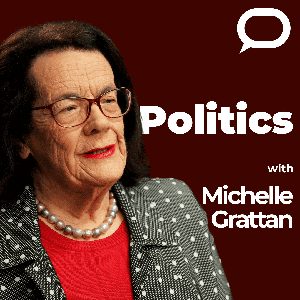


Based on Podcast App listening data
Monday’s government-Labor meeting over the proposed same-sex marriage plebiscite ended in a stalemate. But Special Minister of State Scott Ryan tells Michelle Grattan the government has made it very clear it will consider in “good faith” any proposal that Bill Shorten and the Labor Party bring forward.
“The meeting was an opportunity for them - even if they didn’t have the power to make formal suggestions - to actually say ‘these are the terms upon we want to come back to you in a week or two’,” he says.
Ryan gives no encouragement to the view that if the plebsicite legislation is defeated, the government could move to a parliamentary vote. “The government’s position I think, and we’ve done this on a number of issues, is to stick with the policy we took to the election.”
Having launched a parliamentary inquiry into electoral matters, which will include an examination of political donation rules, Ryan says he has no problem with corporate donations “in principle”.
“I’m not going to participate or support any measure that seeks to create an unfair playing field in political donations or political participation and the ludicrous position of the Greens to ban corporations that make a profit but allow unions and non-profit corporations to make political contributions is an example of that.”
Following much debate about the impact of Labor’s so-called “Mediscare” campaign on the outcome of this year’s election, Ryan says he would require a lot of convincing to go down the path of further regulating political speech, through truth in advertising measures.
“My personal view is that I require a lot of convincing because in politics, unlike in say commercial transactions where we do have consumer law that protects people from misleading conduct, politics is a lot more about opinion and interpretation of fact, so I think we need to be careful to not have a system that would end up in people needing more lawyers to argue the case of whether something is true or not. That would distract from the fact that this is a political contest.”
Mentioned in this episode:
Your support matters
Support non-profit journalism you can trust.
Donations 2025
The Making of an Autocrat
Search: "The Conversation Weekly" for our new series.
At next week’s UN General Assembly, Malcolm Turnbull will be among many leaders responding to the large movements of refugees and migrants across the world. Peter Jennings, executive director of the Australian Strategic Policy Institute, tells Michelle Grattan that the purpose of Barack Obama’s meeting is to get other countries to accept more refugees through legal channels.
“I don’t think he’s going to make much headway because at the moment the Europeans are closing their doors rather than opening them. But I wouldn’t be surprised if we see significant pledges of new aid and Australia will probably be doing the same thing at that meeting,” he says.
While Turnbull is in the US, he will take part in a dialogue on cyber security. Jennings, who is head of one of the think tanks sponsoring the talks, says the idea is to see if they can find ways to more effectively link business into a discussion about cyber security, including on issues like counter-radicalisation.
“I think what the hope is is that we’ll see closer Australia-US cooperation emerging not only in government but also between business entities as well.”
Music credit: “Ebani”, by Dlay on the Free Music Archive
Mentioned in this episode:
The Making of an Autocrat
Search: "The Conversation Weekly" for our new series.
Your support matters
Support non-profit journalism you can trust.
Donations 2025
Earlier this year, Australian writer Don Watson visited the United States, observing the race for president. Rather than examine the “rust belt” or “down-at-heel” cities, Watson chose America’s heartland.
“I found in Wisconsin many of the underlying themes of this election. And that sort of Gothic quality of the United States where everything has a very deep and often dark story behind it.”
Watson tells Michelle Grattan that what is happening in the United States now has “something to do with the religion of neoliberalism and the really nasty tactics of the Republican Party since Reagan”.
“We ought to be careful I think that we don’t go the same way. Certainly inequality is increasing here and we have seen the revival of Hansonism and we know that Australia is prone to bouts of xenophobia and even of racism,” he says.
Mentioned in this episode:
Your support matters
Support non-profit journalism you can trust.
Donations 2025
The Making of an Autocrat
Search: "The Conversation Weekly" for our new series.
In the first sitting of the new parliament, conservatives within the government have muscled a proposed amendment to the Racial Discrimination Act onto the agenda. Senator Eric Abetz, a strong advocate for change, tells Michelle Grattan that he doubts it will be dealt with this year.
“It will be introduced and then I think it would make sense for it to go through the normal processes. It may well go to a Senate committee, things of that nature. So how it transpires - no timetable has been set but we did want to put it up there on the agenda so it could be dealt with in due course,” he says.
“We would hope that in the period of a three-year parliament, we can chew gum and walk at the same time and that there will be time set aside for what is a very minimalist amendment to the Racial Discrimination Act to remove the words offend and insult.”
Abetz, a former leader of the government in the upper house and a minister in the Abbott government, remains resentful of being banished by Turnbull to the backbench and still harbours frontbench ambitions.
“Chances are there’s still some ministerial capacity left within myself. Senator David Bushby, who’s the chief government whip in the Senate - clearly ministerial capacity as well. So I think it’s a disappointment that the prime minister did not see fit to appoint somebody from Tasmania for the frontbench when, if I might say, there is ministerial talent available from Tasmania.”
“I would like to be able to serve on the frontbench again but as I’ve said many a time - I got into politics to serve, not to ‘succeed’, in inverted commas. But of course if you can be on the frontbench you can make a good and positive contribution.”
Mentioned in this episode:
Your support matters
Support non-profit journalism you can trust.
Donations 2025
The Making of an Autocrat
Search: "The Conversation Weekly" for our new series.
Fred Smith is no ordinary Australian diplomat. In postings served in the Uruzgan Province of Afghanistan, he built relationships with tribal leaders while continuing his side-career as a folk musician.
Smith, who has written about his experiences in a book, The Dust of Uruzgan, tells Michelle Grattan for the first three or four months he stashed his guitar under the bed.
“You know, I wanted to be taken seriously as a political officer and not seen as a folk singer. But eventually as I became more comfortable on the base, I got the guitar out and started writing songs and put together bands … and of course there wasn’t much going on on a Saturday night in Tarin Kowt so a lot of people would come,” he says.
“Then they would hear me singing stories about things that had happened a couple of weeks beforehand and it resonated, you know. And that’s sort of in the very finite emotional and intellectual information economy of that base. It opened up doors and built a sense of community.”
Mentioned in this episode:
Your support matters
Support non-profit journalism you can trust.
Donations 2025
The Making of an Autocrat
Search: "The Conversation Weekly" for our new series.
Since retiring from politics in 2012, former Greens leader Bob Brown has continued to offer sharp perspectives on issues of national debate. After giving the closing address at the Canberra Writers' Festival at the weekend, Brown tells Michelle Grattan that Malcolm Turnbull should have “stood up to the right wing” of his party at the end of 2015.
“We now have a reactionary and conservative government. I don’t think that’s where Malcolm Turnbull wants to be. I think he would prefer to be a Bob Menzies, and his time’s running out.
“He either will stand up to that power base of right-wing reactionaries and conservatives, or he’ll be another prime minister who failed to reach their promise, and Australia deserves a very progressive and liberal-minded leader.
“Turnbull’s got it in him, but one wonders if he’s had the life experience to be able to say: ‘Well, I’m not going to be dictated to’. It’s pretty late in the piece. ‘I’m not going to be dictated by these right wingers. I will stand up to them and if I lose out as a result of that at least I’ve tried.’,“ he says.
In the wake of a Greens portfolio reshuffle last week, Brown pays tribute to Sarah Hanson-Young’s period as the party’s immigration spokesperson.
“I think she’s helped move this nation from feeling ‘oh, you know let’s forget about those people’ to saying ‘no, we can’t. They’re under our care.’
“I was sorry to see her move because she’s done such a fine job in that portfolio. On the other hand I think it’s a very, very daunting job. You know, you are dealing with the agony and suffering of men, women and children and she’s been doing that for years. So in a way it might end up being a hidden blessing.
“I think it’ll free her a little. You know, I just think it’s a harrowing job,” he says.
Opening music credit: What Tomorrow Brings, by Ketsa on the Free Music Archive.
Closing music credit: Earth Song, written by Bob Brown. Sung by Claire Wood and accompanied by Craig Wood and Michelle Wood.
Mentioned in this episode:
The Making of an Autocrat
Search: "The Conversation Weekly" for our new series.
Your support matters
Support non-profit journalism you can trust.
Donations 2025
Incoming Victorian senator Derryn Hinch has the potential to be an ally or an enemy to the government’s agenda. Describing his political philosophy, Hinch says he isn’t in the Senate “just to be opposition”.
“If I was in America I’d be a Democrat. I’m conservative on some issues. Very conservative. And that’s over law and order issues and I’ve campaigned on those over the years. If I’m a socialist about anything it’s about medicine and hospitals. … Socially I’m fairly lower case liberal,” he says.
In the early days of the new parliament, Hinch plans to try to lift the restrictions on press in the Senate, where current rules prevent Senators from being photographed unless they are speaking on their feet.
“I just think this is wrong, we should streamline it, bring it up-to-date. This is a public house. …So those restrictions should be lifted. Standing order should be changed,” he says.
Music credit: “Definition” by Ketsa, Free Music Archive
Mentioned in this episode:
Your support matters
Support non-profit journalism you can trust.
Donations 2025
The Making of an Autocrat
Search: "The Conversation Weekly" for our new series.
From the publisher's feed
Ranked by our users in the last 21 days
90 Listeners

21 Listeners
6 Listeners

42 Listeners
19 Listeners
21 Listeners

15 Listeners
79 Listeners
49 Listeners
60 Listeners

2 Listeners
8 Listeners
1 Listeners
315 Listeners
69 Listeners

0 Listeners
24 Listeners

113 Listeners

5 Listeners

161 Listeners

0 Listeners

0 Listeners

0 Listeners

12 Listeners

65 Listeners

0 Listeners

0 Listeners
0 Listeners
0 Listeners

51 Listeners
5 Listeners
63 Listeners

3 Listeners
0 Listeners