
Sign up to save your podcasts
Or

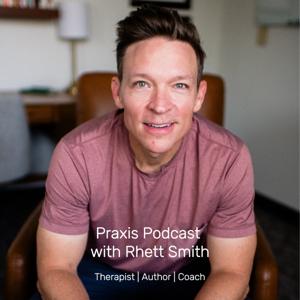


If I had to take a guess, I would guess that at least 50-60% of every couple that I work with is in my office because of an affair. Affairs come in varied forms from the physical to the emotional and everything in between. And affairs don't discriminate based on gender, race, or age. In fact, it's often the person or couple that you expect least likely to have to deal with an affair, is the couple dealing with the affair.
My experience is that most everyone goes into marriage with the intention to stay faithful in the relationship, so it will often come to a surprise to a spouse, or the couple's friends when words gets out that an affair has taken place.
In this episode I share my experience in working with couples as they navigate the affair recovery process. And because one of my specialties is marriage counseling, it's not surprising then that a lot of the couples I work with are dealing with affairs.
I think there are some general principles as one begins to work to recover and heal from an affair, but the process can often be chaotic, and each couple needs different things. So in this episode I try and distill some of the most common steps I take with couples.
In this episode you will:
Resources Mentioned in this Episode
NOT 'Just Friends': Rebuilding Trust and Recovering Your Sanity After Infidelity by Shirley Glass and Jane Coppock Staeheli
Beyond Ordinary: When A Good Marriage Just Isn't Good Enough by Justin and Trish Davis
One of the things that I have come to believe through my work with clients, and through my own personal work, is that insight alone is usually not enough to create change. That insight has to be coupled with practice, and lots of it to create the change, and ultimately the transformation we desire. We could also say the same if we flipped it in reverse. Practice alone, without any insight, will also not create change.
I have been greatly influenced by this idea through a couple of key writings. One is the work of my mentor and friend Dr. Terry Hargrave out of Fuller Theological Seminary, his book Restoration Therapy: Understanding and Guiding Healing in Marriage and Family Therapy, along with my training with him, has been transformative in my life. His model of the Pain and Peace Cycle, alone with four very practical steps has been a game changer in my life and the life of many.
I have also really been influenced by the work of Angela Duckworth, and more specifically, her book, Grit: The Power of Passion and Perseverance. In her book she delineates between deliberate practice and flow, and talks about how flow comes out of deliberate practice.
What I have experienced through the Restoration Therapy model is that the more individuals, couples, etc, practice their Pain and Peace Cycles, they can often get to flow states where it feels very natural, and habitual. But that transformational experience is only experienced because of the combination of insight and practice. Without both, flow and change isn't experienced.
I'm currently reading a really good book by Laurence Gonzales called Deep Survival:Who Lives, Who Dies, and Why. In this book he writes the following:
While the pathways from the amygdala to the neocortex are stronger and faster than the ones going the other way, some ability may remain for the neocortex to do the following: First, to recognize that there is an emotional response underway. Second, to read reality and perceive circumstances correctly. Third, to override or modulate the automatic reaction if it is an inappropriate one; and fourth, to select a correct course of action. (location 876-886/Kindle)He then goes on to write:
When you learn something complex, such as flying, snowboarding, or playing tennis or golf, at first you must think through each move. That is called explicit learning, and it's stored in explicit memory, the kind you can talk about, the kind that allows you to remember a recipe for lasagna. But as you gain more experience, you begin to do the task less consciously. You develop flow, touch, timing— a feel for it. It becomes second nature, a thing of beauty. That's known as implicit learning. The two neurological systems of explicit and implicit learning are quite separate. Implicit memories are unconscious. Implicit learning is like a natural smile: It comes by way of a different neural pathway from the one that carries explicit memory. (location 896/Kindle)
After I read this I thought to myself, this are the steps Restoration Therapy model of the Pain and Peace Cycle. And he's talking about deliberate practice and flow states.
Why is all of this important? Because whether we are talking about life and death situations like in Deep Survival, or conflict in relationships like in Restoration Therapy, or athletic and artistic performance in Grit....they are all about a certain level of awareness (insight) that requires us to practice, and it's in doing so that we create change and make better decisions, and move closer to transformational flow.
In this episode:
Resources Mentioned
Restoration Therapy: Understanding and Guiding Healing in Marriage and Family Therapy by Dr. Terry Hargrave
Grit: The Power of Passion and Perseverance by Angela Duckworth
Deep Survival:Who Lives, Who Dies, and Why by Laurence Gonzales
So I am not one to talk much about politics...at least online. There are several reasons for this. 1) I feel a bit naive on the subject matter and not as fluent in political knowledge and conversation as I would like to be. 2) I've rarely seen political discussion online lead to anything positive. So for the most part I work on improving my family, my neighborhood, and the communities around me by having face to face conversations (about all kinds of things), and working to affect change where I am able.
And I've noticed that ranting on FB about something does little to affect change.
And I think there is a reason for this.
This is the subject of this podcast. How emotional regulation (lack thereof usually), anxiety, and boundaries (usually violations of) lead to a toxic environment for political discourse. And in this I will just try and speak from my own knowledge of family and organization systems, and the lens that I view things from as a marriage and family therapist. And I think this has relevancy because we are all engaged in systems, and online political discourse is a relational system where the same principles apply. And I know I have a certain view point because of my own background and experience, but I try to stick to the published work out there on this topic (which of course has it's own viewpoints). That the reality...we all have viewpoints. But at the end of the day, I believe that if we can become aware of our biases and pain points, and emotionally self-regulate ourselves enough, we are actually capable of creating a safe environment that leads to action and change. Otherwise, all we are doing is slinging mud at each other.
I start this podcast with a quote from the Jewish Rabbi and Marriage and Family Therapist Edwin Friedman, who wrote:
"Communication does not depend on syntax, or eloquence, or rhetoric, or articulation but on the emotional context in which the message is being heard. People can only hear you when they are moving toward you, and they are not likely to when your words are pursuing them"
In this episode I explore:
In Failure of Nerve, Friedman writes:
....Precisely because our technologically advanced society constantly keeps us in often-simultaneous touch with one another it may be more difficult today not to become caught up in the surrounding systemic anxiety. Ironically, the very advances in technology that mark our era tend to intensify the 'herding instinct' characteristic of an anxious society. This kind of enmeshment inhibits further the kind of individuation that is the essential precondition for bold leadership and imaginitive thinking....My thesis here is that the climate of contemporary America has become so chronically anxious that our society has gone into an emotional regression that is toxic to well-defined leadership....Emotional regression, therefore, is more of a 'going down' than a 'going back'; it is devolution rather than evolution....At the same time that a society is 'pro-gressing' technologically it can be 're-gressing' emotionally....When a society (or an institution) is in a state of emotional regression, it will put its technological advances to the service of its regression so that the more it advances on one level the more it regresses on another.... (pp. 52-55)
I decided to take about a 6 week break from the podcast to focus on my work and family as we entered into a very busy holiday season. It was good to take a break from the podcast as I focused on the New Year ahead.
I'm not sure what the podcast will look like in 2017, but I do know there will be one. I would really love to move to more of a guest format, but it's pretty challenging to line up all the details between myself and a guest when I spend most of my week in sessions with clients. But my favorite podcasts that I listen to myself, and my favorite episodes of my podcast, are the ones where the host talks with a guest.
So in 2017 expect to hear more guests on my podcast, and it's possible I may move from the 3-4 episodes a month format I've been doing, to maybe just 2 a month. Whatever I can do to maintain high quality is what I will be doing.
That being said, the beginning of a New Year gives me an opportunity to think through and reflect on the past year, as well as think about the goals for this coming year.
In this episode I:
One of the most common questions I get is about what marriage book I might recommend. That is a tough question in some ways because there are so many books out there, and every person responds to a certain book differently. So it's hard to be too prescriptive on this topic.
But I can tell you there are about 7 books that I recommend a lot, and have been recommending for a long time. And the reason I recommend these books is because they have not only transformed my life and marriage, but they are the books that couples consistently report as being the most helpful and life-transforming for them.
So in this episode I briefly talk about these 7 books. Each book is pretty different from each other. Some are Christian and faith based in their approach, while others don't come with any faith perspective. Some are pretty prescriptive in their approach, listing out steps and tools to use in your marriage, while others take a more philosophical and theological approach, but it's up to the reader to figure out how and if that applies to their marriage. Some talk about sex (one in pretty specific and graphic ways), while others don't even mention it. Some are more academic, while others are an easy read.
So check out these books and see what may most apply and be helpful to you.
Hold Me Tight: Seven Conversations for a Lifetime of Love by Sue Johnson -- Great read by the founder of Emotionally Focused Couples Therapy. Her seven conversations provide great insight and direction for couples working on their connection.
Restoration Therapy: Understanding and Guiding Healing in Marriage and Family Therapy by Terry D. Hargrave and Franz Pfitzer -- This is perhaps my favorite book on marriage because it is the therapy model founded by my mentor and friend Dr. Hargrave. It's the model that I use in therapy with my clients and what I teach in churches and organizations. More of a technical read for therapists and practitioners, though helpful for couples who do want to dive into the theory. I talk with Dr. Hargrave about his model here, and discuss it's concepts here, here, here, here and here.
5 Days to a New Marriage by Terry D. Hargrave and Shawn Stoever -- this is the book that was written by the developers of the 4-day marriage intensives at The Hideaway Experience where I was on staff for four years. It's a simple, awesome read that walks couples through was is essentially Terry Hargrave's Restoration Therapy model.
Passionate Marriage: Keeping Love and Intimacy Alive in Committed Relationships by David Schnarch -- This book was probably one of the biggest life changing books for me individually, and in my marriage. It introduced me to the concept of self-differentiation in marriage, and it's ideas on anxiety and self-soothing are some of the most helpful concepts I use with couples. Schnarch is also a sex therapist, so this book will be the most graphic of the selection in terms of it's content.
The 3 Big Questions for a Frantic Family: A Leadership Fable About Restoring Sanity to the Most Important Organization in Your Life by Patrick Lencioni -- though this is not a "marriage" book per se, it is super helpful in marriages. My wife have worked through this book and it has been marriage transforming for us. I have written about this here, and did a podcast about it here.
The Mystery of Marriage: Meditations on the Miracle by Mike Mason -- This was really one of the first books that I read on marriage. I read it in seminary when I wasn't even dating anyone, and yet, it is a book I keep coming back to time and time again. One of the things I like about it the best is that it is not a marriage book with how to's or step by step instructions. It's more of a poetic and theological look at marriage.
Sacred Marriage: What if God Designed Marriage to Make Us Holy, More Than to Make Us Happy? by Gary L. Thomas -- One of the premises about this book that I think is so helpful is the concept that marriage is a refining process that is more about making us holy than happy. That is a tough sell in today's culture.
Last week I had the privilege of speaking to one of my favorite groups...MOPS. In this case it was the MOPS group at First Baptist Frisco which is an awesome group I have had the opportunity to speak to before (as well as their MOMSnext group). And as I was thinking about what topic to speak to them about, I started thinking about what season of life most of these moms find themselves in. It's tiring. It's busy. There is lots of new expectations, and that can sometimes be coupled with depression or anxiety. And in the midst of this, there is a marital relationship that they are trying to navigate along with all the challenges of being a new mom, or adding more kids to the family. And they might be in a marriage where their spouse is or isn't engaged in not only the life of the new baby and kids, but may or may not be engaged in the marriage as well.
That being said, it's a crucial time for marriages. And a lot of marriages tend to drift during this season, and those who are lucky course correct, and those who aren't, continue to drift apart further and further over the years. But what I have found in healthy marriages, especially ones who navigate this season successfully, is that it's not about luck, but rather about two people committed to working together to see their marriage grow in an intentional way.
So in this episode:
Resources and People Mentioned in Episode
Corey Allan -- Marital Drift Assessment
The 3 Big Questions for a Frantic Family by Patrick Lencioni
Link to my 5-Part Blog Series on Why Your Family Should Use The 3 Big Questions for a Frantic Family
Link to my podcast episode on creating a vision statement for your marriage/family
Link to my podcast episode on self-care and relationships
Last weekend I had the humbling opportunity to speak at the first ever Restoration Therapy Conference which was held at Pepperdine University in Malibu, CA. When the founder of the model, Dr. Terry Hargrave asked med to present on anxiety and the Restoration Therapy model, I knew it was an invitation that I couldn't refuse. I consider Dr. Hargrave not only a mentor, but also a friend, so I definitely wanted to participate in anything he was doing. But I also knew I would be anxious for several months leading up to my presentation. And I was. But it was a great time to be with a bunch of other therapists and researches who are on the ground floor in the ongoing development of the Restoration Therapy model.
I won't go into details in this post since you will hear more in this episode. But I've been using Restoration Therapy as my primary therapeutic model since about 2010 when I was first exposed to it co-leading marriage intensives at The Hideaway Experience in Amarillo, TX. I did not know the model as Restoration Therapy at the time, but rather as The 5 Days to a New Marriage model...and essentially, the Pain and Peace Cycle model.
But no model has changed my life more than this one. And no model has helped my clients more than this one. I have experience and training and proficiency in a lot of different models, but I believe this is the best one out there for a lot of reasons...many of which I will go into in this episode.
This is a 2 part episode, and in these episodes I explore the concept of anxiety and how it differs from fear...and why that distinction is so important. I look at what anxiety is and how to define it. I talk about how to normalize anxiety for your clients and reframe it as an opportunity for growth. I talk about how to get at the roots of anxiety using the RT Model and understanding the work of the Pain and Peace Cycle. I talk about how to take the Pain and Peace Cycle and practice it daily to create transformation. And then I talk about the important tools and resources that can help people manage their anxiety.
But for now, what you must know is this. In the Restoration Therapy Model, anxiety is not a feeling, but rather a coping behavior. We don't feel anxious, rather we become anxious. We do anxiety. But there is some other feeling that drives the anxiety. And that's important, otherwise we could end up just chasing the relief of the symptoms (though important), rather than dealing with the root issues of anxiety. Keeping that in mind, it's important to understand that anxiety is about issues concerning individual(love/identity) and relational personhood (trust/safety). And they are about "ultimate concerns" in life such as faith, life, death, purpose, meaning, relationships. Whereas, fear is about specific situations and circumstances.
So as I spell out in these episodes, my fear growing up was speaking in front of people because I would stutter. But my anxiety was that I would feel inadequate, be alone, not measure up. And I spent most of my life trying to relieve my fears (speaking), rather than understanding and dealing with my anxiety (coping behavior) and what was at the root of it, which was those feelings of inadequacy (feelings).
It may not seem like an important distinction at the outset, but actually has huge implications in terms of one getting healing when it comes to their anxiety. And I think you can see this distinction play out both in faith and biblical perspectives, as well as psychological and secular perspectives...so I address these integrative pieces as well.
So whether you are a therapist, lay counselor, pastor, friend, spouse, parent, colleague....who wants to help someone with anxiety...or whether you are trying to help your own anxiety...these episodes are for you.
Please listen and subscribe to my podcast in the following places, and then leave a comment letting me know what you liked about the show, or what guest you would like to hear from. Thank you so much for your support.
iTunes -- Stitcher
Player FM -- Libsyn
People and Resources Mentioned in the Episodes
Restoration Therapy Model -- in Episode 21 I talk about Restoration Therapy and how I use it for my work with individuals, couples, churches and organizations. Restoration Therapy Conference
Terry Hargrave -- in Episode 55 I interview Dr. Hargrave
Pain Cycle (this is Episode 42)
Peace Cycle (this is Episode 43)
Sharon Hargrave Steve and Rajan Trafton
The Hideaway Experience
The Anxious Christian by Rhett Smith
The Concept of Anxiety by Soren Kierkegaard
Fear and Trembling by Soren Kierkegaard
The Meaning of Anxiety by Rollo May
Be Not Anxious: Pastoral Care of Disquieted Souls by Allan Huge Cole Jr.
Things Might Go Terribly, Horribly Wrong: A Guide to Life Liberated from Anxiety by Kelly G. Wilson and Todd Dufrene
The Courage to Be by Paul Tillich
Existential Psychotherapy by Irvin D. Yalom
Last weekend I had the humbling opportunity to speak at the first ever Restoration Therapy Conference which was held at Pepperdine University in Malibu, CA. When the founder of the model, Dr. Terry Hargrave asked med to present on anxiety and the Restoration Therapy model, I knew it was an invitation that I couldn't refuse. I consider Dr. Hargrave not only a mentor, but also a friend, so I definitely wanted to participate in anything he was doing. But I also knew I would be anxious for several months leading up to my presentation. And I was. But it was a great time to be with a bunch of other therapists and researches who are on the ground floor in the ongoing development of the Restoration Therapy model.
I won't go into details in this post since you will hear more in this episode. But I've been using Restoration Therapy as my primary therapeutic model since about 2010 when I was first exposed to it co-leading marriage intensives at The Hideaway Experience in Amarillo, TX. I did not know the model as Restoration Therapy at the time, but rather as The 5 Days to a New Marriage model...and essentially, the Pain and Peace Cycle model.
But no model has changed my life more than this one. And no model has helped my clients more than this one. I have experience and training and proficiency in a lot of different models, but I believe this is the best one out there for a lot of reasons...many of which I will go into in this episode.
This is a 2 part episode, and in these episodes I explore the concept of anxiety and how it differs from fear...and why that distinction is so important. I look at what anxiety is and how to define it. I talk about how to normalize anxiety for your clients and reframe it as an opportunity for growth. I talk about how to get at the roots of anxiety using the RT Model and understanding the work of the Pain and Peace Cycle. I talk about how to take the Pain and Peace Cycle and practice it daily to create transformation. And then I talk about the important tools and resources that can help people manage their anxiety.
But for now, what you must know is this. In the Restoration Therapy Model, anxiety is not a feeling, but rather a coping behavior. We don't feel anxious, rather we become anxious. We do anxiety. But there is some other feeling that drives the anxiety. And that's important, otherwise we could end up just chasing the relief of the symptoms (though important), rather than dealing with the root issues of anxiety. Keeping that in mind, it's important to understand that anxiety is about issues concerning individual(love/identity) and relational personhood (trust/safety). And they are about "ultimate concerns" in life such as faith, life, death, purpose, meaning, relationships. Whereas, fear is about specific situations and circumstances.
So as I spell out in these episodes, my fear growing up was speaking in front of people because I would stutter. But my anxiety was that I would feel inadequate, be alone, not measure up. And I spent most of my life trying to relieve my fears (speaking), rather than understanding and dealing with my anxiety (coping behavior) and what was at the root of it, which was those feelings of inadequacy (feelings).
It may not seem like an important distinction at the outset, but actually has huge implications in terms of one getting healing when it comes to their anxiety. And I think you can see this distinction play out both in faith and biblical perspectives, as well as psychological and secular perspectives...so I address these integrative pieces as well.
So whether you are a therapist, lay counselor, pastor, friend, spouse, parent, colleague....who wants to help someone with anxiety...or whether you are trying to help your own anxiety...these episodes are for you.
Please listen and subscribe to my podcast in the following places, and then leave a comment letting me know what you liked about the show, or what guest you would like to hear from. Thank you so much for your support.
iTunes -- Stitcher
Player FM -- Libsyn
People and Resources Mentioned in the Episodes
Restoration Therapy Model -- in Episode 21 I talk about Restoration Therapy and how I use it for my work with individuals, couples, churches and organizations. Restoration Therapy Conference
Terry Hargrave -- in Episode 55 I interview Dr. Hargrave
Pain Cycle (this is Episode 42)
Peace Cycle (this is Episode 43)
Sharon Hargrave
Steve and Rajan Trafton
The Hideaway Experience
The Anxious Christian by Rhett Smith
The Concept of Anxiety by Soren Kierkegaard
Fear and Trembling by Soren Kierkegaard
The Meaning of Anxiety by Rollo May
Be Not Anxious: Pastoral Care of Disquieted Souls by Allan Huge Cole Jr.
Things Might Go Terribly, Horribly Wrong: A Guide to Life Liberated from Anxiety by Kelly G. Wilson and Todd Dufrene
The Courage to Be by Paul Tillich
Existential Psychotherapy by Irvin D. Yalom
One of the most common questions I get outside of my office (via Facebook, Twitter, email, etc.) is, "What can I do if I struggle with anxiety?" Or often they are asking for someone they know and care about, "What can I do to help someone with anxiety?"
I have to caution and say that there is not a one size fits all answer to this question.
But generally speaking there are 4 things that I tell that person that we can do:
These are four things that you can help a person, or yourself, who is struggling with anxiety. And these are the things that you might also want to look for in a counselor, therapist, pastoral counselor, life coach, etc.
Please listen and subscribe to my podcast in the following places, and then leave a comment letting me know what you liked about the show, or what guest you would like to hear from. Thank you so much for your support.
iTunes -- Stitcher
Player FM -- Libsyn
When I was in my early 30's I was fortunate enough to have a really great Marriage and Family Therapy supervisor in D. Michael Smith. He was actually one of many early great mentors I had and supervisors as I pursued my license as a therapist. But one day while I was in a supervision session with him, and I was feeling particularly stuck with a client, he took out a piece of paper and began to write some questions down.
He told me that he believed that every person is essentially asking these 4 questions at each new stage in their life (and potentially are questions that are constantly at one's top of mind). As he began to write I was super eager to see what these important questions were. He put the piece of paper between us and I began to look at the questions with him. The questions were:
Essentially, they are questions of identity, vocation, relationship, and purpose/calling. And these questions are intimately linked with one another, because often one can't be answered without having answered the other.
In this episode I explore these 4 questions in depth and talk about why they are necessary questions for us. They are perhaps the most important questions we can be asking ourselves. They are questions of ultimate concern as I talk about in this episode. As the Christian existential philosopher/theologian Paul Tillich wrote:
"Man, like every living being, is concerned about many things, above all about those which condition his very existence...If [a situation or concern] claims ultimacy it demands the total surrender of him who accepts this claim...it demands that all other concerns...be sacrificed." (Dynamics of Faith)I have written and talking extensively about how anxiety in the New Testament can mean different things in different contexts. Paul in Philippians uses the Greek merimnao to describe not being anxious (Philippians 4:6) and to have care/concern for (Philippians 2:20). In essence, the Greek word for anxiety here means literally to not be anxious, but at other times, have care and concern for.
So it's possible that our anxiety at times points to ultimate concerns because it's in our anxiety that we are being told to care for these things. And it's these questions that often come up for us.
Please listen and subscribe to my podcast in the following places, and then leave a comment letting me know what you liked about the show, or what guest you would like to hear from. Thank you so much for your support.
iTunes -- Stitcher
Player FM -- Libsyn
Resources and People Mentioned in the Episode Paul Tillich D. Michael Smith
I am a Licensed Marriage and Family Therapist practicing in Plano, Texas. I work with individuals, couples, and families regarding a number of issues from marriage therapy, anxiety, depression, infidelity, faith, relationship strengthening, and athletic performance. If you are interested in scheduling a session with me, or having me out to speak, please contact us via email or phone (469-304-9022).
From the publisher's feed

369,525 Listeners