Project 2025: The Ominous Specter

Project 2025: The Ominous Specter

Download on the App Store

Project 2025: The Ominous Specter episodes

  • Radical Overhaul: Project 2025's Blueprint for Reshaping America's Government
    Imagine a blueprint for remaking America’s government from the ground up, drawn by conservative architects at the Heritage Foundation. That’s Project 2025, a 900-page manifesto called *Mandate for Leadership*, released in April 2023, aiming to consolidate power in the presidency and purge what its authors see as a bloated administrative state, according to the Heritage Foundation’s own documentation.
    Fast forward to today: with Donald Trump back in the White House since January 20, 2025, elements of this vision are unfolding at breakneck speed. The Department of Government Efficiency, led by Elon Musk—known as DOGE—has fired tens of thousands of federal workers, targeting diversity offices and entire agencies like USAID and the Consumer Financial Protection Bureau, as reported by Government Executive. Courts have reinstated some employees, but the push rolls on, echoing Project 2025’s call to reinstate Schedule F, stripping civil service protections to install loyalists, per the National Federation of Federal Employees.
    Key proposals cut deep. The plan urges dismantling the Department of Education, shifting programs like those for disabled students to Health and Human Services, and empowering states with school choice to combat “woke propaganda,” the document states. It seeks to abolish the Department of Homeland Security, merging immigration functions into a new agency, while slashing Medicaid through funding caps and work requirements. The DOJ and FBI would answer directly to the president under unitary executive theory, curbing their independence to fight what the blueprint calls a “radical liberal agenda.”
    Experts warn of risks. The ACLU describes it as a “radical restructuring” threatening rights, while unions like AFGE decry potential loss of up to a million jobs and weakened services for veterans and rural communities. Yet proponents, per Heritage, promise efficiency: merging economic bureaus and boosting nuclear innovation.
    This ambition connects the dots from tax cuts—a flat income tax and corporate reductions—to militarized borders, illustrating a total overhaul. As DOGE deadlines loom, like agency RIF plans due April 14, battles in courts and Congress will decide its fate.
    Looking ahead, upcoming Supreme Court rulings and midterms could cement or derail these changes. Thanks for tuning in, listeners—come back next week for more.
    Some great Deals https://amzn.to/49SJ3Qs
    For more check out http://www.quietplease.ai
    This content was created in partnership and with the help of Artificial Intelligence AI.

    3 min
  • Transforming Government: Project 2025's Ambitious Restructuring Plan
    Imagine a blueprint so ambitious it aims to remake the entire U.S. government in 180 days, placing the executive branch firmly under presidential control. That's Project 2025, the Heritage Foundation's 900-page Mandate for Leadership, published in April 2023, which outlines radical reforms for a conservative administration.
    At its core, the plan pushes the unitary executive theory, seeking to dismantle agency independence. According to the Heritage Foundation's document, it calls for replacing federal civil service workers with loyalists via Schedule F, a policy to strip protections from up to a million employees. The Department of Justice and FBI would answer directly to the White House, with the FBI director personally accountable to the president. Wikipedia details how it brands the DOJ a "bloated bureaucracy" pushing a "radical liberal agenda," proposing reforms to combat "anti-white racism" under the Civil Rights Act of 1964.
    Concrete examples abound. Project 2025 urges abolishing the Department of Education, Department of Homeland Security—replacing it with a streamlined immigration agency—and the Consumer Financial Protection Bureau. The National Labor Relations Board would shrink, making union organizing harder by eliminating card-check elections, as noted in the National Federation of Federal Employees' analysis. On health, it proposes Medicaid cuts like per-capita caps, stricter work requirements, and voucher options, while defunding NIH stem cell research. Tax reforms include corporate cuts and a flat individual income tax.
    Latest developments, as reported by Government Executive in April 2025, show execution accelerating under President Trump's Department of Government Efficiency, led by Elon Musk. Entire agencies like USAID face elimination, with tens of thousands fired—though courts have reinstated some, like Consumer Financial Protection Bureau staff. Health and Human Services plans 20,000 cuts, 25% of its workforce. Jenny Mattingley of the Partnership for Public Service warns this politicizes a traditionally nonpartisan civil service, undercutting services for rural areas and seniors.
    Experts like the ACLU highlight risks to reproductive, LGBTQ, and immigrant rights, while proponents argue it streamlines efficiency. The plan's scope—from fossil fuel favoritism to military aid in immigration enforcement—signals a governance overhaul.
    Looking ahead, key decision points loom: congressional battles over agency eliminations and Supreme Court challenges to workforce purges. As implementation unfolds, its full impact on American democracy remains a pivotal watchpoint.
    Thank you for tuning in, listeners. Come back next week for more.
    Some great Deals https://amzn.to/49SJ3Qs
    For more check out http://www.quietplease.ai
    This content was created in partnership and with the help of Artificial Intelligence AI.
    3 min
  • Sweeping Government Overhaul: Project 2025's Bold Vision for a Unitary Executive Branch
    Project 2025 began quietly, as a 900-page manual from the conservative Heritage Foundation called Mandate for Leadership. According to Heritage, its goal is to prepare “the next conservative president” to remake the federal government from day one, with a pre-vetted army of appointees and draft executive orders ready to sign.
    At its core is a simple but sweeping idea: place almost the entire executive branch under direct presidential control. Heritage authors invoke the “unitary executive” theory, arguing that agencies like the Department of Justice and the FBI should no longer operate with traditional independence. Project documents call DOJ a “bloated bureaucracy” that has “forfeited the trust” of Americans and urge making the FBI director “personally accountable to the president,” reshaping federal law enforcement priorities and civil rights enforcement, as summarized by PBS NewsHour and the Mandate itself.
    To make that vision real, Project 2025 leans on a hiring category known as Schedule F. The National Federation of Federal Employees explains that the plan would reclassify large numbers of civil servants as at-will employees and replace them with ideological loyalists, eliminating long-standing job protections against political interference. Heritage allies describe this as clearing out the “administrative state”; unions and watchdog groups describe it as opening the door to political purges across the bureaucracy.
    The scope reaches every corner of government. The Mandate proposes abolishing the Department of Education entirely, shifting its programs to states and to the Department of Health and Human Services, and folding the National Center for Education Statistics into the Census Bureau. It urges dismantling the Department of Homeland Security and replacing it with a streamlined immigration-focused agency combining Customs and Border Protection, ICE, TSA, and parts of Justice and Health and Human Services, as detailed in the Project 2025 chapters on immigration and education.
    Economic regulators are also targeted. The document calls for eliminating the Consumer Financial Protection Bureau, abolishing the Federal Trade Commission, shrinking the National Labor Relations Board, and merging the Census Bureau, the Bureau of Labor Statistics, and the Bureau of Economic Analysis into a single, politically directed statistics office, according to the Project 2025 overview compiled by Wikipedia and summaries from public-sector unions.
    Supporters argue this would cut red tape, boost fossil fuel production by rolling back environmental rules, and, in their words, “destroy the administrative state” that they see as blocking conservative policy. Critics, including the ACLU and Democracy Forward, warn that concentrating so much power in the White House could weaken checks and balances, politicize data, and threaten protections for workers, immigrants, and marginalized groups.
    The next major milestones hinge on elections and transition planning:
    This content was created in partnership and with the help of Artificial Intelligence AI.
    4 min
  • Reshaping the Federal Government: Project 2025's Sweeping Conservative Vision
    The story of Project 2025 begins not on Election Day, but long before, in the quiet offices of the Heritage Foundation, where conservative policy experts assembled a nearly 900‑page blueprint called “Mandate for Leadership.” According to Heritage, the goal is simple and sweeping: prepare “the next conservative president” to overhaul the federal government on day one, using prewritten executive orders, a handpicked personnel roster, and a detailed 180‑day playbook.
    At its core, Project 2025 envisions a presidency with far greater direct control over federal agencies. Heritage’s documentation argues for a robust “unitary executive,” calling for the Department of Justice and the FBI to be brought firmly under presidential authority and for the FBI director to be “personally accountable to the president.” Wikipedia’s summary of the plan notes that independent regulators like the Federal Trade Commission and the Federal Communications Commission would lose much of their autonomy, reshaping how antitrust, consumer protection, and media rules are enforced.
    Listeners can see this ambition most clearly in proposals for the civil service. The National Federation of Federal Employees explains that Project 2025 leans on an idea known as Schedule F, a Trump‑era classification that would let the White House reclassify tens of thousands of career officials as political appointees. Heritage materials describe this as replacing a hostile “administrative state” with loyal staff, while unions and watchdogs warn it would strip protections and open the door to patronage and purges.
    The scope goes well beyond personnel. The blueprint urges abolishing the Department of Education and shifting most authority to states, with the National Center for Education Statistics folded into the Census Bureau. It says the federal role should be largely “statistics‑keeping,” accusing Washington of pushing “woke propaganda” in schools. In homeland security, it calls for dismantling the Department of Homeland Security and replacing it with a streamlined immigration‑focused agency built around border enforcement components, according to reporting summarized on Wikipedia.
    Economic and social policy would move sharply in a conservative direction. The plan calls for rolling back environmental regulations to favor fossil fuels, cutting corporate taxes, exploring a flat income tax, and reducing Medicaid and Medicare spending. The ACLU, which has published an overview titled “Project 2025, Explained,” warns that these shifts, combined with proposals to curtail civil rights enforcement and expand the federal death penalty, could weaken protections for immigrants, LGBTQ people, and communities of color.
    Supporters frame all this as restoring accountability and reversing what they see as liberal overreach. Critics at groups like the Brennan Center for Justice argue that concentrating power in the White House and politicizing law enforcement risks eroding checks and balances that have underp
    This content was created in partnership and with the help of Artificial Intelligence AI.
    4 min
  • Project 2025: Reshaping the Federal Government
    Project 2025 begins not with a candidate, but with a playbook. According to the Heritage Foundation, it is a “Presidential Transition Project” designed to prepare a future conservative administration to, in its words, “take back our government” on day one. Its core text, a nearly 900-page volume titled Mandate for Leadership, lays out a sweeping plan to reshape the federal government agency by agency, from the Justice Department to the Department of Education, and to concentrate power more directly in the presidency.
    At the heart of the project is personnel. Heritage leaders say their goal is to recruit and train thousands of conservatives ready to serve, insisting that “personnel is policy.” They openly advocate reviving a job category known as Schedule F, which would reclassify tens of thousands of civil servants as political appointees, making it easier to fire career officials and replace them with loyalists. The National Federation of Federal Employees warns this could “destroy the administrative state” by stripping protections from nonpartisan experts and giving a president “full control of the Executive Branch for personal and political gain.”
    The blueprint also calls for dramatic changes to federal agencies. Project 2025’s Mandate for Leadership proposes dismantling the Department of Education entirely, shifting its programs to other departments and leaving states in charge of most education policy. It recommends abolishing the Consumer Financial Protection Bureau and even the Federal Trade Commission, arguing that such regulators have become hostile to business. According to the ACLU’s analysis of Project 2025, the plan would curb the independence of the Justice Department and FBI so that both are “directly accountable to the president,” a move that critics say could erode the traditional firewall between law enforcement and politics.
    On policy, the document pushes for deep cuts to Medicaid, reductions in Medicare, and lower corporate taxes, alongside rolling back environmental regulations to favor fossil fuel production, as summarized by reporting on Project 2025 in major national outlets and by policy watchdog groups. Supporters describe this as unleashing growth and restoring constitutional limits. Opponents, including Democracy Forward and the Center for Progressive Reform, argue the agenda would weaken worker protections, civil rights enforcement, and climate policy, while concentrating power in ways that test constitutional norms.
    As the 2024 campaign season unfolded, references to Project 2025 became a proxy fight over the future of American governance. Heritage insists it is simply offering a roadmap should a conservative win the White House. Legal scholars, meanwhile, are already gaming out court battles over any attempt to purge civil servants or dismantle long-standing agencies without congressional approval.
    The next milestones will hinge on who controls the presidency and Congress, and how much of this vision they are w
    This content was created in partnership and with the help of Artificial Intelligence AI.
    4 min
  • Reshaping the Federal Government: Heritage Foundation's Sweeping Conservative Blueprint
    Project 2025 is a sweeping conservative blueprint to reshape the federal government, published in April 2023 by the Heritage Foundation and a coalition of right‑wing groups. At its core is a 900‑page policy manual called Mandate for Leadership, which lays out a detailed plan to consolidate power in the White House, remake the federal workforce, and roll back decades of Democratic policy.
    The project envisions a federal government where the president has far greater control over agencies now considered independent. It calls for dismantling the Department of Education and the Department of Homeland Security, replacing them with new structures that give states and the executive branch more authority. The Department of Education, for example, would be closed and its programs shifted to the Department of Health and Human Services, while the National Center for Education Statistics would be folded into the Census Bureau. Project 2025 argues that this would reduce “woke propaganda” in schools and expand school choice and parental rights.
    Another major goal is to transform the civil service. The plan urges replacing merit‑based career officials with political loyalists, especially through a revived “Schedule F” classification that would make many federal jobs at‑will appointments. Heritage Foundation officials have said this is about ensuring that the executive branch serves the president’s agenda, not entrenched bureaucracy. But critics, including the American Federation of Government Employees and the ACLU, warn it would politicize the workforce and undermine government effectiveness.
    Project 2025 also targets regulatory and economic policy. It proposes abolishing the Consumer Financial Protection Bureau and the Federal Trade Commission, shrinking the National Labor Relations Board, and merging key statistical agencies under a more ideologically aligned leadership. On immigration, it calls for scrapping DHS and creating a new immigration‑focused agency that consolidates border and enforcement functions. On law enforcement, it argues the Department of Justice and FBI have become “infatuated with a radical liberal agenda” and must be brought under tighter White House control.
    Experts and watchdog groups stress that while Project 2025 is framed as a transition plan, its scale of change would fundamentally alter American governance. Democracy Forward and the NAACP Legal Defense Fund note that many of its proposals are already being tested in states and through executive actions. The plan’s success or failure will hinge on the 2024 election and the legal and political battles that follow over agency independence, civil service protections, and the balance of power in Washington.
    Thank you for tuning in. Come back next week for more.
    Some great Deals https://amzn.to/49SJ3Qs
    For more check out http://www.quietplease.ai
    This content was created in partnership and with the help of Artificial Intelligence AI.
    3 min
  • Transformative Conservative Plan Unveiled: Project 2025 Aims to Overhaul Federal Government
    Project 2025 begins with a simple premise: the next conservative president should arrive in Washington not just with ideas, but with a turnkey plan to remake the federal government. The Heritage Foundation, which coordinates the effort, calls its 900-page blueprint Mandate for Leadership and describes it as a manual to “restore the family as the centerpiece of American life” and “dismantle the administrative state,” all within the first 180 days of a new administration, according to Heritage’s own materials and summaries by the American Civil Liberties Union and federal employee groups.
    At the heart of the project are two tracks: changing the rules, and changing the people who enforce them. Heritage and allied authors propose reviving and expanding “Schedule F,” a Trump-era personnel category that would let a president strip civil service protections from tens of thousands of policy-related jobs and replace career officials with ideological loyalists. The National Federation of Federal Employees warns that this would allow “unlimited political appointees without expiration dates,” effectively turning much of the bureaucracy into an at-will workforce devoted to a single agenda.
    The blueprint also sketches sweeping changes to major agencies. In education, Project 2025 urges closing the Department of Education entirely, shifting its programs to other departments and sending more power and funding directly to states. Heritage authors argue this would curb what they call “woke propaganda” and boost school choice and parental rights. Critics, including the Center for Progressive Reform, counter that such a move could destabilize protections for students with disabilities and civil rights enforcement in schools.
    On law enforcement and regulation, the document calls for putting traditionally independent entities under direct presidential control. It recommends tightening White House oversight of the Department of Justice and Federal Bureau of Investigation, and even abolishing the Federal Trade Commission and Consumer Financial Protection Bureau. Project authors say this would streamline regulation and stop what they describe as anti-business overreach. Consumer advocates respond that eliminating agencies that have returned billions of dollars to defrauded borrowers and credit card holders would leave ordinary families more exposed to corporate abuse.
    The plan reaches deep into social policy as well. Heritage’s Mandate for Leadership urges major cuts to Medicaid, new work requirements, and options to turn it into a voucher-style program, while also rolling back reproductive rights, LGBTQ protections, and climate regulations in favor of expanded fossil fuel production. Supporters frame this as restoring traditional values and economic freedom. Opponents warn it amounts to a radical centralization of power in the presidency combined with a contraction of the social safety net.
    As listeners watch the 2024 and 2025 political calendar unfold, Project 202
    This content was created in partnership and with the help of Artificial Intelligence AI.

    4 min
  • Project 2025: Reshaping the Federal Government for Conservative Dominance
    Project 2025 is a sweeping blueprint for reshaping the federal government, published by the Heritage Foundation and a coalition of conservative groups. At its core, the initiative aims to consolidate executive power, dismantle or radically restructure key agencies, and install political loyalists throughout the bureaucracy. The project’s 900-page manual, “Mandate for Leadership,” details plans for every major department, from the Department of Justice to the Department of Education, and lays out a 180-day playbook for the first days of a new conservative administration.
    One of the most controversial proposals is the revival of Schedule F, a personnel classification that would allow the president to replace thousands of career civil servants with political appointees. According to the Heritage Foundation, this would ensure that the executive branch is staffed by individuals “aligned with the president’s agenda.” Critics, including the American Federation of Government Employees, warn that this could undermine the nonpartisan nature of the federal workforce and leave employees vulnerable to political pressure.
    The plan calls for the elimination of several agencies, including the Consumer Financial Protection Bureau and the Federal Trade Commission. The Department of Education would be dismantled, with its functions shifted to the states or other departments. The Department of Homeland Security would also face major cuts. The National Institutes of Health would see reduced independence, and funding for stem cell research would be eliminated. The blueprint also recommends merging the Bureau of Economic Analysis, the Census Bureau, and the Bureau of Labor Statistics into a single agency, with a mission aligned to conservative principles.
    Project 2025’s education agenda focuses on reducing federal involvement, promoting school choice, and curbing what it calls “woke propaganda” in public schools. The Individuals with Disabilities Education Act would be administered by the Department of Health and Human Services, and federal enforcement of civil rights in schools would be significantly curtailed.
    The initiative also seeks to expand presidential powers, advocating for direct White House control over agencies like the Department of Justice and the FBI. This is based on a controversial interpretation of the unitary executive theory, which aims to centralize authority in the presidency. The plan recommends dismissing all State Department leadership before January 20, 2025, and replacing them with ideologically vetted appointees.
    Experts warn that these changes could have profound implications for American governance. The American Civil Liberties Union notes that Project 2025 could erode checks and balances, while the Center for Progressive Reform tracks the potential consequences for workers and the public. The project’s proposals have already begun to influence executive actions, with recent orders targeting diversity, equity, and inclusion offices, f
    This content was created in partnership and with the help of Artificial Intelligence AI.

    4 min
  • Radical Overhaul: Project 2025's Sweeping Plan to Transform Federal Government Under GOP
    On a quiet April morning in 2023, the Heritage Foundation released a staggering 900-page document titled Project 2025, a blueprint that would soon pulse through think tanks and campaign war rooms. Billed as a “Mandate for Leadership,” Project 2025 lays out an unprecedented roadmap for transforming the federal government in the event of a Republican administration, leaving no department untouched and no norm unquestioned.
    At its center is a bold vision: bring the entire executive branch under direct presidential command. Quoting the Heritage Foundation’s Kevin Roberts, “all federal employees should answer to the president.” To achieve this, Project 2025 proposes to overhaul the doctrine of separation between agencies like the Department of Justice, the FBI, and the Federal Communications Commission. Kiron Skinner, who co-authored parts of the plan, argues that leadership at the State Department should be swept clean and restaffed with more loyal, ideologically vetted officials, sidestepping Senate confirmation when possible. She told CNN last June that seasoned diplomats were simply “too left-wing” to implement conservative policy, though she struggled to name examples of open resistance.
    One of Project 2025’s most controversial elements is Schedule F, a personnel mechanism designed to undo decades-old civil service protections. The idea is simple and dramatic: reclassify key federal positions to allow political firing and hiring at will. Without these protections, career staff could be ousted en masse and replaced by partisan loyalists. According to a recent Office of Personnel Management memo, every agency has been instructed to draft plans for a “significant reduction in the number of full-time positions” and to “consolidate management layers where unnecessary layers exist.” The Department of Government Efficiency—led by Elon Musk in collaboration with President Trump—has already executed some of these plans in chaotic fashion, abolishing entire agencies such as the Consumer Financial Protection Board and Voice of America before court rulings temporarily reinstated their staff.
    The impact stretches far beyond personnel charts. Project 2025 recommends dissolving the federal Education Department, closing or consolidating Agriculture field offices, and stripping the IRS’s Office of Civil Rights and Compliance to a skeletal staff. These moves are justified, according to the project’s authors, by the goal of eliminating inefficiency and rooting out what they see as a pervasive liberal bias. Former Trump Justice Department official Gene Hamilton, who helped pen Project 2025’s justice chapter, contends that the DOJ has “forfeited the trust” of the American people, pledging to prosecute any state or private employer with “DEI or affirmative action programs.” He calls it a fight against “anti-white racism,” intentionally invoking the language of the 1964 Civil Rights Act.
    There has been vocal opposition. The American Federation of Government Employe
    This content was created in partnership and with the help of Artificial Intelligence AI.

    6 min
  • Unleashing the Radical Agenda: Project 2025's Bid to Reshape American Governance
    Project 2025 has quickly become the most consequential—and controversial—blueprint for American governance in recent history. Conceived by the Heritage Foundation and launched with a sprawling 927-page policy manual in April 2023, Project 2025’s core goal is to reshape the entire federal government according to staunch conservative priorities. It is, as Heritage Foundation president Kevin Roberts puts it, an effort to “dismantle the administrative state and restore presidential control over the executive branch.”
    Yet behind those words lies an ambitious checklist for the next presidential administration, presuming a Republican—most likely Donald Trump—takes office. Project 2025 is not just a collection of ideas. It is a detailed playbook, complete with executive orders, departmental reorganization timetables, and a so-called 180-day playbook, designed for rapid execution on “Day One.”
    At the heart of Project 2025 is an unprecedented push to centralize power in the Oval Office. The plan relies on the controversial unitary executive theory, which argues all executive branch employees should be directly answerable to the president. Kevin Roberts has been explicit: “All federal employees should answer to the president.” According to the project manual, entire agencies such as the Department of Justice, Consumer Financial Protection Bureau, and the Federal Trade Commission would lose their current independence and fall under direct White House control.
    One of the most sweeping reforms revolves around personnel. The blueprint resurrects the idea of “Schedule F”—a Trump-era category that would allow the president to reclassify tens of thousands of career civil servants as political appointees, instantly stripping them of protections from partisan firing. The National Federation of Federal Employees warns this would “give the president and his loyalists full control of the executive branch for personal and political gain,” hollowing out civil service checks that have traditionally protected against corruption and patronage.
    Concrete examples illustrate the scale of the changes envisioned. In foreign policy, the State Department chapter recommends that, before January 20, all leadership be dismissed and replaced with ideologically aligned “acting” appointees who bypass Senate confirmation entirely. Kiron Skinner, the former policy planning chief who wrote this section, has called for removing staff she considers too left-leaning, despite admitting she could not name a single time employees substantively obstructed White House policy.
    The playbook doesn’t stop there. Project 2025 proposes slashing federal workforce numbers through forced attrition, with the White House directing agency heads to lay off or consolidate thousands of positions and eliminate entire offices deemed non-essential. For example, agencies like USAID and the CFPB are earmarked for dissolution, their functions either axed or merged into departments more closely monitored by the ex
    This content was created in partnership and with the help of Artificial Intelligence AI.

    5 min

About Project 2025: The Ominous Specter

From the publisher's feed

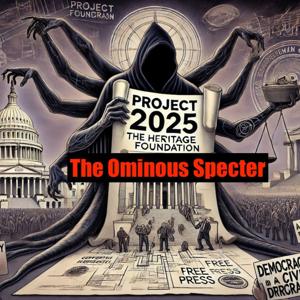
Project 2025: The Ominous Specter Ladies and gentlemen, we find ourselves standing at the precipice of a dark and foreboding future, one in which the very foundations of our democracy are under siege. The threat we face is not an external one, but rather a cancer that has metastasized within the body politic itself. I speak, of course, of the insidious manifesto known as Project 2025 – a blueprint for authoritarian rule that masquerades as a conservative vision for the United States. As we delve into the depths of this pernicious document, crafted in the shadowy halls of the Heritage Foundation, it becomes abundantly clear that we are witnessing nothing less than a frontal assault on the principles that have long sustained our republic. Project 2025 is not merely a misguided set of policy proposals; it is a calculated attempt to dismantle the very fabric of our democratic institutions, to concentrate power in the hands of a few, and to impose a rigid ideological orthodoxy on a nation that has always prided itself on its diversity and its commitment to individual liberty. At its core, Project 2025 seeks to reshape the federal government in the image of a conservative dystopia. Its proponents, consumed by an insatiable hunger for power and an unwavering commitment to their ideological agenda, have meticulously crafted a roadmap for the systematic erosion of checks and balances, the suppression of dissent, and the consolidation of executive authority. It is a vision that should send a shiver down the spine of every freedom-loving American, for it represents nothing less than a repudiation of the very principles upon which this nation was founded. The architects of Project 2025 argue, with a level of audacity that borders on the delusional, that the federal bureaucracy is overrun with unaccountable liberals who impede their agenda. Their solution? A purge of Stalinist proportions, reclassifying tens of thousands of civil servants as political appointees, effectively transforming the machinery of government into an apparatus of ideological conformity. The implications of this proposal alone are staggering – the eradication of expertise, the subversion of meritocracy, and the creation of a loyalty-based system that would make even the most fervent authoritarian blush. But the assault on democratic institutions does not end there. Project 2025's disdain for the separation of powers is as blatant as it is dangerous. Its vision of a "unitary executive theory" is nothing short of a repudiation of the very principles enshrined in our Constitution. By seeking to exert control over independent agencies like the Department of Justice and the FBI, the project's architects aim to transform these bastions of impartiality into instruments of partisan enforcement. It is a move that would make Richard Nixon's transgressions seem like mere child's play, a power grab of such magnitude that it threatens to unravel the very fabric of our democracy. And yet, even as we r

More shows like Project 2025: The Ominous Specter

Fiction - Comedy Fiction by The Sunset Explorers

Fiction - Comedy Fiction

6,448 Listeners

The Ezra Klein Show by New York Times Opinion

The Ezra Klein Show

15,904 Listeners

What's in Project 2025? by KALW

What's in Project 2025?

34 Listeners