Project 2025: The Ominous Specter

Project 2025: The Ominous Specter

Download on the App Store

Project 2025: The Ominous Specter episodes

  • "Project 2025: Reshaping American Governance or Undermining Democracy?"
    Project 2025 began with a clandestine meeting of political strategists and conservative activists in the spring of 2022, their goal clear and unsettling: to engineer a dramatic transformation of American governance. By April 2023, this ambition took written form—a sprawling, 900-page policy blueprint released by the Heritage Foundation and dubbed Mandate for Leadership. Its stated purpose was simple: destroy the so-called “Administrative State” and concentrate presidential power like never before.
    Supporters of Project 2025 call it a necessary overhaul, arguing that “an unaccountable and biased bureaucracy” has long obstructed the will of the people. The plan’s central premise is to place the entire federal executive branch, including agencies like the Department of Justice and the FBI, under direct White House control. As Kevin Roberts, Heritage Foundation president, declared, “All federal employees should answer to the president.” The project’s architects are explicit—they want to rid agencies of perceived ideological opponents, filling key roles with loyalists on “Day One.” They envision the president hiring scores of political appointees with no expiration date, using what’s known as Schedule F. Under this system, career civil servants could be transferred into politically appointed positions, stripping away their traditional legal protections against arbitrary removal or political interference.
    Kiron Skinner, who authored the State Department section of Project 2025, was blunt about her intentions: remove all senior staff and bring in conservatives ready to serve the administration's agenda. When interviewer Peter Bergen pressed her in June 2024 to provide examples of bureaucratic resistance, she came up empty handed. Despite this, the plan moves forward.
    Concrete proposals are sweeping. Project 2025 prescribes eliminating the Consumer Financial Protection Bureau and the United States Agency for International Development outright. The Department of Government Efficiency, led by Elon Musk, wasted no time, dissolving entire agencies, laying off tens of thousands, and initiating a government-wide return-to-office mandate. These personnel moves layered chaos atop the rollback of existing policy, leaving many agency missions in limbo.
    In criminal justice, Project 2025’s recommendations are transformative and controversial. The agenda calls for the Department of Justice to charge or remove local prosecutors who, in their view, fail to sufficiently prosecute crimes like low-level marijuana possession or shoplifting. This would dismantle the tradition of local prosecutorial discretion, potentially pressuring DAs elected on reform platforms to abandon their priorities for fear of federal retribution. The plan also aims to expand federal law enforcement into local jurisdictions deemed “soft” on crime. According to the Brennan Center for Justice, these changes would shift the balance of power away from local communities and toward a politically dri
    This content was created in partnership and with the help of Artificial Intelligence AI.
    5 min
  • Project 2025: Shaping the Future of American Governance
    Project 2025 began quietly in conservative conference rooms but today stands at the center of a storm over the future of American governance. Born from the Heritage Foundation and assembled by over one hundred right-leaning partners, its 900-page “Mandate for Leadership” lays out not just a governing plan for a future Republican administration, but a wholesale reimagining of the federal government itself. Supporters rally around its stated purpose: as Heritage’s Kevin Roberts says, “We’re going to impose the will of the people through a reinvigorated executive branch.” Critics, however, warn of what the American Civil Liberties Union calls “a blueprint for replacing the rule of law with right-wing ideals.”
    One of Project 2025’s boldest proposals is placing the entire executive branch—agencies like the Department of Justice, the FBI, even the Federal Communications Commission—under direct presidential control. The aim, described by Roberts as “ending the era of the ‘independent’ bureaucracy,” is rooted in the controversial unitary executive theory. The project calls for every senior official in the State Department to be replaced by a president’s handpicked loyalists, bypassing the usual Senate confirmation process. Kiron Skinner, who authored the State Department chapter, explained her vision by insisting most career employees are “too left-wing” and must make way for “warriors for the conservative agenda.”
    The methods are as consequential as the proposals. Project 2025 revives the idea of “Schedule F,” a bureaucratic mechanism that lets a president reclassify tens of thousands of civil service jobs, stripping long-held protections. The National Federation of Federal Employees warns that by transforming apolitical government roles into political appointments, Project 2025 would make it nearly impossible for career staff to resist pressure or political overreach. As one union leader put it, “Without civil service protections, federal employees will be powerless to stop them.”
    The details ripple into almost every corner of American life. A return-to-office mandate for federal workers, for example, upends years of flexible work arrangements, with federal employees ordered back to their offices, often within tight timelines. The Consumer Financial Protection Bureau, an agency created after the 2008 financial crisis to oversee banks and safeguard consumers, is marked for elimination. Agencies like USAID, which manages American humanitarian aid abroad, have already faced drastic cuts and layoffs, with numbers reaching into the hundreds of thousands according to Challenger, Gray & Christmas.
    Labor unions also appear squarely in the project’s crosshairs, with proposals to ban public-sector unions, eliminate card check elections, and speed up the process to decertify existing unions. Another core promise is what Project 2025 calls the “restoration of the family.” The authors advocate policies that would restrict abortion, curtail LGBTQ+ rights, and re
    This content was created in partnership and with the help of Artificial Intelligence AI.

    5 min
  • Radical Republican Agenda Aims to Dismantle Federal Government
    Project 2025 is not just another policy blueprint; it is a sweeping, meticulously detailed playbook designed to overhaul how the federal government operates, reshape the civil service, and realign American governance along sharply conservative lines. Crafted by the Heritage Foundation with contributions from over 100 coalition partners and released in April 2023, the 927-page document, titled “Mandate for Leadership: The Conservative Promise,” outlines concrete steps a newly elected Republican president could take starting from day one in office.
    Proponents of Project 2025 describe it as a plan to “destroy the Administrative State,” targeting what they argue is an unaccountable bureaucracy captured by liberal interests. Kevin Roberts of the Heritage Foundation put it bluntly: “All federal employees should answer to the president.” The vision centralizes control of the entire executive branch, grounding itself in an expansive interpretation of the unitary executive theory. According to the project’s documentation, independence for agencies such as the Department of Justice, the Federal Communications Commission, and others would be eliminated. Leadership at these institutions would be swept clean and staffed by presidential loyalists, many of whom could be installed in “acting” roles that bypass Senate confirmation.
    A key mechanism enabling this transformation is Schedule F, a controversial classification devised to move large numbers of nonpartisan civil servants into at-will positions. Without traditional civil service protections, these employees could be easily removed and replaced with political appointees. Heritage Foundation writers stress that this is essential to secure rapid, loyal implementation of the president’s agenda. Critics, however, warn that the move exposes federal government positions to unchecked political influence and undermines the longstanding principle of impartial public service.
    Listeners may recognize some of these ambitions from earlier efforts under President Trump. This time, Project 2025 comes armed with a detailed 180-day playbook and ready-to-sign executive orders designed to implement change with unprecedented speed. As reported by Government Executive, the plan’s first phase has already resulted in the abrupt dissolution of agencies such as the Consumer Financial Protection Board and USAID, accompanied by mass firings spanning across more than two dozen agencies. Challengers, including federal employee unions like the NTEU, have launched lawsuits, arguing these actions violate long-standing legal protections for government workers.
    Project 2025 reaches well beyond administrative restructuring. In criminal justice, for example, the document spells out proposals directing the Department of Justice to directly intervene in cases where local prosecutors are viewed as too lenient—potentially removing them from office. The Brennan Center points out that such measures could limit prosecutorial discretion and pres
    This content was created in partnership and with the help of Artificial Intelligence AI.
    5 min
  • Transforming American Governance: The Ambitious and Controversial Project 2025
    Project 2025 is not just a policy blueprint—it’s a movement aiming to remake American governance from the ground up. Growing out of the Heritage Foundation’s nearly 1,000-page Mandate for Leadership, Project 2025 lays out detailed steps to reshape the federal government in ways that, in its authors’ words, will “destroy the Administrative State.” Supporters see it as a plan to bring an unaccountable bureaucracy under control, while critics warn it risks undermining the checks and balances at the heart of American democracy.
    At the heart of Project 2025 is an ambitious assertion of presidential control over the federal government. The proposal rests on the controversial unitary executive theory—a vision that would give the president direct authority over agencies traditionally considered independent. According to Heritage Foundation president Kevin Roberts, “All federal employees should answer to the president.” That’s not an abstract idea; the plan explicitly calls for replacing civil service protections with the so-called Schedule F scheme, permitting mass firings and replacing thousands of current staffers with political loyalists who can be hired—and fired—at will. The stated aim is to ensure government personnel are “aligned with the president’s vision,” a move that legal experts like those at the ACLU say could erode the rule of law and the traditional separation of church and state.
    One of the most consequential aspects of Project 2025 is its Day One playbook—hundreds of executive orders prepared for immediate signature by a new Republican president. These directives aren’t vague. The plan recommends, for example, eliminating entire agencies such as the Consumer Financial Protection Bureau. It also outlines how to dismiss all Department of State leadership before the next inauguration, replacing them with interim officials who are “ideologically vetted,” bypassing Senate confirmation. Kiron Skinner, who contributed to the State Department chapter, told journalist Peter Bergen this summer, “Most State Department employees are too left-wing and must be replaced by those loyal to the president,” though she could not name concrete examples of alleged obstruction.
    The intended changes go far beyond personnel shuffles. Project 2025 includes proposals for increasing executive control over policy on education, health, and the environment—often with the goal of terminating or rolling back regulations deemed “woke” or outside a conservative agenda. For example, its environmental proposals would gut major climate initiatives and environmental protections, while social policy sections support rolling back abortion rights and LGBTQ protections. Heritage Foundation materials state that these moves are needed to “put the people back in charge,” but organizations like the Center for Progressive Reform warn that such changes could devastate protections for workers, the public’s health, and marginalized communities.
    Concrete steps are already underway. S
    This content was created in partnership and with the help of Artificial Intelligence AI.
    6 min
  • Radical Restructuring or Democratic Disaster? The Controversy Surrounding Project 2025
    Project 2025 has emerged as one of the most ambitious and controversial blueprints for American governance in recent memory. Initiated by the Heritage Foundation and backed by a coalition of over 100 conservative organizations, the project’s stated mission is to radically restructure the federal government and centralize executive power, promising what supporters call a return to accountability and efficiency. Critics, meanwhile, warn of its sweeping threats to democratic norms, federal checks and balances, and the livelihoods of millions.
    Unveiled in the form of a 900-page manifesto titled “Mandate for Leadership,” Project 2025 provides granular directions, agency by agency, for an incoming administration determined to overhaul how Washington operates. According to the Heritage Foundation, the “heart of the project” is dismantling what they label as an unaccountable bureaucracy that has “drifted too far from the people’s will.” Kevin Roberts, Heritage’s president, bluntly declared, “All federal employees should answer to the president.” This vision is animated by an expansive concept known as the unitary executive theory, essentially arguing that the president should have direct control over all executive branch agencies, shedding their current independence.
    For listeners wondering about concrete changes, consider the plan for the Department of State. Project 2025 advocates for the wholesale removal of agency leadership officials before Inauguration Day, replacing them with individuals hand-picked for strict ideological alignment. Kiron Skinner, who penned the State Department chapter, envisioned a department led exclusively by loyalists, aiming to “remove those not aligned with the president’s priorities.” This move is designed not just to hasten the implementation of foreign policy goals, but to prevent bureaucratic resistance—a key grievance among the plan’s authors.
    Just as striking is Project 2025’s approach to the federal workforce. Its architects call for the resurrection and expansion of “Schedule F,” a controversial employment status for federal employees. Schedule F would classify hundreds of thousands—if not more—career civil servants as political appointees, stripping them of longstanding job protections. The stated goal is a government “purged of entrenched opposition” so that “key decisions reflect the president’s will on day one.” Critics like the National Federation of Federal Employees describe this as a “scheme to purge career professionals,” warning it would turn public administration into a partisan machine vulnerable to corruption.
    The plan doesn’t stop at restructuring government jobs. Project 2025 lays out a 180-day playbook, which includes ready-to-sign executive orders to immediately strip environmental regulations, curb civil rights protections, and overhaul social welfare programs. According to the Center for Progressive Reform, executive actions under this strategy have already targeted the rollback of climate rul
    This content was created in partnership and with the help of Artificial Intelligence AI.

    5 min
  • "Transforming the Federal Government: Project 2025's Sweeping Reforms"
    Project 2025 is reshaping the conversation about the role and reach of the federal government in ways that feel both sweeping and personal. Born from the Heritage Foundation’s “Mandate for Leadership,” this 900-plus-page policy blueprint divides nearly every federal agency and department into zones of targeted reform, all aimed at what its architects call “destroying the administrative state.” Heritage Foundation President Kevin Roberts summed up the mood behind it simply, declaring that “every federal employee should answer to the president.” That principle, experts say, guides the project’s plans to consolidate power at the top and move swiftly on a series of executive moves from day one.
    The scale of intended change is hard to overstate. Project 2025 outlines an operational playbook for the first 180 days of a new Republican administration. Its centerpiece is Schedule F—a government job classification that would allow the new president to reclassify tens of thousands of career civil servants as at-will political appointees. That means federal workers, who traditionally hold their positions regardless of party, could be replaced without cause by loyalists. Kiron Skinner, who authored the State Department chapter, suggested clearing out senior career officials before January 20 and quickly installing appointees who share the president’s views, bypassing regular Senate confirmation requirements. Skinner argues such moves are necessary to ensure ideological alignment, though when pressed by CNN’s Peter Bergen, she couldn’t cite a specific past obstruction by career diplomats.
    Concrete actions have followed rhetoric. When President Trump took office on January 20, he and Elon Musk’s newly minted Department of Government Efficiency hit the ground running. According to Government Executive and other outlets, entire agencies like the Consumer Financial Protection Bureau and USAID were targeted for elimination through “legally questionable means,” with the stated goal of cutting $1 trillion in spending. Executive orders soon followed, including one mandating that federal agencies may only hire one worker for every four who leave, and requiring return-to-office mandates for a federal workforce that had grown accustomed to remote work during the pandemic.
    Faced with the threat of losing job protections, over a quarter-million federal workers and contractors were facing layoffs by spring 2025, with forty-seven years of collective bargaining law challenged as unions raced to court. NTEU President Doreen Greenwald put it bluntly, calling it “an attack on the law, and on public service.” Opposition isn’t limited to labor groups. The ACLU has charged that Project 2025 is a “roadmap to replace the rule of law with right-wing ideals,” warning that the proposals could undermine legal norms, civil rights, and protections for marginalized groups. Legal scholars from both political parties have raised flags about weakening the separation of powers, endangering e
    This content was created in partnership and with the help of Artificial Intelligence AI.

    5 min
  • Conservative Playbook Unveiled: Project 2025 Aims to Centralize Executive Power and Reshape American Governance
    Project 2025 began quietly in conservative circles, with its origins traced to a Spring 2022 gathering of strategists and operatives in Washington. By April 2023, the Heritage Foundation had unveiled the nine-hundred-plus page blueprint, branding it “Mandate for Leadership: The Conservative Promise.” The document reads less like a policy wish list and more like a regime change manual, spelling out a dramatic vision for American governance under a future conservative administration.
    Kevin Roberts, president of the Heritage Foundation, captured the mood in a statement: “All federal employees should answer to the president.” This encapsulates the project’s signature ambition—greater centralization of executive power—rooted in what conservative legal theorists call “unitary executive theory.” According to analysis in The New York Times, this vision would go farther than any post-Nixon Republican platform by making the entire federal bureaucracy directly accountable to the president, erasing agency independence and civil service barriers that have existed for decades.
    The Project’s approach is methodical. Its 180-day playbook details how agency heads should be replaced immediately after inauguration, with thousands of ideologically vetted appointees stepping into critical roles. The controversial Schedule F personnel policy is central: it seeks to reclassify existing civil servants, strip them of job protections, and replace large swathes with loyalists, allowing the new administration essentially unlimited power to hire and fire across government. According to the National Federation of Federal Employees, this would have unprecedented ramifications—apolitical employees, many with deep expertise, would lose their shields from political interference and could be replaced at will, upending regulatory stability.
    Examples of proposed reforms are as concrete as they are sweeping. The plan advocates abolishing entire agencies, including the Consumer Financial Protection Bureau and the U.S. Agency for International Development. According to reporting on the current administration’s implementation efforts, the Department of Government Efficiency led by Elon Musk has already moved to shut down both of those agencies, simultaneously laying off over a quarter million federal workers and contractors—27 agencies impacted in total. The chaos of rapid layoffs has led to lawsuits: NTEU President Tony Reardon stated, “For over 47 years, the law has made clear that collective bargaining in the federal sector is in the public interest. We have taken the necessary action to file a lawsuit to uphold the law and stop this attack.”
    On the policy side, criminal justice stands as a stark example. Project 2025 recommends that the Department of Justice intervene in local cases where it believes “rule of law deficiencies” exist, targeting prosecutors who prefer diversion programs or refuse to prosecute low-level offenses. The Brennan Center underscores that this would politi
    This content was created in partnership and with the help of Artificial Intelligence AI.

    5 min
  • Redefining the American Landscape: Project 2025's Ambitious Plan to Reshape Federal Governance
    In April 2023, a coalition led by the Heritage Foundation released Project 2025, an audacious blueprint proposing to reshape American governance on a scale rarely seen in modern politics. The plan, spanning nearly a thousand pages, lays out a “Mandate for Leadership” that reaches into the fiber of every federal agency and policy domain, promising dramatic change beginning as soon as January 20, 2025, should the architects gain influence.
    Project 2025 isn’t just another policy playbook. According to The Center for Progressive Reform, it aims to radically restructure the executive branch by concentrating unprecedented power in the Oval Office. By relying on a controversial interpretation of the unitary executive theory, the project proposes to eliminate the independence of the Justice Department, the FBI, the Federal Communications Commission, and the Federal Trade Commission, placing them all directly under presidential control. Kevin Roberts of Heritage proclaimed, “All federal employees should answer to the president,” highlighting the drive for loyalty and ideological uniformity at the highest levels.
    A significant tool in this restructuring is Schedule F, a hiring scheme that allows for unlimited political appointments without civil service protections. Political loyalists would fill key posts overnight, while thousands of career officials could be dismissed or reassigned. The National Federation of Federal Employees warns this could “destroy the Administrative State,” stripping public servants of their protection and empowering the incoming administration to act with little oversight. Experts note this opens the door to corruption and abuse of power on a level unseen since the patronage systems of the 19th century.
    Concrete proposals go beyond staffing. Project 2025 calls for dismantling the Consumer Financial Protection Board and the United States Agency for International Development, as seen in recent attempts to eliminate these agencies under the current administration, which has already fired hundreds of thousands of workers. The American Federation of Government Employees and National Treasury Employees Union have filed lawsuits, arguing, “For over 47 years, the law has made clear that collective bargaining in the federal sector is in the public interest. We have taken the necessary action to file a lawsuit to uphold the law and stop this attack.” Meanwhile, chaotic return-to-office mandates and office closures serve a dual purpose: savings, and making remote work, long a civil service perk, much harder.
    Education policies advocated by Project 2025 are even more sweeping. Brookings experts describe proposals to shutter the Department of Education, eliminate Head Start and Title I funding, privatize the federal student loan program, and rescind protections for LGBTQ+ students. The report’s authors, many of whom served in the first Trump administration, envision a landscape where federal enforcement of civil rights is severely curtaile
    This content was created in partnership and with the help of Artificial Intelligence AI.

    5 min
  • Ambitious "Project 2025" Seeks Sweeping Government Overhaul Under Republican Administration
    Project 2025 has become one of the most ambitious—and controversial—proposals to reshape American governance in modern times. Unveiled by the Heritage Foundation and backed by a coalition of over 100 conservative groups, this nearly thousand-page blueprint envisions a sweeping overhaul of the federal government if a Republican president takes office in January 2025. Its stated mission is nothing short of a root-and-branch restructuring: dismantle the so-called “administrative state,” reassert presidential control, and roll back everything from agency independence to civil service protections.
    As Heritage Foundation president Kevin Roberts put it, “all federal employees should answer to the president.” At Project 2025’s core lies an aggressive reading of the “unitary executive” theory, which claims the president should exercise direct oversight of the entire executive branch. The project calls for the elimination of the independence of agencies like the Department of Justice, Federal Bureau of Investigation, Federal Trade Commission, and the Federal Communications Commission. This would mean every official answers directly to the Oval Office, erasing barriers that, until now, protected agencies from political interference.
    Concrete examples of this ambition spill across the plan’s 30 dense chapters. According to the policy document “Mandate for Leadership: The Conservative Promise,” Project 2025 proposes the immediate dismissal of all State Department leadership and their replacement by ideologically vetted appointees. Kiron Skinner, who led the chapter on the State Department, wrote that career officials should be replaced by those more loyal to the president’s agenda—noting she considered most State staff as “too left-wing.”
    The implications run deep for the federal workforce. Project 2025 reinvigorates the controversial “Schedule F” system, which would allow the mass reclassification of up to a million civil service positions to at-will federal jobs. As the National Federation of Federal Employees explains, everyone in these positions could be fired and replaced at the president’s discretion. This would gut long-standing protections intended to shield government workers from political retribution or interference, paving the way for a loyalist bureaucracy on “Day One.”
    Some of the earliest developments since the 2024 election have been dramatic. The new administration, working with an Elon Musk–led Department of Government Efficiency, has already attempted to dismantle entire agencies like the Consumer Financial Protection Bureau and the U.S. Agency for International Development. According to Politico, Musk’s team eliminated the CFPB and USAID, fired tens of thousands of federal workers, and rapidly imposed return-to-office mandates intended to shrink the government’s physical footprint. The White House described the effort as making government “more efficient and effective,” with President Trump issuing an executive order for agencies to hi
    This content was created in partnership and with the help of Artificial Intelligence AI.
    5 min
  • Sweeping Overhaul: Heritage Foundation's Project 2025 Aims to Reshape Federal Government
    Project 2025 stands at the center of the most audacious effort to refashion the American federal government in a generation. Announced by the Heritage Foundation in April 2023, it’s described by its architects as a “Mandate for Leadership,” a nearly 1,000-page policy blueprint orchestrated for the next conservative administration. Its goal is to radically re-engineer almost every corner of the federal bureaucracy, starting on day one after inauguration.
    The true scope of Project 2025 emerges in its detailed chapters—each targeting a federal agency, each brimming with concrete proposals and strict timelines. According to Heritage president Kevin Roberts, “We must tear apart the administrative state,” and his words echo through the policy pages. The plan’s core principle is to place the executive branch firmly under direct presidential control. This means eliminating the independence of agencies like the Department of Justice, the FBI, and the Federal Communications Commission. Kiron Skinner, the main author of the State Department section, put it bluntly: “Most State Department employees are too left-wing. They should be replaced by loyal conservatives appointed to acting roles with no Senate confirmation required.”
    Listeners should note the mechanism behind this overhaul: Schedule F. This little-known hiring classification, revived for this project, lets the president move career civil servants into politically appointed roles stripped of traditional protections. As the National Federation of Federal Employees explains, “Schedule F wipes out the guardrails against political overreach or abuse of power.” The vision is clear—on January 20, 2025, the new president would sign a prepared stack of executive orders, dismiss hundreds of agency leaders, and flood offices with handpicked loyalists.
    Elon Musk’s stewardship of the new Department of Government Efficiency (DOGE) has served as the shock troops for these changes, reports Government Executive. Entire agencies, like the Consumer Financial Protection Board and USAID, have already been eliminated. In tandem, tens of thousands of federal workers have been laid off, with over 280,000 jobs cut or slated for elimination across 27 agencies. This restructuring, according to statements from the American Federation of Government Employees, represents “an attack on the very foundation of public service.” Return-to-office mandates and the downsizing of federal office buildings, often with little coordination, have further upended daily life for civil servants.
    President Trump’s executive order from February 2025 codified much of the Project’s ethos. The Department of Government Efficiency must reduce federal hiring to only essential positions, and for every four employees departing, only one replacement is allowed—excluding national security, law enforcement, and immigration. Agencies must draw up plans for large-scale reductions in force. Trump asserts this will shrink the government “for a new era of pr
    This content was created in partnership and with the help of Artificial Intelligence AI.
    5 min

About Project 2025: The Ominous Specter

From the publisher's feed

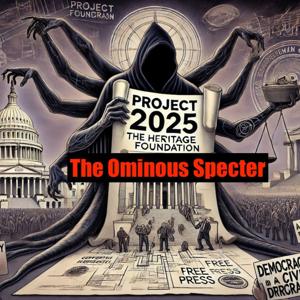
Project 2025: The Ominous Specter Ladies and gentlemen, we find ourselves standing at the precipice of a dark and foreboding future, one in which the very foundations of our democracy are under siege. The threat we face is not an external one, but rather a cancer that has metastasized within the body politic itself. I speak, of course, of the insidious manifesto known as Project 2025 – a blueprint for authoritarian rule that masquerades as a conservative vision for the United States. As we delve into the depths of this pernicious document, crafted in the shadowy halls of the Heritage Foundation, it becomes abundantly clear that we are witnessing nothing less than a frontal assault on the principles that have long sustained our republic. Project 2025 is not merely a misguided set of policy proposals; it is a calculated attempt to dismantle the very fabric of our democratic institutions, to concentrate power in the hands of a few, and to impose a rigid ideological orthodoxy on a nation that has always prided itself on its diversity and its commitment to individual liberty. At its core, Project 2025 seeks to reshape the federal government in the image of a conservative dystopia. Its proponents, consumed by an insatiable hunger for power and an unwavering commitment to their ideological agenda, have meticulously crafted a roadmap for the systematic erosion of checks and balances, the suppression of dissent, and the consolidation of executive authority. It is a vision that should send a shiver down the spine of every freedom-loving American, for it represents nothing less than a repudiation of the very principles upon which this nation was founded. The architects of Project 2025 argue, with a level of audacity that borders on the delusional, that the federal bureaucracy is overrun with unaccountable liberals who impede their agenda. Their solution? A purge of Stalinist proportions, reclassifying tens of thousands of civil servants as political appointees, effectively transforming the machinery of government into an apparatus of ideological conformity. The implications of this proposal alone are staggering – the eradication of expertise, the subversion of meritocracy, and the creation of a loyalty-based system that would make even the most fervent authoritarian blush. But the assault on democratic institutions does not end there. Project 2025's disdain for the separation of powers is as blatant as it is dangerous. Its vision of a "unitary executive theory" is nothing short of a repudiation of the very principles enshrined in our Constitution. By seeking to exert control over independent agencies like the Department of Justice and the FBI, the project's architects aim to transform these bastions of impartiality into instruments of partisan enforcement. It is a move that would make Richard Nixon's transgressions seem like mere child's play, a power grab of such magnitude that it threatens to unravel the very fabric of our democracy. And yet, even as we r

More shows like Project 2025: The Ominous Specter

Fiction - Comedy Fiction by The Sunset Explorers

Fiction - Comedy Fiction

6,448 Listeners

The Ezra Klein Show by New York Times Opinion

The Ezra Klein Show

15,904 Listeners

What's in Project 2025? by KALW

What's in Project 2025?

34 Listeners