
Sign up to save your podcasts
Or

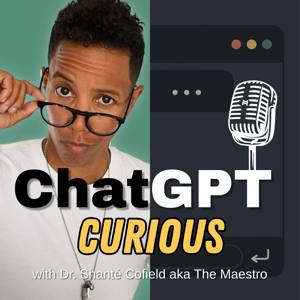


What's the best way to use AI? This is 100% my opinion, but it's also 100% my podcast, so that makes it 100% correct: custom solutions for personal pain points. AI is now so capable and so accessible that you can literally just ask Claude or ChatGPT to build you a personal web app, whether that's a workout tracker, a pet chore tracker, or a client dashboard, all in just a few minutes. In this episode I cover how Claude artifacts make this possible, and why you shouldn't let a few limitations stop you from trying.
You don't need to know everything AI can do to start using it, in fact, thinking about all the possibilities is likely the very thing that’s preventing you from getting started. In this episode I walk through 4 big picture steps for how to get started using AI (to do things, not just answer questions) in a way that won’t overwhelm you. My biggest piece of advice: stop looking at what everyone else is building, start with your own problems, and when you get stuck, just ask the robot.
Ever been mesmerized by a 100-page AI report you didn't actually need? That's heftnosis, a word I made up (and am very proud of) that describes the AI attraction and excitement that comes from equating output volume with value. In this episode I explain why I don’t label this verbosity-bias as slop, why so many new AI rollouts (Claude Duet included) feel more desperate than helpful, and why responsible AI use starts with asking yourself "Do I actually need all of this? Is it actually helpful?" I'm still very pro AI and I still want you to be ambitious with it, but more is not better. Better is better.
Inspired by a recent article I read, written by an engineering manager at Anthropic, this episode zooms out to look at the bigger picture and dives into the question of whether we are being ambitious enough with AI. We are no longer working with the AI of 2023, and in light of how capable present-day AI has become, I think that we can ask more of it. A certain level of tech tenacity will always be required in order to get the output that you want. This episode looks to consider how much creative ambition is also required.
In this episode I break down OpenAI's latest rollout, Dots, an always-on agent that lives inside ChatGPT and keeps doing things even after you've closed the chat. I cover what a Dot is, how it works, the logistics around pricing and access, the rules and guardrails, and what Dots can do. I also share my thoughts on abstraction in the agentic era and what the launch of Dots (and Meta Muse) speaks to in the bigger picture.
No gatekeeping here. In this episode I share my current AI tech stack, breaking down everything from my daily driver to my “once in a while but good to know about” tools. AI is inside of literally everything these days, and the majority of it isn’t helpful at all. I’m here to share the things that I actually use and that truly move the needle for me.
I recently used Claude to write an entire website proposal in about an hour, and the entire process revealed some pretty stark differences between corporate and creator AI use cases. In this episode I explain why outsourcing the final product is a great choice when the goal is convention, and an absolute no-no when convention is the goal is your voice.
In this episode I cover how AI access and permissions have changed since ChatGPT launched back in 2022, from zero connections and basically zero worry to the current YOLO approach of vibe coders and early adopters. I share what I currently give Claude access to, what my biggest concern is, and offer a read/write/act framework that you can use to decide what your AI should touch.
Is AI actually going to kill us all?There's been a ton of talk about this topic in the media lately, and so I'm dedicating an episode to sharing my thoughts. Spoiler alert, no, I don’t think that AI is going to kill us, but that doesn’t mean that this technology has no risk. I walk through the Jacob Coxon resignation thread and the fact that Anthropic's own alignment team admits there's genuine risk, then get into why the doom talk feels more irresponsible than credible. I don't think regulation is coming to save us anytime soon, but to me, the answer isn't fear, it’s curiosity.
In this episode I talk about the eleventy billion AI models that dropped in the past few weeks, including Anthropic's Fable 5.1 and Mythos 5.1, OpenAI's GPT-6 Astra, and Meta's new Muse agent. I get into former Anthropic researcher Jacob Coxon's resignation and his warning about AI risk, plus what it actually means that OpenAI just rated Astra "Critical" for cybersecurity capability. I also share why I think Meta Muse is a terrible idea and what all of these model drops say about the direction AI is heading.
From the publisher's feed

112,262 Listeners

61,518 Listeners

4,454 Listeners
245 Listeners
105 Listeners
263 Listeners
217 Listeners

19,975 Listeners