
Sign up to save your podcasts
Or

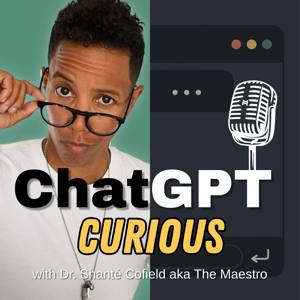


Inspired by a podcast episode my girlfriend recently listened to, I use this episode to tackle the question: “Is it cheating if you use AI”? Using the definition of cheating as a springboard, I break down why the school-and-sports framing most of us default when it comes to cheating, and why the topic warrants a more nuanced approach when considering AI. Along the way I discuss the role of the system at large, and round the episode out by diving into an equally exciting topic for me: how AI use affects trustworthiness.
In this episode I break down WTF a frontier model actually is, starting with what most people assume the term means versus the real technical definition. I cover how "frontier model" got coined in 2023, and why the term even came about at all, and how self-naming benefitted its creators. A bit of an etymology episode, this episode is more about the background of the term, and explores how new open weight models are challenging the definition.
In this episode I break down the best way to teach Claude how to complete specific tasks in a repeatable way: Claude Skills. I explain how Skills work, walk through how to build your own, and cover the real differences between Skills and Projects. As per always, the best way to understand this stuff is to try it yourself first hand, but hopefully this episode will give you some ideas and a nice jumpstart.
In this episode I get into AI watermarking, starting with Claude's new invisible watermark and Substack's "Scan for AI text" feature with Pangram. I break down the EU AI Act rules driving this, how OpenAI, Google, Meta, Microsoft, Mistral, and xAI are (or aren't) handling it, and my thoughts as to the actual motives behind why companies are rolling out these changes.
In this episode we’re celebrating one year of Prompting Curiosity and I’m sharing my unfiltered thoughts about where I stand on AI. I get into why the discourse on Threads is such a mess, why AI is an easy target given the enshittification of everything, and why capitalism (not AI capability) is the real driver behind the issues at hand. No predictions, no hype, just my two pennies on data centers, adoption, and why I'm not willing to give up something that genuinely helps my brain and my business.
In this episode I dig into open weight and open source AI models: what they actually are, why they keep showing up in AI news, and why I think they’re central to future-proofing our AI usage. I cover a bit of the technical aspect, the economic factors at play, and make the case that open weight models are a true hedge against getting stuck forever paying whatever a handful of AI companies decide to charge while simultaneously worrying that access could just be stripped away at any moment.
In this episode I get curious about Perplexity, a name I'd heard used a ton in the AI space but never actually knew what the heck it was. I break down what it is, how its citation-first approach set it apart from ChatGPT early on, and what it can actually do today: Deep Research, Labs, and its push into the agent space with Computer, Brain, and Comet. I also cover the legal issues that are serving as a sneak peek into the future of agent wars, and give my honest take on whether Perplexity is worth using.
After years of not knowing what to do with it, I finally decided to give deep research mode a try. In this episode I break down what deep research actually is, how it works under the hood, and how ChatGPT, Gemini, Claude, and Grok stack up against each other. I also walk through real use cases, prompting tips for getting a better report, and a safety reminder about hallucinations and bad citations.
In this episode I break down what AI agents actually are and how they differ from regular chat tools. Before diving in, I run through the recent flood of new model releases from Anthropic, OpenAI, and xAI, including the full story on the Fable 5 suspension and reinstatement. The episode ends with a practical mini cheatsheet on when an agent is actually the right tool for your workflow.
In this episode I break down MCP (Model Context Protocol): what it is, why Anthropic created it, and why it matters for anyone using AI tools. I cover MCP servers, the two-party connection, the API relationship, and the three main concerns to keep in mind when using MCPs. Fair warning: this one is mildly techy, far less than past episodes, but I do believe MCP is a term we're going to start hearing a lot more, so we’re getting curious and talking about it now.
From the publisher's feed

112,262 Listeners

61,518 Listeners

4,454 Listeners
245 Listeners
105 Listeners

263 Listeners

217 Listeners

19,975 Listeners