
Sign up to save your podcasts
Or



Based on Podcast App listening data
On this week’s episode: a mini tyrannosaur is a new species, ants redesign to avoid illness, toxic lead gave humans the edge over Neanderthals, invasive fish are evolving to avoid eradication attempts, and how big mining projects — and attempts to hurry them along — can spell bad news for the environment.
This week: bees trained to keep track of time, eating small amounts of plastic can kill ocean animals, scientists spot winds blowing from our black hole, a "one-two punch" earthquake may be coming for the Pacific coast and what “drunken trees” can tell us about our warming climate.
On this week's episode: tracking down a stellar explosion, climate apathy, arctic foxes are key in northern food web, why golf balls lip out of holes and making snake bites less deadly.
On this week's episode: studying a rare visitor to our solar system, eating saturated fats can mess with our internal clocks, holding hands with our 2 million year old ancestors, woodpeckers drill into trees like hammers, and the pros and cons of geoengineering.
On this week's episode: selling sunlight on demand, rhinos roamed Canada’s Arctic 23 million years ago, making a more precise parachute using kirigami, the winner of this year's prestigious Gerhard Herzberg Gold Medal and uncovering widespread scientific fraud.
On this week's spooktacular episode: Wolves are afraid of the big bad human, methane spewing from Montreal’s largest snow dump, screaming babies make us hot to get our attention, baby pterosaurs died in a torrential storm and mind-controlling parasites turn bugs into zombies.
Nobel Prize in medicine for a leash on our immune system
Our immune system has enormous power to defend us against the wide range of pathogens and invaders that nature sends at us. But it’s a double-edged sword, and can target its powerful weapons against us as well. This year’s Nobel prize in Medicine or Physiology went to a group who discovered a critical mechanism that keeps the immune system in check, under normal circumstances, giving them new insights into the diseases that occur when it goes wrong.
Yogurt with a creepy-crawly secret ingredient
A team of researchers has duplicated an ancient recipe for yogurt that uses a unique ingredient to initiate fermentation: ants. They added squished ants to fresh milk, buried it in an anthill to incubate it, and enjoyed zesty yogurt soon after. A microbiological analysis showed that the ants contributed a bacteria to the yogurt that is also present in sourdough starter.
An ancestor of the largest dinosaurs was a dog-sized biped
Researchers have discovered a 230 million year old fossil high in the Andes of Argentina that is the precursor to the giant, long-necked sauropod dinosaurs like the iconic brontosaurus. This animal, however, is a two-legged herbivore that likely weighed less than 20 kilograms.
Nobel in physics awarded for laying the groundwork for quantum computing
Quantum tunneling is a strange phenomenon in which subatomic particles can pass through apparently impenetrable objects like magic. This year’s Nobel prize in physics was awarded to a team that discovered that this strange quantum phenomena can happen on larger scales too, and how their superconducting circuit also absorbs and emits energy at distinct energy levels, laying the groundwork for quantum computers.
Neanderthals systematically rendered fat from animal bones
Scientists think that the fragmented bones of at least 172 animals discovered at a Neanderthal site in Germany represent the remains of a large-scale processing site where they extracted nutritious and useful fat. This could be used for a range of things, from skin protection to preserving meat similar to pemmican.
Moose are hot. Are they bothered?
During the fall rut moose, particularly the males, are very active searching for mates and competing with rivals. This activity generates a large amount of heat, which could be a problem as moose don’t sweat. Scientists are investigating if, in a warmer climate, this might be interfering with their reproductive success.
On October 9, 1975, CBC listeners across the country heard David Suzuki introduce the very first episode of Quirks & Quarks. 50 years and thousands of interviews later, Quirks is still going strong, bringing wonders from the world of science to listeners, old and new.
On October 7, 2025 we celebrated with an anniversary show in front of a live audience at the Perimeter Institute for Theoretical Physics in Waterloo, Ontario. We had guests from a range of scientific disciplines looking at what we’ve learned in the last 50 years, and hazarding some risky predictions about what the next half century could hold.
Our panelists were:
Evan Fraser, Director of Arrell Food Institute and Professor of Geography at the University of Guelph, co-chair of the Canadian Food Policy Advisory Council, a fellow of the Pierre Elliot Trudeau foundation, and a fellow of the Royal Canadian Geographical Society.
Katie Mack, Hawking Chair in Cosmology and Science Communication at the Perimeter Institute for Theoretical Physics.
Luke Stark, Assistant Professor in the Faculty of Information & Media Studies at Western University in London, Ontario, and a Canadian Institute for Advanced Research Azrieli Global Scholar with the Future Flourishing Program.
Laura Tozer, Assistant Professor of Environmental Studies at the University of Toronto and director of the Climate Policy & Action Lab at the Department of Physical and Environmental Sciences at the University of Toronto Scarborough.
Ana Luisa Trejos, a professor in the Department Electrical and Computer Engineering and the School of Biomedical Engineering and Canada Research chair in wearable mechatronics at Western University in London, Ontario.
Yvonne Bombard, professor at the University of Toronto and scientist and Canada Research Chair at St. Michael’s Hospital, Unity Health Toronto, where she directs the Genomics Health Services Research Program.
Remembering Jane: a conversation with Jane Goodall on her storied career
Science lost a unique pioneering figure this week. Jane Goodall — primatologist, conservationist and activist — died at the age of 91. In 2002, she visited the Quirks & Quarks studio to talk with Bob McDonald ahead of the Canadian launch of her IMAX film Jane Goodall's Wild Chimpanzees. Bob and Jane spoke about how a girl growing up in urban England developed a love for animals, why scientists critical of her work were wrong, and how she was able to get close to the wild chimpanzees in Gombe Stream National Park.
Scientists can predict what colour a person is looking at based on brain activity
Scientists can predict what colour a person is looking at based on brain activity
Do you see what I see? New research says you do. Using brain imaging technology, scientists were able to predict what colour a person was looking at by reading their brain activity. This suggests that everyone responds essentially the same way to certain colours. Michael Bannert, a postdoctoral student at Tuebingen University in Germany, led the research published in the Journal of Neuroscience.
A Mars rover spots strong evidence of ancient life on the red planet
Earlier this month, NASA revealed that their Perseverance rover gathered what could be the strongest evidence yet that life may have existed on Mars. Using the rover's scientific instruments, scientists identified two minerals in an ancient river that they say are most often found as a result of microbial life here on Earth. They also set aside a sample for a future return mission. Joel Hurowitz, a geologist at Stony Brook University, says he can't wait to get the sample back to Earth to find out if it truly is a sign of life. It was published in the journal Nature.
Life at the limits: searching for 'Intraterrestrial' life deep within the Earth’s crust
A new book explores the latest research into the search for life deep inside the Earth, where the sun doesn't shine and oxygen doesn't reach. Scientists travel to some of the most geologically dangerous regions of our planet to understand how life forms in extreme environments, and answer deep questions like the origin of life on Earth and what life might be like off of our planet. Karen Lloyd, a subsurface biogeochemist from the University of Southern California, is the author of Intraterrestrials: Discovering the Strangest Life On Earth.
Let’s go, Grue Jays!
New kinds of birds are not usually discovered while browsing Facebook, but an ornithologist spotted something he’d never seen before in a photo, and tracked down the strange bird. Brian Stokes, a PhD candidate at the University of Texas at Austin, discovered it was actually a previously unknown hybrid of the familiar blue jay and a green jay, better known from southern parts of North America. Climate change likely played a part in bringing the two species together. Their research was published in the journal Ecology and Evolution.
Chimpanzees’ taste for ripe fruit is equivalent to two drinks a day
Chimpanzees in the wild can eat about 10 per cent of their body weight worth of fruit each day, and all of that fruit contains small amounts of alcohol. A team of scientists, including Aleksey Maro from the University of California Berkeley, wanted to understand just how much alcohol the chimps were getting from all this fruit. Three different methods of analysis over three years revealed the chimps were consuming the equivalent of two standard drinks a day. This suggests an evolutionary explanation for the human taste for ethanol. The research was published in the journal Science Advances.
Sea life says make homes, not bombs
After the defeat of Germany in 1945, an estimated 1.6 million tons of munitions were dumped into the Baltic sea off the German coast. A team of researchers, including marine biologist Andrey Vedenin from the Senckenberg Research Institute, wanted to understand how this potentially toxic legacy had affected sea life. They were stunned to discover thousands of animals surviving on the abandoned weapons despite the toxic burden they carried. The research was published in the journal Nature Communications Earth & Environment.
Structure of social media sites 'inherently lead to something problematic'
Our experience of social media sites is that they often descend into extremism, divisiveness and conflict, but this may be a feature, not a bug. In a pre-print study on arXiv, scientists simulated social media interactions between AI-generated participants to test various interventions to see how they'd impact the problems that emerge, such as the rise of echo chambers, the concentration of influence and the amplification of polarized voices. Petter Törnberg, a University of Amsterdam computational social scientist, said he was disappointed to learn that none of the interventions worked.
Your brain’s two halves hand off perception like a baton in a relay race
When something passes from one side of your visual field to the other, something amazing happens, according to new research published in the Journal of Neuroscience. Matthew Broschart, a postdoctoral fellow at MIT, tracked how the visual parts of each half of the brain, connected to each eye, do a coordinated dance to create a unified visual perception in primates.
The bear necessities of tracking B.C. grizzlies with machine learning software
Scientists and guardians from five First Nations of the Nanwakolas Council are working together to track individual grizzlies across the southern Great Bear Rainforest in B.C.. Using camera traps and machine learning techniques, they've developed an automated system through the BearID Project to identify individual bears and track them over the landscape. We spoke with conservation scientist and director of the BearID Project, Melanie Clapham, and Tashina James-Matilpi, from the Tlowitsis First Nation, the project's guardian logistics coordinator for the Nanwakolas Council.
From the publisher's feed
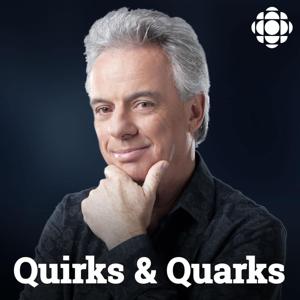
CBC Radio's Quirks and Quarks covers the quirks of the expanding universe to the quarks within a single atom... and everything in between.
Ranked by our users in the last 21 days
422 Listeners

112 Listeners

394 Listeners

154 Listeners

45 Listeners

177 Listeners
206 Listeners

59 Listeners
736 Listeners

72 Listeners
19 Listeners

27 Listeners

21 Listeners

166 Listeners

194 Listeners
244 Listeners

431 Listeners

16 Listeners
26 Listeners
10 Listeners

88 Listeners

346 Listeners
164 Listeners

4 Listeners

23 Listeners

66 Listeners
4 Listeners

268 Listeners

5 Listeners

4 Listeners

3 Listeners