
Sign up to save your podcasts
Or


Send us Fan Mail
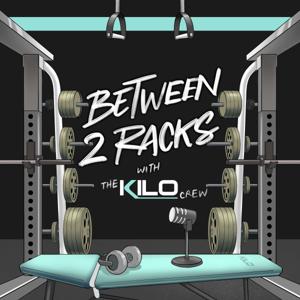
In this Rapid Fire Q&A episode of Between 2 Racks, the KILO Crew works through a wide range of programming questions that strength coaches and personal trainers run into when building real programs for real clients.
The conversation starts with whether different body parts can be trained for different goals within the same macrocycle, and why the answer depends on how far apart those goals are, the client’s limitations, and the recovery cost of the overall plan.
From there, the crew discusses why KILO has moved away from certain older testing models, including maximal strength deficit testing, and how assessment should evolve as coaching systems improve.
The episode also covers how bench angle changes triceps extension variations, why seated, standing, lying, and kneeling leg curls should be viewed more as programming variations than strict progressions, and why limiting lifts do not automatically belong on the first training day of the week.
Later, the discussion moves into neck training, conditioning across different macrocycle goals, nutrition adjustments around conditioning sessions, and the difference between relative strength ratios and strength ratios.
This episode is a reminder that good programming is not about memorizing rules. It is about understanding the principles well enough to know when a rule applies, when it does not, and what changes downstream when you adjust it.
Better coaching starts with better decision-making.
Stay Connected with KILO:
Have a question? Submit it for a Rapid Fire episode.
Learn more at trainkilo.com
Follow KILO on Instagram and YouTube.
 View all episodes
 By KILO Education
5
1717 ratings
Send us Fan Mail
In this Rapid Fire Q&A episode of Between 2 Racks, the KILO Crew works through a wide range of programming questions that strength coaches and personal trainers run into when building real programs for real clients.
The conversation starts with whether different body parts can be trained for different goals within the same macrocycle, and why the answer depends on how far apart those goals are, the client’s limitations, and the recovery cost of the overall plan.
From there, the crew discusses why KILO has moved away from certain older testing models, including maximal strength deficit testing, and how assessment should evolve as coaching systems improve.
The episode also covers how bench angle changes triceps extension variations, why seated, standing, lying, and kneeling leg curls should be viewed more as programming variations than strict progressions, and why limiting lifts do not automatically belong on the first training day of the week.
Later, the discussion moves into neck training, conditioning across different macrocycle goals, nutrition adjustments around conditioning sessions, and the difference between relative strength ratios and strength ratios.
This episode is a reminder that good programming is not about memorizing rules. It is about understanding the principles well enough to know when a rule applies, when it does not, and what changes downstream when you adjust it.
Better coaching starts with better decision-making.
Stay Connected with KILO:
Have a question? Submit it for a Rapid Fire episode.
Learn more at trainkilo.com
Follow KILO on Instagram and YouTube.
26,250 Listeners

30,185 Listeners

4,469 Listeners

2,177 Listeners

7,995 Listeners
10 Listeners

3,032 Listeners
45,948 Listeners

29,207 Listeners

3,126 Listeners
581 Listeners

19,524 Listeners

1,196 Listeners
63 Listeners
6 Listeners