
Sign up to save your podcasts
Or




The city of Raqqa symbolises the tragic fate of Syria over the past 12 years. From the start of the uprising against President Bashar al-Assad in 2011, the northern city was a major target for rebel groups. It then became the stronghold of Islamic State group terrorists, who made Raqqa the capital of their self-proclaimed caliphate. The city went through three years of hell – suffering atrocities, public hangings and slave auctions – before being bombed and then liberated in 2017 by an international US-led coalition. Since then, the "Pearl of the Euphrates" has struggled to get back on track.
Some Argentinians carry a heavy family secret. Under the country’s military dictatorship from 1976 to 1983, their fathers were police or military officers. As such, they were responsible for the disappearance of up to 30,000 people, according to human rights groups. These men have since been accused – and sometimes convicted – of crimes against humanity. After decades of living in shame and silence, some of their now grown-up children have decided to make their voices heard and recount their terrible family legacy. They call themselves "the children of those who committed genocide".
In this edition of Revisited we head to Canada to discover the diversity of the country's French accents and cultures as the use of French in the mainly English-speaking country declines. From Port Royal in Nova Scotia to Toronto via New Brunswick and Quebec, what remains of the 18th-century colony of New France? Our correspondent reports.
As record numbers of migrants continue to arrive on the small Italian island of Lampedusa, FRANCE 24 looks back at the shipwreck of 2013, which saw 368 people drown off the island. Our reporters met a witness to the tragedy, a survivor and the island's doctor who registered the deaths. All of them want to put an end to these shipwrecks, which have made the Mediterranean the deadliest migrant route in the world.
It has been 50 years since Chile's military junta came to power. On September 11, 1973, the army headed by General Augusto Pinochet launched a coup with the US' covert backing. Soldiers took over the presidential palace, ousting leftist President Salvador Allende, who committed suicide. Pinochet then stayed in power for 17 years, a period of dictatorship that saw more than 3,000 people killed or missing and around 200,000 fleeing into exile. Even today, the constitution that was tailor-made for him in 1980 is still in force, although there are lively debates about amending it. FRANCE 24’s Juliette Chaignon and Guillaume Gosalbes report.
During the Cold War, the US military conducted manoeuvres in Spain’s Andalusia region. On January 17, 1966, a bomber and a supply plane collided in mid-air. From the belly of the bomber, four thermonuclear bombs fell to the ground. There was no nuclear explosion, as luckily they were unarmed. But they scattered highly radioactive plutonium over 250 hectares around the sleepy farming village of Palomares. The US tried to downplay the incident and quickly cleaned up the site, but left 50,000 cubic metres of plutonium-contaminated soil. More than half a century later, the accident is still a source of tension between Madrid and Washington. FRANCE 24's Céline Schmitt and Armelle Exposito report.
Back in 2015, Guatemala's President Otto Perez Molina was forced to resign before being eventually found guilty of fraud and criminal conspiracy. His downfall seemed proof that impunity for corruption was not inevitable in a country plagued by 40 years of civil war. Perez was the prize catch of the International Commission against Impunity in Guatemala (CICIG), but this victory was short-lived. In 2018, the Commission was dissolved by the new president, Jimmy Morales, whom it was investigating. Since then, the justice system has been in the government's crosshairs: magistrates are arrested, imprisoned or forced into exile; journalists and lawyers risk the same fate. FRANCE 24's Laurence Cuvillier and Matthieu Comin report on the country's authoritarian drift.
In 1953, a gigantic storm swept across the North Sea and caused a tidal wave in the Netherlands, Belgium and the UK. Many dykes controlling water levels were simply swept away as the water spread far inland. While more than 300 people died in the UK, over 1,800 lost their lives in the Netherlands. At the time, around a fifth of the Netherlands was below sea level. More than 2,000 square kilometres of land were flooded there, including almost the entire province of Zeeland. Protective structures have since been created. But will they be sufficient to hold back the expected rise in sea levels due to climate change? FRANCE 24's Alix Le Bourdon reports.
In 1943, the Warsaw Ghetto uprising took place. It was a courageous act of resistance against the Nazis by several hundred Jewish fighters.
Since 1941, the Jewish population of the Polish capital – approximately 400,000 people – had been confined by the Nazi occupiers to a small neighbourhood in the center of the city. Many died as a result of starvation and diseases there. Others were sent to the Treblinka death camp.
Back in 2018, the signing of a peace deal between South Sudanese President Salva Kiir and his longtime rival Riek Machar created hope and optimism. The people of South Sudan, an independent nation since 2011, were emerging from a brutal civil war. However, five years later, this peace agreement is mostly respected only in Juba, the young nation's capital. Elsewhere, the fear of conflict remains palpable – a fear that has been further accentuated by the conflict in neighbouring Sudan. FRANCE 24's team reports.
From the publisher's feed
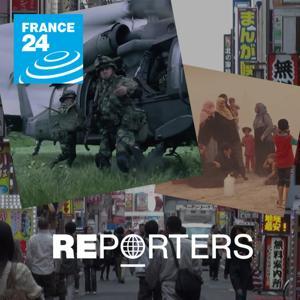
We return to places which have been in the news – often a long time ago, sometimes recently – to see how local people are rebuilding their lives. Sunday at 10:10pm. Or you can catch it online from…

4 Listeners

0 Listeners

0 Listeners

2 Listeners
1 Listeners

21 Listeners

5 Listeners
0 Listeners

4 Listeners

21 Listeners

6 Listeners

5 Listeners
39 Listeners
3 Listeners
4 Listeners
5 Listeners

1 Listeners

0 Listeners

0 Listeners

0 Listeners