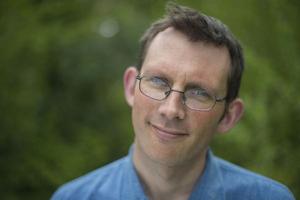
Rob Hopkins

Rob Hopkins

By Rob HopkinsSociety & Culture
Download on the App Store

Rob Hopkins episodes

  • Episode Twenty Five: What if we built an imagination infrastructure?
    Let’s imagine, and this takes quite a leap in Britain in 2021 I’ll grant you, but stay with me, that we had a government who recognised that we are living through a time of imaginative contraction alongside a climate and ecological emergency, a social justice emergency and so much more. Let’s imagine that they were able to recognise this as the crisis it is, that allowing a population’s imagination to contract is profoundly dangerous.
    And let us also imagine that they decided that they needed to put in place an infrastructure of policy, resourcing, approaches, economics, and so on, that created the best possible conditions for the imagination to flourish. What might that look like? How would it be to live in a world where that infrastructure was in place?
    Panthea Lee is a strategist, curator, organizer, and facilitator working for structural justice and collective liberation, and Cassie Robinson. Cassie is Deputy Director of Funding Strategy at The National Lottery Community Fund where she’s responsible for Innovation, Policy and Practice, and oversees the Climate Action Fund, the Digital Fund and the Emerging Futures Fund amongst others (these are very shortened versions of their amazing bios, click the links in their names for more).
    37 min
  • A 2030 to long for: the best of 2030 from Episodes 10-19.
    In which, with the help of specially-composed music by Ben Addicott and Rosie Issitt, we take a step into the 2030 that could result from our doing everything we could possibly do. Join Kwame Boateng, Suhaiymah Manzoor-Khan, Brian Eno, Scilla Elworthy, Robert Philips, Zach Norris, Andrea J. Ritchie Roman Krznaric, Jane Davidson, Hilary Powell, Dan Edelstyn, Sophie Leguil, Ash Perrin, Ben Tawil, Jane Perrone, Sherri Mitchell (Weh’na Ha’mu’ Kwasset), Josina Calliste, Chris Smaje, Tyson Yunkaporta, Lusi Alderslowe and Matt Willer as they step though time.
    42 min
  • Episode Twenty Four: What if we read more books?
    When was the last time you read a book cover to cover? And if you are still able to do this, do you feel you read in the same way you did, say, 20 years ago? How is the decline in our collective attention span affecting our ability to read and, by extension, our collective capacity for knowledge, wisdom and art? What do we lose when we lose our ability to focus? This was such a fascinating conversation, with two people who have given this question a great deal of thought.
    Maryanne Wolf is a scholar, a teacher, and an advocate for children and literacy around the world. She is the Director of the newly created Center for Dyslexia, Diverse Learners, and Social Justice at the UCLA Graduate School of Education and Information Studies. Previously she was the John DiBiaggio Professor of Citizenship and Public Service and Director of the Center for Reading and Language Research in the Eliot-Pearson Department of Child Study and Human Development at Tufts University. She is the author of Proust and the Squid: The Story and Science of the Reading Brain, Dyslexia, Fluency, and the Brain Tales of Literacy for the 21st Century and most recently of the brilliant Reader, Come Home: The Reading Brain in a Digital World.
    Sven Birkerts defines himself as an essayist, a teacher of writing, and the editor of a literary journal at Boston University called AGNI. He started out as a book reviewer, which led him into becoming a writer of essays and memoirs. In 1994 he wrote ‘The Guthenberg Elegies’, which explored the demise of reading and the rise of digital culture. It’s a phenomenal book. Then, in 2015, he wrote ‘Changing the Subject’, an update on his relationship with digital media, and a powerful cry for the importance of attention and imagination in a time where both appear to be waning.
    More recently he has become, as he puts it, “kind of obsessed, both in a very literal ‘get and out and do it’ way, but also thinking about it, by taking photographs. With his phone. As he puts it, “It has become a little fixation of some sort that has me thinking a lot about how we take in the world and what we keep and what serves us, and what is artistic and what isn’t”. He lives in Arlington, Massachusetts. I interviewed him previously as part of the research for 'From What Is to What If'.
    This was such a great discussion. I hope you love it. Do let me know what you think. And thanks as always to Ben Addicott for theme music and production.
    50 min
  • Episode Twenty-Three: What if street art could transform the world?
    Welcome to Episode 23 of our journey together into the imagination and into the powers of What If. Today we are looking at street art. Street art has stood alongside the fight for climate justice, the Black Lives Matter revolution, and pretty much every mass uprising for change through history. But is it just decoration? Or does it have the power to deeply shift a culture? To fire the collective imagination? And what if it was everywhere?
    I am joined today by two incredible, insightful, passionate masters of this particular artform. Ghanaian-born artist Tijay Mohammed combines his work as an artist, with numerous accolades and residencies, as well as working with the diverse communities he surrounds himself with. He lives in the Bronx, New York, and was one of the artists who created the huge Black Lives Matter mural in that city. He also maintains a studio in Ghana which serves as a sanctuary for visiting artists to interact with local residents, promoting multicultural dialogue through story circles and art workshops, a source of motivation for him in both his studio and teaching practice.
    Favianna Rodriguez is an interdisciplinary artist, cultural strategist, and social justice activist based in Oakland, California. Her art and praxis address migration, gender justice, climate change, racial equity, and sexual freedom. Her practice boldly reshapes the myths, stories, and cultural practices of the present, while healing from the wounds of the past. Her work serves as a record of her human experiences as a woman of color embracing joy, sexual pleasure and personal transformation through psychedelics as an antidote to the life-long impacts of systemic racism. She is the co-founder and president of The Center for Cultural Power, a national organization igniting change at the intersection of art, culture and social justice.
    Both are phenomenal, and I am so grateful they were able to find the time to join me. I hope you love this discussion. Do please let me know what you thought of it, using the comments box below. My thanks to you for supporting this podcast, to my guests, and to Ben Addicott for production and theme music. Join me next week when Favianna and Tijay join me in the Ministry of Imagination....
    41 min
  • Episode Twenty Two: What if we learned to embrace failure?
    Welcome to Episode 22 of 'From What If to What Next'. This week we are exploring failure. More precisely, what if we were able to create a culture in which failure is embraced, celebrated even, rather than feared, avoided or ridiculed? What would society look like if we embraced failure in politics, education, economics and everyday life, indeed if we learned from a young age that failure was just as important as success? There's a great What If question to stretch your imagination...
    My two guests have so many great insights into failure and its importance. Social visionary, entrepreneur and thought leader Simon Cohen strives to make the world a happier and more fulfilled place—he is uniquely placed as the individual who gave away his £1m company, Global Tolerance. A champion for media ethics, social justice and values, he expounds his wisdom as an international keynote speaker. He is also the first person in the UK to place an entire company on a one year sabbatical.
    And Carlos Zimbrón is the Co-founder and CEO of Fuckup Inc. He is also the Co-founder of WE ARE TODOS (cultural space), architect, art and history lover, who describes himself as “always curious” and was described by the Economic Times of India as “Not glamorising failure, just embracing it”.
    I hope you love it, and that you will share any thoughts and comments you have in the box below. My thanks to my guests, to you for listening and for supporting this podcast and to Ben Addicott for theme music and production. And just to prepare you, the episode where Simon and Carlos visit the Ministry of Imagination (which you'll receive next week) is amazing. One to look forward to.
    35 min
  • Episode Twenty: What if we addressed the trauma that lies beneath the world's problems?
    Welcome to Episode 20 of From What If to What Next. This feels like a bit of a landmark for us, our twentieth episode! Thank you for joining me on this journey. Do tell your friends to come join us... Any reflections on how you're finding the journey so far are most welcome. Seems like a good moment for that.
    The good news is that we have saved one of the very finest episodes to mark this moment. Today we are exploring the question of trauma, and I must confess that recording this conversation rather blew my mind, as it will no doubt blow yours. I had to lie down afterward and digest it for a while. I am joined by two amazing thinkers for this conversation. I hope you love it.
    Susan Raffo is a bodyworker, cultural worker and writer. For the last 15 years she has focused her work through the lens of healing justice with a particular interest in supporting individual and collective practices of safety and wellness. This also means attending to how generational and historical trauma shapes the present moment , including both internalized and systemic supremacy. She spent her first seven years of adulthood living in Bristol, England, particularly shaped by the anti-imperialism and sustainability movements of the 1980s (the protests at Greenham Common being an especially life-shaping experience). She has lived in south Minneapolis in the US for 30 years with her awesome partner, Rocki, and their daughter, Luca.
    Staci K. Haines is a national leader in the field of Somatics, specializing in intersecting personal and social change. Staci is the co-founder of generative somatics, a multiracial social justice organization bringing somatics to social and climate justice leaders and organizations. She specializes in somatics and trauma, and leads programs for healers, therapists, and social change leaders to transform the impact of individual and social trauma and violence. Her new book The Politics of Trauma: Somatics, Healing and Social Justice (North Atlantic Press 2019) is based on that work. She is the founder of generationFIVE, a community based organization whose mission is to end the sexual abuse of children within five generations.
    Both are phenomenal, and I am so grateful to them for coming on the podcast. My thanks as always to Ben Addicott for his production skills and our theme tune, to you for subscribing and making all of this possible, and please do leave your thoughts below. As mentioned in the podcast, Staci and Susan sent in the list of recommended readings, which I will copy below:
    Emergent Strategy: Shaping Change, Shaping World, We will not cancel us, and other dreams of transformative justice and Pleasure Activism: The Politics of Feeling Good by Adrienne Maree Brown.
    My Grandmother’s Hands by Resmaa Menakem.
    Fumbling Towards Repair: A workbook for community accountability facilitators by Mariame Kaba and Shira Hassan.
    Beyond Survival: Strategies and Stories from the Transformative Justice Movement by Leah Lakshmi Piepzna-Samarsinha and Ejeris Dixon.
    The Politics of Trauma: Somatics, Healing and Social Justice by Staci K. Haines.
    Mutual Aid: Building Solidarity during this crisis and the next by Dean Spade.
    Love and Rage, the path of liberation through anger by Lama Rod Owens
    Transform Harm: a website with many resources about Transformative Justice and ending violence
    Finding Our Way Podcast, by Prentis Hemphill
    Zehr Institute on Panel Transformative Justice with Ejeris Dixon, RJ Maccanni, and Nathan Shara. Video.
    Zehr Institute on Panel Transformative Justice with Ejeris Dixon, RJ Maccanni, and Nathan Shara. Video.
    Two Feathers Native American Family Services. "Healing the Soul Wound" with Dr. Eduardo Duran. April 10, 2020. His life’s work has been in Native American postcolonial psychology. Video.

    1 hr 5 min
  • Episode Twenty-One: What if dynasties of private wealth reimagined their relationship to money?
    It was recently announced that Chuck Feeney, the Irish American former airport duty free shopping entrepreneur who was worth $8bn, had, at the age of 89, succeeded in his goal of giving away all of his money to initiatives working to make the world a better place. Every cent. He suggested that to give away a huge fortune was far more fun than holding onto it. He once wrote “to those wondering about giving while living .. try it, you’ll like it”.
    In today's podcast we are exploring how it would be if Feeney's thinking were to be embraced by those holding the vast reserves of money that the world needs to address its complex problems right now. What if they shifted and recognised the need to let go of what they're holding onto? And how would it feel to do so?
    I'm joined by two amazing guests to discuss this. Dr Wanda Wyporska is Executive Director at The Equality Trust, the national charity that campaigns to reduce social and economic inequality. She is a Visiting Research Fellow at the University of York, a trustee of the Association of Chief Executives of Voluntary Organisations, Redthread Youth, and Equally Ours, as well as Governor of a primary school.
    Chuck Collins is the Director the Program on Inequality and the Common Good at the Institute for Policy Studies where he co-edits Inequality.org. He is author of the seminal book, Born on Third Base: A One Percenter Makes the Case for Tackling Inequality, Bringing Wealth Home, and Committing to the Common Good and co-author of Wealth and Our Commonwealth, a case for taxing inherited fortunes. His new book, The Wealth Hoarders: How Billionaires Pay Millions to Hide Trillions, is about the wealth defense industry and will be published in the UK in February 2021 and US in March 2021 by Polity Press.
    I hope you enjoy this conversation. Do let me know what you thought. My thanks to my guests, to you for subscribing to this podcast, and to Ben Addicott for production and our theme tune. See you next week when we join Wanda and Chuck at the Ministry of Imagination.
    32 min
  • Episode Nineteen: What if we rewrote the National Curriculum based on permaculture principles?
    By now, in this journey into 'From What If to What Next', it is clear that one of the key things in our world in 2021 that needs reimagining is our education system. In this episode, we explore how it might be if at the heart of that reimagining were permaculture principles. How would the underpinning of the National Curriculum with permaculture principles affect both what is taught, and how it is taught? Imagine a generation leaving school skilled in a diversity of practical sustainability skills, as well as being instinctive systems thinkers. After you've heard this conversation, anything less just won't do.
    This wonderful conversation is only possible thanks to my two wonderful guests. Lusi Alderslowe is the author of 'Earth Care, People Care and Fair Share in Education: The Children in Permaculture Manual' and has been engaging children in permaculture in formal, non-formal and informal settings around Scotland since 2005. She's a mother of two, a Forest School Leader, a human ecologist and co-founder and coordinator of the Children in Permaculture project for the Permaculture Association and Gatehouse School. A certified Children in Permaculture trainer, she teaches online courses in Engaging Children in Permaculture with students from Australia to Austria, Kenya to Costa Rica.
    From 2013-2018, Matt Willer was a full time humanities teacher at Reepham High School & College. It was during this time at this school that Matt decided to attempt to create a school allotment to inspire his students. After five years of non-stop work, and with the help of many amazing people, 'The Allotment Project' became a nationally recognised and celebrated secondary school allotment which subsequently won multiple awards.
    In 2019, Matt left full-time teaching to set up The Papillon Project, which is now a registered charity. The 'Allotment Project' at Reepham High School & College, in many respects, was the 'accidental pilot' project that inspired Matt to create 'The Papillon Project' so he, and others, can help other secondary schools and colleges in Norfolk to also inspire children and young people to lead more sustainable lives too.
    As always, do share your thoughts on this episode. We love to hear your reflections after the What If massage each episode gives your brain.
    48 min
  • Episode Eighteen: What if a revolution in relation to land unlocked a revolution of the imagination?
    Welcome to our first episode of 2021! We are planning an amazing series of podcasts for this year, and love that you are part of this exploration. In today's episode we bring together Josina Calliste, a health professional and community organiser who is one of the co-founders of Land in Our Names (LION), a black-led collective addressing land inequalities affecting black people and people of colour's ability to farm and grow food in Britain, and Chris Smaje, author of the book 'A Small Farm Future' and the brilliant blog of the same name.
    Our far-reaching conversation, which could have gone on for hours, explores our relationship with land, and how a reimagining of that could unlock so much. My thanks to both of my guests for their generosity and wisdom, and to Ben Addicott for production and theme music.
    35 min

About Rob Hopkins

From the publisher's feed

Podcast by Rob Hopkins

More shows like Rob Hopkins

Tara Brach by Tara Brach

Tara Brach

10,526 Listeners

Jacobin Radio by Jacobin

Jacobin Radio

1,460 Listeners

Les Pieds sur terre by France Culture

Les Pieds sur terre

226 Listeners

Science Weekly by The Guardian

Science Weekly

414 Listeners

Politics Weekly UK by The Guardian

Politics Weekly UK

268 Listeners

Where Should We Begin? with Esther Perel by Esther Perel Global Media

Where Should We Begin? with Esther Perel

14,903 Listeners

Today in Focus by The Guardian

Today in Focus

966 Listeners

Accidental Gods - The Thrutopian Podcast by Accidental Gods

Accidental Gods - The Thrutopian Podcast

151 Listeners

The Knepp Wilding Podcast by Knepp.co.uk

The Knepp Wilding Podcast

18 Listeners

Sense-Making in a Changing World by Morag Gamble: Permaculture Education Institute

Sense-Making in a Changing World

23 Listeners

From What If to What Next by Rob Hopkins

From What If to What Next

16 Listeners

Planet: Critical by Rachel Donald

Planet: Critical

88 Listeners

The Great Simplification with Nate Hagens by Nate Hagens

The Great Simplification with Nate Hagens

435 Listeners

The Rest Is Politics by Goalhanger

The Rest Is Politics

3,017 Listeners

Rare Earth by BBC Radio 4

Rare Earth

13 Listeners