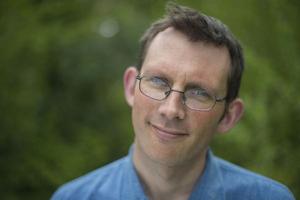
Rob Hopkins

Rob Hopkins

By Rob HopkinsSociety & Culture
Download on the App Store

Rob Hopkins episodes

  • Episode Nine: What if we lived in a Wellbeing Economy?
    Our question this time was slightly adapted from one sent in by subscriber Pamela Barnes. As the world attempts to claw its way back from the COVID19 pandemic, and as opinion polls show an overwhelming support for not ‘going back’ to how things were before, people are increasingly discussing and exploring new models for an economy that better needs the needs of the population as a whole. One of those key ideas is that of a Wellbeing Economy, an economy that delivers both human and ecological wellbeing.
    It is an idea that is being taken up by governments now in Scotland, New Zealand and Iceland, and attracting interest from further afield. But what would it be like to live in a Wellbeing Economy? What would daily life look like? What would change, and what would be the same? And how would it impact on democracy, fairness, inclusion? Big questions, but fortunately we are joined by two of the very best people to help us explore them.
    Dr Katherine Trebeck is Advocacy and Influencing Lead for the Wellbeing Economy Alliance and co-founder of Wellbeing Economy Alliance Scotland. She instigated the Wellbeing Economy Governments partnership and her book The Economics of Arrival was published in 2019. Yannick Beaudoin is Director-General for Ontario and Northern Canada with the David Suzuki Foundation. He brings a ‘new economics for transition’ lens to the organization to enable the transformation of Canada towards social and ecological sustainability.
    58 min
  • Episode Eight: What if communities had spaces where they could come together to imagine?
    In this episode we are exploring a question sent in by subscriber Joy Cherkaoui. One of the things a future in which imagination is able to flourish will need is spaces in which imagination and creativity are invited. Intentionally. These can take many forms, but we need them. What then are the ingredients of such spaces? What makes a good one? Who gets to create them? How can we ensure that they support and reflect the diversity of the place in which they are situated?
    Big questions. But luckily in this episode we are joined by two of the very best people to explore it. Tom Doust is Director of Experience and Learning at the Institute of Imagination in London, an organisation which champions opportunities for children and young people of all backgrounds to develop their imaginations, a quality vital to creativity and the next generation’s ability to adapt and thrive in a rapidly changing world. Marie Godart works in the field of theatrical creation, climate change and facilitating the imagination. She is currently working on ‘Play’, a proposed cultural space in the centre of Brussels dedicated to the power of play and imagination in our cities.
    I hope you enjoy this episode. Do let me know what you think, and tell your friends!
    45 min
  • Episode Seven: What if every city used Doughnut Economics?
    Doughnut Economics is rapidly moving from the fringe to the mainstream. Amsterdam in Holland was recently confirmed as the first ‘Doughnut City’, using the model to underpin its economic development strategy. Many other cities are also moving towards adopting this powerful and fascinating tool for reimagining cities and their economies. Our question in this episode, your mind-expanding piece of summer listening, is "what if every city used Doughnut Economics?'
    As usual, I have sought out the two very best people to help me explore this. Kate Raworth is an economist focused on making economics fit for the 21st century. Her book Doughnut Economics: seven ways to think like a 21st century economist is an international bestseller that has been translated into 18 languages. She is co-founder of Doughnut Economics Action Lab, which works with change-makers to turn Doughnut Economics from a radical idea into transformative action. She teaches at Oxford University and Amsterdam University of Applied Sciences.
    Marieke van Doorninck is Alderman for Sustainability and Urban Development for the City of Amsterdam. From 2006 until 2014, she was a member of the Municipal Council for the GreenLeft party, of which she was the party chair since 2009. Before that, she worked for different organisations focusing on refugees and women’s rights. She is one of the key people working with Kate and the Doughnut Economic Lab team to bring the Doughnut model to Amsterdam.
    The conversation that followed, and the new vision it opened up, is fascinating, and I hope you really enjoy it. Doughnut Economics creates, by identifying the 'safe space' in which our city economies need to operate, a powerful imaginative space. As usual, do let me know what you think.

    48 min
  • Episode Six: What if imagination were a universal right?
    Allow me to present one of my very favourite episodes of ‘From What If to What Next’ thus far. The question we explore is ‘What if imagination were a universal right?’ It emerges from the argument in ‘From What Is to What If’ that imagination is, to a degree, a function of privilege, and that we need to create the conditions for everyone to be able to live a life rich in imagination. But how do questions of colonisation, systemic racism and social exclusion impact this? What is the state of health of our collective imagination today, and how does the fact that we have failed to see imagination as a universal right manifest in the world around us today?
    My guests to explore this are Ariane Conrad, writer, activist and ‘book doula’ (editorial consultant and collaborative author) who tends to collaborate with authors who defend the rights of people and planet, and Dr. Masum Momaya who has worked at the intersection of arts, culture, social justice and human rights for more than 20 years as an educator, museum curator, writer and activist. You’re going to love this episode, and I would love to hear your thoughts and what it brings up for you.
    My thanks as always to Ben Addicott for theme music and production.
    48 min
  • Episode Five: What if we treated people at the end of their lives with reverence, love and care
    This fifth episode of 'From What If to What Next' has the longest title of any of our shows thus far! It was sent in by subscriber Chris Wells. As we start, hopefully, to emerge from the COVID-19 pandemic, which has disproportionately affected older people, many people have experienced an end to their lives that was lonely and traumatic. How different would the world feel if its priorities had changed to being one where the end of life was treated with the same love and reverence as birth?
    My two guests for this episode are Mike Grenville and Mary Nally. Mike is a dying doula and independent funeral Celebrant. He runs workshops on 'death and dying' including Dying To Talk sessions. He has had a long involvement in the Transition movement and he lives in Frome. Mary lives in Summerhill in County Meath, Ireland. She has background in nursing, and founded an amazing organisation called Third Age ("where the third age of life is valued and celebrated"), which she will tell you about in the podcast. She is an Ashoka fellow.
    30 min
  • From What If to What Next: Episode Four: What if doctors' surgeries became catalysts for Transition?
    In our fourth episode, we bring together two of the UK's most pioneering doctors to explore what a very different future for healthcare could be like. What would it be like if doctors' surgeries were key players in the wider Transition of the community, actively stimulating a reimagining of food, energy, community and much more?
    In this episode we are joined by Dr Jane Myat, doing amazing work at the Caversham Group Practice in Kentish Town, North London since 1997. She is a passionate advocate of finding alternative patient-centred approaches to long-term conditions. Inspired by pioneering GPs such as Sam Everington and by our second guest here, and assisted by Transition Kentish Town, Jane founded the Listening Space, a project centred around a community garden in the courtyard of her family practice.
    Dr Michael Dixon is a Devon GP whose CV and list of roles within the NHS is glittering and includes numerous national leadership roles. To name just two, he is a Chair of the College of Medicine and Clinical Champion for Social Prescription (NHS England) and Chair of The Institute for Social Prescription.
    36 min
  • From What If to What Next: Episode Three: What if cities relocalised their food production?
    FWIWN3.mp3
    In this third episode of 'From What If to What Next', we're talking about food. Taking a question from Patreon subscriber Tony Buck, we are asking "What If towns and cities set out to intentionally relocalise their food production?" How would it work? Where would you start? How would you involve the local government? How would you ensure that it is inclusive?
    To explore this complex question, one that COVID-19 has firmly re-emphasised the importance of, we have two guests with many years of experience in this area. Dee Woods describes herself as a “food and farming action-ist and campaigner” and has been involved for many years in London, playing a role in many different projects, whilst also writing and speaking widely on issues around food insecurity, inequalities in food systems, participatory policy making, intersectionality and decolonisation.
    Christian Jonet is one of the founders and co-ordinators of the brilliant Ceinture Aliment-Terre Liégeoise ( Liége Food Belt) in Belgium, one of the most remarkable examples of a citizen-led re-imagining of a city's food production.
    I hope you love this episode. Please leave your comments and feedback below. My thanks to Ben Addicott for production and theme tune, and to you for subscribing to this podcast.
    40 min
  • Episode Two: What if a UBI sparked a revival of the imagination?
    In this second episode of 'From What If to What Next', we're talking about Universal Basic Income with Alexis Frasz, researcher and cultural strategist with Helicon Collaborative, and Phil Teer, author of 'The Coming Age of Imagination'. What would it be like to live in a world in which UBI was now an integral part of everyday life? How would life, and the world around us feel different? How might we re-frame UBI as a vital strategy for rebuilding our collective imagination? All too often, UBI is discussed as being an economic issue, but might imagination provide a fresh and essential lens through which to explore the idea?
    I hope you love this episode. Please leave your comments and feedback below. My thanks to Ben Addicott for production and theme tune, and to you for subscribing to this podcast.
    45 min
  • From What If to What Next: Episode One.
    Welcome to this, the first ever episode of 'From What If to What Next'. In this first episode, we meet singer, curator, event creator and lover of birdsong Sam Lee, speaking to us direct from a birdsong-filled forest, and Mya-Rose Craig, also known as 'Birdgirl', who is doing amazing work promoting birdwatching among young people and promoting BME engagement with the natural world.
    Subscribe to this podcast at www.patreon.com/fromwhatiftowhatnext and get it a full two weeks before everyone else, PLUS a subscribers-only podcast called 'The Ministry of Imagination', PLUS other treats such as my recent conversation with permaculture co-founder David Holmgren AND the opportunity to ask the What If questions that shape these episodes. All for just £3 a month.
    27 min
  • A taste of Episode 1 of 'From What If to What Next'
    Here is a taster of Episode One of 'From What If to What Next', my new podcast series. You can unlock this full episode, as well the exclusive 'Ministry of Imagination' podcast, and other exclusives, by subscribing at www.patreon.com/fromwhatiftowhatnext. This first episode speaks to Sam Lee and Mya-Rose Craig, and is deeply lovely.
    5 min

About Rob Hopkins

From the publisher's feed

Podcast by Rob Hopkins

More shows like Rob Hopkins

Tara Brach by Tara Brach

Tara Brach

10,526 Listeners

Jacobin Radio by Jacobin

Jacobin Radio

1,460 Listeners

Les Pieds sur terre by France Culture

Les Pieds sur terre

226 Listeners

Science Weekly by The Guardian

Science Weekly

414 Listeners

Politics Weekly UK by The Guardian

Politics Weekly UK

268 Listeners

Where Should We Begin? with Esther Perel by Esther Perel Global Media

Where Should We Begin? with Esther Perel

14,903 Listeners

Today in Focus by The Guardian

Today in Focus

966 Listeners

Accidental Gods - The Thrutopian Podcast by Accidental Gods

Accidental Gods - The Thrutopian Podcast

151 Listeners

The Knepp Wilding Podcast by Knepp.co.uk

The Knepp Wilding Podcast

18 Listeners

Sense-Making in a Changing World by Morag Gamble: Permaculture Education Institute

Sense-Making in a Changing World

23 Listeners

From What If to What Next by Rob Hopkins

From What If to What Next

16 Listeners

Planet: Critical by Rachel Donald

Planet: Critical

88 Listeners

The Great Simplification with Nate Hagens by Nate Hagens

The Great Simplification with Nate Hagens

435 Listeners

The Rest Is Politics by Goalhanger

The Rest Is Politics

3,017 Listeners

Rare Earth by BBC Radio 4

Rare Earth

13 Listeners