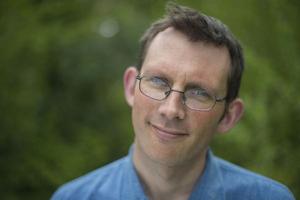
Rob Hopkins

Rob Hopkins

By Rob HopkinsSociety & Culture
Download on the App Store

Rob Hopkins episodes

  • Episode Seventeen: What if indigenous wisdom could save the world?
    Of all the 17 episodes of this podcast so far, this is the one that I had to go off somewhere quiet afterwards for a while to digest. It is a very powerful and fascinating discussion. My two guests are extraordinary, and I feel so blessed that they could make the time to join me in this wonderful What If exploration.
    Sherri Mitchell (Weh’na Ha’mu’ Kwasset (She Who Brings the Light)) is an attorney, an activist, an advisor, a speaker and so so so much more, including author of ‘Sacred Instructions: indigenous wisdom for living spirit-based change’. She was born and raised on the Penobscot Indian Reservation.
    Tyson Yunkaporta is an academic, an arts critic, and a researcher who belongs to the Apalech Clan in far north Queensland. He carves traditional tools and weapons and also works as a senior lecturer in Indigenous Knowledges at Deakin University in Melbourne. His recent book, Sand Talk: how indigenous thinking can save the world, is deeply wonderful and I am very much enjoying it right now.
    Our discussion focused around the question ‘what if indigenous wisdom could save the world?’, and I hope it blows your mind as much as it did mine. I would recommend taking some time after you’ve listened to it to go for a walk and digest it. It worked for me.
    57 min
  • Episode 16: What if we took play seriously?
    In Episode 16 of 'From What If to What Next' we explore the question of play. Play is a devalued aspect of both childhood and adulthood which has been declining now for decades, and its decline has had many knock-on effects across society. What would it be like if we decided to give it a huge boost, to create the ideal conditions for a re-emergence of play across education, economics, planning, and so much more? What might that look like?
    I am joined in this episode by two of the most amazing guests to dive deep into this act of imagining. Ash Perrin is the founder and CEO of The Flying Seagull Project, a UK-based charity that works around the world to bring happiness to children who are marginalised or suffering. His small, highly-skilled team of around twenty professional entertainers use music, arts, dance and clowning to spread smiles to more than 140,000 children in hospitals, orphanages and refugee camps around the world. His TEDx talk from last year is a must-watch.
    Ben Tawil is a play consultant and researcher. Working together with his colleague Mike Barclay as Ludicology, they have over 40 years’ experience of working with and on behalf of playing children. Their work includes play sufficiency assessments, research and action planning with municipalities and national organisations, consultancy on neighbourhood regeneration, developing evidence-based design recommendations, and working with schools and arts and cultural organisations to develop playful practices.
    I hope you love this inspiring and insightful episode. My thanks, as ever, to Ben Addicott for theme music and production, and to you for listening. Do share your thoughts and reflections, and join us next week when we join Ash and Ben on an umissable visit to the Ministry of Imagination.
    49 min
  • Episode 15: What if we learned to love weeds?
    During the first Coronavirus lockdown in the UK, a strange phenomenon was seen in towns and cities across the country. As councils became unable, or unwilling, to maintain their usual programmes of spraying weeds and cutting grass, pavements began to feature what had previously been dismissed as 'weeds'. In response, and using a hashtag #MoreThanWeeds, people began using chalk to circle them and to write their names, both common and Latin.
    In this podcast we explore how different the future would be if we were to cultivate a culture of better understanding and loving weeds. How would it affect the world around us, and how would it affect us? And how does the way we talk about that dazzling diversity of plants that we dismiss as 'weeds' give insights to how many people 'other' groups of people such as immigrants? What does our attitude to weeds tell us about ourselves?
    For this, our fifteenth episode, we are joined by two people who have been central to this chalky-fingered rebellion. Sophie Leguil is a freelance botanical consultant, writer, translator and nature tour leader. In 2019, she created the project "More Than Weeds", which hopes to change people's perception of urban flora and inspire authorities to adopt biodiversity-friendly practices. Sophie previously worked for the charity Plant Heritage, developing initiatives to conserve the diversity of garden plants in the UK. Having lived in Brussels and London, she became interested in urban greening issues, particularly in relation to planning. Using her background in ecology and horticulture, she is advocating for better landscaping choices in cities, to create healthy streets and spaces for both humans and wildlife."
    Jane Perrone is a freelance journalist, and presenter and producer of indoor gardening podcast On The Ledge. She is currently crowdfunding a book on houseplants called Legends of the Leaf. She loves growing houseplants inside and raising weird veg in her garden, and walking in the countryside with her hound Wolfie. She has a background in news journalism, spending more than 20 years working in local newspapers, then joining the Guardian as a reporter online and working her way up to an online news desk editor. In 2008 she became gardening editor at the Guardian, editing the gardens pages of Weekend magazine, making the Sow, Grow, Repeat podcast with Alys Fowler and writing features, news stories and blogposts. She left in 2017 to become fully freelance.
    My thanks, as always, to Ben Addicott for theme music and production. Do let me know what you thought of this episode. Thanks for listening.

    40 min
  • Episode Fourteen: What if we were to respond to the debt crisis with art and playfulness?
    One of the things we love most here at 'From What If to What Next' is stories of people bringing imagination to their activism, of impactful, thought-provoking projects that engage our imagination and our playfulness. One of the very best examples of this that we've ever seen is The Bank Job in Walthamstow, London, the work of printmaker Hilary Powell and filmmaker Dan Edelstyn, once described as "an act of generosity rare in the art world".
    Following the release of the great new book 'The Bank Job' (published by Chelsea Green, and keep an eye on your emails as on Wednesday we will have a subscriber-only competition to win a copy) and their impending new film about the project, we were thrilled to invite Dan and Hilary onto the podcast. The Bank Job eradicated £1.2 million of payday lending debt in their community and so much more besides. I already interviewed Hilary and Dan once before when researching 'From What Is to What If', you can find that interview here. It feels like something we will now do on a regular basis!
    As ever, thanks to Ben Addicott for theme music and production, and do let us know what you think of this episode.
    48 min
  • The Best of 2030: from episodes 1-9 of 'From What If to What Next'
    Every episode of 'From What If to What Next' begins with my inviting my guests to close their eyes and to walk us through what they imagine 2030 could be like if it were the result of our having done everything we could possibly have done. What would it feel like, taste like, sound like? It is often the most powerful and beautiful part of the podcast.
    And so, our producer Ben Addicott has painstakingly pieced together the best bits of those visions, and together with Tamsin Cornish, written beautiful music to accompany them. When all pieced together, this podcast offers you a deep and rich immersion in a future that is still possible to us, just. It's not Utopia, but it is a walk through the possible. As the poet Rilke once wrote, "the future must enter into you a long time before it happens". This podcast allows it to do so in the most beautiful way.
    If there was ever a time in history when clear, abundant and positive visions of the future were vitally needed, this is that time. I so hope you love this, and that the time Ben and Tamsin put into lovingly crafting has produced something you will cherish and love.
    1 hr 9 min
  • Episode Thirteen: What if governments factored future generations into law and policy?
    And so we reach our thirteenth episode. Wow. Thank you so much for being with us on this journey so far. We have an amazing episode for you today. We live in a world where so much political decision-making seems to be based on short-term thinking, the next opinion poll, next quarter, next election, yet so many of the problems we face are the result of our failing to think in the long term. We use the future as a place to dump the problems we can't resolve, to dump our pollution, carbon emissions, the thorny issues we'd rather avoid. Indigenous cultures and wiser civilisations of the past planned and thought with future generations in mind, so why can't we? And how different would the world be if we did?
    I am joined for this episode by Roman Krznaric, author of the recent book 'The Good Ancestor: How to Think Long Term in a Short Term World' and one of Britain’s leading popular philosophers, and also by Jane Davidson, author of '#futuregen: Lessons from a Small Country', Pro Vice-Chancellor Emeritus at the University of Wales Trinity Saint David and former Minister for Environment and Sustainability in Wales where she proposed legislation to make sustainability the central organising principle of government - the Wellbeing of Future Generations (Wales) Act.
    Our deep and far reaching conversation will hopefully give you a rich and delicious taste of how different the future would be if we lived in a world in which governments, organisations and indeed all of us, factored future generations into all of our decision making. Prepare your imagination for a good workout. As always, do let me know what you think....
    51 min
  • Episode Twelve: What if criminal justice resources were instead invested into communities of colour?
    You are in for such a treat today. It is my honour and privilege to share with you our twelfth episode of 'From What If to What Next'. In the US, as elsewhere, vast amounts of money are poured into mass incarceration and brutal and violent policing. What if instead that money was invested into the communities that bear the burnt of this approach to criminal justice, into healthcare, wellbeing, opportunity, safety? It's a huge question, and such a rich What If question. Luckily we are joined in this podcast by two amazing guests to explore it.
    Andrea J. Ritchie is a Black lesbian immigrant police misconduct attorney and organizer whose writing, litigation, and advocacy has focused on policing and criminalization of women and LGBT people of color for the past two decades. She is currently Researcher in Residence on Race, Gender, Sexuality and Criminalization at the Barnard Center for Research on Women, where she recently launched the Interrupting Criminalization: Research in Action initiative.
    Zach Norris is the Executive Director of the Ella Baker Center for Human Rights, author of We Keep Us Safe: Building Secure, Just, and Inclusive Communities, and co-founder of Restore Oakland, a community advocacy and training center that will empower Bay Area community members to transform local economic and justice systems and make a safe and secure future possible for themselves and for their families.
    These are tough times in the US. I was touched by both Andrea and Zach telling me how much they had been looking forward to recording this episode, how they had been looking forward to stepping out of the grave and knife-edge moment the US is living through and into some space to imagine how it could be. As Andrea puts it in this podcast, "our dreams are what will save us in this moment".
    I hope listening to this podcast moves you as much as it did to record it. My thanks for your support for this podcast, my thanks to Zach and Andrea, and to Ben Addicott for theme music and production. I would love to hear what you think of this episode. Do share your thoughts below. Thank you.
    39 min
  • Episode Eleven: What if we had the skills and abilities to talk to decision makers?
    Welcome to Episode 11 of From What If to What Next. So many of those who listen to this podcast are trying, in one way or another, to bring about change in the world. Whether it is the more confrontational activism demonstrated by groups like Extinction Rebellion and Black Lives Matter, or grassroots organising and working to build the alternative, we are all trying to understand how to be the most effective activists we can possibly be.
    Which leads us to this episode’s question, one that feels increasingly timely, one sent in by subscriber Elke Himmelmann. “What if we had the skills and abilities to talk to decision makers and convince them to act differently?”. What would those skills be, and how might we become adept at using them? We are joined by two amazing guests to explore this.
    Scilla Elworthy is a three times Nobel Peace Prize nominee for her work with Oxford Research Group to develop effective dialogue between nuclear weapons policy-makers worldwide and their critics. Her most recent book is The Mighty Heart: how to transform conflict (2020 ). Robert Philips founded Jericho in 2013 after a 25-year career at the top of the global communications industry. He leads its work on Responsible Tax, Good Work, Social Justice in Tech, Housing, Energy and Infrastructure. He is the chair of #JerichoConversations.
    As ever, my thanks to you for subscribing and for listening, and my thanks also to my guests and to Ben Addicott for production and theme music. Do let me know what you thought of this episode below.
    46 min
  • Episode Ten: What if we decolonised education?
    The uprising of Black Lives Matter and other organisations have led to many calls for the decolonisation of education at every level. But what does it mean to decolonise education? As Boris Johnson dismisses such calls as a "national orgy of self-embarrassment", does decolonising education mean simply changing the curriculum, or does it go much, much deeper than that? And what if we achieved it? What would it be like to live in a world where that had happened?
    In this deep, rich and fascinating episode of ‘From What If to What Next’ we are joined by two amazing guests to explore this...
    Suhaiymah Manzoor-Khan is an educator, writer and poet from West Yorkshire, UK. Her work disrupts and interrupts questions of history, race, knowledge and power - interrogating the political purpose of narratives about Muslims, migrants, gender and violence in particular. She is the author of poetry collection, Postcolonial Banter, co-author of the anthology, A FLY GIRL’S GUIDE TO UNIVERSITY: Being a woman of colour at Cambridge and other institutions of power and elitism and hosts the Breaking Binaries podcast.
    Kwame Boateng is passionate about de-colonial approaches to education and community development. Having extensive experience with Black youth in rural areas of the UK which are still lacking racial integration, Kwame decided to begin his studies in social anthropology and development focusing on race, identity and their respective intersections with education and transformative pedagogy. At present Kwame is working closely with ‘The Black Curriculum’ as an educator. Their objective is to incorporate Black British history into the national curriculum to aid a holistic understanding of British identity rooted in respect, reciprocity and empowerment.
    45 min

About Rob Hopkins

From the publisher's feed

Podcast by Rob Hopkins

More shows like Rob Hopkins

Tara Brach by Tara Brach

Tara Brach

10,526 Listeners

Jacobin Radio by Jacobin

Jacobin Radio

1,460 Listeners

Les Pieds sur terre by France Culture

Les Pieds sur terre

226 Listeners

Science Weekly by The Guardian

Science Weekly

414 Listeners

Politics Weekly UK by The Guardian

Politics Weekly UK

268 Listeners

Where Should We Begin? with Esther Perel by Esther Perel Global Media

Where Should We Begin? with Esther Perel

14,903 Listeners

Today in Focus by The Guardian

Today in Focus

966 Listeners

Accidental Gods - The Thrutopian Podcast by Accidental Gods

Accidental Gods - The Thrutopian Podcast

151 Listeners

The Knepp Wilding Podcast by Knepp.co.uk

The Knepp Wilding Podcast

18 Listeners

Sense-Making in a Changing World by Morag Gamble: Permaculture Education Institute

Sense-Making in a Changing World

23 Listeners

From What If to What Next by Rob Hopkins

From What If to What Next

16 Listeners

Planet: Critical by Rachel Donald

Planet: Critical

88 Listeners

The Great Simplification with Nate Hagens by Nate Hagens

The Great Simplification with Nate Hagens

435 Listeners

The Rest Is Politics by Goalhanger

The Rest Is Politics

3,017 Listeners

Rare Earth by BBC Radio 4

Rare Earth

13 Listeners