
Sign up to save your podcasts
Or

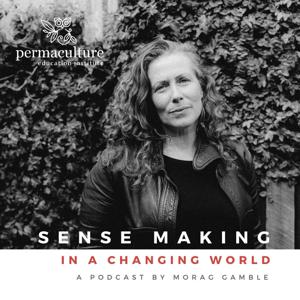


My guest today is Dr Claire Scobie, award winning author of Wild Hope: Stories of Living and Leading in Uncertain Times, her fifth book, out September 1.
In our conversation, we talk about how hearing that a tiny marsupial called the Bramble Cay melomys had been declared extinct in 2019 shifted Claire from denial into what she calls wild hope. We explore Prigogine's islands of coherence, how change happens in hyperlocal ways and ripples outward into whole systems, and why storytelling itself is a regenerative practice. Claire shares story after story from the book, from a community social media page in a small Northern Irish town that grew into a national food strategy, to the campaign to make Melbourne's Yarra River swimmable again, to what her husband Aden's Gumbaynggirr culture teaches about a world with no separate word for nature.
This was the first time Claire and I had met, and after we stopped recording we kept talking for ages. I loved this conversation, and I know you will too.
Claire is the award winning author of Last Seen in Lhasa, an enduring classic about Tibet, The Pagoda Tree and A Baboon in the Bedroom. She has written for the Observer, the UK's Daily Telegraph and the Sydney Morning Herald. Her training in regenerative practice includes the Work That Reconnects methodology and Regenesis, and she draws on applied improvisation and storytelling when she facilitates workshops. Through her company Wordstruck, she and her team help global companies, not for profits and sustainable businesses uncover the stories that shape their work and the change they want to make in the world.
Claire's Links
I'd love to hear from you. Text me here.
Support the show
_____
MORAG GAMBLE
Founder, Permaculture Education Institute
I am a possibilitarian and I believe in HumanKINDness.
In this podcast my guests and I explore How are we to live? Really live, as nature ourselves, tending the conditions where life can thrive. We ask How do we become the kind of humans this moment is asking us to be?
This podcast is one of my acts of myceliation. Each conversation is a thread in a vast network of people speaking up for life with love and care.
This podcast beams out from my hand-built solar-powered studio in the midst of a permaculture food forest in a permaculture ecovillage on Jinibara and Gubbi Gubbi country.
If this episode lights something in you, pass it to one person who needs it. That is how myceliation works.
What draws us to the garden — even when we don't have to grow anything? Even when life is full, when grief is heavy, when we barely have a balcony to spare?
In this conversation I speak with Hannah Moloney — presenter on ABC Gardening Australia, permaculture educator and designer, climate activist, cabaret performer, author and deliberate optimist. Her new book, Why We Garden: On the Joy and Wonder of Growing Things Even When We Don't Have To, has just been released and it made my heart sing.
Hannah surveyed thousands of people about why they garden. The answer that came back from 94% of respondents? Joy. Not food security. Not saving money. Joy. That alone tells us something profound about our relationship with the living world.
We talk about:
Hannah's call to action is simple and radical: get your hands in the earth, your feet on the ground. This knowledge is already in you. It doesn't need to be learned — only remembered.
Find Hannah and her book:
Watch this episode on YOUTUBE
I'd love to hear from you. Text me here.
Support the show
_____
MORAG GAMBLE
Founder, Permaculture Education Institute
I am a possibilitarian and I believe in HumanKINDness.
In this podcast my guests and I explore How are we to live? Really live, as nature ourselves, tending the conditions where life can thrive. We ask How do we become the kind of humans this moment is asking us to be?
This podcast is one of my acts of myceliation. Each conversation is a thread in a vast network of people speaking up for life with love and care.
This podcast beams out from my hand-built solar-powered studio in the midst of a permaculture food forest in a permaculture ecovillage on Jinibara and Gubbi Gubbi country.
If this episode lights something in you, pass it to one person who needs it. That is how myceliation works.
What is permaculture design and how can you use it in your daily life?
The permaculture design principles are at the heart of the answer to these questions, to understanding what permaculture is about, and how you can apply it to all kinds of contexts.
My guest in this episode of Sense-Making in a Changing World, Wilf Richards, has spent the last three and a half years collaborating with 40 permaculture educators from across Britain and beyond to write The Power of Permaculture Principles - an honest and generous exploration of the permaculture principles. Not a revision. Not a simplification. An invitation to think more deeply about the tools we already hold.
This book shares a history of each principle, its development since being formed and an analysis of how they are being used, understood and applied.
In our conversation we explore where the principles actually came from, how the language around them has evolved (and where it still needs to), what's missing (resilience, anyone?), why the principles might best be understood as a living system — a tree still growing, still branching — and how they can help all of us, wherever we are, find our way back into right relationship with the rest of nature.
Wilf is a permaculture designer and teacher based near Durham in the UK, co-managing a cooperative smallholding since 2001, and a Senior Tutor in the British permaculture diploma system. He came to permaculture through the road protest movement of the mid-1990s — that classic arc from anger at destruction to the desire to build something better — and has been living it on the land and in the community ever since.
The Book: https://www.permanentpublications.co.uk/port/the-power-of-permaculture-principles/
Wilf's Linktree: https://linktr.ee/wilf.richards
Wilf's email: [email protected]
Wilf's Substack: https://wilfrichards1.substack.com/
I'd love to hear from you. Text me here.
Support the show
_____
MORAG GAMBLE
Founder, Permaculture Education Institute
I am a possibilitarian and I believe in HumanKINDness.
In this podcast my guests and I explore How are we to live? Really live, as nature ourselves, tending the conditions where life can thrive. We ask How do we become the kind of humans this moment is asking us to be?
This podcast is one of my acts of myceliation. Each conversation is a thread in a vast network of people speaking up for life with love and care.
This podcast beams out from my hand-built solar-powered studio in the midst of a permaculture food forest in a permaculture ecovillage on Jinibara and Gubbi Gubbi country.
If this episode lights something in you, pass it to one person who needs it. That is how myceliation works.
When supply chains wobble and prices jump, the most powerful thing we can do is reconnect locally. Tianda Williams, co founder of UForage, is helping make local food visible again, from backyard abundance to roadside stalls and small growers.
On this episode of Sense-Making in a Changing World podcast we are diving into this super practical local food solution that you can all be part of.
UForage is a free, map-based mobile app that connects local growers, makers, and foragers with consumers to share, swap, or sell fresh, local food, effectively acting as a digital "farmers market in your pocket"
In 2022, Tianda's family lost their home in the Northern Rivers area to floods. It made them realise the significance of food security, community support and sustainability, and inspired her to find a way to help others, and began creating this app to connect people with local food near them.
Uforage maps local food from backyard abundance and roadside stalls to small producers and foraging locations. We talk about how local food access is often shaped by who you happen to meet, and how a simple mapping tool like this can help communities connect, reduce waste, and strengthen resilience during disruptions like floods and supply shortages.
In this episode we explore
Links
UForage
UForage app
TIanda's LinkedIn
I'd love to hear from you. Text me here.
Support the show
_____
MORAG GAMBLE
Founder, Permaculture Education Institute
I am a possibilitarian and I believe in HumanKINDness.
In this podcast my guests and I explore How are we to live? Really live, as nature ourselves, tending the conditions where life can thrive. We ask How do we become the kind of humans this moment is asking us to be?
This podcast is one of my acts of myceliation. Each conversation is a thread in a vast network of people speaking up for life with love and care.
This podcast beams out from my hand-built solar-powered studio in the midst of a permaculture food forest in a permaculture ecovillage on Jinibara and Gubbi Gubbi country.
If this episode lights something in you, pass it to one person who needs it. That is how myceliation works.
What if the most radical thing you could do right now is go gently?
That is what this conversation left me with. Not a strategy, not a framework, not a list of actions — but this nugget of advice — an invitation. Go gently. Tend what is in front of you. Trust that your bones already know more than your head gives them credit for. Root yourself so deeply in the place you are that you can feel the seasons change in your body before the calendar tells you.
Jade Miles lives this — her philosophy and daily practice — in the soil, in the shadows, in the quality of light on a cold north east Victorian morning, in the women's circles by the dam and the school groups sitting barefoot around fires and the 100 varieties of apple that fruit across six different months because someone paid close enough attention to plant them that way.
She is the kind of person who makes you feel, within minutes, that rootedness is not a retreat from the world. It is the most generative place from which to tend it.
Jade is a local food advocate and educator, author, podcaster, and regenerative heritage fruit farmer at Black Barn Farm in north east Victoria on Palanggang Medang country. She is the CEO of Sustainable Table — supporting the regeneration of food and farming systems across Australia — and the author of Futuresteading and the newly released Huddle, a book about the quiet, necessary art of coming together in the places where we live.
We recorded this conversation late last year, not long after Jade had returned from a vision quest — raw, liminal, and freshly cracked open, as she put it. What came through was some of the most honest thinking I have heard about what it actually means to belong to a place, what local food systems can and cannot do alone, and why the tools in our back pocket will never be enough unless we also learn to collectivise them.
We talked about Black Barn Farm — 100 varieties of apple, kilometres of berries, school groups arriving weirded out and leaving calm, women's circles by the dam, potluck dinners in the woolshed. We talked about growing up in Gippsland as a permaculture kid, about being locked outside by an eccentric artist father and eating chook pellets during the hungry months and not knowing until much later that this was actually an extraordinary gift. We talked about what it means to land in a place that is not your ancestral homeland and slowly, through community and seasons and the length of the shadows, come to belong there anyway.
We talked about the vision quest — the ritualised death of the maiden, the emergence of what comes next. About the part of Jade's life that had been keeping her in her head when her bones knew something different. About the moment she stepped into the sacred circle, took her clothes off, and said out loud: take me home, mama.
And we talked about urgency — the question I carry and I suspect you carry too: is what we're doing enough? Jade's answer is one I want to keep close. She goes to the bush. She has two sit spots — one by still water, one by running water — and she lets the noise become quiet. She redefines what enough looks like. She has compassion for herself. Because without that, she says, you are not in a generative way of being. You render yourself useless. You cannot do even what you are already doing.
Go gently. Even if only for the next hour. Take a deep breath.
This conversation is for anyone tending something — a garden, a community, a food system, a family, a vision — and wondering how far the seeds are actually travelling.
About Jade Miles
Jade Miles is a local food advocate, educator, author, and regenerative heritage fruit farmer at Black Barn Farm in north east Victoria on Palanggang Medang country. She has spent 25 years watching the agricultural heartbeat of her region slow — and has been quietly, persistently rebuilding it through food coope
I'd love to hear from you. Text me here.
Support the show
_____
MORAG GAMBLE
Founder, Permaculture Education Institute
I am a possibilitarian and I believe in HumanKINDness.
In this podcast my guests and I explore How are we to live? Really live, as nature ourselves, tending the conditions where life can thrive. We ask How do we become the kind of humans this moment is asking us to be?
This podcast is one of my acts of myceliation. Each conversation is a thread in a vast network of people speaking up for life with love and care.
This podcast beams out from my hand-built solar-powered studio in the midst of a permaculture food forest in a permaculture ecovillage on Jinibara and Gubbi Gubbi country.
If this episode lights something in you, pass it to one person who needs it. That is how myceliation works.
Coral reefs are often spoken about as beautiful places we visit. In this episode, Sam Teicher brings us into a much bigger understanding, reefs as living systems that support marine biodiversity, sustain livelihoods, protect coasts from storms and erosion, and hold deep cultural meaning for many communities.
Coral reefs cover less than 1% of the sea floor, yet support around 25% of marine life. Already 50% have been lost, and 90% may be gone forever in 25 years.
Sam is the co founder of Coral Vita, an Earthshot Prize winning reef restoration company that grows corals on land and replants them onto damaged reefs. We talk about what is driving coral decline, including heat stress and bleaching, and why restoring reefs is both an ecological and human imperative.
We then explore the practicalities of restoration. Sam explains how Coral Vita uses land based coral farming to control conditions, accelerate growth through microfragmentation, and improve survivorship by identifying and propagating more heat tolerant genotypes, all while working with local communities and building education and employment pathways.
We also unpack the idea of a restoration economy. Who pays for reef restoration, how restoration as a service works, what nature positive brands are doing, and why policy, insurance, public health, and security conversations all converge when we talk about ecosystems.
Find out more about Coral Vita.
Coral Vita
Coral Restoration Consortium
Instagram
Facebook
Watch this conversation on youtube
I'd love to hear from you. Text me here.
Support the show
_____
MORAG GAMBLE
Founder, Permaculture Education Institute
I am a possibilitarian and I believe in HumanKINDness.
In this podcast my guests and I explore How are we to live? Really live, as nature ourselves, tending the conditions where life can thrive. We ask How do we become the kind of humans this moment is asking us to be?
This podcast is one of my acts of myceliation. Each conversation is a thread in a vast network of people speaking up for life with love and care.
This podcast beams out from my hand-built solar-powered studio in the midst of a permaculture food forest in a permaculture ecovillage on Jinibara and Gubbi Gubbi country.
If this episode lights something in you, pass it to one person who needs it. That is how myceliation works.
In this fourth and final January solo episode, Morag reflects on permaculture livelihoods—work designed in service of life. She explores how permaculture often begins in the garden, then quietly expands into our homes, communities, and the way we make choices about energy, money, and work.
You will hear a simple, permaculture grounded way to think about livelihood design. Start where you are. Work with what you have. Make the smallest possible intervention that creates the biggest shift. Observe the feedback and adjust. Morag shares practical questions to help you notice what your place needs, what you already know through lived practice, and what people keep asking you for, then shape a small next step that fits your capacity and stays aligned with care.
This episode also includes a gentle practice you can do with paper and pen to find the thread of a livelihood you might want to explore, and a reminder that the January intake for the Permaculture Educators Complete Collection closes January 31, 2026 at midnight Brisbane time.
I'd love to hear from you. Text me here.
Support the show
_____________________________
Subscribe to this podcast, share widely, leave a comment and a 5 star review to help these stories myceliate far.
This podcast is hosted by Morag Gamble, founder of the Permaculture Education Institute - the leading-edge international online school for integrated permaculture design, education, leadership and [pr]activism.
Find more of Morag's conversations at the International Permaculture Festival of Wild Ideas.
This podcast is broadcast from a solar powered studio in the midst of a permaculture ecovillage on Jinibara & Gubbi Gubbi country.
In this third episode of my January solo series, I follow the permaculture thread into education. Not education as information, credentials, or performance, but education as a living practice that changes how we belong to place, how we listen, how we notice, and how we make decisions.
I explore how permaculture education invites our attention back into relationship with soil, water, seasons, other species, and the limits and gifts of where we live.
This episode is also about cultural repair, and the kinds of education that uplift humility, reciprocity, responsibility, and being in relationship with life.
I love Robin Wall Kimmerer’s question: “What would it be like if we understood that the land loves us back?”
In this episode we explore
January offer
The Permaculture Educators Complete Collection is only available until 31 January 2026.
This ONCE-ONLY bundle includes LIFETIME access to the Permaculture Educators Program, including the full Permaculture Design Certificate and the Permaculture Teacher Certificate, plus bonus permaculture business modules. It also includes lifetime access to SHARE Permaculture and The Incredible Edible Garden. Everyone who joins is invited into HIVE, our global learning community, with live tutorials, replays, peer learning, and member sessions.
If you would like to chat with me about signing up for the Permaculture Educators Complete Collection, you can reach me at [email protected] or book a time to chat here.
Next episode
Next week is the final episode in this January 4-part solo series - exploring livelihood and how permaculture can be woven into the fabric of work and service without losing the ethics.
I'd love to hear from you. Text me here.
Support the show
_____________________________
Subscribe to this podcast, share widely, leave a comment and a 5 star review to help these stories myceliate far.
This podcast is hosted by Morag Gamble, founder of the Permaculture Education Institute - the leading-edge international online school for integrated permaculture design, education, leadership and [pr]activism.
Find more of Morag's conversations at the International Permaculture Festival of Wild Ideas.
This podcast is broadcast from a solar powered studio in the midst of a permaculture ecovillage on Jinibara & Gubbi Gubbi country.
In this second episode of my January solo series, we talk about design. Not design as a glossy masterplan, not something fixed or expert only, but design as a responsive practice that is grounded in place and always in motion.
Permaculture begins with observation, with noticing, with curiosity. It asks how we can show up as kind humans in service of life, and how we can shape the places we live and work so they support comfort, health, resilience, belonging, and biodiversity.
I share a little story from my home in the ecovillage, including why I design to use less water even when it is available, and what it means to live as one species among many. We explore what “healthy human habitats” can really mean, and why most of the challenges we face sit right here in the everyday systems of human life.
If this work calls to you but you are not sure you know enough yet, I want you to hear this clearly. Permaculture design is learnable. You learn it by doing it, with good guidance, examples, and a community of practice.
This episode also includes a simple practice you can do this week: a slow walk through one place you move through every day, choosing one relationship that is calling for attention, and making one small change you can complete within a week.
---
January 2026 offer
The Permaculture Educators Complete Collection is available from 7 to 31 January 2026. https://permacultureeducationinstitute.org/permaculture-educators-program
This once only bundle includes lifetime access to the Permaculture Educators Program, including the full Permaculture Design Certificate and Permaculture Teacher Certificate, plus bonus permaculture business modules. It also includes lifetime access to SHARE Permaculture and The Incredible Edible Garden, which are only available inside this Complete Collection. You’re also invited into our global learning community, The HIVE, for a year, so you’re held in a living community of practice while you learn and apply what you’re learning.
About Morag
Morag Gamble is the founder of the Permaculture Education Institute. Through her courses, films, and conversations, she supports people around the world to design for one planet li
I'd love to hear from you. Text me here.
Support the show
_____________________________
Subscribe to this podcast, share widely, leave a comment and a 5 star review to help these stories myceliate far.
This podcast is hosted by Morag Gamble, founder of the Permaculture Education Institute - the leading-edge international online school for integrated permaculture design, education, leadership and [pr]activism.
Find more of Morag's conversations at the International Permaculture Festival of Wild Ideas.
This podcast is broadcast from a solar powered studio in the midst of a permaculture ecovillage on Jinibara & Gubbi Gubbi country.
🎧 Episode 1 – Why We Need Positive, Practical Permaculture
Many of us are carrying a quiet weight. We see what’s happening in the world and wonder what difference we can make. This episode is a gentle, hopeful invitation to come back to what’s real - place, people, food, community, meaning - and to rediscover the power of small, practical acts of care.
Morag Gamble shares how permaculture can move us from reacting to designing, from anxiety to agency, and from isolation to connection. You’ll hear simple, life-centred ways to create pockets of ease, beauty, and regeneration right where you are.
🌿 In this episode:
WATCH YOUTUBE VERSION
---------
🌱 Join the Permaculture Educators Complete Collection – Special January Offer
If you’re ready to take your learning further, the Permaculture Educators Complete Collection is open 7 – 31 January.
It offers lifetime access to my our core online permaculture courses - the Permaculture Design Certificate, Permaculture Teachers Certificate, Permaculture Business Modules, The Incredible Edible Garden and SHARE Permaculture - with a yearlong access to HIVE - our community hub
Gain practical tools to help you design, teach, and share permaculture in your own context.
👉 Learn more and join here: https://permacultureeducationinstitute.org/permaculture-educators-program
🔗 Watch the video version on YouTube @SenseMakinginaChangingWorld and follow on Instagram: sensemaking.podcast @moraggamble | @permacultureeducationinstitute
I'd love to hear from you. Text me here.
Support the show
_____________________________
Subscribe to this podcast, share widely, leave a comment and a 5 star review to help these stories myceliate far.
This podcast is hosted by Morag Gamble, founder of the Permaculture Education Institute - the leading-edge international online school for integrated permaculture design, education, leadership and [pr]activism.
Find more of Morag's conversations at the International Permaculture Festival of Wild Ideas.
This podcast is broadcast from a solar powered studio in the midst of a permaculture ecovillage on Jinibara & Gubbi Gubbi country.
From the publisher's feed
Join Morag Gamble, global permaculture teacher and ambassador, in conversation with leading ecological educators, thinkers, activists, authors, designers and practitioners to explore the kind of…
2,587 Listeners
1,159 Listeners
550 Listeners

312 Listeners
508 Listeners
85 Listeners
1,035 Listeners
152 Listeners

10 Listeners
88 Listeners
76 Listeners
429 Listeners

2,029 Listeners
55 Listeners
8 Listeners