
Sign up to save your podcasts
Or



Based on Podcast App listening data
Achille Varzi is the John Dewey Professor of Philosophy at Columbia University and Bruno Kessler Honorary Professor at the University of Trento. He is a renowned metaphysicist and logician, and widely regarded as the world’s leading mereologist. Achille—or Varzi, as he is affectionately known around the halls of Columbia’s philosophy department—is also an immensely important philosophical figure for Robinson, and a prior denizen of this podcast multiverse (see episode 47 for Achille’s introduction to metaphysics and nominalism). In this installment, however, Robinson and Varzi delve deep into the history, logic, and metaphysics of mereology, the theory of parts and the parthood relation. For a more in-depth and rigorous discussion of the material covered in this episode (because yes, this is in fact possible!), check out Achille and A.J. Cotnoir’s fantastic monograph on the subject, linked below:
Mereology (Oxford, 2021): https://a.co/d/gFKrO3U
Mereology (SEP): https://plato.stanford.edu/entries/mereology/
Achille’s Website: http://www.columbia.edu/~av72/
Correction: Achille mistakenly refers to Verity Harte, author of Plato on Parts and Wholes, as Valery Harte.
OUTLINE
00:00 In This Episode…
1:02 Introduction
4:44 Achille’s Start in Mereology
8:19 The Etymology of Mereology
18:00 What is Mereology?
20:03 Ancient Mereology
30:04 Medieval Mereology and the Liar Paradox
47:33 Husserl’s Formal Ontology
1:10:28 Leśniewski and the Formalization of Mereology
1:21:25 Whitehead, Leonard & Goodman, and the History of Mereology
1:34:26 The Language of Mereology
1:39:44 Mereology and the Axiomatic Method
1:47:46 More on the Language of Mereology
1:52:37 The Mereological Formalism
2:16:42 Composition
2:29:35 Misconceptions about Mereological Fusion
3:01:10 Gunk, Junk, and Hunk
3:10:15 Applications of Mereology
3:15:50 Mereological Pluralism
3:31:43 Mereotopology and the Ordering Axioms
Robinson’s Website: http://robinsonerhardt.com
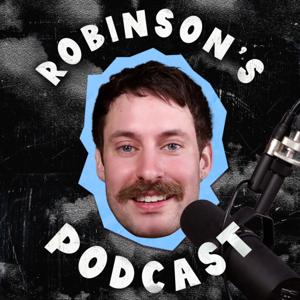
Robinson Erhardt researches symbolic logic and the foundations of mathematics at Stanford University. Join him in conversations with philosophers, scientists, weightlifters, artists, and everyone in-between.
Alva Noë is Professor of Philosophy and Chair of the Department of Philosophy at the University of California, Berkeley, where he researches the philosophy of mind—primarily focusing on perception and consciousness—and the philosophy of art. In this episode, Robinson and Alva discuss the latter, for while Alva is already the author of two books in the area—Strange Tools: Art and Human Nature (Farrar Strauss and Giroux, 2015) and Look: Dispatches from the Art World (Oxford, 2021)—June 23, 2023 will mark the release of a new work, The Entanglement: How Art and Philosophy Make Us What We Are (Princeton University Press). Robinson and Alva touch on topics from all three works, including the interrelationship between art, philosophy, phenomenology, and neuroscience.
Alva’s Website: http://www.alvanoe.com
Alva’s Twitter: https://twitter.com/alvanoe
OUTLINE
00:00 In This Episode…
00:38 Introduction
04:08 Mind and Art
10:05 Knowledge and Making
18:39 Attention and Rembrandt
31:28 Viewer and Creator
41:29 Art as a Philosophical Practice
47:00 Neuroscience
57:09 The Entanglement
01:17:15 Phenomenology, Art, and Analytic Philosophy
Robinson’s Website: http://robinsonerhardt.com
Robinson Erhardt researches symbolic logic and the foundations of mathematics at Stanford University. Join him in conversations with philosophers, scientists, weightlifters, artists, and everyone in-between.
Havi Carel is Professor of Philosophy at the University of Bristol, where she studies illness and its relationship to philosophy. Her research draws largely on phenomenology, a philosophical approach most closely associated with the Continental tradition of philosophy, and that relies heavily on perception and experience. In this episode Robinson and Havi discuss her own illness, LAM, and how it affects her own work, along with many other topics related to illness, such as Freud, mental health, and breathlessness.
OUTLINE
00:00 In This Episode…
01:24 Introduction
03:31 LAM and Illness
08:14 Continental Philosophy, Analytic Philosophy, and Phenomenology
22:12 Illness, Sickness, and Disease
26:36 Limitations of Writing on Phenomenology and Illness
42:34 Illness and Philosophy
51:03 Freud and the Phenomenology of Illness
56:41 Breathing and Breathlessness
Robinson’s Website: http://robinsonerhardt.com
Robinson Erhardt researches symbolic logic and the foundations of mathematics at Stanford University. Join him in conversations with philosophers, scientists, weightlifters, artists, and everyone in-between.
Joan Bagaria is ICREA Research Professor in the Department of Experimental Sciences and Mathematics at the University of Barcelona. He is a mathematical logician who works in set theory, which is the branch of mathematics that not only specializes in the investigation of infinity but serves as the foundation for the rest of mathematics—what this means, and its implications, are explored in the episode. Joan and Robinson discuss all things set theory, beginning with its origins in the mind of Georg Cantor, its development in the 20th century, some philosophical questions, and some current outstanding problems. They also briefly touch on Catalan independence, a topic dear to Joan’s heart.
John Perry is Henry Waldgrave Stuart Professor of Philosophy Emeritus at Stanford University. He was also the co-host with Ken Taylor of the nationally syndicated radio show Philosophy Talk. John has worked in the philosophy of language, mind, and metaphysics, and is well-known for his famous Slingshot Argument with John Barwise. Robinson and John first talk about his book The Art of Procrastination: A Guide to Effective Dawdling, Lollygagging and Postponing. They then turn to some of his work on identity, personal identity, and the self.
OUTLINE
00:00 In This Episode…
00:58 Introduction
02:43 In Defense of Procrastination
10:45 Dialogues and Philosophical Writing
23:17 Identity and Personal Identity
35:37 Memory and Personal Identity
47:39 The Body-Identity Theory
54:18 Parfit and Lewis on Identity
01:03:31 John and the Memory Theory
01:21:46 Death and Identity
01:32:46 Personhood and the Self
01:54:54 Could You Be Someone Else?
Robinson’s Website: http://robinsonerhardt.com
Robinson Erhardt researches symbolic logic and the foundations of mathematics at Stanford University. Join him in conversations with philosophers, scientists, weightlifters, artists, and everyone in-between.
David Papineau is Professor of Philosophy of Science at King’s College London. He also teaches at the City University of New York Graduate Center, and before that he lectured in the Department of History and Philosophy of Science at Cambridge. David’s last appearance on the podcast was episode 62, where he and Robinson spoke about realism, antirealism, and the philosophy of science. This time, however, they discuss the content of his most recent book, The Metaphysics of Sensory Experience (OUP 2021), which is linked below.
The Metaphysics of Sensory Experience: https://a.co/d/6hID7Lf
David’s Website: https://www.davidpapineau.co.uk
Twitter: @davidpapineau
OUTLINE
00:00 In This Episode…
01:38 Introduction
02:52 David’s Philosophical Interests
08:16 Distinguishing Sensory and Perceptual Experience
21:57 Naive Realism and the Metaphysics of Sensory Experience
34:09 Representationalism and the Metaphysics of Experience
01:02:02 The Transparency of Experience
01:15:28 Objections
Robinson’s Website: http://robinsonerhardt.com
Robinson Erhardt researches symbolic logic and the foundations of mathematics at Stanford University. Join him in conversations with philosophers, scientists, weightlifters, artists, and everyone in-between.
Graham Harman is Distinguished Professor of Philosophy at Sci-Arc, the Southern California Institute of Architecture in Los Angeles. He is one of the leading metaphysicians in the continental tradition of philosophy and an influential philosopher of art. Robinson and Graham discuss his work at the forefront of the speculative realist trend in the contemporary continental world, where he is known for his object-oriented ontology, or OOO. They also talk about the philosophy of art and architecture, touching on figures like H.P. Lovecraft and Duchamp, who Graham has written about extensively in his work. Check out Graham’s latest book, Architecture and Objects, linked below:
Architecture and Objects: https://a.co/d/ewHg5Ur
OUTLINE
00:00 In This Episode…
01:54 Introduction
05:22 Graham and Continental Philosophy
13:04 Speculative Realism and Object-Oriented Ontology
27:05 On Debating Slavoj Žižek
30:28 Fictional Objects
34:42 Real and Sensual Objects
52:14 Aesthetics OOO
59:47 Was Performance the First Art?
01:07:53 H.P. Lovecraft and Philosophy
01:17:33 Surrealism, Dada, and Literalism
01:23:19 Architecture, Philosophy, and Metaphysics
01:46:06 Philosophical Formalism and Architecture
02:00:20 Final Thoughts
Robinson’s Website: http://robinsonerhardt.com
Robinson Erhardt researches symbolic logic and the foundations of mathematics at Stanford University. Join him in conversations with philosophers, scientists, weightlifters, artists, and everyone in-between.
Graham Oppy is Professor of Philosophy at Monash University. Before that, he did his undergraduate work in Melbourne and his graduate work at Princeton. Though Graham is best known as a philosopher of religion, he has also published on the philosophy of math, language, aesthetics, and more. In this episode, Robinson and Graham begin by discussing the nature of argument: What makes an argument successful? What’s a good argument? How should we think about arguments in areas of deep disagreement? They then move on to a discussion of ontological arguments in the philosophy of religion, where one argues for the existence of god—or gods—without any prior assumptions.
Ontological Arguments: https://plato.stanford.edu/entries/ontological-arguments/
Majesty of Reason: https://www.youtube.com/@MajestyofReason
OUTLINE
00:00 In This Episode…
00:40 Introduction
05:04 Graham and the Philosophy of Religion
11:45 Arguments
14:12 What Makes a Good Argument?
38:00 How to Talk Around Deep Disagreement
48:23 How Arguments Vary Across Disciplines
56:13 Ontological Arguments for the Existence of God
01:31:29 Cosmological Arguments
Robinson’s Website: http://robinsonerhardt.com
Robinson Erhardt researches symbolic logic and the foundations of mathematics at Stanford University. Join him in conversations with philosophers, scientists, weightlifters, artists, and everyone in-between.
Frank Jackson is Emeritus Professor at the Australian National University. He is best known for the knowledge argument and Mary’s Room—its accompanying thought experiment—but has published widely in the philosophy of mind, epistemology, metaphysics, and the philosophy of language. Graham Priest is a Distinguished Professor in the philosophy department at the CUNY Graduate Center. Like Frank, he is one of the most influential philosophers of the past fifty years, and has done important work on a wide range of topics, ranging from the philosophy of mathematics to logic and eastern philosophy. In this episode, Robinson, Frank, and Graham talk about David Lewis and his immense legacy in the philosophical world. They cover his character—Frank and Graham were friends with him for many years—as well as some of his work, ranging from the thesis of modal realism to Humean supervenience and the philosophy of set theory.
Frances Egan is Distinguished Professor of Philosophy at Rutgers, where she works on the philosophy of mind, the philosophy of psychology, and the foundations of cognitive science. Recently she has been researching computational models of cognition and how they relate to representation. Robinson and Frankie talk about the foundations of cognitive science and the nature of mental representations before discussing psychological explanation, different ways of conceiving the mind’s boundaries, and how it interfaces with the rest of the body and environment.
Frankie’s Website: https://frances-egan.org/index.html
Mental Representation: https://plato.stanford.edu/ENTRIES/mental-representation/
OUTLINE
00:00 In This Episode…
01:21 Introduction
07:10 Frankie and the Philosophy of Mind
11:04 The Foundations of Cognitive Science
13:20 What are Mental Representations?
26:49 Eliminativism and Representations
32:33 A Deflationary Account
40:51 Naturalism and Cognitive Science
55:39 Psychological Explanation
01:03:02 The Extended Mind and Embodied Cognition
01:21:14 The New Mechanists
Robinson’s Website: http://robinsonerhardt.com
Robinson Erhardt researches symbolic logic and the foundations of mathematics at Stanford University. Join him in conversations with philosophers, scientists, weightlifters, artists, and everyone in-between.
From the publisher's feed
Ranked by our users in the last 21 days

2,669 Listeners

26,230 Listeners

2,442 Listeners

542 Listeners

316 Listeners
1,069 Listeners

932 Listeners

4,169 Listeners

1,626 Listeners

505 Listeners

19 Listeners

388 Listeners
946 Listeners
216 Listeners

366 Listeners