
Sign up to save your podcasts
Or


Send us Fan Mail
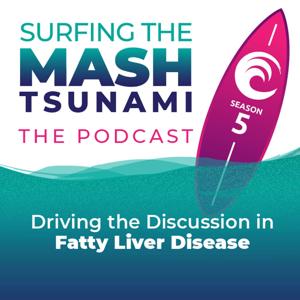
Amidst a shifting diagnostic pathway, the UK’s National Institute for Health and Care Excellence (NICE) reconsiders its position on vibration controlled transient elastography (VCTE) in the community. This conversation begins with Will Alazawi concluding his comments on the link between liver outcomes and socioeconomic status. The group then explores a range of factors contributing to inequity. Roger speaks to his marketing research experience which revealed physicians' frustration with an inability to drive patients toward sustaining lifestyle management goals. Will suggests that the challenges are not strictly socioeconomic, but concedes that a number of variables remain immeasurable at this point in time. For example, he poses a few yet to be answered questions: how much space do people have in their homes? Is there access to healthy food? What financial impediments exist? Louise and Kate comment on misunderstandings about alcohol consumption and liver health. All agree that an excess of “good quality” alcohol has the same deleterious effects on liver health as does an excess of cheap drink.
Discussion shifts back toward accessible pathways. Will and Louise suggest that the challenge lies in deploying hepatologist skills into the community more effectively. Kate questions who will administer the FibroScans in primary care, pointing to the shortage of nurses in the UK amongst other challenges. Ian thinks it may be impossible to implement solutions for every issue discussed in a scalable, cost effective way. He asserts that testing needs to be deliverable in a way that is meaningful to patients. Establishing a simple, communicable testing metric with accessible points of administration is key. This seems more difficult and expensive to achieve in the context of liver health than it has for identifying other successful metrics such as reading blood pressure.
 View all episodes
 By SurfingNASH.com


3.9
2424 ratings
Send us Fan Mail
Amidst a shifting diagnostic pathway, the UK’s National Institute for Health and Care Excellence (NICE) reconsiders its position on vibration controlled transient elastography (VCTE) in the community. This conversation begins with Will Alazawi concluding his comments on the link between liver outcomes and socioeconomic status. The group then explores a range of factors contributing to inequity. Roger speaks to his marketing research experience which revealed physicians' frustration with an inability to drive patients toward sustaining lifestyle management goals. Will suggests that the challenges are not strictly socioeconomic, but concedes that a number of variables remain immeasurable at this point in time. For example, he poses a few yet to be answered questions: how much space do people have in their homes? Is there access to healthy food? What financial impediments exist? Louise and Kate comment on misunderstandings about alcohol consumption and liver health. All agree that an excess of “good quality” alcohol has the same deleterious effects on liver health as does an excess of cheap drink.
Discussion shifts back toward accessible pathways. Will and Louise suggest that the challenge lies in deploying hepatologist skills into the community more effectively. Kate questions who will administer the FibroScans in primary care, pointing to the shortage of nurses in the UK amongst other challenges. Ian thinks it may be impossible to implement solutions for every issue discussed in a scalable, cost effective way. He asserts that testing needs to be deliverable in a way that is meaningful to patients. Establishing a simple, communicable testing metric with accessible points of administration is key. This seems more difficult and expensive to achieve in the context of liver health than it has for identifying other successful metrics such as reading blood pressure.

32,092 Listeners

30,714 Listeners
9,645 Listeners
105 Listeners

21,156 Listeners
3,368 Listeners

112,220 Listeners

56,587 Listeners
9,527 Listeners
8,032 Listeners

10,183 Listeners

6,410 Listeners

0 Listeners
428 Listeners

753 Listeners