
Sign up to save your podcasts
Or


Send us Fan Mail
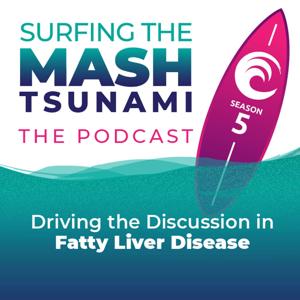
Patient empowerment can be an overlooked, yet critical success factor for putting a dent in Fatty Liver disease. In this conversation, the panelists investigate the economics of pathway design while identifying challenges and opportunities for effective solutions.
The preceding dialogue has suggested that the guideline processes are too focused on opportunities for private sector product developers to make money. Roger Green challenges this idea by identifying FIB-4 as the first stage test across all guidelines and pathways. He notes FIB-4 is an inexpensive test that will not profit manufacturers. Louise Campbell agrees before shifting focus to challenges obstructing effective pathway design. She notes a disconnect between systems and the lack of integrating agents and organizations to implement multi-specialty clinical care pathways.
Robert Mitchell-Thain responds with two key points: NAFL-D is not merely a liver disease and any solution must play on the potential for partnerships between organizations and professionals. He asks the group to envision a world where patients are identified earlier in disease and supported with such strong information and tools that many may never need medication. Louise endorses this viewpoint before highlighting a specific shortcoming in UK health systems. She points out that focus is oriented toward high cost individuals, downstream in disease progression, who cost 3.6B pounds per year. Such a strategy fails to provide sufficient support to earlier stage patients who will cost 19B pounds collectively.
 View all episodes
 By SurfingNASH.com


3.9
2424 ratings
Send us Fan Mail
Patient empowerment can be an overlooked, yet critical success factor for putting a dent in Fatty Liver disease. In this conversation, the panelists investigate the economics of pathway design while identifying challenges and opportunities for effective solutions.
The preceding dialogue has suggested that the guideline processes are too focused on opportunities for private sector product developers to make money. Roger Green challenges this idea by identifying FIB-4 as the first stage test across all guidelines and pathways. He notes FIB-4 is an inexpensive test that will not profit manufacturers. Louise Campbell agrees before shifting focus to challenges obstructing effective pathway design. She notes a disconnect between systems and the lack of integrating agents and organizations to implement multi-specialty clinical care pathways.
Robert Mitchell-Thain responds with two key points: NAFL-D is not merely a liver disease and any solution must play on the potential for partnerships between organizations and professionals. He asks the group to envision a world where patients are identified earlier in disease and supported with such strong information and tools that many may never need medication. Louise endorses this viewpoint before highlighting a specific shortcoming in UK health systems. She points out that focus is oriented toward high cost individuals, downstream in disease progression, who cost 3.6B pounds per year. Such a strategy fails to provide sufficient support to earlier stage patients who will cost 19B pounds collectively.

32,103 Listeners

30,680 Listeners

9,629 Listeners
104 Listeners

21,141 Listeners
3,365 Listeners

112,101 Listeners

56,530 Listeners

9,528 Listeners

8,023 Listeners

10,186 Listeners

6,393 Listeners

0 Listeners

426 Listeners

743 Listeners