
Sign up to save your podcasts
Or

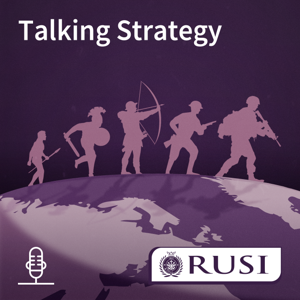

Marshal of the Royal Air Force Arthur Tedder was General Eisenhower's Deputy as Supreme Commander for Operation Overlord during the Second World War. A quiet and thoughtful leader, Tedder understood the difference between war and warfare and carefully orchestrated his campaigns – including the transportation plan concerning D-Day – in an alliance context to great effect.
Tedder's strategic leadership can be characterised as understated and thoughtful, underpinned by his ability to manage relationships with allies and experts to get the most from each. He also understood the importance of waging war economically in a way that exploited logistics capacity as a critical enabler for his own forces and as a means of weakening his enemies. Despite the Allied victory, after the Second World War he recognised the weaknesses that loomed.
This week's guest, Air Marshal Edward Stringer, was the air component commander for NATO's operation in Libya in 2011, the Director of Operations in the UK Ministry of Defence and the UK liaison officer to the Chairman of the US Joint Chiefs of Staff. In his last role, he was Director General Joint Force Development. Since retirement, he has become an expert commentator and writer on defence, defence strategy and air power.
 View all episodes
 By Royal United Services Institute
5
2424 ratings
Marshal of the Royal Air Force Arthur Tedder was General Eisenhower's Deputy as Supreme Commander for Operation Overlord during the Second World War. A quiet and thoughtful leader, Tedder understood the difference between war and warfare and carefully orchestrated his campaigns – including the transportation plan concerning D-Day – in an alliance context to great effect.
Tedder's strategic leadership can be characterised as understated and thoughtful, underpinned by his ability to manage relationships with allies and experts to get the most from each. He also understood the importance of waging war economically in a way that exploited logistics capacity as a critical enabler for his own forces and as a means of weakening his enemies. Despite the Allied victory, after the Second World War he recognised the weaknesses that loomed.
This week's guest, Air Marshal Edward Stringer, was the air component commander for NATO's operation in Libya in 2011, the Director of Operations in the UK Ministry of Defence and the UK liaison officer to the Chairman of the US Joint Chiefs of Staff. In his last role, he was Director General Joint Force Development. Since retirement, he has become an expert commentator and writer on defence, defence strategy and air power.
1,071 Listeners
144 Listeners
765 Listeners
426 Listeners
109 Listeners
19 Listeners

369 Listeners
406 Listeners
21 Listeners
493 Listeners
480 Listeners

1,867 Listeners
335 Listeners
461 Listeners

269 Listeners