
Sign up to save your podcasts
Or

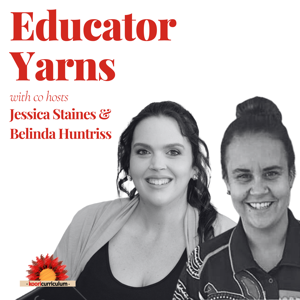

In this enlightening episode of Educator Yarns, host Jess Staines is joined by Bec Burch, founder of Bush Kindy Australia, to explore the powerful intersection between Aboriginal perspectives and sustainability practices in early childhood education.
Together, they unpack the seven Rs of sustainability—rethink, refuse, reduce, reuse, repair, regift, and recycle—and how these principles can guide educators in teaching children to become mindful custodians of Country.
This conversation delves deep into practical strategies for moving away from wasteful classroom practices towards more meaningful, culturally respectful approaches that honour Aboriginal connections to land.
Bec and Jess share inspiring examples of how natural materials can become rich learning resources, the importance of ethical procurement that supports Aboriginal businesses, and how educators can critically reflect on their environmental impact in ways that respect the traditional owners of the land on which centres operate.
Key Takeaways:
The seven Rs of sustainability offer early childhood educators a practical framework for embedding Aboriginal perspectives into everyday practice, moving beyond tokenistic approaches to deep, meaningful engagement with sustainability principles.
By reimagining our relationship with materials, consumption, and waste through an Aboriginal lens, we can create more culturally responsive, environmentally conscious learning environments.
Take time this week to audit one area of your practice—perhaps your art supplies or outdoor maintenance routines—and consider how you might apply these sustainability principles in ways that honour Aboriginal connections to Country and teach children to become the next generation of custodians.
Access the episode resources here.
 View all episodes
 By Jessica Staines
In this enlightening episode of Educator Yarns, host Jess Staines is joined by Bec Burch, founder of Bush Kindy Australia, to explore the powerful intersection between Aboriginal perspectives and sustainability practices in early childhood education.
Together, they unpack the seven Rs of sustainability—rethink, refuse, reduce, reuse, repair, regift, and recycle—and how these principles can guide educators in teaching children to become mindful custodians of Country.
This conversation delves deep into practical strategies for moving away from wasteful classroom practices towards more meaningful, culturally respectful approaches that honour Aboriginal connections to land.
Bec and Jess share inspiring examples of how natural materials can become rich learning resources, the importance of ethical procurement that supports Aboriginal businesses, and how educators can critically reflect on their environmental impact in ways that respect the traditional owners of the land on which centres operate.
Key Takeaways:
The seven Rs of sustainability offer early childhood educators a practical framework for embedding Aboriginal perspectives into everyday practice, moving beyond tokenistic approaches to deep, meaningful engagement with sustainability principles.
By reimagining our relationship with materials, consumption, and waste through an Aboriginal lens, we can create more culturally responsive, environmentally conscious learning environments.
Take time this week to audit one area of your practice—perhaps your art supplies or outdoor maintenance routines—and consider how you might apply these sustainability principles in ways that honour Aboriginal connections to Country and teach children to become the next generation of custodians.
Access the episode resources here.
151 Listeners

586 Listeners
821 Listeners

620 Listeners
212 Listeners

48 Listeners

131 Listeners

93 Listeners

14 Listeners
80 Listeners
356 Listeners

101 Listeners
38 Listeners

22 Listeners
9 Listeners