
Sign up to save your podcasts
Or



Based on Podcast App listening data
Today Justin is taking on a gruelling 50km walk carrying a 10kg vest to raise $50,000 for Top Blokes, a mentoring program helping young men build resilience, develop healthy relationships and learn to ask for help.
After losing his nephew Logan to suicide, this mission is deeply personal.
We need just 600 more people to donate $50 each to reach this target. Can you help lift the load? Donate here!
See omnystudio.com/listener for privacy information.
Parenting gets harder when your kids start needing you less.
Justin and Kylie talk about the messy reality of raising children who eventually leave home, make their own choices and face hard things without you beside them. They share a beautiful reminder that resilience rarely looks neat, why the struggle matters, and why the goal of parenting is to make yourself redundant.
They also talk about Justin’s 50K for 50K Lift the Load challenge, raising money to help Top Blokes support boys with mentors and positive models of masculinity.
KEY POINTS
QUOTE OF THE EPISODE
“Make yourself redundant. And the great irony is, if you do it well, because they don’t need you, they come back not because they need you, but because they want to be there.”
RESOURCES MENTIONED
ACTION STEPS FOR PARENTS
See omnystudio.com/listener for privacy information.
The more you monitor your kids, the more they might hide.
Research on parental monitoring shows that knowing where your kids are matters far less than creating a relationship where they feel safe telling you what is really going on. Justin and Kylie Coulson unpack what the research says about disclosure, surveillance, rules and trust, and share five practical ways to help your kids keep talking when things go wrong.
KEY POINTS
QUOTE OF THE EPISODE
“Location apps will show you where they are, but only the relationship that you have will tell you how they are.”
RESOURCES MENTIONED
ACTION STEPS FOR PARENTS
See omnystudio.com/listener for privacy information.
Australia made global headlines when it introduced a minimum age of 16 for social media. But months on, more than eight in 10 kids are still using age-restricted platforms.
Justin Coulson sits down with Federal Communications Minister Anika Wells to ask what is happening, why compliance has been so difficult, and what the new Digital Duty of Care could mean for families.
The proposed laws go beyond social media to cover gaming, AI chatbots and other online platforms, with new requirements around harmful content and addictive design features such as endless scrolling and popularity metrics.
KEY POINTS
QUOTE OF THE EPISODE
“This is about introducing some basic safety standards to an industry that hasn’t had any.”
Anika Wells
RESOURCES MENTIONED
ACTION STEPS FOR PARENTS
See omnystudio.com/listener for privacy information.
What do you do when your 17-year-old refuses to go to school, skips classes and has no idea what he wants to do instead?
Justin and Kylie tackle a tricky question from a parent whose son is struggling with Year 11. They explore vocational schools, apprenticeships, TAFE, distance education and the idea that education doesn’t have to mean sitting in a classroom until Year 12. The goal is to help young people keep learning, contributing and moving forward without forcing them into a path that clearly isn’t working.
KEY POINTS:
QUOTE OF THE EPISODE:
“You need to be either full-time earning or full-time learning.”
RESOURCES MENTIONED:
ACTION STEPS FOR PARENTS:
See omnystudio.com/listener for privacy information.
It’s Mrs Happy Families’ birthday week, so Justin puts Kylie on the spot with questions she hasn’t seen before. There are childhood confessions, a $2 garage sale bargain, a surprising celebrity crush, competitive board games, laundry, parenting wisdom and one deeply meaningful question about how she hopes her six children will remember her.
Kylie also opens up about setting herself a big goal, learning to value the progress rather than just the number, and the moment she realised she could be proud of herself.
It’s funny, honest and unexpectedly moving.
KEY POINTS:
QUOTE OF THE EPISODE:
“I would rather be 10 kilos lighter at the end of the year and not reach my goal of 20 kilos than to be sitting where I was at the beginning of the year without any hope or a desire to make the changes necessary.”
ACTION STEPS FOR PARENTS:
See omnystudio.com/listener for privacy information.
More than eight in ten Australian kids were still using age-restricted social media platforms months after the under-16 law came into effect. So is the legislation working?
Justin speaks with Federal Communications Minister Anika Wells about what has happened since the social media minimum age law began, why compliance has been slower than expected, and what the new Digital Duty of Care could mean for families.
The proposed laws go much further than social media. They cover AI chatbots, online games, messaging platforms and other digital services, with new responsibilities for tech companies to identify and reduce risks to children.
They also tackle harmful content, addictive design features, algorithmic feeds and the growing challenge of keeping kids safe from pornography and other dangerous material online.
KEY POINTS
QUOTE OF THE EPISODE
"We want you to be able to say, this is the law and you can point to the law to try and address these daily fights that people are having in their home."
ACTION STEPS FOR PARENTS
See omnystudio.com/listener for privacy information.
What if improving your wellbeing was far simpler than you thought?
In this Doctor’s Desk episode, Justin and Kylie unpack a huge new scientific review published in Nature that analysed 183 wellbeing studies involving nearly 23,000 people worldwide. The conclusion? You don’t need the perfect routine, expensive programs, or hours of free time to feel better.
You just need to do something.
From exercise and mindfulness to yoga, gratitude, therapy, and simple self-awareness practices, the research shows that consistent small actions have a powerful impact on mental health and happiness. Justin and Kylie also share their own honest experiences of trying to prioritise wellbeing in the middle of busy family life.
If you’ve been waiting for the “right time” to take care of yourself, this episode is your reminder that small steps still count.
KEY POINTS:
QUOTE OF THE EPISODE:
“Don’t overthink the perfect wellbeing routine. Just do something.”
RESOURCES MENTIONED:
ACTION STEPS FOR PARENTS:
See omnystudio.com/listener for privacy information.
What if protecting our kids too much is actually holding them back?
In this powerful conversation, Dr Justin Coulson sits down with extreme athlete, sports psychologist, and author Ant Williams to unpack why so many kids struggle with pressure, discomfort, and resilience — and what parents can do differently.
From diving beneath Arctic ice to coaching elite athletes under extreme stress, Ant shares the mindset shifts that help people stay calm, capable, and courageous when life gets hard. Together, they explore the parenting habits that unintentionally weaken resilience, the fine line between support and overprotection, and why kids need opportunities to struggle, fail, and recover.
If your child avoids hard things, melts down under pressure, or constantly says “I can’t”, this episode will change the way you respond.
KEY POINTS
QUOTE OF THE EPISODE
“Our reaction becomes their template.”
RESOURCES MENTIONED
ACTION STEPS FOR PARENTS
See omnystudio.com/listener for privacy information.
You’re worried. They don’t care. And somehow, headphones have become the hill your relationship might die on.
When one mum fears Bluetooth is harming her teen’s brain—and he flatly refuses to listen—this episode unpacks what’s really going on beneath the conflict.
Because this isn’t just about radiation. It’s about teenage psychology, risk, independence… and knowing which battles are worth fighting.
KEY POINTS
QUOTE OF THE EPISODE
“‘I don’t care, I’ll be fine’ is the most accurate summary of a teenage boy’s brain.”
RESOURCES MENTIONED
ACTION STEPS FOR PARENTS
See omnystudio.com/listener for privacy information.
From the publisher's feed
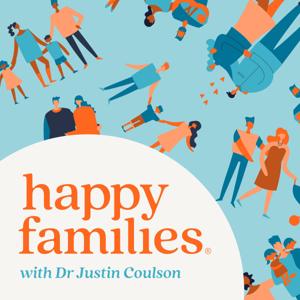
Deciding which parenting advice to follow? Join the thousands of mums and dads who turn to Australia’s most downloaded parenting podcast.
Dr Justin Coulson and his wife Kylie bring real parenting solutions every day, cutting through the noise of modern advice with clear, practical guidance for every step of parenting.
From early childhood challenges to the complexities of the teenage years, each daily episode offers simple, evidence-based strategies to help you feel more confident in your decisions and more connected to your kids.
Ranked by our users in the last 21 days
52 Listeners
582 Listeners
778 Listeners

18 Listeners
550 Listeners

310 Listeners

89 Listeners
379 Listeners

42 Listeners

15 Listeners
59 Listeners

86 Listeners

29 Listeners

54 Listeners

46 Listeners