
Sign up to save your podcasts
Or

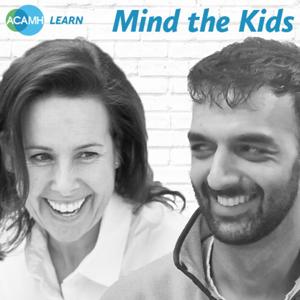

What if a baby’s wobbly reach for a spoon or a make-believe tea party could quietly change the way language unfolds? In this episode of Mind The Kids, “Building Blocks: How motor and social skills shape language learning, as captured by genes” host Mark Tebbs talks with Dr Beate St Pourcain and Dr Ellen Verhoeff from the Max Planck Institute for Psycholinguistics about what it really means to develop language in a developing body.
Drawing on their JCPP study of over 6,000 children in the ALSPAC cohort, they follow a developmental cascade that starts with early gross motor milestones like sitting and crawling, moves through culturally shaped self-care and pretend-play skills like using a spoon or hosting a tea party, and then flows into vocabulary and grammar between 15 and 38 months. Along the way, they unpack how genetics and environment intertwine, why social interactions and playful routines act as gateways into language rather than just nice “add-ons,” and what this might mean for parents, carers, clinicians and educators who want to support communication in both autistic and non-autistic children.
You can read the main JCPP paper discussed in this episode, “Developing language in a developing body: genetic associations of infant gross motor behaviour and self-care/symbolic actions with emerging language abilities” via https://doi.org/10.1111/jcpp.70021
Get a free CPD/CME certificate for listening to this podcast by registering for a FREE ACAMH Learn account at https://www.acamhlearn.org
Visit https://www.acamh.org
Facebook and LinkedIn search / ACAMH
Instagram https://www.instagram.com/assoc.camh
Bluesky https://bsky.app/profile/acamh.bsky.social
X https://x.com/acamh
 View all episodes
 By The Association for Child and Adolescent Mental Health

4.5
1212 ratings
What if a baby’s wobbly reach for a spoon or a make-believe tea party could quietly change the way language unfolds? In this episode of Mind The Kids, “Building Blocks: How motor and social skills shape language learning, as captured by genes” host Mark Tebbs talks with Dr Beate St Pourcain and Dr Ellen Verhoeff from the Max Planck Institute for Psycholinguistics about what it really means to develop language in a developing body.
Drawing on their JCPP study of over 6,000 children in the ALSPAC cohort, they follow a developmental cascade that starts with early gross motor milestones like sitting and crawling, moves through culturally shaped self-care and pretend-play skills like using a spoon or hosting a tea party, and then flows into vocabulary and grammar between 15 and 38 months. Along the way, they unpack how genetics and environment intertwine, why social interactions and playful routines act as gateways into language rather than just nice “add-ons,” and what this might mean for parents, carers, clinicians and educators who want to support communication in both autistic and non-autistic children.
You can read the main JCPP paper discussed in this episode, “Developing language in a developing body: genetic associations of infant gross motor behaviour and self-care/symbolic actions with emerging language abilities” via https://doi.org/10.1111/jcpp.70021
Get a free CPD/CME certificate for listening to this podcast by registering for a FREE ACAMH Learn account at https://www.acamhlearn.org
Visit https://www.acamh.org
Facebook and LinkedIn search / ACAMH
Instagram https://www.instagram.com/assoc.camh
Bluesky https://bsky.app/profile/acamh.bsky.social
X https://x.com/acamh

428 Listeners
279 Listeners
14,937 Listeners

8,828 Listeners
587 Listeners

4,014 Listeners
1,182 Listeners

29,284 Listeners

67 Listeners
25 Listeners

3,810 Listeners
2,130 Listeners
857 Listeners
170 Listeners
47 Listeners