
Sign up to save your podcasts
Or

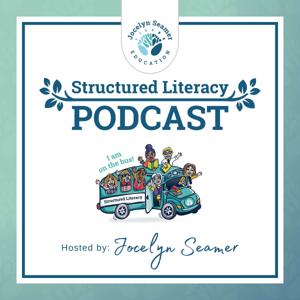

We challenge the assumption that whole-class phonics with a little extra is the most effective route and explore why targeted Tier 1 grouping often delivers stronger gains. Using cognitive load theory and intervention research, we show how matched content can raise progress without creating waitlists or missed learning elsewhere.
• why many Year 3 students still need foundational code
• what grouping studies actually tested and why that matters
• how targeted, explicit, code-focused teaching drives gains
• early, intensive support over waiting for intervention
• designing Tier 1 to include intervention features
• cognitive load as a lens for matching content
• when to keep whole-class and when to regroup
• practical next steps for data, grouping, and progress checks
Has something in this episode resonated with you? Get in touch!
We have released Spelling Success in Action 1, a catch-up program for phonics, early morphology, and orthographic conventions for years 3 to 8. This program can be used one-on-one, in small groups, or as a whole class and is built on what the evidence tells us is the critical knowledge students need for strong spelling and the type of instruction that makes learning stick.
Learn more about this resource and order your copy at www.jocelynseamereducation.com
Quick Links
Jocelyn Seamer Education Homepage
The Resource Room
Youtube channel
Facebook Page
#jocelynseamereducation #literacy #bestpractice #earlyprimaryyears #primaryschool #primaryschools #primaryschoolteacher #earlyyearseducation #earlyyearseducator #structuredliteracy #scienceofreading #classroom #learning #learningisfun #studentsuccess #studentsupport #teacherlife #theresourceroom #theevergreenteacher #upperprimary #upperprimaryteacher #thestructuredliteracypodcast #phoneme #grapheme #phonics #syntheticphonics
 View all episodes
 By Jocelyn Seamer

4.2
55 ratings
We challenge the assumption that whole-class phonics with a little extra is the most effective route and explore why targeted Tier 1 grouping often delivers stronger gains. Using cognitive load theory and intervention research, we show how matched content can raise progress without creating waitlists or missed learning elsewhere.
• why many Year 3 students still need foundational code
• what grouping studies actually tested and why that matters
• how targeted, explicit, code-focused teaching drives gains
• early, intensive support over waiting for intervention
• designing Tier 1 to include intervention features
• cognitive load as a lens for matching content
• when to keep whole-class and when to regroup
• practical next steps for data, grouping, and progress checks
Has something in this episode resonated with you? Get in touch!
We have released Spelling Success in Action 1, a catch-up program for phonics, early morphology, and orthographic conventions for years 3 to 8. This program can be used one-on-one, in small groups, or as a whole class and is built on what the evidence tells us is the critical knowledge students need for strong spelling and the type of instruction that makes learning stick.
Learn more about this resource and order your copy at www.jocelynseamereducation.com
Quick Links
Jocelyn Seamer Education Homepage
The Resource Room
Youtube channel
Facebook Page
#jocelynseamereducation #literacy #bestpractice #earlyprimaryyears #primaryschool #primaryschools #primaryschoolteacher #earlyyearseducation #earlyyearseducator #structuredliteracy #scienceofreading #classroom #learning #learningisfun #studentsuccess #studentsupport #teacherlife #theresourceroom #theevergreenteacher #upperprimary #upperprimaryteacher #thestructuredliteracypodcast #phoneme #grapheme #phonics #syntheticphonics

637 Listeners

785 Listeners

570 Listeners

84 Listeners

98 Listeners
434 Listeners

136 Listeners
484 Listeners
335 Listeners
644 Listeners
39 Listeners
3 Listeners

94 Listeners

118 Listeners
11 Listeners