
Sign up to save your podcasts
Or

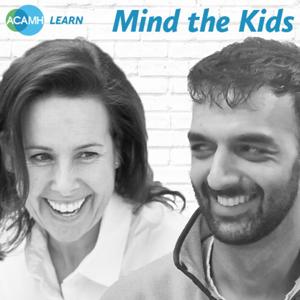

Children with mild intellectual difficulties are often overlooked, but the evidence suggests they may face real challenges in emotional wellbeing, behaviour and education, especially when support is patchy or late.
In this Mind the Kids episode, Dr. Foteini Tseliou joins hosts Dr. Jane Gilmour and Prof Umar Toseeb to discuss the paper 'Factors Associated with Better Emotional, Behavioural and Educational Outcomes in Children with Mild Intellectual Disabilities'.
They highlight three big messages: many children with mild intellectual difficulties are in mainstream schools and may not be formally identified; peer relationships emerge as one of the strongest protective factors across outcomes; and it is the accumulation of support across home, school and friendships that seems to matter most, rather than any single intervention on its own.
At the same time, the conversation makes clear that outcomes are not fixed by IQ. With the right support, many children with mild intellectual difficulties can do well, and the protective factors that help them often help other children too – which makes a strong case for universal, inclusive provision rather than waiting until problems become severe.
You can read the main JCPPA Advances journal paper discussed in this episode, “Factors associated with better emotional, behavioural and educational outcomes in children with mild intellectual difficulties” https://doi.org/10.1002/jcv2.70072
Get a free CPD/CME certificate for listening to this podcast by registering for a FREE ACAMH Learn account at https://www.acamhlearn.org
Visit https://www.acamh.org
Facebook and LinkedIn search / ACAMH
Instagram https://www.instagram.com/assoc.camh
Bluesky https://bsky.app/profile/acamh.bsky.social
X https://x.com/acamh
 View all episodes
 By The Association for Child and Adolescent Mental Health

4.5
1212 ratings
Children with mild intellectual difficulties are often overlooked, but the evidence suggests they may face real challenges in emotional wellbeing, behaviour and education, especially when support is patchy or late.
In this Mind the Kids episode, Dr. Foteini Tseliou joins hosts Dr. Jane Gilmour and Prof Umar Toseeb to discuss the paper 'Factors Associated with Better Emotional, Behavioural and Educational Outcomes in Children with Mild Intellectual Disabilities'.
They highlight three big messages: many children with mild intellectual difficulties are in mainstream schools and may not be formally identified; peer relationships emerge as one of the strongest protective factors across outcomes; and it is the accumulation of support across home, school and friendships that seems to matter most, rather than any single intervention on its own.
At the same time, the conversation makes clear that outcomes are not fixed by IQ. With the right support, many children with mild intellectual difficulties can do well, and the protective factors that help them often help other children too – which makes a strong case for universal, inclusive provision rather than waiting until problems become severe.
You can read the main JCPPA Advances journal paper discussed in this episode, “Factors associated with better emotional, behavioural and educational outcomes in children with mild intellectual difficulties” https://doi.org/10.1002/jcv2.70072
Get a free CPD/CME certificate for listening to this podcast by registering for a FREE ACAMH Learn account at https://www.acamhlearn.org
Visit https://www.acamh.org
Facebook and LinkedIn search / ACAMH
Instagram https://www.instagram.com/assoc.camh
Bluesky https://bsky.app/profile/acamh.bsky.social
X https://x.com/acamh

429 Listeners

277 Listeners
14,969 Listeners
8,876 Listeners

594 Listeners

3,903 Listeners
1,228 Listeners

29,272 Listeners

68 Listeners
17 Listeners
3,858 Listeners

2,131 Listeners
851 Listeners
188 Listeners
48 Listeners