
Sign up to save your podcasts
Or

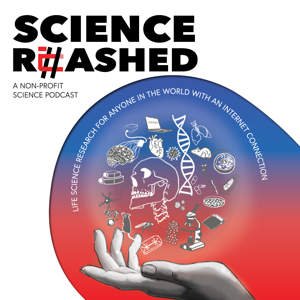


Have you ever wondered what happens in the brain during sleep? Or what regulates which substances can enter your brain and which can’t? When we think of the brain, we think of neurons. However, neurons can’t do all of this work by themselves! The cerebrospinal fluid (CSF) is a significant player in the brain and helps carry out vital functions, such as cleaning your brain during sleep! So why do we know so little about it? Learn more about the CSF and its fundamental roles in the brain with Dr. Madeline A. Lancaster, a Group Leader in the Cell Biology Division of the Medical Research Council (MRC) Laboratory of Molecular Biology in Cambridge, UK. She explains why we should pay more attention to the CSF and how, thanks to the recent in vitro models developed in her lab, we can now study this vital fluid like never before.
Have you ever seen gray hairs on someone? And do they almost immediately blame it on the stress in their life? Well, they could be right! For the first time, researchers have found that key players responsible for the transient flight-and-fight stress response are also involved in permanent stress-induced hair pigment loss. The finding, which was published in the journal Nature, discredited popularly postulated hypotheses regarding stress-induced gray hairs and suggests hopeful pathways to modify the damaging effects of stress on stem cell pools in other organs. Listen to Dr. Ya-Chieh Hsu, an Associate Professor of Stem Cell and Regenerative Biology at Harvard Stem Cell Institute, as she explains how her team zoomed in from the systemic stress response down to the cellular and molecular dynamics of this exciting biology. “Half Mystery” by Kevin MacLeod is licensed under CC BY 4.0.
This week we are joined by Parkinson’s disease expert and neurosurgeon Jeffrey Schweitzer, MD, PhD, of Massachusetts General Hospital in Boston. He takes us through a recently published case study in the New England Journal of Medicine on a novel autologous transplantation treatment for Parkinson’s disease. Parkinson’s disease is a prevalent and debilitating neurodegenerative disease that primarily affects dopaminergic cells in the brain. It has many existing treatments available, but many lose efficacy over time. This single case study presents evidence that transplantation of a patient's stem cells-derived dopamine neurons into the brain may pave the way forward for treatments that have better longevity and reversal of symptoms than other available treatments on the market.
The human immune system is one of the most adaptive systems in human biology. While environmental impact on the immune system is well documented, more recently, immunologists have begun to study the relationship between the central nervous and immune systems. In this episode, Mehdi and Shen hear from immunologist Dr. Hai Qi from Tsinghua University in Beijing, China. Dr. Qi’s research explores the impact of behavioral changes on the humoral immune response. He details the inspiration behind his research, his aunt’s dedicated Qigong practice, and the possible drawbacks of using a mouse model to draw parallels to the human immune function.
This week marks our third and final Covid-19 episode of this season (or our final installment, at least until the end of 2020). This episode focuses on coping strategies from healthcare professionals and reflections from our team about their experience of isolation during the pandemic. Special guests joining us in this episode to navigate through this topic include Dr. Michal Elovitz, who specializes in Maternal-Fetal Medicine at the University of Pennsylvania, and licensed mental health therapist and yoga teacher, Sarah Harmon of Sarah Harmon Wellness in Boston, Massachusetts. Our Science Rehashed team round table includes co-hosts Mehdi Jorfi and Shen Ning and two of our long-term staff members: Producer, Shuang Zhang, and Creative Director, Emma Brand.
We launch our new series WWiSE with an empowering discussion with Dr. Joanne Kamens, the Executive Director of Addgene and the founder of the Massachusetts chapter of Association for Women in Science. She was recognized in the list of 2013 PharmaVOICE 100 Most Inspiring-Commanders & Chiefs and 2014 Forty Over 40 - Women Who are Making an Impact. She is passionate about gender equality, workplace inclusivity, and advocates for women and minorities in STEM fields. In this episode, Dr. Kamens gives us a snapshot of her journey in academia, pharma, and biotech, and let us question our prejudices, calls to act on them. She also gives us insights into Addgene’s efforts to build an equitable workplace environment! “Inspired” by Kevin MacLeod is licensed under CC BY 4.0
In this episode, we explore Dr. George Church’s opinions on CRISPR editing of human embryos, his project to bring back the extinct woolly mammoth, and his journey as a scientific pioneer. Dr. Church is a Professor at Harvard & MIT, a co-author of 537 papers, 156 patent publications, a book, called “Regenesis: How Synthetic Biology Will Reinvent Nature and Ourselves,” and significant contributor to developing next-generation genome sequencing technologies. He is a Franklin Bower Laureate for Achievement in Science; some of his honors include election to the National Academy of Sciences and the National Academy of Engineering. He is an advocate for cost reduction of technologies, openness in science, and biological automation and multiplexing. Get a peek inside George Church’s brain now! “Half Mystery” by Kevin MacLeod is licensed under CC BY 4.0.
Listen to Dr. Chih-Hao Lee, a professor in the Department of Molecular Metabolism at Harvard T.H. Chan School of Public Health, whose team discovered that the metabolic benefits of endurance exercise are triggered by IL-13, a molecule released by immune cells residing in the muscle tissue. IL-13, speculated to have evolved to adapt to the energy stress during human parasitic infections, triggers efficient use of energy during muscle contraction resulting in increased endurance capacity, mitochondrial biogenesis, glucose tolerance, and fatty acid oxidation. “Furious Freak” by Kevin MacLeod is licensed under CC BY 4.0.
As the world continues to fight against COVID-19, the United States is reopening to try to save its economy. Since our last episode on COVID-19 360 Perspective in April, the central questions for handling the situation have evolved, technologies are emerging, and consensus remains on the significance of testing. So, what is the current state of diagnostics now, as the country heads into the fall? In this episode, we explore COVID-19 diagnostics from experts in Biotech companies, research labs, biological resource sharing centers, and other newly established centers to facilitate the development of innovations and testing that flatten the COVID-19 curve.
“How we’ll fight the next deadly virus” by Pardis Sabeti, TEDWomen 2015 is licensed under CC BY-NC-ND 4.0.
“Inspired” by Kevin MacLeod is licensed under CC BY 4.0.
What is it that sets humans apart from all other species on earth? We explore this question with Dr. Rodrigo Quian Quiroga through his extensive research on a concept now dubbed the “Concept Cells”. Dr. Quiroga explains how the same set of neurons in the hippocampus can recognize different pictures of the same person, such as Jennifer Aniston, through conceptual processing. This ability and feature of our neural network is currently thought to be unique to humans. Some theorize this is the reason why our intelligence differs so greatly from our closest related species, chimpanzees, and bonobos. Dr. Quiroga is the Director of the Center of Systems Neuroscience at the University of Leicester.
From the publisher's feed

78,398 Listeners

32,017 Listeners

14,348 Listeners

4,981 Listeners
394 Listeners

8,527 Listeners

7,999 Listeners

164,539 Listeners

29,207 Listeners
2,024 Listeners