
Sign up to save your podcasts
Or

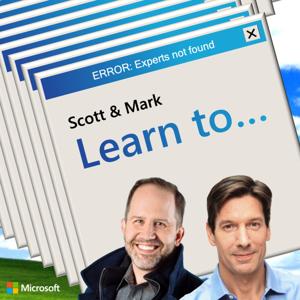


In this episode, Scott Hanselman and Mark Russinovich dive into a growing issue in AI-driven research: hallucinated references in academic papers. After scanning thousands of conference submissions, Mark uncovers widespread citation inaccuracies, sparking a broader conversation about accountability, cognitive surrender, and the risks of over-relying on AI tools. They explore where AI adds value versus where it erodes critical thinking, from academic writing to everyday coding and content creation. The conversation shifts into the realities of vibe coding, the tradeoffs of speed versus quality, and what it means to maintain taste and expertise in an AI-accelerated world, ultimately asking: if AI lowers the barrier to create, does it also lower the standard?
LLM Writing in Tech: Blogs and Articles
Takeaways:
Who are they?
View Scott Hanselman on LinkedIn
View Mark Russinovich on LinkedIn
Watch Scott and Mark Learn on YouTube
Listen to other episodes at scottandmarklearn.to
Discover and follow other Microsoft podcasts at microsoft.com/podcasts
Produced by Hangar Studios
In this episode, Scott Hanselman and Mark Russinovich unpack the tension between subjective preference and objective usability, arguing that strong product instincts come from years of exposure, experience, and pattern recognition rather than innate talent. Through examples ranging from UI design to AI-assisted coding, they highlight how good decision-making requires both a holistic systems view and attention to detail. The conversation also examines the limits of accelerating expertise, the role of education in building foundational thinking, and why human judgment remains critical even as AI tools become more capable.
Takeaways:
Who are they?
View Scott Hanselman on LinkedIn
View Mark Russinovich on LinkedIn
Watch Scott and Mark Learn on YouTube
Listen to other episodes at scottandmarklearn.to
Discover and follow other Microsoft podcasts at microsoft.com/podcasts
Produced by Hangar Studios
In this episode, Scott Hanselman and Mark Russinovich dive into the evolution of ZoomIt, exploring new features like panoramic screen capture, webcam overlays, and lightweight video editing tools. They discuss the technical challenges behind building these capabilities, especially stitching images across any application and how AI-assisted coding is accelerating development while introducing new edge cases. Along the way, the conversation blends deep technical insight with candid, behind-the-scenes moments, highlighting both the complexity of modern software development and the value of experimentation and iteration.
Takeaways:
Who are they?
View Scott Hanselman on LinkedIn
View Mark Russinovich on LinkedIn
Watch Scott and Mark Learn on YouTube
Listen to other episodes at scottandmarklearn.to
Discover and follow other Microsoft podcasts at microsoft.com/podcasts
Produced by Hangar Studios
In this episode, Scott Hanselman and Mark Russinovich explore how software development is evolving in the age of AI, challenging the idea that everything should start with a fully defined spec. They highlight a more iterative, sculpting approach to building, where continuous refinement, testing, and human judgment are essential and discuss the realities of AI-assisted coding, including edge cases, maintenance, and the limits of productivity gains.
Takeaways:
Who are they?
View Scott Hanselman on LinkedIn
View Mark Russinovich on LinkedIn
Watch Scott and Mark Learn on YouTube
Listen to other episodes at scottandmarklearn.to
Discover and follow other Microsoft podcasts at microsoft.com/podcasts
Produced by Hangar Studios
In this episode, Scott Hanselman and Mark Russinovich unpack how AI systems actually behave beneath the surface, pushing past hype into the messy reality of how models are trained, aligned, and deployed.
They explore whether AI systems are inherently benevolent or simply shaped by incentives, training data, and reinforcement learning, and why behaviors like deception can emerge under certain conditions. The conversation moves from philosophical questions about human nature versus machine behavior into the practical mechanics of large language models, including how reinforcement learning with human feedback shapes outputs and why alignment is far from perfect.
Along the way, they ground the discussion in a real engineering challenge, stitching a scrolling panorama from screen captures, to show how complex systems come together through heuristics, edge cases, and iteration.
Takeaways:
Who are they?
View Scott Hanselman on LinkedIn
View Mark Russinovich on LinkedIn
Watch Scott and Mark Learn on YouTube
Listen to other episodes at scottandmarklearn.to
Discover and follow other Microsoft podcasts at microsoft.com/podcasts
Produced by Hangar Studios
In this episode, Scott Hanselman and Mark Russinovich dive into the realities of building complex software with AI coding agents. Mark shares his experience using modern models to implement a shared-memory transport for gRPC across Go and .NET, explaining how AI dramatically accelerated development while still requiring constant oversight. They discuss the surprising strengths and limitations of AI coding tools, to the massive productivity gains that make the frustration worthwhile. The conversation also explores the challenges of solving hard engineering problems, including an attempt to build a scrolling screenshot stitcher, and wraps with thoughts on the future of developer tooling and a potential live episode of the show.
Takeaways:
Who are they?
View Scott Hanselman on LinkedIn
View Mark Russinovich on LinkedIn
Watch Scott and Mark Learn on YouTube
Listen to other episodes at scottandmarklearn.to
Discover and follow other Microsoft podcasts at microsoft.com/podcasts
Produced by Hangar Studios
In this episode, Scott Hanselman and Mark Russinovich discuss their recent ACM paper and explore a growing challenge in the tech industry: how to develop the next generation of engineers. They debate the idea of preceptorship programs that train early-career developers inside companies, why many organizations avoid investing in junior talent, and how universities could play a larger role in bridging the gap between education and real-world experience. The conversation looks at the economics of hiring juniors, the risk of companies poaching trained talent, and what it might take to build a scalable pipeline for future technical leaders.
Takeaways:
Who are they?
View Scott Hanselman on LinkedIn
View Mark Russinovich on LinkedIn
Watch Scott and Mark Learn on YouTube
Listen to other episodes at scottandmarklearn.to
Discover and follow other Microsoft podcasts at microsoft.com/podcasts
Produced by Hangar Studios
In this episode, Scott Hanselman and Mark Russinovich dive into a wide-ranging conversation about the future of software, debating whether apps are dead in an era of AI agents, chat interfaces, and automation. They explore the resurgence of text-based and terminal user interfaces, the limits of using large language models as stand-ins for deterministic workflows, and why reliability, security, and repeatability still demand traditional applications and SaaS platforms. Along the way, they unpack common misconceptions about AI replacing apps, argue for better UX and APIs instead of throwing AI at broken systems, and emphasize that AI is best used for reasoning and ambiguity, not as a replacement for well-designed software.
Takeaways:
Who are they?
View Scott Hanselman on LinkedIn
View Mark Russinovich on LinkedIn
Watch Scott and Mark Learn on YouTube
Listen to other episodes at scottandmarklearn.to
Discover and follow other Microsoft podcasts at microsoft.com/podcasts
Produced by Hangar Studios
In this episode, Scott Hanselman and Mark Russinovich explore how AI-assisted vibe coding is changing the way complex software gets built, debugged, and refined. Mark walks through real-world experiments using AI to tackle difficult engineering problems, including gRPC shared memory, Win32 UI work, and major new features coming to ZoomIt. The conversation digs into where AI meaningfully accelerates development, where it still requires careful human oversight, and how tools like screenshots, debug output, MCP servers, and multimodal feedback loops are reshaping modern developer workflows. The result is an honest, technical discussion about productivity gains, limitations, and the evolving role of human judgment in AI-driven software engineering.
Takeaways:
Who are they?
View Scott Hanselman on LinkedIn
View Mark Russinovich on LinkedIn
Watch Scott and Mark Learn on YouTube
Listen to other episodes at scottandmarklearn.to
Discover and follow other Microsoft podcasts at microsoft.com/podcasts
Produced by Hangar Studios
In this episode, Scott Hanselman and Mark Russinovich pull back the curtain on what really goes into a large-scale conference talk, using their recent Ignite session as a case study. They reflect on the balance between educational and soft talks, the importance of credibility and audience expectations, and why not every talk needs a rigid takeaway to be valuable. The conversation traces a playful but technically deep journey through computing history, from early machine code and Altair systems to modern Azure infrastructure, massive virtual machines, and experimental demos that intentionally blur the line between serious engineering and creative exploration. Along the way, they share behind-the-scenes lessons about live demos, pacing, risk, and why delight, curiosity, and a bit of silliness still matter in technical storytelling.
Takeaways:
Who are they?
View Scott Hanselman on LinkedIn
View Mark Russinovich on LinkedIn
Watch Scott and Mark Learn on YouTube
Listen to other episodes at scottandmarklearn.to
Discover and follow other Microsoft podcasts at microsoft.com/podcasts
Produced by Hangar Studios
From the publisher's feed

1,710 Listeners

4,336 Listeners

286 Listeners

2,011 Listeners

888 Listeners

1,638 Listeners
781 Listeners
3,712 Listeners

83 Listeners

302 Listeners
145 Listeners

554 Listeners
108 Listeners

682 Listeners
75 Listeners