
Sign up to save your podcasts
Or

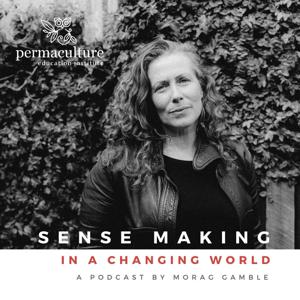


Seventeen years ago, Rob Pekin decided to radicalise the way we shop for and distribute fresh food. His concept for a new food system was based on community, connection and localisation – and the result is an Australian-wide food systems revolution called Food Connect
Born and bred on a dairy farm in western Victoria, Rob began to imagine a different kind of food system after he lost the family farm and fell into a depression.
“The food connect model started out as a multi-farmer community-supported agriculture project. It was really my attempt as a pretty busted-up dairy farmer, disgruntled with the world and how it worked, saying – well, if I’m going to do something on a solutions side of things, I have to address probably the biggest source of misuse of power, which is in the distribution side of things.”
In the latest episode of the Sense-making in a Changing World podcast, I chat with Rob about his journey and the Food Connect vision. Hear more in this earlier interview with Rob's partner and Food Connect co-creator, Emma Kate Rose. (interviewed on Episode 14)
What they’ve created is an is an inspiring highly networked localised ethical and regenerative food system - one that nourishes growers, consumers, producers, the earth and foregrounds indigenous voices.
Before we begin, I'd like to acknowledge the traditional custodians of the unceded lands from which I’m speaking with you, the Gubbi Gubbi, and pay my deep respect to their elders past present and emerging. I’d like to recognise care for country, the waters and biodiversity for millenia.
Don’t forget to give the podcast five stars! Rating the podcast helps promote the podcast to others so we can share the stories of permaculture and the amazing people we interview.
This podcast is supported by the Permaculture Education Institute.
Thanks to Rhiannon Gamble for editing, and Kim Kirkman for the introductory music.
I'd love to hear from you. Text me here.
Support the show
_____
MORAG GAMBLE
Founder, Permaculture Education Institute
I am a possibilitarian and I believe in HumanKINDness.
In this podcast my guests and I explore How are we to live? Really live, as nature ourselves, tending the conditions where life can thrive. We ask How do we become the kind of humans this moment is asking us to be?
This podcast is one of my acts of myceliation. Each conversation is a thread in a vast network of people speaking up for life with love and care.
This podcast beams out from my hand-built solar-powered studio in the midst of a permaculture food forest in a permaculture ecovillage on Jinibara and Gubbi Gubbi country.
If this episode lights something in you, pass it to one person who needs it. That is how myceliation works.
The topic of ethical fashion is in the media this week because the annual Ethical Fashion Guide has been released. But can fashion ever be ethical?
My guest on this week’s Sense-making in a Changing World podcast is Shannon Lohr – a leader in the ethical fashion world.
Shannon’s career is defined by her efforts to change the fashion industry, promoting a sustainable approach focused on local production, quality materials and timeless designs. She believes how we dress ourselves is connected to the health of the planet.
“There is no such thing as perfectly sustainable fashion. Anytime you're making something new, it's going to have an impact,” Shannon says. “It doesn't matter if you make your clothing with organic cotton if landfill is still overflowing with clothing. The real problem is the culture and marketing system that the fast fashion industry uses which tells consumers: buy a dress, wear it that night, throw it to the back of your closet and never wear it again or put it in the trash. That’s what creates an inherently unsustainable fashion industry.”
Shannon is the founder and director of Factory45 – an online business school that helps sustainable fashion entrepreneurs consider fashion design and manufacturing in a closed loop way. That means considering the life cycle of a garment beyond its immediate use and what the customer will do with it when they’re done wearing it.
She’s also a strong advocate for increasing supply chain transparency through sourcing, localisation and storytelling. She’s been named a thought leader for the future of fashion and was nominated as a “Woman of Note” by the Wall Street Journal.
I'd love to hear from you. Text me here.
Support the show
_____
MORAG GAMBLE
Founder, Permaculture Education Institute
I am a possibilitarian and I believe in HumanKINDness.
In this podcast my guests and I explore How are we to live? Really live, as nature ourselves, tending the conditions where life can thrive. We ask How do we become the kind of humans this moment is asking us to be?
This podcast is one of my acts of myceliation. Each conversation is a thread in a vast network of people speaking up for life with love and care.
This podcast beams out from my hand-built solar-powered studio in the midst of a permaculture food forest in a permaculture ecovillage on Jinibara and Gubbi Gubbi country.
If this episode lights something in you, pass it to one person who needs it. That is how myceliation works.
Welcome to this episode of Sense-Making in a Changing World. I am delighted to be joined by the wonderful Emma Cutting, creator of The Heart Gardening Project and visionary Melbourne Pollinator Corridor
The Heart Gardening Project is a community initiative that joyfully connects humans to nature through street gardening. Emma revels in connecting the dots between different people and fields of expertise through this project and connecting to the world through her street gardening, getting completely covered in dirt and creating positive change.
While she grew up on a farm in Northern NSW, Emma is now based in inner Melbourne and is a full-time mum, piano teacher, pianist, verge gardener, amateur plantswoman and amateur naturalist. She get's called many things - a community pollinator activist - The Bee Lady. She has recently recovered from a 12 year battle with Chronic Fatigue Syndrome which she says has helped shape her to be the person she is today. I think she is an extraordinary doer, catalyst and connector.
Emma's book, the Melbourne Pollinator Corridor Handbook can be found here - a fabulous resource for people wanting to design for pollinator habitat in urban areas.
The Melbourne Pollinator Corridor is an 8km community-driven wildlife corridor that will link 2 large green patches that run along the Birrarung (Yarra River), Westgate Park and the Royal Botanic Gardens Melbourne. It is an Australia-first project that she hopes will create a buzz, and be replicated across the country and beyond.
Emma is leading a crowdfunding campaign to raise funds for this project. Already they have generated enough for the first hub of gardens. Let's help her create all four hubs across the corridor. Here is the link to donate.
This podcast is wholly supported by the Permaculture Education Institute - we teach permaculture teachers. Check out this link for all of our courses, events and programs.
The Permaculture Education Institute would like to acknowledge the traditional custodians of the unceded lands from which we are broadcasting this show, the Gubbi Gubbi, and pay our deep respect to their elders past present and emerging. We'd also like to recognise their deep care for this land, the waters, and biodiversity for so many thousands of years.
Remember to subscribe so you get notification of these weekly podcast episodes, leave a lovely review (it helps the algorithms to find and share our little podcast).
I'd love to hear from you. Text me here.
Support the show
_____
MORAG GAMBLE
Founder, Permaculture Education Institute
I am a possibilitarian and I believe in HumanKINDness.
In this podcast my guests and I explore How are we to live? Really live, as nature ourselves, tending the conditions where life can thrive. We ask How do we become the kind of humans this moment is asking us to be?
This podcast is one of my acts of myceliation. Each conversation is a thread in a vast network of people speaking up for life with love and care.
This podcast beams out from my hand-built solar-powered studio in the midst of a permaculture food forest in a permaculture ecovillage on Jinibara and Gubbi Gubbi country.
If this episode lights something in you, pass it to one person who needs it. That is how myceliation works.
Welcome to the fourth and final part of this special localisation series on Sense-making in a Changing World podcast with internationally claimed localisation activist Helena Norberg-Hodge .
We all know that a radical shift in the way humanity is living is essential for our future. Where do we spend our energy as activists to have the most impact possible? Here we explores the concept of Big Picture activism - acting locally and globally simultaneously and what role permaculture can play. In the first 3 parts we talked about the global economy, localising our food system and the importance of focussing our efforts on building community and restoring ecosystems. Here in part 4 we dive big picture activism.
Helena is the founder and director of Local Futures, an international nonprofit organization dedicated to renewing ecological and social wellbeing by strengthening communities and local economies worldwide.
Helena has just released a new film, Planet Local: A Quiet revolution. Her first book Ancient Futures, written in 1991 has been translated into 40 languages and sold over 1 million copies. She’s been the subject of hundreds of articles and written many books, including her latest book, Local is Our Future: Steps to an Economics of Happiness which accompanies her award-winning documentary, also called The Economics of Happiness. Helena’s work spans almost five decades, with support and collaboration from leading ecological thinkers. She has been the recipient of a right livelihood award, also known as the alternative Nobel peace prize and also the Goi Peace Prize.
I first met Helena back in 1992 at Schumacher college, and was absolutely inspired by the work that she was doing and subsequently volunteered with her in Ladakh or little Tibet.
So again grab your notebook, listen with friends, follow up by watching Helena’s films and delving into her study group materials and localisation action guide, and feel free to share widely.
Before we begin, I’d like to acknowledge the traditional custodians of the land on which I’m meeting with you today. I’m here on the unceded land of the Gubbi Gubbi people and on the banks of the Moocaboola river.
So sit back and enjoy, and thank you so much for being here as part of this series of conversations with Helena Norberg-Hodge.
This podcast series is hosted by Morag Gamble and brought to you by The Permaculture Education Institute.
Please rate and review this podcast in the Apple Podcast app, Spotify, or wherever you listen. By giving this podcast a five-star review, we can help bring Permaculture into other people’s lives
I'd love to hear from you. Text me here.
Support the show
_____
MORAG GAMBLE
Founder, Permaculture Education Institute
I am a possibilitarian and I believe in HumanKINDness.
In this podcast my guests and I explore How are we to live? Really live, as nature ourselves, tending the conditions where life can thrive. We ask How do we become the kind of humans this moment is asking us to be?
This podcast is one of my acts of myceliation. Each conversation is a thread in a vast network of people speaking up for life with love and care.
This podcast beams out from my hand-built solar-powered studio in the midst of a permaculture food forest in a permaculture ecovillage on Jinibara and Gubbi Gubbi country.
If this episode lights something in you, pass it to one person who needs it. That is how myceliation works.
In episode three of our four-part conversation for World Localisation Day, Morag Gamble talks with Helena Norberg-Hodge about the central role of community and ecology in our world. And, how localising both of these things can improve the health of people and the planet.
Helena is a filmmaker, author and founder and director of the international non-profit organisation, Local Futures. Helena and I first met in 1992, working on the Ladakh Project over the other side of the Himalayas in the Indus Valley. This time we spent together (and since) as well as her film, Ancient Futures, led Evan and me to work in Permaculture. Thirty years later, I’m still inspired and motivated by Helena’s wisdom and mission.
In this episode, Morag and Helena discuss:
This podcast is brought to you by The Permaculture Education Institute.
Please rate and review this podcast in the Apple Podcast app, Spotify, or wherever you listen. By giving this podcast a five-star review, we can help bring Permaculture into other people’s lives.
I'd love to hear from you. Text me here.
Support the show
_____
MORAG GAMBLE
Founder, Permaculture Education Institute
I am a possibilitarian and I believe in HumanKINDness.
In this podcast my guests and I explore How are we to live? Really live, as nature ourselves, tending the conditions where life can thrive. We ask How do we become the kind of humans this moment is asking us to be?
This podcast is one of my acts of myceliation. Each conversation is a thread in a vast network of people speaking up for life with love and care.
This podcast beams out from my hand-built solar-powered studio in the midst of a permaculture food forest in a permaculture ecovillage on Jinibara and Gubbi Gubbi country.
If this episode lights something in you, pass it to one person who needs it. That is how myceliation works.
Welcome to the second of this special 4 part series on Sense-Making in a Changing World podcast. I am talking with a pioneer of the new economy movement - internationally claimed localisation activist Helena Norberg-Hodge about the food system. Relocalising the food system is central to creating a shift in the global economy, restoring communities and regenerating landscapes. Regenerative food systems are locally-adapted biodiverse agro-ecosystems deeply connected to place and community.
Helena is the initiator of the global celebration of World Localization Day which is being celebrated on 21 June in 2022. Together with Helena, we are celebrating all month with weekly conversations, but also a screening of her new film Planet Local: A Quiet Revolution and hosting a Masterclass together.
Helena is the founder and Director of Local Futures, an international nonprofit organisation dedicated to renewing ecological and social wellbeing by strengthening communities and local economies worldwide.
Helena's first book Ancient Futures has been translated into 40 languages and sold over 1 million copies. She's been the subject of hundreds of articles and written many books, including her latest book, Local is Our Future: Steps to an Economics of Happiness, which accompanies her award-winning documentary, also called the Economics of Happiness.
Helena's work spans almost five decades and she collaborates with leading ecological thinkers. She's been the recipient of a Right Livelihood Award, also known as the alternative Nobel Peace Prize and also the Goi Peace Prize for contributing to “the revitalization of cultural and biological diversity, and the strengthening of local communities and economies worldwide.”
I first met Helena back in 1992 at Schumacher College, and was absolutely inspired by the work that she was doing and subsequently volunteered with her in Ladakh (Little Tibet).
This is the first of our series of conversations about localisation. A new episode will be released each Wednesday
So grab your notebook, listen in with friends, follow up by watching Helena's films and delving into her localisation action guide.
Before we begin, I'd like to acknowledge the traditional custodians of the land on which I'm meeting with you today and pay respects to their elders past, present and emerging I'm here on the unceded lands of the Gubbi Gubbi people and on the banks of the Moocaboola [Mary] River.
Thank you so much for being here as part of this series of conversations with Helena Norberg-Hodge.
We'd love for you to leave a review and give us a lovely star rating. These really help the algorithm to find this podcast and share it further. Thank you.
Morag Gamble
Permaculture Education Institute
I'd love to hear from you. Text me here.
Support the show
_____
MORAG GAMBLE
Founder, Permaculture Education Institute
I am a possibilitarian and I believe in HumanKINDness.
In this podcast my guests and I explore How are we to live? Really live, as nature ourselves, tending the conditions where life can thrive. We ask How do we become the kind of humans this moment is asking us to be?
This podcast is one of my acts of myceliation. Each conversation is a thread in a vast network of people speaking up for life with love and care.
This podcast beams out from my hand-built solar-powered studio in the midst of a permaculture food forest in a permaculture ecovillage on Jinibara and Gubbi Gubbi country.
If this episode lights something in you, pass it to one person who needs it. That is how myceliation works.
Welcome to the first of this special 4 part series on Sense-Making in a Changing World podcast. I am talking with a pioneer of the new economy movement - internationally claimed localisation activist Helena Norberg-Hodge. She initiated a global celebration of World Localization Day which is being celebrated on 21 June in 2022, but we are celebrating all month with weekly episodes with Helena.
Helena is the founder and Director of Local Futures, an international nonprofit organisation dedicated to renewing ecological and social wellbeing by strengthening communities and local economies worldwide.
Helena's first book Ancient Futures has been translated into 40 languages and sold over 1 million copies. She's been the subject of hundreds of articles and written many books, including her latest book, Local is Our Future: Steps to an Economics of Happiness, which accompanies her award-winning documentary, also called the Economics of Happiness. Helena has just released a new film, Planet Local: A Quiet Revolution
Helena's work spans almost five decades and she collaborates with leading ecological thinkers. She's been the recipient of a Right Livelihood Award, also known as the alternative Nobel Peace Prize and also the Goi Peace Prize for contributing to “the revitalization of cultural and biological diversity, and the strengthening of local communities and economies worldwide.”
I first met Helena back in 1992 at Schumacher College, and was absolutely inspired by the work that she was doing and subsequently volunteered with her in Ladakh (Little Tibet).
This is the first of our series of conversations about localisation. A new episode will be released each Wednesday
So grab your notebook, listen in with friends, follow up by watching Helena's films and delving into her localisation action guide.
Local Futures is also releasing a brand new film this month called Bringing the Economy Home: The Rise of the Worldwide Localization Movement. We will be screening this on June 20 at the Permaculture Film Club. Helena will be joining live in conversation at this event.
Before we begin, I'd like to acknowledge the traditional custodians of the land on which I'm meeting with you today and pay respects to their elders past, present and emerging I'm here on the unceded lands of the Gubbi Gubbi people and on the banks of the Moocaboola [Mary] River.
Thank you so much for being here as part of this series of conversations with Helena Norberg-Hodge.
(Part 1 of this series was originally released in late 2021)
Morag Gamble
Permaculture Education Institute
We are collaborating with Local Futures and World Localization Day to bring this series to you.
I'd love to hear from you. Text me here.
Support the show
_____
MORAG GAMBLE
Founder, Permaculture Education Institute
I am a possibilitarian and I believe in HumanKINDness.
In this podcast my guests and I explore How are we to live? Really live, as nature ourselves, tending the conditions where life can thrive. We ask How do we become the kind of humans this moment is asking us to be?
This podcast is one of my acts of myceliation. Each conversation is a thread in a vast network of people speaking up for life with love and care.
This podcast beams out from my hand-built solar-powered studio in the midst of a permaculture food forest in a permaculture ecovillage on Jinibara and Gubbi Gubbi country.
If this episode lights something in you, pass it to one person who needs it. That is how myceliation works.
Welcome to this episode of Sense-Making in a Changing World - being released at a critical moment in history here in Australia - the cusp of the Australian Federal election.
A few months ago I interviewed my amazingly talented friend Tim Hollo, author, musician, climate activist, community leader, Director of the The Green Institute Founder of Green Music, catalyst of so many community initiatives, AND currently a Greens candidate for the seat of Canberra in our current Federal Election. (I knew he was going to be way too busy for such a long and relaxed chat in the weeks leading up to election day).
Almost 2 years ago I called a group together here in Australia informally called "Leadership in a Changing World" and it is through this that I came to meet and know Tim, and deeply understand the depth of his scholarship, compassion and action.
I wish for our governments at all levels to be filled with people with the heart and thinking that Tim shares, and the practical skills and ideas too - what a different world and kind of democracy we would be experiencing
Please take the time to listen - even if you are not in Australia. This is not campaigning - it is deep and thoughtful exploration about what Tim calls Living Democracy - actually the title of his forthcoming book published by UNSW Press .
In his book, he offers bold ideas and a positive vision for the future. While it might be the end of the world as we know it, it doesn’t have to be the end of the world. In fact, around the globe, people and communities are beginning a whole new journey.
Often we can feel disempowered in the political process, but political will is what we need to bring the changes necessary, and Tim encourages us that the power to change lies within all of us, and change will happen not by working individually, but by working together in communities to re-imagine our local areas that begin to seed change everywhere through transformative collective action.
I wish Tim all the best at the election this weekend, and wish us all a climate safe and just future.
This show is hosted by Morag Gamble, founder of the Permaculture Education Institute.
Before we begin, I’d like to acknowledge the traditional custodians of the unceded lands from which I’m speaking with you, the Gubbi Gubbi, and pay my deep respect to their elders past present and emerging. I’d like to recognise their ability to care for this land, the waters, and biodiversity for so many thousands of years.
Remember to subscribe so you get notification of these weekly podcast episodes, leave a lovely review (it helps the algorithms to find and share our little podcast).
I'd love to hear from you. Text me here.
Support the show
_____
MORAG GAMBLE
Founder, Permaculture Education Institute
I am a possibilitarian and I believe in HumanKINDness.
In this podcast my guests and I explore How are we to live? Really live, as nature ourselves, tending the conditions where life can thrive. We ask How do we become the kind of humans this moment is asking us to be?
This podcast is one of my acts of myceliation. Each conversation is a thread in a vast network of people speaking up for life with love and care.
This podcast beams out from my hand-built solar-powered studio in the midst of a permaculture food forest in a permaculture ecovillage on Jinibara and Gubbi Gubbi country.
If this episode lights something in you, pass it to one person who needs it. That is how myceliation works.
In this episode, Morag Gamble talks with Damon Gameau about his latest film, Regenerating Australia. The Permaculture Education Institute's Film Club is hosting a free livestreaming on May 20th. BOOK HERE.
Damon Gameau is an award-winning filmmaker, author, father and activist. His 2015 movie, That Sugar Film, broke Australian box office records, and his other feature-length film, 2040, was one of the highest-grossing Australian documentaries of all time.
His latest offering, Regenerating Australia, is a short film that explores what Australia could look like in 2030 if we listened to the needs of its people. Based on interviews with a diverse group of Australians about their hopes for the future, the film features well-known voices like Kerry O’Brien, Sandra Sully, Gorgi Coghlan, Tim Flannery, Larissa Behrend and David Pocock.
Morag and Damon discuss:
This podcast is bought to you by The Permaculture Education Institute.
Please rate and review this podcast in the Apple Podcast app, Spotify, or wherever you listen. By giving this podcast a five-star review, we can help bring Permaculture into other people’s lives.
I'd love to hear from you. Text me here.
Support the show
_____
MORAG GAMBLE
Founder, Permaculture Education Institute
I am a possibilitarian and I believe in HumanKINDness.
In this podcast my guests and I explore How are we to live? Really live, as nature ourselves, tending the conditions where life can thrive. We ask How do we become the kind of humans this moment is asking us to be?
This podcast is one of my acts of myceliation. Each conversation is a thread in a vast network of people speaking up for life with love and care.
This podcast beams out from my hand-built solar-powered studio in the midst of a permaculture food forest in a permaculture ecovillage on Jinibara and Gubbi Gubbi country.
If this episode lights something in you, pass it to one person who needs it. That is how myceliation works.
In this episode of Sense-Making in a Changing World show, it is my delight to welcome Rupert Read - public scholar and climate activist. He is based in England, but I spoke to him in France where he was leading a residency on eco-spirituality and the moderate flank (something you’ll hear more about)
Rupert Read is an Associate Professor of Philosophy at the University of East Anglia in Norwich, UK, former spokesperson for Extinction Rebellion and co-founder of the Green Activists Network, GreensCAN. He is the author of several books, including This Civilisation is Finished and Parents for a Future. His new book, Why Climate Breakdown Matters, is due to be published in the summer. The book he is working on with Permanent Publications is about Transformative Adaptation. He has also written for The Guardian, The independent, The Ecologist, Permaculture Magazine, Resilience (and many more) and a frequent guest on BBC radio and TV.
He was part of the group that catalysed the British governments declaration of a Climate and Ecological Emergency and a reviewer of the recent IPCC (International Panel on Climate Change) report - one he describes as the scariest yet.
In the show we talk about Transformative Adaptation, the Great Turning - and how we can turn faster, taking action vs being an activist, Thrutopia - stories that can help us through the changes and disruptions that are our new normal, the kinds of messages that shine through the fear, despair and overwhelm.
Rupert says, our world needs a positive and radical change - quickly - emergency transformative adaptation. Civilisation as we know it is over, but collapse is not inevitable. We need a new way of thinking, about politics, about philosophy, and about our role in the world - something like a permaculture rebellion of [pr]activism myceliating rapidly everywhere. And for Australian listeners, he offers some encouragement for voters in the coming Federal election.
This show, Sense-Making in a Changing World, is hosted and sponsored by my organisation Permaculture Education Institute and our globally recognised Permaculture Educators Program .
I acknowledge the traditional custodians of the unceded lands from which I’m speaking with you, the Gubbi Gubbi, and pay my deep respect to their elders past present and emerging. I’d like to recognise their deep care for this land, the waters, air and biodiversity.
Please leave a lovely review (it helps the bots to find our little podcast).
And finally, I’d love for you to share this with a friend or group to open conversations for positive practical change.
Morag Gamble
CEO/Founder, Permaculture Education Institute
Check out the video version over at our youtube - and subscribe there too.
Help us ripple support refugee action to create local permaculture food resilience through our registered charity. We send 100% - please donate at Ethos Foundation
I'd love to hear from you. Text me here.
Support the show
_____
MORAG GAMBLE
Founder, Permaculture Education Institute
I am a possibilitarian and I believe in HumanKINDness.
In this podcast my guests and I explore How are we to live? Really live, as nature ourselves, tending the conditions where life can thrive. We ask How do we become the kind of humans this moment is asking us to be?
This podcast is one of my acts of myceliation. Each conversation is a thread in a vast network of people speaking up for life with love and care.
This podcast beams out from my hand-built solar-powered studio in the midst of a permaculture food forest in a permaculture ecovillage on Jinibara and Gubbi Gubbi country.
If this episode lights something in you, pass it to one person who needs it. That is how myceliation works.
From the publisher's feed
Join Morag Gamble, global permaculture teacher and ambassador, in conversation with leading ecological educators, thinkers, activists, authors, designers and practitioners to explore the kind of…
2,587 Listeners
1,159 Listeners
550 Listeners

312 Listeners
508 Listeners
85 Listeners
1,035 Listeners
152 Listeners

10 Listeners
88 Listeners
76 Listeners
429 Listeners
2,029 Listeners
55 Listeners
8 Listeners