
Sign up to save your podcasts
Or

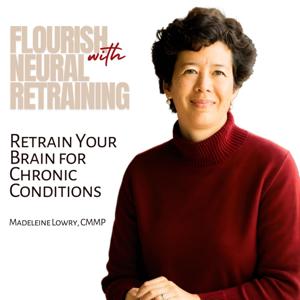

Food sensitivities. Chemical sensitivities. Reactions to environmental irritants that seem to come out of nowhere—and often worsen over time.
If you’ve experienced this, you may have been told your body is “overreacting” or that you simply need to avoid more and more exposures. But what if there is a deeper explanation?
In this episode Madeleine Lowry, a neural retraining specialist, introduces the role of the limbic system—the part of the brain responsible for threat detection, emotional processing, and survival—and how it can become overprotective in people with sensitive nervous systems.
You’ll learn how the brain continuously scans both the internal and external environment for potential danger, and how—after periods of stress, illness, or trauma—it can begin to associate previously neutral substances (like foods, smells, or environments) with threat.
These learned associations can lead to increasing sensitivity over time, where the list of triggers grows rather than shrinks.
Madeleine also explains why avoidance alone often reinforces the problem, confirming to the brain that these substances are dangerous. Instead, she introduces how neural retraining works to calm the limbic system, dissolve these learned threat patterns, and restore a sense of safety.
As the brain begins to reinterpret these inputs as safe, many people experience a gradual reduction in sensitivity and an expansion of what they can tolerate again.
Learn more about subconscious neural retraining and how it can support emotional and physical wellbeing. Visit TCNeuralRetraining.com to take our free quiz, schedule a free phone consultation, or private sessions via Zoom.
 View all episodes
 By Madeleine Lowry | Neural Retraining for Chronic Illness Specialist & MAP Practitioner

4.7
99 ratings
Food sensitivities. Chemical sensitivities. Reactions to environmental irritants that seem to come out of nowhere—and often worsen over time.
If you’ve experienced this, you may have been told your body is “overreacting” or that you simply need to avoid more and more exposures. But what if there is a deeper explanation?
In this episode Madeleine Lowry, a neural retraining specialist, introduces the role of the limbic system—the part of the brain responsible for threat detection, emotional processing, and survival—and how it can become overprotective in people with sensitive nervous systems.
You’ll learn how the brain continuously scans both the internal and external environment for potential danger, and how—after periods of stress, illness, or trauma—it can begin to associate previously neutral substances (like foods, smells, or environments) with threat.
These learned associations can lead to increasing sensitivity over time, where the list of triggers grows rather than shrinks.
Madeleine also explains why avoidance alone often reinforces the problem, confirming to the brain that these substances are dangerous. Instead, she introduces how neural retraining works to calm the limbic system, dissolve these learned threat patterns, and restore a sense of safety.
As the brain begins to reinterpret these inputs as safe, many people experience a gradual reduction in sensitivity and an expansion of what they can tolerate again.
Learn more about subconscious neural retraining and how it can support emotional and physical wellbeing. Visit TCNeuralRetraining.com to take our free quiz, schedule a free phone consultation, or private sessions via Zoom.

10,530 Listeners

21,141 Listeners

12,166 Listeners

149 Listeners

4,716 Listeners

8,544 Listeners

3,803 Listeners

1,660 Listeners

9,249 Listeners

47,808 Listeners

838 Listeners

5,487 Listeners

627 Listeners

226 Listeners
406 Listeners