
Sign up to save your podcasts
Or



Supporting feeding and swallowing in schools requires more than identifying what a student needs.
Full Episode Title: From Recommendations to Reality: Feeding and Swallowing Support
Guest: Elisa Thurman, MS, CCC-SLP
Earn 0.10 ASHA CEUs for this episode with Speech Therapy PD
Watch on YouTube
Carolyn and Elisa explore common challenges that arise when feeding and swallowing recommendations are carried over into the school setting, including building shared understanding among families, SLPs, teachers, paraprofessionals, and other school staff. They discuss the roles of key team members, strategies for communicating recommendations clearly, and ways to support consistency across people and environments. The episode also addresses when collaboration with medical providers may be needed and how school teams can coordinate care while keeping the student’s needs at the center. SLPs will come away with a clearer understanding of how to move feeding and swallowing recommendations from paper into everyday practice at school.
About the Guest: Elisa Thurman, MS, CCC-SLP, is a co-founder of The Feeding Link and a member of the Feeding and Swallowing Team at at the Multnomah Education Service District (MESD). Specializing in pediatric feeding disorders, she has extensive experience managing complex feeding and swallowing profiles in the school setting. Today, Elisa focuses on clinical mentorship, empowering fellow practitioners through advanced coaching and knowledge exchange.
Show Notes:
Carolyn Dolby Article
The Feeding Link Website
Bring more evidence and confidence to the feeding therapy table.
Guests: Jeanne Marshall, PhD, B Sp. Path & Valerie Gent, BAppSc, MMedRes, PhD Candidate
Earn 0.10 ASHA CEUs for this episode with Speech Therapy PD
Watch on YouTube
In this episode of Making Sense with Madi, host Madi Metcalf, MS, CCC-SLP, is joined by Jeanne Marshall, PhD, B Sp. Path, and Valerie Gent, BAppSc (Speech Pathology), MMedRes, PhD Candidate, to examine the evidence behind responsive feeding therapy and its use with children with pediatric feeding disorder (PFD) and avoidant/restrictive food intake disorder (ARFID).
Responsive feeding and responsive feeding therapy are closely related, but they are not the same. Jeanne and Valerie explain the distinction between the two, trace the foundations of responsive feeding therapy, and discuss the research supporting its use as a treatment framework. They also highlight key benefits of a responsive approach and what the evidence can tell clinicians about applying these principles in feeding therapy.
This episode will strengthen your understanding of the research behind responsive feeding therapy and help you feel more confident using this framework when supporting children with PFD and ARFID.
About the Guests: Dr. Jeanne Marshall, PhD, B Sp Path, is an experienced practicing speech pathologist and internationally recognised researcher and educator in pediatric feeding disorder. She holds a conjoint research fellow position between Children's Health Queensland Hospital and Health Service and The University of Queensland, where her research is embedded within a health service environment and driven by the needs of children and families, as well as the clinicians that care for them. Her work spans better diagnostics, early intervention, and awareness and advocacy for pediatric feeding disorder, with a strong focus on preventative health.
Valerie Gent is a Certified Practicing Speech Pathologist with more than 20 years’ experience working across the lifespan in Dysphagia. She is the Director of Let’s Eat! Feeding Therapy and Co-Director of Feeding Therapy Australia. Val published a kids’ book: “But I’m NOT Hungry for my Dinner” which was shortlisted for the Speech Pathology Australia Award in 2022. She also completed a Master of Medical Research exploring the impact of feeding differences for autistic children, graduating with an Award of Excellence in Research Thesis in 2023. Val is currently completing a PhD on a full -time scholarship (2024-2027) at the University of Queensland, focusing on Responsive Feeding Therapy.
Show Notes:
Contact Madi Metcalf: LinkedIn, Instagram, Function First
Contact Jeanne Marshall: LinkedIn, Instagram, The University of Queensland
Contact Valerie Gent: LinkedIn, Instagram, Facebook, Research Gate
Full resource list available on the course page.
Invitada: Jackie Rodriguez, M.S. CCC-SLP
Gana 0.1 ASHA CEU por este episodio con Speech Therapy PD
Watch on Youtube
En este episodio de SLPs en Acción, Damaris Sánchez Rivera, MS, CCC-SLP, conversa con Jackie, MS, CCC-SLP, sobre el impedimento cognitivo vascular desde una perspectiva clínica, cultural y comunitaria, destacando por qué este es un tema que los patólogos del habla y lenguaje no pueden ignorar.
Conversarán sobre qué es el impedimento cognitivo vascular, cómo se diferencia de otras formas de deterioro cognitivo y cuál es su relación con condiciones comunes como la hipertensión, la diabetes y la hipercolesterolemia. También analizarán cómo estas condiciones impactan de manera particular a las comunidades latinas, considerando factores como el acceso a servicios, las barreras lingüísticas, la educación en salud y las experiencias culturales que influyen en la comprensión, prevención y manejo de la condición.
A través de esta conversación, resaltarán el rol fundamental de los SLPs en la identificación de cambios cognitivos y comunicativos, la educación a pacientes y familias, y la integración de estrategias de alfabetización en salud para promover intervenciones más claras, efectivas y culturalmente relevantes.
Show Notes:
Referencias:
A conversation examining the intersection of systems, bias, and clinical practice to promote equitable feeding experiences for all students.
Guest: Lily Glasgo, PhD, OTR/L
Earn 0.10 ASHA CEUs for this episode with Speech Therapy PD
Watch on YouTube
In this episode of First Bite, Michelle Dawson, MS, CCC-SLP, CLC, BCS-S, FNAP, sits down with Lily Glasgo, PhD, OTR/L, to explore how bias, policy, and politics have shaped the history of school meals and what that means for children today. Through the lens of institutional feeding systems, this conversation examines how school-based meal programs influence participation, access, and outcomes for students, particularly those with pediatric feeding disorder (PFD). Together, they discuss the role of school-based clinicians, including the balance between therapeutic intervention and maintaining safe feeding practices, and how interprofessional collaboration can support more inclusive, student-centered care.
About the Guest: Lily M. Glasgo, PhD, OTR/L, (she/her) is an OT who is passionate about system level change to support kids with significant support needs. She gained clinical experience in outpatient and school based feeding before completing her PhD in Occupational Science from UNC Chapel Hill. Now, as an assistant professor at Pacific University, she teaches pediatrics and engages in a variety of research projects about pediatric feeding disorder.
Show Notes:
Books:
Love Money Cause: Spoon Foundation
Choosing the right language assessment tools takes more than reaching for a familiar test.
Guest: Michelle Ivey, PhD, CCC-SLP
Earn 0.10 ASHA CEUs for this episode with Speech Therapy PD
Watch on YouTube
Using the RIOT framework—review, interview, observe, and test—as a guide, Carolyn and Michelle look at how information from multiple sources can inform the assessment process. They discuss thoughtful selection and interpretation of norm-referenced assessments, the importance of considering communication across settings and partners, and ways to ensure the family’s perspective has a meaningful role in the evaluation. From preschool through the school-age years, this episode encourages SLPs to look beyond individual test scores and consider how each piece of assessment information contributes to the bigger picture.
About the Guest: Michelle L. Ivey, PhD, CCC-SLP, is an instructional faculty member in the Communication Sciences and Disorders Department of the University of Houston. There she teaches graduate and undergraduate classes in child language development and disorders. She also teaches the clinical methods capstone class and serves as a clinical educator for on-and off- campus clients.
Tune into the connections between music, movement, and sensory processing.
Guest: Jessica Teich, PhD, MT-BC, MTA, NMT-F™
Earn 0.10 ASHA CEUs for this episode with Speech Therapy PD
Watch on Youtube
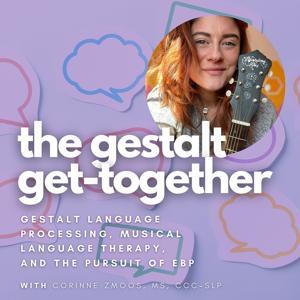
In this episode of The Gestalt Get-Together, host Corinne Zmoos, MS, CCC-SLP, is joined by Jessi Teich, PhD, MT-BC, MTA, NMT-F™, to discuss music-based sensorimotor interventions for children with autism. Drawing from her work as a music therapist and researcher, Dr. Teich examines how music and rhythm can support sensory processing, motor control, and self-regulation.
Differences in sensory integration, motor coordination, and self-regulation can influence how autistic children engage, move, communicate, and participate in everyday activities. Dr. Teich explains how rhythm and structured musical input interact with the brain's motor, sensory, and timing networks, offering a closer look at the connections between music, movement, and sensory processing.
The episode also examines rhythm-based and music-based interventions designed to address individual sensory and motor needs. SLPs will better understand the science behind these approaches and how music-based sensorimotor interventions may fit within interdisciplinary support for autistic children.
About the Guest: Dr. Jessica Teich (pronounced teach) is the Founder and Director of Rhythma Health Solutions™, an Ontario-based clinic that provides individualized neurologic music therapy® clinical care for Neurodivergent individuals and people with complex sensory and motor-related barriers. She holds a PhD in Music and Health Sciences and is a Board-Certified Music Therapist and Neurologic Music Therapist®, Fellow. Her work integrates advanced clinical training, research expertise, and real-world music experience to support neurodivergent and neurologically complex individuals and families.
Show Notes:
Contact Corinne Zmoos: Instagram, LinkedIn, Linktree
Contact Jessica Teich: LinkedIn, Rhythma Health Solutions
Sensing echoes: temporal misalignment in auditory brainstem responses as the earliest marker of neurodevelopmental derailment
The Academy of Neurologic Music Therapy
This episode offers practical guidance on building a feeding practice that is clinically sound, ethical, and sustainable.
Guest: Jean Hawney, MA, CCC-SLP, BCS-S, CLC
Earn 0.10 ASHA CEUs for this episode with Speech Therapy PD
Watch on YouTube
In this episode of First Bite, host Michelle Dawson, MS, CCC-SLP, CLC, BCS-S, FNAP, is joined by Jean Hawney, MA, CCC-SLP, BCS-S, CLC, to break down some of the biggest barriers pediatric SLPs face when considering private practice, from mindset blocks and finding your niche to the logistical challenges of getting started. Michelle and Jean dig into what SLPs need to consider when building a feeding-focused practice, including scope of practice, advanced training, ethical decision-making, and the resources that can help guide the process.
About the Guest: Jean Hawney, MA, CCC-SLP, BCS-S, CLC is a pediatric speech-language pathologist and feeding specialist, and the founder of Little Eaters & Talkers, a multidisciplinary private practice based in Houston, Texas. Jean specializes in infant and pediatric feeding and swallowing disorders, with a focus on medically complex infants, bottle aversion, early feeding development, and caregiver coaching.
Show Notes:
Contact Jean:
Love Money Cause: Hope for Minds
Trauma-sensitive care and interprofessional collaboration to better support children and families.
Guest: Lauren Thompson, MEd, CCC-SLP, CLC, and Allissa Younan, MS, OTR/L
Earn 0.10 ASHA CEUs for this episode with Speech Therapy PD
Watch on YouTube
In this episode of First Bite, Michelle Dawson, MS, CCC-SLP, CLC, BCS-S, FNAP, is joined by Lauren Thompson, MEd, CCC-SLP, CLC, and Allissa Younan, MS, OTR/L, to discuss how combining clinical perspectives can strengthen care for children with feeding challenges, sensory differences, nervous system dysregulation, and other complex needs. They consider what may be behind a child’s apparent refusal, shifting the focus from a child who “won’t” participate to one who may not yet feel safe, regulated, or supported enough to engage.
About the Guests: Lauren Thompson, M.Ed., CCC-SLP, CLC, is a Speech-Language Pathologist and Certified Lactation Counselor, and the owner of Well Fed Feeding & Swallowing Therapy in Londonderry, New Hampshire. Since 2012, she has supported infants and children with Pediatric Feeding Disorder, dysphagia, lactation challenges, ARFID, and feeding-related trauma across inpatient rehabilitation, hospital-based outpatient care, Level II and III NICUs, and public schools.
Allissa Younan, MS, OTR/L is a pediatric occupational therapist, TBRI practitioner, and owner of Holistic Abilities where she is passionate about helping children and families thrive through evidence-informed, relationship-based care. She specializes in sensory processing, feeding, and supporting children to make gains in their everyday life.
Contact the Guests:
Show Notes:
References:
Support responsive feeding while honoring each child’s autonomy.
Guest: Jenny McGlothlin, MS, CCC-SLP, CLC
Earn 0.10 ASHA CEUs for this episode with Speech Therapy PD
Watch on YouTube
In this episode of Making Sense with Madi the SLP, Madi Metcalf, MS, CCC-SLP, is joined by Jenny McGlothlin, MS, CCC-SLP, CLC, to discuss what responsive feeding therapy looks like in practice.
Jenny shares a practical framework for bringing the values of responsive feeding therapy into feeding sessions while honoring each child’s autonomy around eating. She explains how to apply these principles across different populations and adapt them to meet the needs of individual children and families.
You’ll also learn how to meaningfully include caregivers in sessions, helping them understand and carry over responsive feeding practices during meals and everyday routines.
About the Guest: Jenny McGlothlin, MS, CCC-SLP, CLC, is a Speech-Language Pathologist and Certified Lactation Counselor specializing in feeding across the lifespan—from newborns to adolescents—as well as pediatric motor speech disorders. With over 20 years of clinical experience, she empowers caregivers with the confidence and competence to be their child’s best feeding and communication partner. In 2005, Jenny developed the STEPS feeding program at the UT Dallas Callier Center to support and promote feeding development in preschool-aged children. She provides training for graduate students, therapists, teachers, and parents both nationally and internationally. Jenny has been inducted into the Texas Speech-Language-Hearing Association’s Hall of Fame for her contributions to the field. She also volunteers with Feeding Matters and has been an active TSHA volunteer for many years. She lives in Dallas with her husband, three children, and their rescue dog, Baxter. In her free time, she enjoys reading, organizing, spending time with friends, and cheering on her kids at games.
Show Notes:
Contact Madi Metcalf: LinkedIn, Instagram, Function First
Contact Jenny McGlothlin: LinkedIn, Instagram, Extreme Picky Eating
What Happened to You? Conversations on Trauma, Resilience, and Healing
Helping Your Child with Extreme Picky Eating
Learn from Margaryta’s "C.O.N.F.I.D.E.N.T." EI SLP framework to support functional, collaborative, and family-centered intervention.
Guest: Margaryta Kuzmin, MA, CCC-SLP, TSSLD-BE
Earn 0.10 ASHA CEUs for this episode with Speech Therapy PD
Watch on YouTube
In this episode of First Bite, Michelle Dawson, MS, CCC-SLP, CLC, BCS-S, FNAP, is joined by Margaryta Kuzmin, MA, CCC-SLP, TSSLD-BE, a bilingual pediatric speech-language pathologist and early intervention provider, for a joyful and empowering discussion about the many hats SLPs wear in early intervention. From feeding and dysphagia to communication, caregiver coaching, and collaboration, this episode celebrates the meaningful, real-life work happening in homes and everyday routines. Michelle and Margaryta redefine what it means to be a “confident” EI SLP, reminding us that confidence is not about knowing everything. It is about trusting your foundation, staying curious, and showing up with intention.
About the Guest: Margaryta Kuzmin is a bilingual speech-language pathologist based in New York City with over 15 years of experience working with infants, toddlers, and school-age children with complex communication, feeding, and developmental needs. She specializes in pediatric feeding and swallowing disorders, AAC, and working with medically complex populations.
Show Notes:
Contact Margaryta:
Resources:
Love Money: 1p36 Deletion Support & Awareness
From the publisher's feed
213 Listeners
47 Listeners

27 Listeners
6 Listeners
6 Listeners
10 Listeners
12 Listeners
3 Listeners
7 Listeners
2 Listeners
0 Listeners