
Sign up to save your podcasts
Or

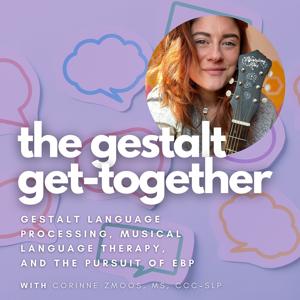


Tune into the connections between music, movement, and sensory processing.
Guest: Jessica Teich, PhD, MT-BC, MTA, NMT-F™
Earn 0.10 ASHA CEUs for this episode with Speech Therapy PD
Watch on Youtube
In this episode of The Gestalt Get-Together, host Corinne Zmoos, MS, CCC-SLP, is joined by Jessi Teich, PhD, MT-BC, MTA, NMT-F™, to discuss music-based sensorimotor interventions for children with autism. Drawing from her work as a music therapist and researcher, Dr. Teich examines how music and rhythm can support sensory processing, motor control, and self-regulation.
Differences in sensory integration, motor coordination, and self-regulation can influence how autistic children engage, move, communicate, and participate in everyday activities. Dr. Teich explains how rhythm and structured musical input interact with the brain's motor, sensory, and timing networks, offering a closer look at the connections between music, movement, and sensory processing.
The episode also examines rhythm-based and music-based interventions designed to address individual sensory and motor needs. SLPs will better understand the science behind these approaches and how music-based sensorimotor interventions may fit within interdisciplinary support for autistic children.
About the Guest: Dr. Jessica Teich (pronounced teach) is the Founder and Director of Rhythma Health Solutions™, an Ontario-based clinic that provides individualized neurologic music therapy® clinical care for Neurodivergent individuals and people with complex sensory and motor-related barriers. She holds a PhD in Music and Health Sciences and is a Board-Certified Music Therapist and Neurologic Music Therapist®, Fellow. Her work integrates advanced clinical training, research expertise, and real-world music experience to support neurodivergent and neurologically complex individuals and families.
Show Notes:
Contact Corinne Zmoos: Instagram, LinkedIn, Linktree
Contact Jessica Teich: LinkedIn, Rhythma Health Solutions
Sensing echoes: temporal misalignment in auditory brainstem responses as the earliest marker of neurodevelopmental derailment
The Academy of Neurologic Music Therapy
From language modeling to play, refresh the tools you use every day.
Guest: Emily Byers Chaney, MS, CCC-SLP
Earn 0.10 ASHA CEUs for this episode with Speech Therapy PD
Watch on Youtube
Whether you’re new to gestalt language processing or could use a refresher, this episode of The Gestalt Get-Together brings the basics back into focus. Host Corinne Zmoos, MS, CCC-SLP, is joined by Emily Byers Chaney, MS, CCC-SLP, to talk through echolalia, language modeling, play-based intervention, and how GLP discourse has evolved.
Using real-world clinical examples, Corinne and Emily make these ideas easier to understand and apply. You’ll come away with practical ways to expand language, encourage reciprocal interactions, and more confidently support gestalt language processors in your everyday practice.
About the Guest: Emily Byers Chaney, M.S., CCC-SLP is a a pediatric speech-language pathologist and the founder of Boundless Speech and Language, a private practice in Los Angeles offering both in-person and teletherapy services across California. With eight years of experience, Emily is dedicated to providing neurodiversity-affirming, child-led care, helping families move toward relationship-centered and co-regulating models of care. She is passionate about empowering families through strengths-based approaches and regularly shares educational content for both parents and professionals focused on practical, evidence-informed ways to support neurodivergent children while honoring their individual communication styles, support needs, and strengths.
Show Notes:
Contact Corinne Zmoos: LinkedIn, Instagram, Linktree
Contact Erin Forward: Instagram
Communication Development Center
Natural Language Acquisition on the Autism Spectrum
Meaningful Speech
Constructing a Language: A Usage-Based Theory of Language Acquisition
The functions of immediate echolalia in autistic children.
Turn connection into communication with practical DIR Floortime® strategies for supporting GLPs.
Guest: Erin Forward, MSP, CCC-SLP, CLC
Earn 0.10 ASHA CEUs for this episode with Speech Therapy PD
Watch on Youtube
In this episode of The Gestalt Get-Together podcast, host Corinne Zmoos, MS, CCC-SLP, is joined by Erin Forward, MSP, CCC-SLP, CLC, to discuss how the DIR Floortime® approach can enhance clinical practice with gestalt language processors (GLPs). Together, they examine how understanding individual differences through the Floortime model can strengthen communication, relationships, and language development.
Corinne and Erin explore functional emotional developmental capacities, circles of communication, and the role these concepts play in supporting children who use gestalt language processing. They also discuss how gestalt language processing can be understood as an individual difference within the DIR Floortime approach, offering practical insights to help SLPs foster meaningful interactions and support the growth of authentic communication.
About the Guest: Erin Forward, MSP, CCC-SLP, CLC, is a speech-language pathologist, DIR/Floortime® Expert Provider, and founder of Nourishing Connection LLC. She is newly a full time Expert DIR/Floortime staff member for ICDL. She specializes in relationship-based, neurodiversity-affirming support for children and families with feeding and communication differences. Erin is an international speaker and host of the Rooted in Connection podcast, where she explores the power of relationships in healthcare, parenting, and everyday life. She believes that relationship based care is the core of what helps children and families thrive.
Show Notes:
Contact Corinne Zmoos: LinkedIn, Linktree
Contact Erin Forward: LinkedIn, Nourishing Connection
Zero To Three
Home of DIRFloortime - What is DIR
Home of DIRFloortime - Affect Diathesis Hypothesis
Home of DIRFloortime - Child Development
Music and Early Language Acquisition
Searching for Roots of Entrainment and Joint Action in Early Musical Interactions
Developmental Pathways for Kids - Ideation
Affect Autism
Rooted in Conntection Podcast - Erin Forward
How can we incorporate brain health into everyday clinical practice?
Guest: Jennifer Ruckner, MS, CCC-SLP
Earn 0.10 ASHA CEUs for this episode with Speech Therapy PD
Watch on YouTube
Brainstorms podcast host Renee Garrett, PhD, CCC-SLP, CBIS, is joined by Jennifer Ruckner, MS, CCC-SLP, for a practical discussion on how speech-language pathologists can incorporate brain health into everyday clinical practice. Together, they break down the neuroscience behind neuroplasticity, cognitive reserve, and lifestyle factors that influence brain function, while exploring what brain health really means across the continuum of care.
About the Guest: Jennifer Ruckner, MS, CCC-SLP, is a seasoned speech-language pathologist with over three decades of experience across Early Intervention, school districts, and private practice. She earned her Bachelor of Science and Master’s degrees in Communication Disorders from Auburn University and has practiced since 1990. Jennifer specializes in Social/Pragmatic Language, Autism Spectrum Disorder, Expressive Language Disorder, and Feeding Disorders.
[
Small shifts in your coaching can make a lasting impact at home.
Guest: Cristina J. Easton, Educational Consultant
Earn 0.10 ASHA CEUs for this episode with Speech Therapy PD
Watch on Youtube
In this episode of The Gestalt Get-Together, host Corinne Zmoos, MS, CCC-SLP, welcomes back Cristina Easton to discuss what effective parent coaching looks like through the eyes of a parent of a Gestalt Language Processor. Drawing from her own experiences, Cristina shares what helped her feel supported, what created barriers to learning, and how clinicians can build stronger partnerships with families throughout the therapy process.
Together, Corinne and Cristina discuss practical coaching strategies that encourage collaboration, confidence, and meaningful carryover beyond the therapy room. You'll learn ways to provide education and feedback that feel supportive rather than overwhelming, helping families become active, empowered members of the therapeutic team.
Whether you're new to parent coaching or looking to strengthen your approach, this episode offers thoughtful insights and real-world perspectives that can help you create more effective, family-centered therapy for Gestalt Language Processors.
About the Guest: Cristina J. Easton is the founder of imPACT Educational Consulting, LLC, Director at Educator Support Collaborative, and Program Strategy Manager at AdoptAClassroom.org. She majored in Sociology at Smith College, earned her Master's in Teaching as a New York City Teaching Fellow in Special Education, and her Master's in Education Leadership at Bank Street College of Education. Her mission is to guide projects from promise to impact, focusing on measurable actions that promote voice, equity, and joy for youth, families, educators, and institutions.
Show Notes:
In Vivo Feedback Predicts Parent Behavior Change in the Attachment and Biobehavioral Catch-up Intervention
The Early Childhood Coaching Handbook - Dathan D. Rush & M'Lisa L. Shelden
Therapeutic Climbing: A Pediatric Top-Rope Rock Climbing Program for Sensory Integration Through Social Prescribing
Neurodivergent Climbers: Finding Balance On and Off the Wall
Effect of an indoor climbing program on selective attention of children with autism spectrum disorder (ASD)
Reflection Questions
Discover how singable stories can unlock meaningful language learning for GLPs.
Guest: Rachel See, MA, MT-BC
Earn 0.10 ASHA CEUs for this episode with Speech Therapy PD
Watch on Youtube
Join host Corinne Zmoos, MS, CCC-SLP, on The Gestalt Get-Together as she welcomes Rachel See, MA, MT-BC, for a conversation about using singable stories to support language development in gestalt language processors (GLPs). Together, they explore how music, storytelling, and literacy can be combined to create engaging, meaningful language-learning experiences.
Rachel explains what makes a story “singable” and why musical books and stories can be such a powerful tool for supporting communication. You’ll learn how singable stories can target language goals through repetition, predictability, shared attention, and meaningful interaction, while also supporting connection and engagement.
About the Guest: After graduating with an undergrad degree in communication disorders and a Master’s in music therapy, Rachel See, MA, MT-BC became interested in how language and music intersect, connect, and enhance each other. Starting in 2011, Rachel opened her private practice in Austin, worked for 11 years in the public school special education classrooms in St. Louis, and now owns and operates the Singable Book Club.Show Notes:
Show Notes:
Book- This Is How We Play
Book- Hi, How Are You
Book- Charlie Parker Played Be Bop
Book- Trashy Town
Rhythm and music for promoting sensorimotor organization in autism: broader implications for outcomes
Auditory-Motor Mapping Training as an Intervention to Facilitate Speech Output in Non-Verbal Children with Autism: A Proof of Concept Study
The Therapeutic Effects of Singing in Neurological Disorders
Supporting GLPs starts with supporting the team around them.
Guest: Tara Phillips, MS, CCC-SLP
Earn 0.10 ASHA CEUs for this episode with Speech Therapy PD
Watch on Youtube
In this episode of The Gestalt Get-Together, Corinne Zmoos, MS, CCC-SLP, is joined by Tara Phillips, MS, CCC-SLP, for a conversation about supporting educators and paraprofessionals who work with Gestalt Language Processors (GLPs). Together, they explore how SLPs can build collaborative relationships with school teams, explain echolalia in approachable, meaningful ways, and share GLP-informed strategies that carry over throughout the school day.
Corinne and Tara also discuss ways to track and interpret gestalts as a team, helping educators better understand what a student’s language is communicating and how to support language development across settings. You’ll walk away with ideas for strengthening communication with school staff, increasing consistency in support, and creating a more collaborative approach for GLP students.
About the Guest: Tara Phillips is a speech-language pathologist with over 25 years of experience working with young autistic children. After decades in the school setting, she saw how overwhelmed and under-supported preschool special educators often felt—and how hard it was to find meaningful, engaging resources for young autistic learners. So in 2019, she founded Autism Little Learners. Today, Tara supports educators around the world with practical, neurodiversity-affirming strategies that help them move from overwhelm to confidence.
Show Notes:
The Hanen Centre- It's "Owl" About Having Fun
Repeating purposefully: Empowering educators with functional communication models of echolalia in Autism
Meaningful Speech
***Originally aired: 12/8/2025***
Guest: Cristina Easton, Educational Consultant
Earn 0.10 ASHA CEUs for this episode with Speech Therapy PD
Watch on Youtube
Join Corinne Zmoos, MS, CCC-SLP, as she interviews Cristina Easton about raising a musical Gestalt Language Processor. Corinne and Cristina will discuss the family’s shift from speech-only interventions to a musical language approach rooted in the NLA framework (Blanc, 2012). Cristina will describe her son’s progress arc, including musical and melodic gestalts, her advocacy work, and where her family is headed to help their GLP thrive.
About the Guest: Cristina J. Easton is the founder of imPACT Educational Consulting, LLC, Director at Educator Support Collaborative, and Program Strategy Manager at AdoptAClassroom.org. She majored in Sociology at Smith College, earned her Master's in Teaching as a New York City Teaching Fellow in Special Education, and her Master's in Education Leadership at Bank Street College of Education. Her mission is to guide projects from promise to impact, focusing on measurable actions that promote voice, equity, and joy for youth, families, educators, and institutions. With extensive experience in education, Cristina has designed inclusive instructional models, founded a new school, developed strategic plans, implemented equitable grading systems, and enhanced student voice in course selection while leading teams as a school administrator. She emphasizes centering the voices of marginalized communities in decision-making processes. Cristina holds a B.A. in Sociology from Smith College, an M.S. in Special Education, as a New York City Teaching Fellow, and an M.A. in School Leadership from Bank Street College of Education. A 2024 graduate of the Arc of Maryland’s Partners in Policymaking, she actively works to foster a world that embraces equity and joy for her son and all of us. In 2021, Cristina and her husband learned that their son was autistic. This catapulted their family into Autism acceptance and family advocacy. Together, they founded the Embrace Play playgroup for families of neurodivergent children ages birth to ten. Through Embrace, the Eastons have provided spaces for families to enjoy where their children and their needs and gifts are validated, and where families can learn from and lean on one another. Cristina is a member of the 2025 Kennedy Krieger Leadership Education in Neurodevelopmental and Other Related Disabilities program and the Arc of Maryland’s Partners in Policymaking 2024 cohort.
Musical speech therapy techniques for the non-musical SLP.
Guest: Corinne Zmoos, MS, CCC-SLP
Earn 0.10 ASHA CEUs for this episode with Speech Therapy PD
Watch on Youtube
Take the FREE Pediatric Feeding Courses for ASHA CEUs (through June 30, 2026)
Want to incorporate music into your speech therapy sessions but don't know where to start? Michelle and Corinne share easy-to-use resources to help non-musical SLPs confidently incorporate music into sessions, along with evidence-based tools for clinicians looking to deepen their knowledge of music-based language intervention.
About the Guest: Corinne Zmoos, MS, CCC-SLP, is a musical speech-language pathologist based in Baltimore, Maryland, and the founder of *Messy Happy Music Lab*, a private practice specializing in neurodivergent language acquisition, musical language therapy, Gestalt Processing, and augmentative and alternative communication (AAC).
Show Notes:
Please note the following correction: A4 (A above middle C) is 440Hz, not middle C as stated.
Contact Corinne:
Love Money: Support Marian House in Baltimore
Join the National Foundation of Swallowing Disorders
Run the Virtual Dash For Dysphagia June 6-13, 2026
Dysphagia Research Society
Learn how gestalt-based approaches can transform feeding therapy for autistic children and their families.
Guest: Michelle Dawson, MS, CCC-SLP, CLC, BCS-S, FNAP
Earn 0.10 ASHA CEUs for this episode with Speech Therapy PD
Watch on Youtube
How can GLP-informed strategies support pediatric feeding therapy for autistic children? In this episode, Corinne Zmoos, MS, CCC-SLP, interviews Michelle Dawson, MS, CCC-SLP, CLC, BCS-S, FNAP, host of the First Bite SLP podcast, to explore her work on pediatric feeding disorders in young autistic individuals. They discuss subtle, often overlooked signs of PFD, as well as medical factors that can impact feeding and swallowing. Together, they explore evidence-informed approaches to care, including how to incorporate linguistic and cognitive gestalts into therapy to support meaningful progress. You’ll leave with a clearer understanding of how GLP-informed strategies align with feeding therapy to better support autistic children and their families.
About the Guest: Michelle Dawson, MS, CCC-SLP, CLC, BCS-S, FNAP works for Augusta County Public School as a full-time early intervention speech-language pathologist with the Infant and Toddler Connection of Augusta-Highland in Staunton, VA, and as an adjunct professor at North Carolina Central University (NCCU) in Durham, NC. Additionally, she is the acclaimed host of “First Bite: Fed, Fun, Functional,” a weekly speech therapy podcast that addresses “all thangs” of pediatric speech therapy and is presented by Speech Therapy PD. Michelle authored Chasing the Swallow: Truth, Science, and Hope for Pediatric Feeding and Swallowing Disorders.
Show Notes:
Feeding Matters
Feeding Matters PFD pdf
Gut: The Inside Story of Our Body's Most Underrated Organ
Talk to Me Technologies
SOS Approach to Feeding
From the publisher's feed

38,653 Listeners

69,494 Listeners
213 Listeners
47 Listeners
27 Listeners
427 Listeners
6 Listeners
6 Listeners

18,923 Listeners
10 Listeners
12 Listeners
64 Listeners
3 Listeners
12,439 Listeners
7 Listeners
2 Listeners