
Sign up to save your podcasts
Or

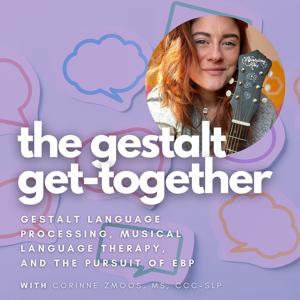


Turn everyday play into powerful support for language and executive functioning.
Guest: Rachel Terrell, M.S., CCC-SLP
Earn 0.10 ASHA CEUs for this episode with Speech Therapy PD
Watch on Youtube
In this episode of The Gestalt Get-Together, Corinne Zmoos, MS, CCC-SLP, is joined by Rachel Terrell, M.S., CCC-SLP, CBIS, to explore the connection between gestalt language processing and executive functioning through play. Together, they discuss how to recognize different GLP play styles and what those preferences may reveal about underlying executive functioning challenges. The conversation highlights how play can offer valuable insight into regulation, flexibility, and organization.
About the Guest: Rachel Terrell, M.S., CCC-SLP, is a speech-language pathologist and founder of Rooted and Rising Therapies and NeuroNook. Through Rooted and Rising Therapies, she specializes in working with autistic children and gestalt language processors, focusing on executive functioning, AAC, and unmasking. NeuroNook aims to break down silos between disciplines and equip clinicians for regulation-first care. Through mentorship, speaking engagements, and digital resources, Rachel encourages therapists to build collaborative teams, challenge outdated models, and create therapy spaces where children feel seen, respected, and truly understood.
Show Notes:
Honoring Diverse Styles of Play
What if hyperlexia is not a barrier, but a bridge to language?
Guest: Liz Watson, MS, CCC-SLP
Earn 0.10 ASHA CEUs for this episode with Speech Therapy PD
Watch on Youtube
In this episode of The Gestalt Get-Together, host Corinne Zmoos, MS, CCC-SLP, sits down with Liz Watson, MS, CCC-SLP, to talk about hyperlexia through the lens of Gestalt Language Processing. They explore what hyperlexia really is, why many GLPs are drawn to what Liz calls “human codes” such as letters, numbers, and symbol systems, and how these interests can become powerful entry points into language.
About the Guest: Liz Watson, MS, CCC-SLP, is a lifelong school-based SLP with a passion for working with hyperlexic kids. She specializes in the preschool age group and loves AAC. She is also a writer for The Informed SLP. Liz lives in Maryland with her wife, son, and two tiny dogs.
Show Notes:
What do autistic children who are interested in letters and numbers do with them? A qualitative study
Turn musical moments into meaningful communication breakthroughs.
Guest: Mikelia Wallace, MT-BC/L
Earn 0.10 ASHA CEUs for this episode with Speech Therapy PD
Watch on Youtube
In this episode of The Gestalt Get-Together, Corinne Zmoos, MS, CCC-SLP, sits down with Mikelia Wallace, MT-BC/L, for an honest, interprofessional conversation about supporting highly musical gestalt language processors (GLPs). Together, they unpack how music therapists and speech-language pathologists can collaborate more effectively by clearly understanding each other’s scope of practice, education, and clinical lenses. Rather than overlapping roles, this conversation highlights how differences in training and perspective can be leveraged to improve outcomes for clients.
About the Guest: Mikelia Wallace, MT-BC/L, is a board-certified and licensed music therapist who is passionate about encouraging self-exploration and skill development through music. She is particularly passionate about working with early intervention, neurodevelopmental disabilities, and medically complex youth. Mikelia strives to practice through a neuro-affirming lens and is focused on adapting and adjusting music interventions to accommodate and empower individuals.
Bridging OT and SLP for stronger, more meaningful outcomes.
Guest: Erin Heyn, OTD, OTR/L, CLC
Earn 0.10 ASHA CEUs for this episode with Speech Therapy PD
Watch on Youtube
The OT–SLP relationship can be a powerful alliance. For neurodivergent children and their families, collaboration across disciplines can make a meaningful difference in relationships, regulation, access to learning, and the ability to build new skills. In this episode of The Gestalt Get-Together, Corinne Zmoos, MS, CCC-SLP, sits down with pediatric occupational therapist Erin Heyn to discuss centering caregiver regulation and cue-reading to create a strong foundation for skill acquisition. Erin shares how sensory processing and nervous system regulation shape everything - from attention and movement to feeding and connection - and why caregiver education and training are essential in early development. Together, they highlight simple ways to build stronger OT-SLP relationships that honor each child’s communication style and help them access their environment with confidence. You will come away with ideas for connecting with the OTs on your clients’ teams on this topic to enhance language acquisition.
About the Guest: Erin Heyn, OTD, OTR/L, CLC, is a pediatric occupational therapist and lactation counselor who specializes in infant and toddler feeding and development. She started Tiny Tides Therapy, a mobile therapy practice, in January of 2025. Erin is passionate about supporting little ones and their families by meeting them where they are (literally) and finding ways to help them achieve their unique goals.
Show Notes:
The Pyramid of Learning
Rethinking language development through rhythm, improvisation, and real connection.
Guest: Garrett Oyama, MS, CCC-SLP
Earn 0.10 ASHA CEUs for this episode with Speech Therapy PD
Watch on Youtube
In this episode of The Gestalt Get-Together, Corinne Zmoos, MS, CCC-SLP, sits down with speech-language pathologist, researcher, musician, and Beyond Words podcast host Garrett Oyama, MS, CCC-SLP, to explore jazz as a framework for thinking about speech and language development. Garrett shares how his background in jazz performance shaped his understanding of communication as a dynamic, improvised skill built through timing, interaction, listening, and real-world use rather than drills or isolated practice. Together, Corinne and Garrett discuss why fluency emerges through meaningful participation, how rhythm and motor learning support language development, and the shifts that occur when therapy moves from correcting errors to supporting connection, flexibility, and authentic communication.
About the Guest: Garrett Oyama, MS, CCC-SLP, is a speech-language pathologist, musician, and research coordinator with over eight years of experience working in clinics and schools throughout California. A graduate of Emerson College (2014), he integrates his background in communication sciences with creative approaches to therapy, technology, and education. His interdisciplinary work bridges clinical practice, research, and the arts to support innovative, evidence-based care.
Guest: Courtney Katzenberg, LGPC, M.Ed
Earn 0.10 ASHA CEUs for this episode with Speech Therapy PD
Watch on Youtube
In this episode of The Gestalt Get-Together, Corinne Zmoos, MS, CCC-SLP, welcomes Courtney Katzenberg, LGPC, M.Ed., for a thoughtful conversation about Compassion-Focused Therapy (CFT), the Three Systems of Regulation, and how these frameworks can meaningfully support parents of neurodivergent children.
Together, Courtney and Corinne explore the shared foundation of regulation that connects CFT for caregivers and Gestalt Language Processing (GLP)-informed approaches for children. You will gain a clear understanding of how CFT can serve as a supportive resource for parents experiencing grief, chronic stress, burnout, confusion, dysregulation, or feelings of defeat, while also strengthening the co-regulation systems that benefit the entire family.
This episode offers practical insight into how SLPs can better understand caregiver experiences, collaborate with mental health professionals, and thoughtfully integrate regulation-centered perspectives into family-centered care.
About the Guest: Courtney Katzenberg, LGPC, M.Ed, is a psychotherapist at Be. Psychotherapy in Baltimore, Maryland. She joined the practice in 2021 after a career transition from education, seeking a clinical internship that would allow her to use evidence-based, compassionate, and mindfulness-focused modalities with the perinatal population. In 2024, she pursued training with the Compassionate Mind Foundation to build her knowledge and skills employing Compassion Focused Therapy, which she uses with individuals and couples.
Show Notes:
Compassionate Mind Foundation
Short CFT video on the Three System Model
The Compassionate Mind Book by Paul Gilbert
The Compassionate Mind Workbook by Chris Irons and Elaine Beaumont
Mindful Compassion by Paul Gilbert and Choden
Podcast: Compassion in a T-Shirt by Stan Steindl
An Exploration of Compassion Focused Therapy for Grieving Individuals by Darcy L. Harris
Guest: Salena Jacob, DPT
Earn 0.1 ASHA CEUs for this episode with Speech Therapy PD: https://www.speechtherapypd.com/courses/playful-pt-with-glps
In this episode of The Gestalt Get-Together, Corinne Zmoos, MS, CCC-SLP, sits down with Salena Jacob, DPT, to talk about her experience supporting gestalt language processors (GLPs) in physical therapy settings.
Salena shares how she brings the GLP profile into real PT sessions, from following children’s special interests to using musical language, rhythm, and familiar phrases to build connection and support regulation. Through concrete examples, she explains how these approaches support engagement as children develop motor skills, highlighting the value of interdisciplinary collaboration across therapy environments.
About the Guest: Salena Jacob, DPT, is a doctor of physical therapy, a 200-hour certified yoga instructor, and a musician who uses her experience to provide an individualized therapeutic plan for pediatric clients. She incorporates learning preferences of Gestalt Language Processors with cutting-edge PT research findings in her sessions.
Guest: Elizabeth (Biz) Freund, CCC-SLP
Earn 0.1 ASHA CEUs for this episode with Speech Therapy PD: https://app.speechtherapypd.com/courses/exploratory-process-art
In this episode of The Gestalt Get-Together, we explore how exploratory process art can support meaningful communication and flexible play for Gestalt language processors (GLPs).
Host Corinne Zmoos, MS, CCC-SLP, interviews Elizabeth Freund, CCC-SLP, about how she uses process art in therapy to create child-directed, choice-driven experiences that prioritize expression over outcomes. Unlike traditional crafts, process art is not about a finished product. Instead, it invites exploration, autonomy, and creativity, even when the process feels messy or nonlinear.
Elizabeth shares how clinicians can shift their mindset, learn to observe patterns and symbolism in a child’s creations, and use these moments to support expressive communication and deeper engagement. This conversation offers a refreshing perspective for SLPs looking to embrace flexibility, follow the child’s lead, and recognize communication opportunities in unexpected places.
About the Guest: Biz Freund, CCC-SLP, is a late-identified AuDhd speech pathologist working in home health in the Phoenix area. She has been working with GLPs and AAC users for the past 10 years in both clinic and home settings. Biz uses exploratory process art with her clients as a modality to facilitate creative, accessible, curiosity-led play and language development.
Guest: Janine Benner, MA, CCC-SLP, BCS-CL, ASCS
Earn 0.1 ASHA CEU for this episode with Speech Therapy PD: https://www.speechtherapypd.com/courses/data-collection-methods
In this episode, Corinne Zmoos, MS, CCC-SLP, is joined by Janine Benner, MA, CCC-SLP, BCS-CL, ASCS, to tackle a practical challenge: how do you collect meaningful data and write goals that truly reflect how gestalt language processors communicate? This conversation highlights strategies that preserve connection, minimize disruption, and support clear clinical decision making. You will hear why even brief documentation moments can interrupt the flow of a GLP session and learn alternatives that protect both rapport and accountability. The discussion includes rethinking existing goals, developing goal frameworks that move beyond accuracy-based metrics, using rubrics with intention, recognizing early gains through a prelinguistic lens, and designing simple data tools that parents and educators can use with confidence.
About the Guest: Janine Benner is a speech-language pathologist with 33 years of experience, including 26 years in pediatric settings. She is a Board-Certified Specialist in Child Language, credentialed by the American Board of Child Language and Language Disorders (ABCLL), with a focus on autism and early intervention and a Certified Autism Spectrum Disorder Clinical Specialist (ASDCS). Before returning to working in public schools, Janine was an assistant professor at the Department of Communication Sciences and Disorders at Loma Linda University. She developed and taught undergraduate and graduate courses, including an SLPD course on neurodiversity; supervised graduate students in autism and early intervention clinics; mentored student research; and developed and implemented service-learning programs in China and Mexico. Janine utilizes strength-based, evidence-based, neurodiverse affirming approaches to evaluate and support young children with autism and complex language disorders. Beyond her clinical practice, Janine provides continuing education courses, professional development, parent education, and consultation and training for international programs. Janine is dedicated to mentoring, service, and teaching, and enjoys traveling.
Guest: Amy Zembriski, MS, CCC-SLP
Earn 0.1 ASHA CEU for this episode with Speech Therapy PD: https://www.speechtherapypd.com/courses/executive-functioning-glp
In this episode, Corinne Zmoos, MS, CCC-SLP, sits down with Amy Zembriski, MS, CCC-SLP, for an engaging conversation about the role of executive function in supporting Gestalt Language Processors (GLPs). Amy explains how perception, attention, and nonverbal working memory influence a child’s ability to access and use language effectively. By learning how to identify signs of perceptual challenges, you’ll gain a better understanding of how these often-overlooked factors may contribute to what presents as receptive language delays or behavioral concerns. You’ll leave with practical, neurodiversity-affirming strategies to strengthen perception and attention—key areas that go far beyond “just modeling” and are especially important for GLPs who seem “stuck” in their language development.
About the Guest: Amy Zembriski, MBA, MS, CCC-SLP, is a certified speech-language pathologist with a diverse clinical background spanning acute care, skilled nursing facilities, schools, early intervention, and private practice. She has also served as an adjunct professor, supervising graduate students during their diagnostic clinical practicum. Amy is the owner of *Speech Therapy Connections* in Fair Lawn, New Jersey, where she specializes in augmentative and alternative communication (AAC) and gestalt language processing. She provides expert support to families with autistic children, guided by a commitment to neurodiversity-affirming practices. Her passion lies in educating and empowering both professionals and families, fostering inclusive communication strategies that honor each child’s unique voice and developmental path.
From the publisher's feed

38,669 Listeners

69,495 Listeners
213 Listeners
47 Listeners
27 Listeners
427 Listeners
6 Listeners
6 Listeners

18,916 Listeners
10 Listeners
12 Listeners
64 Listeners
3 Listeners

12,428 Listeners
7 Listeners
2 Listeners