
Sign up to save your podcasts
Or

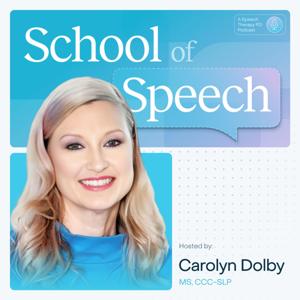


Supporting feeding and swallowing in schools requires more than identifying what a student needs.
Full Episode Title: From Recommendations to Reality: Feeding and Swallowing Support
Guest: Elisa Thurman, MS, CCC-SLP
Earn 0.10 ASHA CEUs for this episode with Speech Therapy PD
Watch on YouTube
Carolyn and Elisa explore common challenges that arise when feeding and swallowing recommendations are carried over into the school setting, including building shared understanding among families, SLPs, teachers, paraprofessionals, and other school staff. They discuss the roles of key team members, strategies for communicating recommendations clearly, and ways to support consistency across people and environments. The episode also addresses when collaboration with medical providers may be needed and how school teams can coordinate care while keeping the student’s needs at the center. SLPs will come away with a clearer understanding of how to move feeding and swallowing recommendations from paper into everyday practice at school.
About the Guest: Elisa Thurman, MS, CCC-SLP, is a co-founder of The Feeding Link and a member of the Feeding and Swallowing Team at at the Multnomah Education Service District (MESD). Specializing in pediatric feeding disorders, she has extensive experience managing complex feeding and swallowing profiles in the school setting. Today, Elisa focuses on clinical mentorship, empowering fellow practitioners through advanced coaching and knowledge exchange.
Show Notes:
Carolyn Dolby Article
The Feeding Link Website
Choosing the right language assessment tools takes more than reaching for a familiar test.
Guest: Michelle Ivey, PhD, CCC-SLP
Earn 0.10 ASHA CEUs for this episode with Speech Therapy PD
Watch on YouTube
Using the RIOT framework—review, interview, observe, and test—as a guide, Carolyn and Michelle look at how information from multiple sources can inform the assessment process. They discuss thoughtful selection and interpretation of norm-referenced assessments, the importance of considering communication across settings and partners, and ways to ensure the family’s perspective has a meaningful role in the evaluation. From preschool through the school-age years, this episode encourages SLPs to look beyond individual test scores and consider how each piece of assessment information contributes to the bigger picture.
About the Guest: Michelle L. Ivey, PhD, CCC-SLP, is an instructional faculty member in the Communication Sciences and Disorders Department of the University of Houston. There she teaches graduate and undergraduate classes in child language development and disorders. She also teaches the clinical methods capstone class and serves as a clinical educator for on-and off- campus clients.
Learn about common barriers and misconceptions surrounding language comprehension curricula, considerations for choosing and implementing a curriculum, and ways to collaborate with educators.
Guest: Hannah Hudson, MS, CCC-SLP
Earn 0.10 ASHA CEUs for this episode with Speech Therapy PD
Watch on YouTube
In this episode of School of Speech, host Carolyn Dolby, MS, CCC-SLP, is joined by Hannah Hudson, MS, CCC-SLP, to discuss how language comprehension curricula can support elementary students with language and literacy difficulties and how SLPs can incorporate these tools into their current practice. As expectations for SLP involvement in literacy continue to grow, structured language comprehension curricula may offer a way to provide consistent support while managing the demands of a school-based caseload.
About the Guest: Hannah Hudson, MS, CCC-SLP, of the Communication Science and Disorders Department at Florida State University, is a PhD Student in Dr. Carla Wood’s lab. Hannah has a strong interest in language acquisition as it relates to literacy development and language acquisition/development as it relates to expressive language abilities. In addition, she is interested in language disorders, learning disabilities, and reading and language comprehension.
Show Notes:
Exploring Language Comprehension Article
Listening Comprehension Resource Center
Books used in the Let's Know! curriculum supplement
Language Dynamics Group - get CUBED
What does it really mean for a speech sound disorder to have an adverse educational impact?
Guest: Angie Neal, MS, CCC-SLP
Earn 0.10 ASHA CEUs for this episode with Speech Therapy PD
Watch on YouTube
Together, they discuss the role of adverse educational impact in determining eligibility for school-based speech-language services, the differences between medical and educational service delivery models, and practical ways to collect and report data that supports compliant decision-making. They also examine how clear documentation can help IEP teams connect speech-language services to educational outcomes while supporting appropriate caseload and workload decisions.
About the Guest: Angie Neal is the SLP Contact and Policy Advisor for Speech-Language Services and Early Literacy at the SC State Department of Education, a board member with the State Education Agency Communication Disability Council, and a published author who presents on a wide variety of SLP topics across the United States.
Show Notes:
Speech-Language Pathology and IDEA by Angie Neal
From creating supportive therapy environments to partnering with educators and families, the conversation highlights ways to help students build confidence, strengthen participation, and develop the communication skills they need to succeed both in and beyond the classroom.
Guests: Naomi Rodgers, PhD, CCC-SLP, Philip Combiths, PhD, CCC-SLP & Beth Walker, PhD, CCC-A/SLP
Earn 0.10 ASHA CEUs for this episode with Speech Therapy PD
Watch on YouTube
In this episode of the School of Speech podcast, host Carolyn Dolby, MS, CCC-SLP, is joined by Naomi Rodgers, PhD, CCC-SLP, Philip Combiths, PhD, CCC-SLP, and Beth Walker, PhD, CCC-A/SLP, for a thoughtful conversation about the social-emotional needs of students with communication disorders. Many students face challenges beyond speech and language that affect their confidence, relationships, classroom participation, and overall school experience. Yet many school-based SLPs report receiving little formal training on how to recognize and support these social-emotional needs within everyday therapy.
About the Guests: Dr. Naomi Rodgers, PhD, CCC-SLP, is an assistant professor at the University Iowa. Her interdisciplinary, trauma-informed program of research centers on the cognitive, emotional, and social aspects of stuttering experiences and therapy.
Dr. Philip Combiths, PhD, CCC-SLP, is an Assistant Professor in the Department of Communication Sciences and Disorders at the University of Iowa and Director of the Clinical Linguistics and Disparities Lab. He investigates multilingualism and health disparities in speech-language pathology, phonological development, and interventions for speech and language impairments.
Beth Walker is a Professor at the University of Iowa where she directs the Pediatric Audiology Lab. She investigates how limited access to sound affects the development of children with hearing loss by examining the consistency of auditory-linguistic input for children who are deaf or hard of hearing.
Show Notes:
"It's My Way of Being a Person" Article
Whether you're curious about the science behind music-based interventions or looking to build stronger interdisciplinary partnerships, this episode offers a practical introduction to music therapy
Full Episode Title: More Than Music: What School-Based SLPs Should Know About Music Therapy
Guest: Anna Graves, MA, MT-BC
Earn 0.10 ASHA CEUs for this episode with Speech Therapy PD
Watch on YouTube
Music therapy is far more than singing songs or playing instruments. In this episode of the School of Speech podcast, host Carolyn Dolby, MS, CCC-SLP, is joined by music therapist and SLP graduate student Anna Graves, MA, MT-BC, to discuss what music therapy is, the theoretical approaches that guide clinical practice, and how understanding the role of music therapists can strengthen collaboration in school settings.
About the Guest: Anna Graves, MA, MT-BC, is a music therapist and graduate speech language pathology student in Northern Colorado. After her undergraduate schooling at Truman State University, she attended graduate school for Music Therapy at the University of Iowa. She relocated to Northern Colorado in 2022, and she has been practicing music therapy since.
How can we incorporate brain health into everyday clinical practice?
Guest: Jennifer Ruckner, MS, CCC-SLP
Earn 0.10 ASHA CEUs for this episode with Speech Therapy PD
Watch on YouTube
Brainstorms podcast host Renee Garrett, PhD, CCC-SLP, CBIS, is joined by Jennifer Ruckner, MS, CCC-SLP, for a practical discussion on how speech-language pathologists can incorporate brain health into everyday clinical practice. Together, they break down the neuroscience behind neuroplasticity, cognitive reserve, and lifestyle factors that influence brain function, while exploring what brain health really means across the continuum of care.
About the Guest: Jennifer Ruckner, MS, CCC-SLP, is a seasoned speech-language pathologist with over three decades of experience across Early Intervention, school districts, and private practice. She earned her Bachelor of Science and Master’s degrees in Communication Disorders from Auburn University and has practiced since 1990. Jennifer specializes in Social/Pragmatic Language, Autism Spectrum Disorder, Expressive Language Disorder, and Feeding Disorders.
[
Whether you're part of a feeding team or looking to strengthen collaboration with colleagues, you'll leave this episode with practical, evidence-informed ideas you can put to work in your own school.
Full Episode Title: More Than Lunch: How SLPs and OTs Can Transform School Mealtimes
Guests: Maragryta Kuzmin, MA, CCC-SLP, TSSLD-BE & Lily Glasgo, PhD, OTR/L
Earn 0.10 ASHA CEUs for this episode with Speech Therapy PD
Watch on YouTube
In this episode of the School of Speech podcast, host Carolyn Dolby, MS, CCC-SLP, is joined by Margaryta Kuzmin, MA, CCC-SLP, TSSLD-BE, BCS-S Candidate, and Lily Glasgo, PhD, OTR/L, to discuss how school-based speech-language pathologists and occupational therapists can work together to better support students with pediatric feeding disorder. They explore each profession's unique and overlapping roles in feeding, swallowing, self-feeding, sensory needs, and mealtime participation, while examining how feeding challenges can influence student safety, nutrition, attendance, learning, inclusion, and access to the educational environment.
About the Guests: Margaryta Kuzmin is a bilingual speech-language pathologist based in New York City with over 15 years of experience working with infants, toddlers, and school-age children with complex communication, feeding, and developmental needs. She specializes in pediatric feeding and swallowing disorders, AAC, and working with medically complex populations.
Dr. Glasgo received her PhD in Occupational Science in 2025 from UNC Chapel Hill, where she was funded through a Department of Education grant supporting young children with significant disabilities. She enjoys interdisciplinary collaboration and loves to bring an occupational perspective to research. She is co-chairing a large research project with the nonprofit Feeding Matters, which aims to increase physician education and outreach for early identification of pediatric feeding disorder.
Whether you're new to school-based practice or a seasoned clinician, you'll leave with realistic, time-saving strategies you can use to make evidence-based practice a sustainable part of your everyday workflow.
Full Episode Title: From Research to Real Life: Making Evidence-Based Practice Work in Schools
Guests: Gabriella Reynolds, PhD, CCC-SLP & Dr. Ellie Cooper PhD, CCC-SLP, LSLS CERT. AVT
Earn 0.10 ASHA CEUs for this episode with Speech Therapy PD
Watch on YouTube
Evidence-based practice is essential for school-based speech-language pathologists (SLPs), but finding, evaluating, and applying research can feel overwhelming in the realities of school practice. In this episode of School of Speech, host Carolyn Dolby, MS, CCC-SLP, welcomes Dr. Gabriella Reynolds and Dr. Ellie Cooper, to share practical, evidence-based strategies for helping school-based SLPs translate research into confident clinical decision-making and effective interventions for the students they serve every day.
About the Guests: Gabriella Reynolds, PhD, CCC-SLP is an assistant professor in the Communication Sciences and Disorders Department at Syracuse University. Prior to entering academia, she worked as a speech-language pathologist (SLP) at a school for children with language and learning difficulties. Her research focuses on the language and literacy development of children with hearing loss.
Dr. Ellie Cooper is a certified Speech-Language Pathologist, Listening and Spoken Language Specialist (LSLS Cert. AVT), and Assistant Professor in the Master of Speech-Language Pathology program at the University of St. Augustine for Health Sciences.
*****Originally Aired: June 3, 2026*****
Guests: Amy Culligan, MA, CCC-SLP & Laura Gottlieb, MA, CCC-SLP
Earn 0.10 ASHA CEUs for this episode with Speech Therapy PD
Watch on Youtube
Full Title: Envision Optimizing Assessment and Dismissal for Students in Public Schools
The episode takes an in-depth look at the three prongs of eligibility, including documenting educational impact and determining the need for specially designed instruction and related services. Amy and Laura also address common challenges clinicians face when considering dismissal, including parent concerns, team disagreements, and difficult IEP conversations. Listeners will gain research-informed strategies for making confident, student-centered decisions while strengthening collaboration with educational teams and families.
About the Guests: Amy Culligan, MA, CCC-SLP, is a dedicated Speech-Language Pathologist with over 25 years of experience in school settings. She has worked with diverse populations and a range of programs. In addition to providing direct therapy, Amy was the Lead SLP for Long Beach Unified for seven years.
Laura Gottlieb, MA, CCC-SLP, is a bilingual Speech-Language Pathologist with over 27 years of experience working in school settings. Laura has spent a number of years providing assessment support to school districts with their diverse assessment needs.
From the publisher's feed

111,821 Listeners

56,403 Listeners
883 Listeners
213 Listeners
47 Listeners
129 Listeners

79 Listeners
27 Listeners
86 Listeners
6 Listeners
119 Listeners
12 Listeners

12,439 Listeners
7 Listeners
7 Listeners