
Sign up to save your podcasts
Or

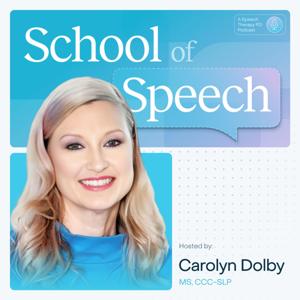


Spend less time managing data and more time focusing on therapy with systematic tweaks and digital tools.
Guest: Michele Rothstein MA, CCC-SLP
Earn 0.10 ASHA CEUs for this episode with Speech Therapy PD
Watch on Youtube
Host Carolyn Dolby, MS, CCC-SLP, is joined by Michele Rothstein, MA, CCC-SLP, on this episode of School of Speech to unpack how school-based SLPs can simplify data collection and IEP progress monitoring without sacrificing accuracy or compliance.This conversation clarifies the often-blurred line between therapy charting and true data collection probes, highlights common documentation pitfalls, and walks clinicians through streamlined systems that make data easier to collect, organize, and interpret. Michele shares practical ways to tighten workflows, reduce paperwork fatigue, and build routines that support consistent, meaningful progress monitoring.
About the Guest: Michele Rothstein is a school-based Speech Pathologist working full-time in an elementary school for students K-6 while running SLP Madness. She serves as a consultant and coach for school-based SLPs, helping them meet the ever-growing demands of their caseloads while meeting the needs of their students. Michele strives to provide high-quality treatment, grounded in the strong connections she has with her students and their families.
Move beyond "80% accuracy"—write therapy goals that show what kids can actually do with their words in everyday life.
Guest: Rebecca Moore, MS, CCC-SLP
Earn 0.10 ASHA CEUs for this episode with Speech Therapy PD
Watch on Youtube
The phrase "beyond 80% accuracy" is one that many clinicians recognize and rely on when writing therapy goals. It is familiar, measurable, and widely accepted. But percentages alone do not always capture what truly matters in a child’s functional communication growth. In this episode of School of Speech, host Carolyn Dolby, MS, CCC-SLP, is joined by Rebecca Moore, MS, CCC-SLP, for a practical conversation about moving beyond default accuracy statements toward goals that are clearer, more meaningful, and more clinically useful.
About the Guest: Rebecca Moore is a speech-language pathologist with 16 years of clinical experience. She earned her undergraduate degree from Marquette University in Milwaukee, Wisconsin, and her Master’s degree from Kansas State University. Over the course of her career, she has lived and worked in Oklahoma, Kansas, and Ohio, primarily serving pediatric populations. She currently resides in Ohio, where she practices in an outpatient pediatric clinic specializing in Childhood Apraxia of Speech and autism therapy, with a particular focus on children under six years of age.
Guests: Tim DeLuca, PHD, CCC-SLP/Nerissa Hall PHD, CCC-SLP/Julia Serra MS, CCC-SLP
Earn 0.1 ASHA CEUs for this episode with Speech Therapy PD:
https://www.speechtherapypd.com/courses/research-practice-partnerships
In this episode of School of Speech, host Carolyn Dolby, MS, CCC-SLP, welcomes Tim DeLuca, PhD, CCC-SLP; Nerissa Hall, PhD, CCC-SLP, BCS-AAC; and Julia Serra, MS, CCC-SLP for a timely conversation about how research-practice partnerships can strengthen speech-language pathology and close the gap between evidence and everyday clinical decision-making. Together, they explore what research-practice partnerships are, why they matter, and how collaboration between clinicians and researchers can lead to more relevant research questions, stronger implementation of evidence-based practices, and better outcomes for students.
You will hear practical examples of existing research-practice partnership models, along with real-world insights into how these collaborations are formed, maintained, and sustained over time. The discussion highlights the mutual benefits for clinicians, researchers, and the broader speech-language pathology community, while offering clear guidance for SLPs who are interested in becoming involved in partnerships that align with their caseload priorities and service delivery needs.
This course provides a practical roadmap for engaging in meaningful collaboration that supports clinically relevant research and fosters the use of research-informed interventions in everyday practice.
About the Guests: Tim DeLuca, PhD, CCC-SLP, is an assistant professor in the Department of Speech, Language, and Hearing Sciences at the University of Massachusetts Amherst and director of the Community Engaged Language and Literacy (CELL) Lab. His research examines best practices for improving language and literacy outcomes for children in schools, particularly those with developmental language disorder, dyslexia, and/or complex communication needs. His research is informed by over a decade of clinical practice as both a speech-language pathologist and reading specialist, continued mentorship and instruction of undergraduate and graduate students, and multiple clinician-researcher partnerships. His work focuses on harnessing implementation science and fostering interprofessional practice to enhance written and spoken language outcomes for children in schools. By bridging the gap between research and practice, the CELL Lab strives to unlock new strategies and tools that can significantly improve children's communication skills and overall quality of life.
Nerissa Hall, PhD, CCC-SLP, BCS-AAC, is a speech-language pathologist, AAC specialist, and co-Director of the Speech Language and Literacy Center with Tate Behavioral, where she works across disciplines—including behavior analysis, occupational therapy, physical therapy, and special education—to support students with complex access, learning, and communication needs. She is passionate about implementation and the interplay among learners, their communication partners, and their environments to maximize outcomes for learners and their partners. She collaborates with university partners, including UMass, agencies, and innovators, to bridge research and practice. Her work focuses on AAC intervention, assessment, consultation, and coaching, as well as tele-AAC, applied technology, and systems-level implementation of evidence-based practices. Dr. Hall is a national and international presenter and co-editor of foundational texts, with a strong emphasis on translating research into sustainable, real-world school practice.
Julia Serra, MA, CCC-SLP, is a speech-language pathologist and supervising clinician at Tate Learning Center, where she works closely with SLPs, BCBAs, OTs, PTs, special educators, and related service providers to support students with complex communication, learning, and behavioral needs and their teams. Her work focuses on AAC, language, and literacy assessment, intervention, and consultation, and she is heavily invested in helping interdisciplinary teams apply evidence-based practices with fidelity, flexibility, and sustainability. Julia brings a grounded, clinician-informed perspective on what it takes to make research work in classrooms, programs, and systems.
Guest: Jacqueline Brown, ED.D., CCC-SLP
Earn 0.1 ASHA CEUs for this episode with Speech Therapy PD:
https://www.speechtherapypd.com/courses/leveraging-supervision
In this episode of School of Speech, host Carolyn Dolby, MS, CCC-SLP, welcomes Jacqueline Brown, EdD, CCC-SLP, for a practical conversation about how special education law shapes speech-language pathology services in school settings and how supervision and evaluation can be leveraged for success.
This course examines how the goals of supervision and evaluation go beyond compliance and can be used to support effective service delivery, meaningful professional growth, and improved outcomes for students. Jacqueline breaks down how legal and administrative frameworks influence SLP roles, responsibilities, and expectations in schools.
Participants will learn practical strategies to advocate for continuing education, protected time, and appropriate resources, while positioning themselves as collaborative allies within multidisciplinary teams. The session also highlights how strong partnerships with supervisors and evaluators can support accountability, confidence, and long-term career sustainability.
About the Guest: Jacqueline (Turcios) Brown, EdD, CCC-SLP, is an Assistant Professor in the Master of Science in Speech-Language Pathology program at the University of New Haven. She is a licensed speech-language pathologist with broad clinical experience across pediatric and adult populations, including work in public schools and at Yale New Haven Health in neurological and pediatric outpatient clinics, acute care, and rehabilitation. Dr. Brown earned her Doctor of Education from Southern Connecticut State University, where her research examined speech-language pathologists’ experiences with Connecticut’s educator evaluation system. She continues to expand this line of inquiry nationally, focusing on the professional experiences of school-based SLPs. Her work focuses on how clinicians can find fulfillment in their roles and sustain motivation throughout their careers.
Guest: Alisha B. Gandhi, MA, MS, CCC-SLP/TSSLD-BE
Earn 0.1 ASHA CEUs for this episode with Speech Therapy PD:
https://www.speechtherapypd.com/courses/vocabulary-translanguaging-strategies
Speech-language pathologists play a critical role in supporting vocabulary development for multilingual learners, and that work goes far beyond teaching isolated words. In this School of Speech episode, host Carolyn Dolby, MS, CCC-SLP, is joined by Alisha B. Gandhi, MA, MS, CCC-SLP/TSSLD-BE, to explore how evidence-based vocabulary instruction can be strengthened through pedagogical translanguaging in classroom and therapy settings.
Alisha breaks down what translanguaging really looks like in practice and how it can be intentionally applied to vocabulary instruction for young multilingual learners. Rather than separating languages, this approach leverages a student’s full linguistic repertoire to support deeper understanding, stronger word learning, and meaningful language growth.
The conversation focuses on practical, collaborative strategies SLPs can use alongside classroom teachers to create explicit, robust vocabulary instruction that supports both language and academic success. Listeners will walk away with concrete ways to apply translanguaging principles within evidence-based intervention frameworks and better advocate for multilingual learners in educational settings.
About the Guest: Alisha B. Gandhi, MA, MS, CCC-SLP, is a Clinical Associate Professor and Director of the Bilingual Extension Track at New York University. She earned her MS degree in Speech and Language Pathology with a focus in Bilingual/Bicultural from Teachers College, Columbia University. She also holds an MA in Educational Leadership, Politics, and Advocacy and is currently a doctoral student in the Educational Leadership and Policy Studies program at NYU. Alisha previously worked as a bilingual speech-language pathologist for the New York City Public Schools, NYS Early Intervention, and in the private sector, providing culturally and linguistically responsive diagnostic and therapeutic services for children and adolescents, including multilingual learners, with a wide variety of speech and language disorders and emotional, physical, intellectual, and developmental disabilities.
Guest: Emily Sweet, MS, CCC-SLP
Earn 0.1 ASHA CEUs for this episode with Speech Therapy PD:
https://www.speechtherapypd.com/courses/multilingual-evaluations
In this episode of School of Speech, host Carolyn Dolby, MS, CCC-SLP, is joined by Emily Sweet, MS, CCC-SLP, to tackle one of the most complex and high-stakes areas of school-based practice: evaluating multilingual children with accuracy and confidence.
Designed for both bilingual and monolingual SLPs, this conversation introduces the converging evidence framework proposed by Castilla-Earls et al. (2020) and explains how multiple sources of data work together to support sound clinical decision-making. Rather than relying on a single test score, Carolyn and Emily walk through how to build a comprehensive evaluation protocol that reflects real-world language use.
Topics include ethnographic interviewing, language sampling, nonword repetition tasks, and dynamic assessment, with clear explanations of how each contributes unique and meaningful information. The episode also addresses ethical and effective approaches for monolingual SLPs who are assessing bilingual or English learner students when a bilingual clinician is not available.
By the end of the episode, listeners will leave with concrete tools, resources, and strategies they can immediately apply to strengthen multilingual evaluations and confidently distinguish language difference from language disorder.
About the Guest: Emily is a bilingual SLP and a clinical associate professor at the Institute for Speech-Language Pathology at Widener University. She earned her MS in Speech Language Pathology with a bilingual extension from Teachers College, Columbia University, and worked for 15 years, first as a hospital-based SLP and then as a school-based SLP. Emily currently specializes in clinical education and issues related to culturally responsive care in pediatric and adult populations.
Guest: Robert McKinney, MA, CCC-SLP
Earn 0.1 ASHA CEUs for this episode with Speech Therapy PD:
https://www.speechtherapypd.com/courses/successful-speech-therapy
This first episode of the season of School of Speech focuses on what it really takes to make speech therapy effective and meaningful in the high school setting, where priorities shift and students are preparing for life beyond graduation.
Host Carolyn Dolby, MS, CCC-SLP, sits down with Robert McKinney, MA, CCC-SLP, for an honest, practical conversation about the evolving role of the SLP in secondary schools. Together, they talk through how speech therapy can support academic access, social communication, and increasing independence for teens and young adults.
The discussion centers on the real communication challenges high school students face and how SLPs can design services that fit busy schedules, complex team dynamics, and future-focused goals. Carolyn and Robert also highlight the importance of collaboration, sharing approachable strategies for working with educators, families, and related professionals to support students’ post-secondary transitions.
Grounded in real school environments, this episode offers realistic ideas SLPs can use to strengthen their impact in high school settings while keeping student needs, dignity, and long-term outcomes front and center.
About the Guest: Robert (Bob) McKinney, MA, CCC-SLP, is the author of *Here’s How to Do Accent Modification* (Plural Publishing, 2019). He holds master’s degrees in Communicative Disorders, International Relations, and Education. Bob speaks six languages, has lived in six countries, and has worked with clients from over eighty nations. Prior to becoming a speech-language pathologist, he spent 26 years in ESL instruction, including serving as a teacher trainer at UC San Diego’s English Language Institute. He currently serves as the lead SLP at the Sweetwater Union High School District, working primarily with bilingual students. At San Diego State University, Bob teaches phonetics and supervises graduate students in the Accent and Communication Training Program. He is Chair-Elect of the California Speech-Language-Hearing Association (CSHA) and Co-President of the Corporate Speech Pathology Network (CORSPAN).
*****Originally Aired: January 22, 2025*****
Guest: Julie Barber-Bristol MS, CCC-SLP
Earn 0.1 ASHA CEU for this episode with Speech Therapy PD: https://www.speechtherapypd.com/courses/top-5-tips-for-excelling-in-your-school-based-cfy
In this episode of School of Speech, host Carolyn Dolby and guest Julie Barber-Bristol share essential insights for speech-language pathologists (SLPs) entering their Clinical Fellowship Year (CFY) in a school setting. Drawing from their extensive experience, they provide practical strategies to navigate assessments, therapy planning, and professional growth. Julie emphasizes the importance of mastering evaluations, organizing data effectively, and leveraging literacy-based therapy to maximize student engagement and goal attainment. They also discuss the significance of collaboration between CFs and supervisors, creating an environment that fosters learning and confidence.
Listeners will gain valuable tips on balancing workload, embracing continuous learning, and using organization techniques to stay efficient in a fast-paced school environment. The episode underscores the role of mentorship and open communication in shaping a successful CF experience while encouraging both CFs and supervisors to adopt a mindset of flexibility, curiosity, and lifelong learning.
Key Questions:
- How can CFs effectively manage assessments, data collection, and therapy planning to streamline their workflow?
- What strategies can supervisors implement to support and mentor CFs while fostering their clinical independence?
- Why is organization essential for school-based SLPs, and what tools can help CFs stay on top of their responsibilities?
About the Guest: Julie L. Barber-Bristol, MS, CCC-SLP, is a highly experienced speech-language pathologist with a career spanning more than two decades. She holds licenses in New York, Pennsylvania, and Texas, respectively, and specializes in school-based therapy. Julie integrates children’s literature to enhance speech and language development. Currently based in Cypress, Texas, she works in the Cypress-Fairbanks Independent School District. She previously worked at the Capital Area Intermediate Unit in Pennsylvania, offering therapy across various educational settings. In New York, she worked in private practice, delivering services to clients in diverse settings including homes, preschools, schools, private facilities, hospitals, and nursing facilities.
*****Originally Aired: June 26, 2024*****
Guest: Ginger G. Collins, PHD, CCC-SLP
Earn 0.1 ASHA CEU for this episode with Speech Therapy PD: https://www.speechtherapypd.com/courses/morphologybased-approaches-to-improving-vocabulary-knowledge
In this episode, Dr. Collins will explain how school-based SLPs can collaborate with classroom teachers to strengthen students’ literacy skills. The strategies discussed were developed for upper elementary and secondary students, and examples will be provided for various curricular content areas. All of these strategies emphasize morphological knowledge and positively impact spelling, decoding, and vocabulary knowledge.
About the Guest: Ginger G. Collins, PhD, CCC-SLP, is a professor and program director at the University of Montana. Her teaching and research focus on literacy interventions with morphology at the core. Dr. Collins also conducts research and teaches about postsecondary transition planning and stuttering. She is a founding member of Structured Word Inquiry Research Vanguard (SWIRV). Structured Word Inquiry is a method of investigating the spelling of words through examination of their morphological composition, etymology, and grapheme-phoneme correspondences.
*****Originally Aired: June 16, 2025*****
Guest: Carol Westby, PHD, CCC-SLP, BCS-CL
Earn 0.1 ASHA CEU for this episode with Speech Therapy PD: https://www.speechtherapypd.com/courses/coherent-storytelling
In this episode, we explore why storytelling matters and how school-based SLPs can help students shape personal narratives that build connection, confidence, and clarity. You’ll learn how storytelling supports executive functioning, mental health, and academic success, and walk away with practical strategies for helping students craft coherent, meaningful stories that make sense to them and the world around them.
About the Guest: Carol Westby, PhD, CCC-SLP, BCS-CL, is a distinguished speech-language pathologist and consultant for Bilingual Multicultural Services in Albuquerque, NM. She holds an affiliated appointment in Communication Disorders at Brigham Young University in Provo, UT. A Fellow of the American Speech-Language-Hearing Association (ASHA), Dr. Westby has received numerous honors, including the ASHA Honors Award, the Kleffner Lifetime Clinical Achievement Award, and the ASHA Award for Contributions to Multicultural Affairs. She is also Board Certified in Child Language and Language Disorders. Dr. Westby’s scholarship and clinical expertise span theory of mind, narrative and expository development, trauma and adverse childhood experiences, qualitative methodologies, written language assessment and facilitation, metacognition, executive function, ADHD, and culturally and linguistically responsive practices. She has published and presented extensively at national and international levels. She earned her BA in English from Geneva College and both her MA and PhD in Speech Pathology from the University of Iowa. Her contributions have been recognized with Distinguished Alumnus Awards from both institutions, reflecting a career dedicated to advancing inclusive, evidence-based practices in communication sciences.
From the publisher's feed

111,825 Listeners

56,397 Listeners
884 Listeners
213 Listeners
47 Listeners
129 Listeners

79 Listeners

27 Listeners
86 Listeners
6 Listeners
119 Listeners
12 Listeners

12,428 Listeners
7 Listeners
7 Listeners