
Sign up to save your podcasts
Or



Strong collaboration doesn't happen by accident. It takes intentional systems, ongoing communication, and a team that's willing to grow together!
Dr. Stephanie Nostin shares how she helped build speech and occupational therapy services within Verbal Beginnings, a large ABA organization. I love hearing how her team has created systems that make interdisciplinary collaboration more effective while supporting clinicians and families.
We explore how technology can simplify data collection, streamline documentation, and help providers develop coordinated treatment plans. One of my biggest takeaways is the importance of listening to employee feedback and refining systems over time. These changes can make a real difference in reducing clinician burnout!
We also get into AAC and how Stephanie's team prepares BCBAs, RBTs, and families to confidently support device use. I especially love their approach to hands-on caregiver training before sending a device home.
#autism #speechtherapy
What’s Inside:
Mentioned In This Episode:
Verbal Beginnings
Say It With Me by Rose Griffin
AAC Mastery for SLPs and BCBAs
Earn CEUs with a community of peers. Join the ABA Speech Connection
ABA Speech: Home
I’m joined by Elaine Keuning and Dr. Sarah Heller to explore what meaningful collaboration between speech therapy and ABA can look like, especially when supporting AAC users with complex communication needs. We talk about those sometimes “prickly” beginnings between professionals and how curiosity, respect, and a shared goal can help teams find common ground.
We also dig into AAC beyond programming. A communication device needs to travel with the learner, become part of everyday routines, and support communication that matters now and years from now. I loved our discussion about thinking beyond percentages and trials and recognizing meaningful progress in the small shifts, like bringing the device on a walk, modeling away from the work table, or seeing a learner begin to seek out their communication system.
#autism #speechtherapy
What’s Inside:
Mentioned In This Episode:
Meaningful Metrics Online Academy
Dr. Sarah Heller
Williams Speech and Language Pathology PLLC
Say It With Me by Rose Griffin
AAC Mastery for SLPs and BCBAs
Earn CEUs with a community of peers. Join the ABA Speech Connection
ABA Speech: Home
Teaching someone to say “no” is just as important as teaching them to say “yes.”
I’m joined by Cristina Theis, Director of Training & Educational Development at Firefly Autism, to explore what assent-based care actually looks like in practice, especially when supporting autistic learners with complex communication and behavioral needs.
We talk about moving beyond simply using terms like assent-based or trauma-informed and making sure those values show up in our everyday clinical decisions. Cristina shares why self-advocacy and communication come first, including teaching learners meaningful, understandable ways to tell us when they are, or are not, comfortable participating.
We also dig into interdisciplinary collaboration and why shared values can help BCBAs, SLPs, OTs, educators, and other professionals work through differences in clinical recommendations. I especially love Cristina’s reminder that collaboration does not mean abandoning the science. We can try something, collect data, look at the results, and come back together as a team.
#autism #speechtherapy
What’s Inside:
Mentioned In This Episode:
Firefly Autism
Firefly Autism on Instagram
Say It With Me by Rose Griffin
AAC Mastery for SLPs and BCBAs
Earn CEUs with a community of peers. Join the ABA Speech Connection
ABA Speech: Home
Three hundred episodes, six years of learning together, and so many meaningful connections along the way. What better way to celebrate than with a little reflection, practical insight, and fun?
For this milestone, I’m welcoming back my friend and colleague Dr. Ron DeMuesy. We talk about how much the field has changed, Ron’s journey to earning his PhD, and his work supporting compassionate approaches to severe problem behavior in public schools. Ron also shares practical thoughts on PFA, SBT, collaboration, and why understanding the environment matters when we’re supporting students and school teams.
We also dig into what school-based BCBAs need to know, including the importance of listening before giving advice, recognizing staff strengths, and building behavior plans collaboratively. And because this is episode 300, we finish with a lightning round and reflect on where the podcast has been and where I hope it goes next.
#autism #speechtherapy
What’s Inside:
Mentioned In This Episode:
Don’t Shoot the Dog! by Karen Pryor
FTF Behavioral Consulting
Ohio Association for Behavior Analysis
John Carroll University ABA Program
Say It With Me by Rose Griffin
AAC Mastery for SLPs and BCBAs
Earn CEUs with a community of peers. Join the ABA Speech Connection
ABA Speech: Home
What are clinicians really asking when they want to feel more confident supporting autistic learners? I’m answering the five questions that show up most often in my inbox, DMs, course evaluations, and conversations with members of the ABA Speech Connection.
AAC is at the top of the list. I’m sharing why becoming comfortable with a learner’s device matters, what to consider during the AAC assessment process, and why vocabulary should be meaningful across the learner’s day. Our students deserve access to communication now, not after we feel perfectly prepared.
I’m also digging into SLP-BCBA collaboration and gestalt language processing. Curiosity, communication, and strong soft skills can make a huge difference when professionals approach treatment differently. We can stay grounded in evidence-based practice while listening to one another and keeping the learner at the center.
We’ll also look at joint attention, naturalistic intervention, and parent training. Whether we’re using books, music, and play or helping families understand communication goals, we need to know why we’re teaching a skill and how it will make a meaningful difference in everyday life.
#autism #speechtherapy
What’s Inside:
Mentioned In This Episode:
Gestalt Super Pack
ASHA
Episode #121: Core Vocabulary and Typical Language Development with Allison Bean and Bethany Frick Semmler
Say It With Me by Rose Griffin
AAC Mastery for SLPs and BCBAs
Earn CEUs with a community of peers. Join the ABA Speech Connection
ABA Speech: Home
Selective mutism isn’t a choice, defiance, or simply being shy. It’s about being unable to speak when speaking is socially expected because anxiety can make communication feel incredibly difficult.
Chelsea Gamache brings such an important perspective to this topic, both as a BCBA and as someone diagnosed with selective mutism at age five. We talk about what selective mutism can actually look like, including whispering, using an altered voice, or communicating freely at home while being unable to speak at school or in the community.
One of my biggest takeaways is the importance of meeting learners where they are. We can use behavioral principles like positive reinforcement, gradual exposure, shaping, stimulus fading, and visual supports, but we also have to understand the anxiety component. Communication should never become something we pressure out of a learner.
#autism #speechtherapy
What’s Inside:
Mentioned In This Episode:
Chelsea on TikTok
Outloud the Selective Mutism Podcast
SMART Center
I Am Brave
Child Mind Institute
Boston Child Study Center
Selective Mutism Association
Say It With Me by Rose Griffin
AAC Mastery for SLPs and BCBAs
Earn CEUs with a community of peers. Join the ABA Speech Connection
Functional communication is about more than getting a learner to request. It’s about helping them communicate what they want and need spontaneously, across people, places, and real-life situations.
Ashley Whitaker joins me to share practical clinical shifts that can make a big difference for autistic learners, especially those who are prompt dependent or seem stuck in their communication progress. We talk about why a simple prompt like “What do you want?” can unintentionally become a barrier to spontaneous communication, and how we can create a stronger connection between motivation and independent requesting.
We also dig into data collection and why tracking both prompted and spontaneous communication gives us valuable information about whether a learner needs more opportunities or a change in programming. Ashley shares practical ways to build communication opportunities throughout the day without making every interaction feel like a structured therapy trial.
Finally, we explore speech clarity and teaching functional communication before moments of escalation. When learners practice responses like “more time,” “all done,” or “no” outside of crisis situations, we can help them build communication skills they can actually access when they need them most.
#autism #speechtherapy
What’s Inside:
Mentioned In This Episode:
VB-MAPP
The Verbal Behavior Approach
Lighthouse Autism Center
Say It With Me by Rose Griffin
AAC Mastery for SLPs and BCBAs
Earn CEUs with a community of peers. Join the ABA Speech Connection
ABA Speech: Home
Mealtimes are full of natural opportunities for communication, connection, and friendship, but we may be overlooking just how valuable those moments can be.
Dr. Katherine Bateman joins me to explore Snack Talk, a simple visual communication support designed to help learners engage with peers during meals and snacks. We talk about using personalized questions and visual choices to make communication accessible across modalities, including speech, gestures, AAC, and other forms of communication.
What I love about Snack Talk is how practical it is. We can build visuals around what our learners genuinely enjoy, rotate topics to keep them meaningful, and use prompting to support engagement without making implementation complicated. Katie also shares how this approach can help educators become more intentional during typically unstructured times while creating opportunities for SLPs, BCBAs, teachers, and paraprofessionals to collaborate.
Ultimately, this is about more than answering social questions. It is about belonging, friendship, and giving learners meaningful ways to connect with the people around them.
#autism #speechtherapy
What’s Inside:
Mentioned In This Episode:
Visual Supports to Increase Conversation Engagement for Preschoolers With Autism Spectrum Disorder During Mealtimes
Snack Talk
Haring Center for Inclusive Education, University of Washington
Say It With Me by Rose Griffin
AAC Mastery for SLPs and BCBAs
Earn CEUs with a community of peers. Join the ABA Speech Connection
ABA Speech: Home
Have you ever picked up an assessment and thought, “This still isn’t giving me the information I need?”
That’s why I’m so excited to introduce you to the Meaningful Outcomes Treatment and Assessment Scale, or MOTAS. Dr. Anika Hoybjerg shares how she and co-creator Casey Barron developed a comprehensive assessment that keeps meaningful, individualized outcomes at the center.
What immediately stood out to me is how practical and approachable the MOTAS feels. It addresses areas like communication, flexibility, social behavior, transitions, personal care, leisure, self-awareness, and perspective taking. There is also an Early Learner version that incorporates developmental milestones and AAC considerations.
I especially love the LOOP interviews, which bring clients, caregivers, and other professionals directly into treatment planning. Instead of assuming what matters most, we can ask, prioritize, and continue checking whether our goals are actually meaningful. That collaboration can make such a difference in creating functional treatment plans that support independence and quality of life.
#autism #speechtherapy
What’s Inside:
Mentioned In This Episode:
Get the MOTAS
ABA Education Center
Say It With Me by Rose Griffin
AAC Mastery for SLPs and BCBAs
Earn CEUs with a community of peers. Join the ABA Speech Connection
ABA Speech: Home
I still remember what it felt like to walk into a therapy session and have no idea how to move forward.
Early in my career, I was working with autistic learners with complex communication and behavioral needs, and I quickly realized graduate school had not prepared me for everything I was seeing. I wanted to help, but I didn’t always have practical strategies I could use when a learner struggled to attend, engage, or communicate. That experience sent me searching for better answers and ultimately shaped the way I practice today.
More than 20 years later, I want clinicians to have something I desperately needed back then: support, practical education, and a community that helps you feel confident about what to do next.
That’s why I created the ABA Speech Connection. It brings speech therapists, BCBAs, and RBTs together to learn evidence-based strategies, earn CEUs, collaborate, and immediately apply what they’re learning with autistic students. From AAC and functional communication to clinical roundtables and live learning, everything is designed to make professional development practical and useful.
You don’t have to spend hours searching for your next CEU or wonder whether you’re doing enough. You can have a place to learn, ask questions, and keep growing alongside professionals who care about helping every student communicate with the world.
#autism #speechtherapy
What’s Inside:
Mentioned In This Episode:
Say It With Me by Rose Griffin
AAC Mastery for SLPs and BCBAs
Earn CEUs with a community of peers. Join the ABA Speech Connection
ABA Speech: Home
From the publisher's feed
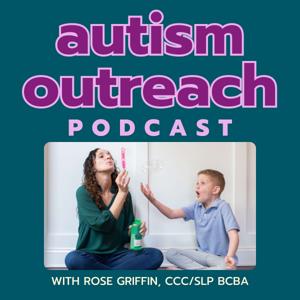
Join Rose Griffin, a dedicated Speech Therapist and BCBA from ABA SPEECH, as she shares her compassionate approach to supporting the communication needs of autistic individuals. With 20 years of…
This podcast is a resource for professionals and parents alike, offering practical strategies that honor each person's unique communication style. Rose covers a wide range of topics, including how to recognize and support autistic communication from an early age, the distinctions between autism and speech differences, and effective, respectful approaches to fostering communication, whether a child is non-speaking, minimally speaking, or verbal.
Through a mix of interviews and solo episodes, Rose explores how to enhance meaningful connections, address challenges with empathy, and celebrate the strengths of autistic individuals. Whether you're a parent, therapist, or educator, you'll find valuable insights and actionable advice to create supportive environments that empower communication and honor neurodiversity.
Hit subscribe and learn more at www.abaspeech.org.

7,651 Listeners
11,912 Listeners

623 Listeners
9,063 Listeners

25,698 Listeners
4,758 Listeners

46,893 Listeners
1,344 Listeners
630 Listeners
427 Listeners

15,415 Listeners

29,163 Listeners
62 Listeners

18,949 Listeners

10,203 Listeners