
Sign up to save your podcasts
Or



What if we could safely practice real-world situations before our students ever experience them?
In this episode, I’m joined by Marsha and Rita from Floreo to talk about how virtual reality is supporting autistic learners in building social, communication, safety, and life skills. Floreo is a VR platform that allows learners to step into immersive environments like airport security lines, grocery stores, and even digital conversations, all while being coached in real time by a therapist, teacher, or parent.
What I love most is how functional these lessons are. From responding to TSA questions to recognizing red flags in online interactions, these scenarios reflect the real challenges our students face. We also discuss the growing research behind VR-assisted therapy, including published studies showing improvements in social skills and skill maintenance.
We talk through how VR can fit naturally into speech therapy and ABA sessions, with pre-teaching, guided practice, and generalization built in. Plus, we cover funding options, including school-based access and the temporary VR-assisted therapy billing modifier 0770T.
Technology is powerful when it’s clinically driven, and this conversation highlights how innovation can truly empower our learners.
#autism #speechtherapy
What’s Inside:
Mentioned In This Episode:
FloreoVR
Earn CEUs with a community of peers. Join the ABA Speech Connection
ABA Speech: Home
If AAC has ever felt intimidating, you are not alone, and this episode is going to give you a clear, practical path forward.
In this conversation, I sat down with Gabriella Wendling, an AAC specialist who has dedicated her entire career to assistive technology and augmentative communication. We talk honestly about how most of us received minimal AAC training in graduate school and how real confidence comes from experience, collaboration, and ongoing learning.
We walk through what AAC evaluations actually look like, including timelines, feature matching, and access considerations like switches and eye gaze. Gabriella explains why getting the device is only the first step and why delays are often related to funding, not clinician performance.
One of my favorite parts of this episode is our discussion about what happens after the device arrives. Gabriella shares her coaching-based model for training communication partners, including teachers and families. She emphasizes micro goals, small, meaningful targets that fit naturally into daily routines, so AAC becomes functional instead of overwhelming.
We also tackle a hot topic around prompting and unpack why modeling and systematic prompting are essential for emergent communicators when done thoughtfully and ethically.
If you want AAC implementation that is sustainable, collaborative, and truly supportive for students, this episode will leave you encouraged and equipped.
#autism #speechtherapy
What’s Inside:
Mentioned In This Episode:
AAC & Me
AAC & Me on Instagram
Earn CEUs with a community of peers. Join the ABA Speech Connection
ABA Speech: Home
When you move from treatment rooms to team meetings, everything changes, including how you show up as a BCBA.
In this episode, I talk with Shalini Solomon about her transition from clinic-based ABA to working as a school-based BCBA. If you’ve worked in both settings like I have, you know they are completely different worlds. In a clinic, you’re often running sessions. In a school, you’re collaborating, coaching, and translating ABA into language that makes sense to teachers and administrators.
Shalini shares what helped her navigate that shift, from simplifying behavior intervention plans so they actually work in busy classrooms to minimizing jargon and building buy-in with staff. We also talk about why understanding IDEA, IEPs, FAPE, and district systems is critical if you’re stepping into a school role, especially if you’re one of the first BCBAs in your district.
We also discuss her journey toward earning a doctorate in behavioral health and the importance of leadership, mentorship, and representation in our field. It’s an honest, practical conversation for anyone considering or currently navigating a school-based BCBA role.
#autism #speechtherapy
What’s Inside:
Mentioned In This Episode:
Elevate & Align Behavior
Earn CEUs with a community of peers. Join the ABA Speech Connection
ABA Speech: Home
Starting your own practice does not have to mean doing it all alone.
In today’s episode, I sat down with Bukhtar Khan, co-founder and CEO of Finni Health, to talk honestly about what it really looks like to start and grow an independent ABA practice. We talked about the fears BCBAs often have around finances, insurance, staffing, and burnout, and how Finni Health is built to support clinicians who want autonomy without sacrificing stability or ethics.
Bukhtar shares the heart behind Finni Health and why their work is so focused on reducing stress for clinicians, protecting quality care, and helping providers build sustainable practices that align with their “why.” If you have ever thought about starting your own clinic but felt overwhelmed by the logistics, this conversation will give you clarity, reassurance, and a realistic look at what support can look like.
#autism #speechtherapy
What’s Inside:
Mentioned In This Episode:
Finni Health
Earn CEUs with a community of peers. Join the ABA Speech Connection
ABA Speech: Home
Stepping into your first leadership role can feel overwhelming, and navigating autism services as a parent can feel even harder, even when you’re already in the field.
In this episode, I sat down with Rayni McMahon for a powerful conversation about leadership, advocacy, and what happens when your professional world and personal life collide. We talked about what it really feels like to move from clinician to administrator, why so many professionals feel unprepared for leadership roles, and the one thing that can make that transition feel more manageable. Rayni shared practical, honest insights about mentorship, managing people, setting boundaries, and learning to lead with both confidence and compassion.
We also spent time talking about advocacy from a deeply personal lens. Rayni opened up about her experience as a BCBA navigating the system as a parent of an autistic child and how being “in the know” did not make accessing services easier. Her perspective highlights just how complex and exhausting the system can be, even for professionals, and why empathy, persistence, and advocacy matter so much for families.
This conversation is thoughtful, relatable, and full of takeaways for anyone who is stepping into leadership, supporting teams, or advocating for children and families within our field.
#autism #speechtherapy
What’s Inside:
Mentioned In This Episode:
Virtue Healthcare Consulting
Rayni Brindley McMahon on LinkedIn
Earn CEUs with a community of peers. Join the ABA Speech Connection
ABA Speech: Home
Prompting AAC is abuse? Let’s talk about that and a few other AAC conversations that keep coming up again and again.
In today’s solo episode, I’m diving into five hot topics in AAC that have been surfacing repeatedly in my recent calls, trainings, and collaboration meetings. After more than 20 years as a speech therapist and being dually certified as a BCBA, I’ve seen how confusing, overwhelming, and sometimes divisive AAC conversations can become. I also remember very clearly when AAC felt intimidating to me too.
This episode is about cutting through the noise, grounding ourselves in research, and having better, more collaborative conversations about AAC. I share real scenarios clinicians are facing right now, from AAC evaluations that drag on far too long to device access barriers to strong opinions about prompting that simply don’t align with the science. My goal is to help you feel more confident, more informed, and better equipped to advocate for your students and clients.
Whether you’re newer to AAC or have years of experience, these topics matter. AAC is a student’s voice, and we have a responsibility to protect, support, and expand it in thoughtful, ethical ways.
#autism #speechtherapy
What’s Inside:
Mentioned In This Episode:
Earn CEUs with a community of peers. Join the ABA Speech Connection
Take the All About AAC bundle
ABA Speech: Home
In this episode, I had the absolute pleasure of welcoming Dr. Kathleen Dyer, Dr. Anna Linnehan, and Dr. Mary Jane Weiss for a powerful conversation around their article Fostering Belonging in Autistic Individuals. This was actually the first time I’ve had three guests on the podcast at once, and it felt like the perfect conversation to mark that milestone.
We spent time unpacking the difference between inclusion and true belonging and why simply being “in the room” does not always mean someone feels connected or accepted. As behavior analysts and speech-language pathologists, we’ve made incredible progress with access, inclusion, and participation, but this conversation challenged us to take a deeper look at the quality of those experiences.
We talked about what happens when autistic individuals are included but don’t feel they belong, the emotional toll of masking and camouflaging, and the very real systemic barriers that still exist for autistic adults. I also loved hearing how this work grew from their experiences in higher education and from listening closely to autistic individuals and families who shared that they often had to create their own communities.
What really stood out to me was how much this conversation aligns with compassionate, individualized care. Belonging looks different for everyone, and if we’re not asking about it, observing it, and building it into our assessments and interventions, we’re missing something essential. This episode felt like an invitation for our field to stretch, reflect, and evolve, and I’m so grateful to these three leaders for helping start that dialogue.
#autism #speechtherapy
What’s Inside:
Mentioned In This Episode:
Earn CEUs with a community of peers. Join the ABA Speech Connection
Get the book Perspectives on Neurodiversity and Belonging
ABA Speech: Home
In today’s episode, I sat down with Nafisa Obi to talk about what it really looks like to bring speech therapy, occupational therapy, and ABA together under one roof. Nafisa shared her journey from starting a small speech therapy practice to co-founding Essential Speech and ABA Therapy, which has grown into a nationwide franchise model focused on early intervention and true interdisciplinary collaboration.
We talked honestly about the realities of private practice ownership, the challenges of adding ABA to an existing SLP practice, and why understanding your “why” matters so much when you’re building services that impact families. Nafisa walked us through how her team recognized a gap in care, leaned into collaboration instead of competition, and built a model that prioritizes children, families, and ethical growth.
This conversation is especially powerful if you’re an SLP, OT, BCBA, or practice owner who feels the pull to do more for your clients but isn’t sure where to start. Nafisa’s story is a reminder that thoughtful, family-centered care and sustainable business practices can exist together, and that collaboration truly changes outcomes.
#autism #speechtherapy
What’s Inside:
Mentioned In This Episode:
Essential Speech and ABA Therapy
Nafisa Obi on LinkedIn
Join the ABA Speech Connection
ABA Speech: Home
I’m bringing back one of my mini episodes that continues to spark great conversations around verbal imitation. This reprise dives into how we think about echoics and verbal imitation in a way that is thoughtful, ethical, and grounded in collaboration. I share why this can be such a tricky area, especially when speech-language pathologists and BCBAs are working together, and why context always matters more than a checklist.
In this episode, I walk through how I approach verbal imitation on a team, why assessment and collaboration are essential, and how we can support learners without turning them off to verbal communication. This is a practical listen that encourages all of us to slow down, zoom out, and make sure our targets are truly functional for the child in front of us.
#autism #speechtherapy
What’s Inside:
Mentioned In This Episode:
Verbal Imitation Guide (Hack #19)
Join our ethics course
Join the aba speech connection
ABA Speech: Home
In this reprise episode, I’m revisiting an important conversation with Dr. Michael Selbst and Dr. Jeniffer Cruz about Pathological Demand Avoidance, often called PDA. I began getting more questions about PDA as clinicians and parents shared concerns about students who weren’t responding to traditional strategies and seemed to escalate around even small or well-intended demands.
In this episode, we break down what PDA is and how it’s currently understood. While PDA is not a formal diagnosis in the United States, it’s often described internationally as a profile rooted in anxiety and a strong drive for control. Dr. Selbst and Dr. Cruz explain how both explicit demands, like being told to complete a task, and implied demands, such as routines or social expectations, can trigger a fight, flight, or freeze response.
We also explore why compliance-based systems and reward-driven approaches often don’t work for learners with this profile. Even positive strategies can increase anxiety when they rely on external control. Instead, this conversation focuses on shifting toward collaboration over compliance, building trust, and reducing power struggles so regulation can come first.
What I appreciate most is how practical this discussion is. We talk about language, tone, and small changes adults can make to better support regulation, communication, and independence.
#autism #speechtherapy
What’s Inside:
Mentioned In This Episode:
Dr. Selbst and Dr. Cruz have the authority to practice interjurisdictional telepsychology (APIT) from the PSYPACT commission, allowing them to provide telepsychology to clients in many states. To see if your state is included, please click on this link: https://psypact.site-ym.com/page/psypactmap
PDA Society
Behavior Therapy Associates
Join the aba speech connection
ABA Speech: Home
From the publisher's feed
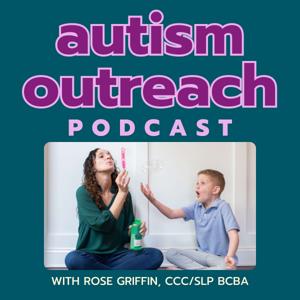
Join Rose Griffin, a dedicated Speech Therapist and BCBA from ABA SPEECH, as she shares her compassionate approach to supporting the communication needs of autistic individuals. With 20 years of…
This podcast is a resource for professionals and parents alike, offering practical strategies that honor each person's unique communication style. Rose covers a wide range of topics, including how to recognize and support autistic communication from an early age, the distinctions between autism and speech differences, and effective, respectful approaches to fostering communication, whether a child is non-speaking, minimally speaking, or verbal.
Through a mix of interviews and solo episodes, Rose explores how to enhance meaningful connections, address challenges with empathy, and celebrate the strengths of autistic individuals. Whether you're a parent, therapist, or educator, you'll find valuable insights and actionable advice to create supportive environments that empower communication and honor neurodiversity.
Hit subscribe and learn more at www.abaspeech.org.

7,682 Listeners
11,937 Listeners
626 Listeners
9,093 Listeners
25,796 Listeners
4,761 Listeners

46,903 Listeners
1,348 Listeners
625 Listeners
421 Listeners

15,394 Listeners

29,197 Listeners
59 Listeners

19,246 Listeners

10,207 Listeners