
Sign up to save your podcasts
Or

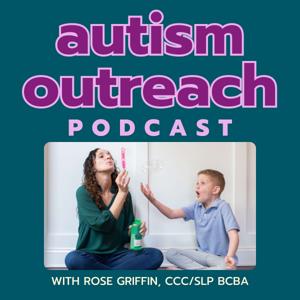


If you've ever wondered whether constant stress is simply part of being a helping professional, this conversation is for you. Burnout isn't a badge of honor, and crying in your car or pushing through physical symptoms shouldn't be considered normal.
I’m joined by Tiffany N. Arango to explore what clinician wellness really looks like and why so many dedicated professionals end up running on empty. Tiffany shares her own experience of reaching severe burnout while working in what she believed was her dream job, and how that experience changed the direction of her career. We talk about the workplace red flags that are easy to overlook, why so many of us normalize unhealthy environments, and how psychological flexibility can help us respond with intention instead of simply surviving each day.
We also explore the role leaders play in creating healthy workplace cultures and why genuine care for employees should never be viewed as a weakness. Whether you're a speech therapist, BCBA, RBT, or another helping professional, I hope this conversation reminds you that your well-being matters just as much as the people you serve. If you're feeling overwhelmed, please know you don't have to navigate it alone. Reach out, find your community, and seek support.
#autism #speechtherapy
What’s Inside:
Mentioned In This Episode:
Grab Say it With Me
The Behavior Station
Earn CEUs with a community of peers. Join the ABA Speech Connection
ABA Speech: Home
The best outcomes happen when we stop working in silos and start learning from each other.
I recently had the chance to be a guest on Dr. Selena J. Layden's podcast, and I knew I wanted to share our conversation with you because it highlights something I'm deeply passionate about, meaningful collaboration between speech-language pathologists and BCBAs. When we recognize each other's expertise and work together, we create better outcomes for the students we serve.
We talked about my journey from school-based speech therapy into the world of ABA, how those experiences shaped ABA Speech, and why I believe communication and behavior support are strongest when they are aligned. We also explored common misconceptions between our professions, practical ways to build trust with colleagues, and why curiosity and open communication can go a long way.
One of my favorite parts of our discussion was sharing what I wish every school-based BCBA understood about speech-language pathology. Our training is incredibly broad, and many of us continue developing our expertise long after graduate school. The same is true for BCBAs, which is why ongoing learning and collaboration matter so much.
Whether you're an SLP, BCBA, educator, or part of an interdisciplinary team, I hope this conversation encourages you to build stronger partnerships that help every student communicate and thrive.
#speechtherapy #autism
What’s Inside:
Mentioned In This Episode:
Grab Say it With Me
The Behavior Education Connection
Earn CEUs with a community of peers. Join the ABA Speech Connection
ABA Speech: Home
What happens when two SLPs and BCBAs get together to tackle the biggest conversations in our fields? You get an honest discussion about collaboration, research, and keeping students at the center of every decision.
Today, we're flipping the script and I'm answering some of the questions I hear most often about speech therapy and ABA, from choosing AAC vocabulary to navigating current topics like gestalt language processing, prompting, and aided language modeling. I share why I believe we have to move beyond an "all or nothing" mindset and focus on what the research tells us while making thoughtful, ethical decisions for each individual learner.
Dr. Giles and I also dig into functional communication, response forms, and why collecting meaningful data should guide every intervention we use. My hope is that these conversations help bridge the gap between disciplines so we can spend less time debating and more time helping our students communicate with confidence.
#autism #speechtherapy
What’s Inside:
Mentioned In This Episode:
Grab Say it With Me
Earn CEUs with a community of peers. Join the ABA Speech Connection
ABA Speech: Home
Every student deserves a way to communicate with the world, and that belief has guided my work from the very beginning.
Today, I’m sharing something incredibly special, the story behind my new book, Say It With Me: Naturalistic Tools to Spark Speech and Social Engagement. This is the resource I wish I had when I first started working with autistic learners who were not yet speaking, struggled to engage in therapy, or faced behavioral barriers that made learning more challenging.
I take you behind the scenes of my journey, from my early days at the Cleveland Clinic Autism Center to the lessons that shaped the compassionate, collaborative approach I use today. I also walk through the practical strategies featured in the book, including assessment, joint attention, play-based learning, AAC, social engagement, group therapy, behavior supports, and meaningful goal writing. My goal has always been to make research approachable and actionable so you can feel confident putting these ideas into practice right away.
Whether you're a speech-language pathologist, BCBA, educator, or parent, I hope this conversation leaves you feeling encouraged and equipped with new ways to support learners who are often the hardest to reach.
#autism #speechtherapy
What’s Inside:
Mentioned In This Episode:
Grab Say it With Me
Earn CEUs with a community of peers. Join the ABA Speech Connection
ABA Speech: Home
Some kids are picky eaters, but when does it become something more?
Feeding challenges can feel overwhelming for families, especially when mealtimes become stressful, food choices become extremely limited, or concerns about nutrition start to grow. That's why I was excited to welcome feeding specialist Margaryta Kuzmin to the podcast. Together, we unpacked the difference between typical picky eating and pediatric feeding disorders, and why early support can make such a meaningful difference.
Margaryta shares the developmental reasons many children go through selective eating phases, along with important red flags that may signal a deeper concern. We also explore why feeding difficulties are rarely about food alone. Medical, nutritional, motor, sensory, and social factors can all play a role. I especially loved our discussion about how providers can approach these conversations with families in a supportive, compassionate way.
Whether you're a speech-language pathologist, BCBA, educator, or parent, this conversation highlights the power of collaboration and why feeding concerns deserve attention early on.
#autism #speechtherapy
What’s Inside:
Mentioned In This Episode:
Feeding Matters
Kuzmin SLP
Margaryta Kuzmin on Instagram
Earn CEUs with a community of peers. Join the ABA Speech Connection
ABA Speech: Home
Child-led therapy doesn’t mean lowering expectations. It means meeting children where they are and building meaningful learning opportunities from what matters most to them.
I’m joined by Dr. Katherine Pickard, Dr. Rachel Yosick, and Dr. Tracy Argueta from the Marcus Autism Center to explore how child-led Applied Behavior Analysis is shaping the future of autism intervention. We unpack Naturalistic Developmental Behavioral Interventions (NDBIs), what they are, how they differ from more traditional ABA approaches, and why they continue to gain momentum in both research and practice.
One of my favorite parts of this conversation is the discussion around “de-implementation,” the idea that sometimes improving our practice requires letting go of strategies that no longer serve children and families as effectively. We also talk about common misconceptions around child-led therapy, how to balance NDBI and structured teaching, and practical ways clinicians can begin incorporating more naturalistic, developmentally appropriate strategies into their sessions.
If you've ever wondered whether child-led approaches are "ABA enough" or how to start making meaningful changes in your own practice, this conversation offers thoughtful, research-based guidance that is both encouraging and actionable.
#autism #speechtherapy
What’s Inside:
Mentioned In This Episode:
Marcus Autism Center
Earn CEUs with a community of peers. Join the ABA Speech Connection
ABA Speech: Home
AAC can feel overwhelming for clinicians, but it does not have to stay that way.
I’m joined by Valerie Zimmerman from Mindcolor Autism to talk about what happens when BCBAs and SLPs come together to better support autistic learners who use AAC. Valerie shares how her team has prioritized AAC training across their organization, even though many clinicians receive little to no formal instruction in this area. We dig into the real questions providers are asking, from ethical considerations around programming devices to understanding the role of collaboration in helping students communicate more effectively.
One of my favorite parts of this conversation is hearing how Mindcolor Autism created a clinical consultation model that gives staff ongoing support when they encounter challenging cases or communication questions. I love seeing organizations build systems that help clinicians feel less alone and more confident in their work.
We also talk about the importance of practical, immediately applicable training. Whether you are a BCBA, SLP, RBT, or parent, this conversation highlights how much growth can happen when teams learn together and stay curious about communication. AAC is not just about devices, it is about giving students meaningful ways to connect with the world around them.
#autism #speechtherapy
What’s Inside:
Mentioned In This Episode:
Mindcolor Autism
AAC Mastery for SLPs and BCBAs
All About AAC Bundle
Earn CEUs with a community of peers. Join the ABA Speech Connection
ABA Speech: Home
Have you ever looked at an AAC device and thought, “Where do I even start?” I’ve been there too, and I know how overwhelming it can feel.
For years, I supported students using AAC while secretly feeling unsure of myself behind the scenes. I could teach communication strategies all day long, but when it came to navigating new systems and vocabulary sets, I remember leaving work feeling defeated and questioning whether I was truly helping my students. That experience completely changed the way I approach AAC today.
I’m sharing the story behind our brand-new course, AAC Mastery for SLPs and BCBAs, and why I created it for professionals who want practical, real-world support with AAC instead of more theory that never translates into therapy sessions. This course brings together incredible AAC experts to talk about assessment, motor planning, collaboration, bilingual learners, switch access, parent support, and so much more.
My goal is simple. I want you to feel confident supporting every AAC user on your caseload. Whether you’re brand new to AAC or you’ve been in the field for years, I want you to walk away with strategies you can actually use right away.
#autism #speechtherapy
What’s Inside:
Mentioned In This Episode:
AAC Mastery for SLPs and BCBAs
Earn CEUs with a community of peers. Join the ABA Speech Connection
ABA Speech: Home
What if our learners could practice success before they ever step into the real moment?
I’m bringing you a conversation that completely reframed the way I think about video modeling, independence, and skill building. We’re talking all about self-video modeling and how technology is creating more personalized, neurodiversity-affirming ways to support communication, daily living skills, and behavior regulation.
Dr. Rachel Khasky-Levy and Rinat Hitelman share how their work with The Babel Group and Wide Therapy is helping clinicians bridge the gap between therapy and real-world implementation. What stood out to me most was the idea of helping learners visualize themselves already succeeding. Whether it’s requesting a favorite snack, transitioning between activities, completing vocational tasks, or building communication skills, this approach focuses on possibility and confidence instead of correction.
I also loved hearing how self-video modeling can support learners who may not yet be able to demonstrate a skill independently in real life. By creating personalized visual rehearsals, clinicians and families can give learners repeated exposure to success in a calm, supportive way that feels meaningful and functional.
This conversation reminded me why I’ve always loved using video modeling in therapy. It’s practical, engaging, and incredibly empowering for our students across ages and settings.
#autism #speechtherapy
What’s Inside:
Mentioned In This Episode:
The Babel Group
Wide Therapy
Voiceitt
Earn CEUs with a community of peers. Join the ABA Speech Connection
ABA Speech: Home
What really helps speech sound practice stick once kids leave the therapy room?
I’m joined by Shail Silver, founder of SpeechLP and parent to a child receiving speech therapy services, for a thoughtful conversation about carryover, motivation, and how technology can support meaningful speech sound practice at home. As a school-based SLP, this topic is especially important to me because we know progress doesn’t just happen during therapy sessions. The real growth comes from consistent practice in everyday environments.
Shail shares how his family’s experience inspired the creation of SpeechLP, an AI-powered app designed to make articulation practice more engaging and less stressful for both parents and clinicians. We talk about the challenge of getting enough repetitions for true generalization, why carryover can be so difficult for students, and how gamified practice can help keep learners motivated. I also loved hearing how practicing SLPs are actively helping shape the platform so it stays practical and clinically relevant.
There’s so much potential in tools that support families, reduce clinician workload, and help students build confidence with communication in a fun and functional way.
#autism #speechtherapy
What’s Inside:
Mentioned In This Episode:
SpeechLP
ParagraphAI
Earn CEUs with a community of peers. Join the ABA Speech Connection
ABA Speech: Home
From the publisher's feed
Join Rose Griffin, a dedicated Speech Therapist and BCBA from ABA SPEECH, as she shares her compassionate approach to supporting the communication needs of autistic individuals. With 20 years of…
This podcast is a resource for professionals and parents alike, offering practical strategies that honor each person's unique communication style. Rose covers a wide range of topics, including how to recognize and support autistic communication from an early age, the distinctions between autism and speech differences, and effective, respectful approaches to fostering communication, whether a child is non-speaking, minimally speaking, or verbal.
Through a mix of interviews and solo episodes, Rose explores how to enhance meaningful connections, address challenges with empathy, and celebrate the strengths of autistic individuals. Whether you're a parent, therapist, or educator, you'll find valuable insights and actionable advice to create supportive environments that empower communication and honor neurodiversity.
Hit subscribe and learn more at www.abaspeech.org.

7,697 Listeners
11,928 Listeners
626 Listeners
9,100 Listeners

25,806 Listeners
4,770 Listeners

46,965 Listeners
1,350 Listeners
625 Listeners
420 Listeners

15,396 Listeners

29,191 Listeners
59 Listeners

19,320 Listeners

10,218 Listeners